
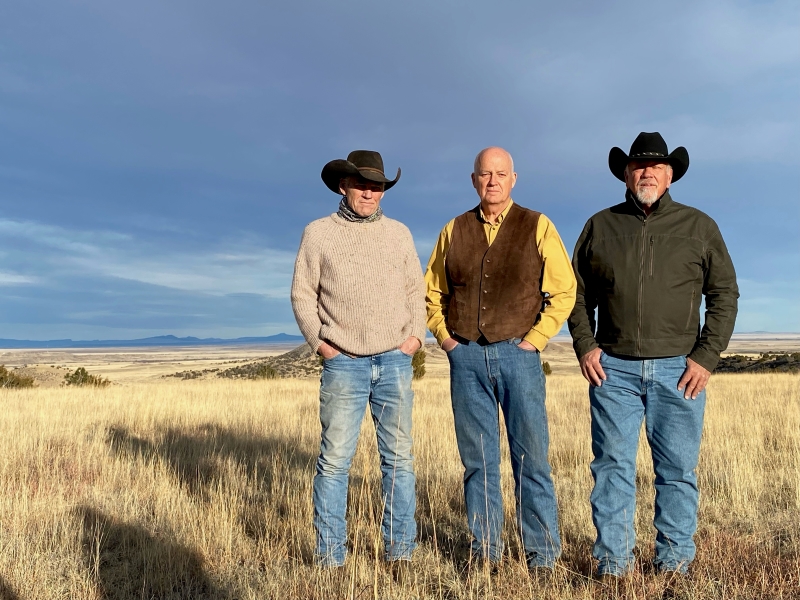
photo by Teri McCartney; photo courtesy of Broken Jukebox Media
Album Review of The Rifters: The Enchanted World (Howlin’ Dog Records)
You may remember that country music was previously referred to as “country and western” music. The “and western” has been dropped from the moniker almost everywhere. But the Rifters are a reminder about that forgotten segment of the music spectrum, delivering a brand of Americana that mixes a western openness, folky songwriting, and a bit of country. If music can sound like the American southwest, then this is what that sounds like. And in case you don’t notice from the music itself, there are plenty of ranching and wide-open-spaces references in the lyrics. To me, the music seems folk-centered, so I’d probably just call it very good folk music, but my folk categorization is largely tied to the album’s song- and lyric-centric with a lot of guitar picking. However, the richer music bed and the harmonies suggest something bigger, so Americana is more likely a most representative category for this trio – Rod Taylor, Jim Bradley, and Don Richmond – and the talented musicians who joined them in the studio for a song here and there among The Enchanted World‘s fourteen tracks.
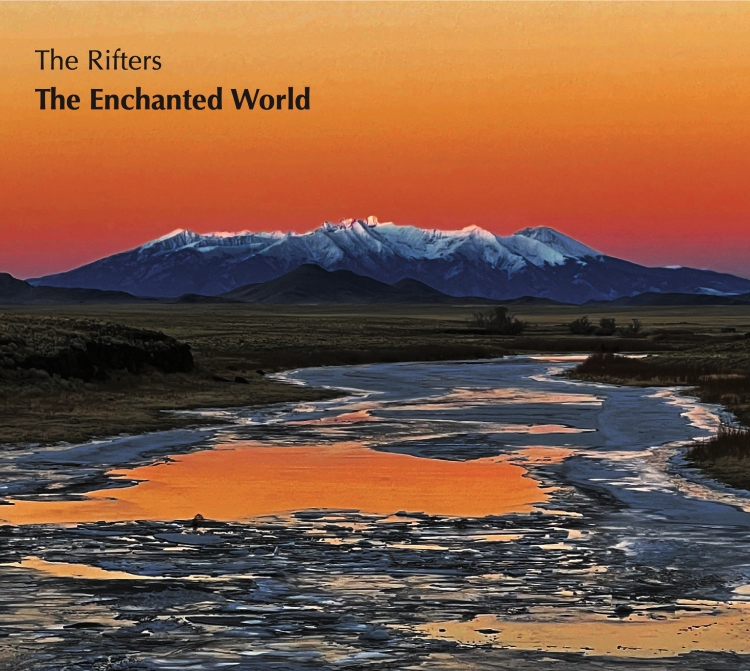
image courtesy of Broken Jukebox Media
“The Circle,” the first song on band’s recent album, The Enchanted World, opens with some attention-grabbing finger-picking that soon progresses to an overall soaring musical style and features a matter-of-fact vocal delivery that signals authenticity. And, with that, this particular, pleasant musical journey with The Rifters has begun.
“The Greatest Mystery,” next, is another standout slower number; then the tempo picks up a little on the third song, the title track.
“The Perfect Dance” is a nifty banjo-pickin’ country dancehall number strung together with clever phrasing in both the lyrics and the music.
“It’s Cause You Lived” follows, an ode to aging with a very soft seventies pop-country styled soundbed. It’s followed by a more uptempo “At the Foot of the Mountain,” a song that makes me think a little of John Denver’s “Country Roads,” with smooth vocals but supporting instrumentation that’s bit more rustic and elicits mental imagery more befitting of an episode of The Waltons.
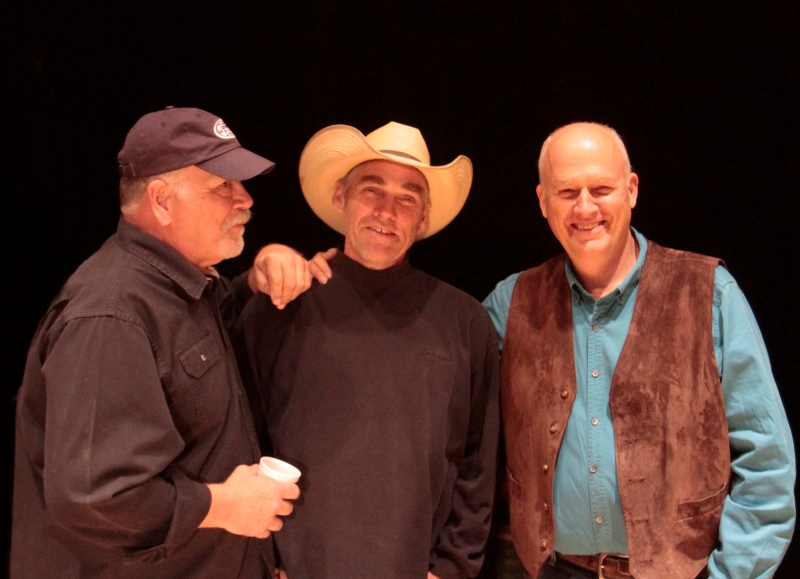
photo by Jim Cox; photo courtesy of Broken Jukebox Media
“The Dollar Worth of Mother Earth” follows, earnestly and tunefully calling for humans to take better care of nature. Indeed, there’s nothing more “western” than a cultural connection to the land, caring about leaving nature unspoiled, taking care of the earth, taking our stewardship of mother earth seriously. In this case, the song is, lyrically, a bit of an apology from a generation that created this mess to those that follow, urging action.
I like that such a heavy song is followed by the playful “Tres Peis,” cheerfully honoring a friend’s joyful three-legged dog, before the Rifters slow things down with “The Wonder of You,” a song whose musical arrangement and performance make it seem like something you’d slow dance to during a barn dance.
Next up is one of my favorite songs on the disc, surprisingly one of the few this trio didn’t pen themselves, a cover of “Nothing is Free,” originally written and recorded by Moors & McCumber. The Rifters’ performance is something special, with prominent string bass and fiddle parts providing the ideal soundbed for Rod’s vocal delivery.
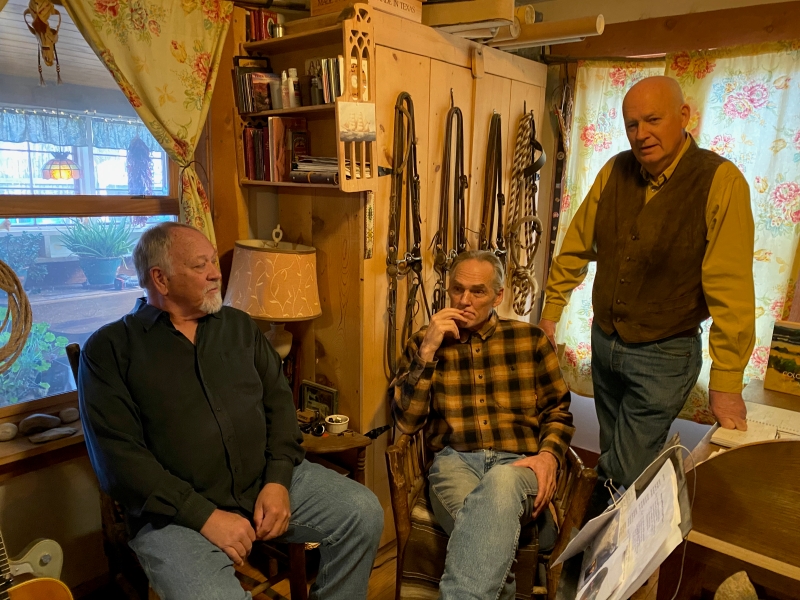
photo by Teri McCartney; photo courtesy of Broken Jukebox Media
“That Lucky Old Sun,” a 1949 number one hit for Frankie Lane, is delivered by the Rifters as an engaging pretty-slow song performed with an old-fashioned, stripped-down delivery.
“So Many Different Things” is sneaky brilliant, as it reveals over a few very careful listens. It has a more uptempo delivery again, an uplift from the prior track; it doesn’t quite have the energy of “Nothing is Free” but is still one of the more moderately energetic songs in the collection. The vocals are simultaneously light and earnest. The violin also touches upon playfulness but with a tone that isn’t convincingly cheerful. In the end, the song musically portrays exceptionally well the weight of the world while still being hopeful and perhaps a bit defiant.
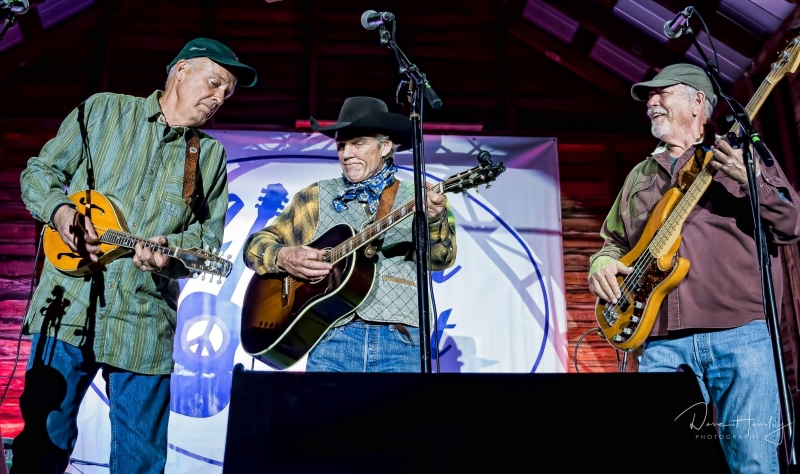
photo by Dave Hensley; photo courtesy of Broken Jukebox Media
“At the Rail,” next, is more unapologetically dark. Rod’s deep vocals are so deep and booming they’re nearly Johnny Cash-esque. The instrumentation is relatively simple – acoustic guitar, bass, and accordion – and the musical arrangement is sparse, with the instruments providing just the necessary support for the vocals.
The Rifters close The Enchanted World with a fun rendition of “Gentle on My Mind.” I’m most familiar with the Glen Campbell version. Of course, it was originally written and performed, with success, by John Hartford. The most recent band to find success with “Gentle on My Mind” was the Band Perry just a few years ago. Well, the Rifters’ outstanding rendition, with the assistance of Pete Wernick’s energetic banjo playing, sounds like a concert-ending song – or perhaps a bar-closing number – sending you home with a smile. You don’t have to go home, but you can’t stay here. However, since this is an album, you can go back to song number one and play it again.
 Geoff Wilbur's Music Blog