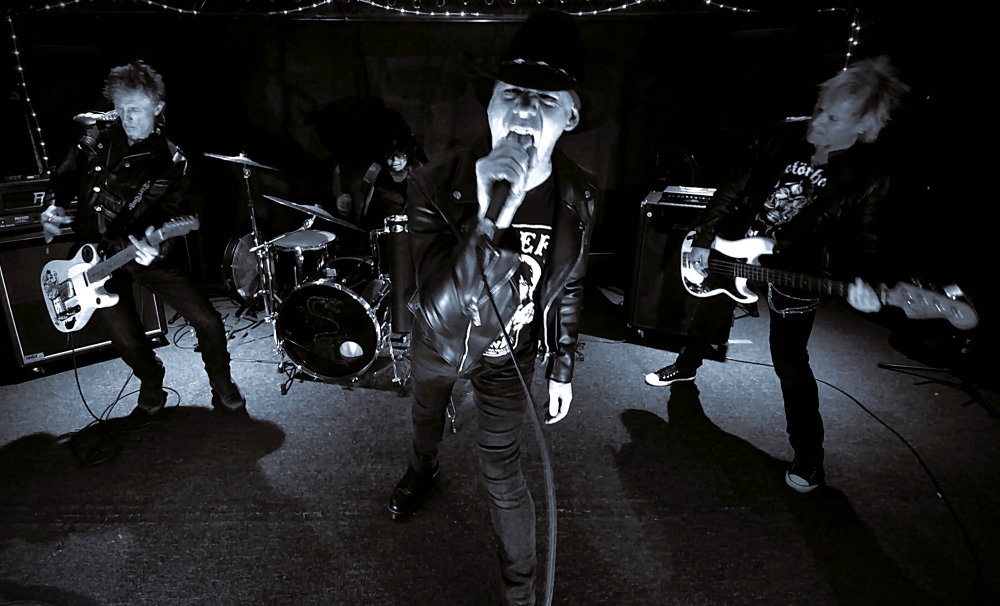

Single Reviews: Lovina Falls – “Tragedy” and “Ellery Way”

Lovina Falls

photo by Joan Hathaway; photo courtesy of Knyvet

Single Reviews of Lovina Falls: “Tragedy” and “Ellery Way”

Lovina Falls is dubbed in its promo material as art-rock. I can’t argue with that. The band’s overall sound, at least on this pair of singles, has that a bit of that floating ’80s new wave musical vibe – for some reason, I think of ABC a little. But I almost don’t want to mention them for fear of scaring off the most likely batch of fans because Lovina Falls’ music comes from a denser, heavier, more modern rock perspective and, aside from the floatiness, has a completely different sound.
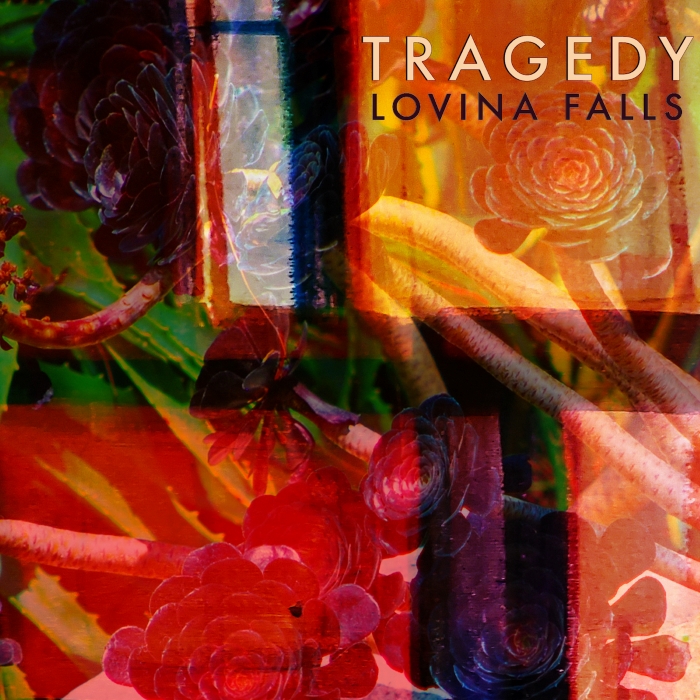
Lovina Falls – "Tragedy" cover art

artwork by Valerie Forgione; image courtesy of Knyvet

Lovina Falls is the current project from ex-Mistle Thrush-er Valerie Forgione (vocals, multiple instruments and sounds). Forgione’s band on “Tragedy” is comprised of Todd Demma (drums), Scott Patalano (guitar), and David Minehan (guitar and bass), while on “Ellery Way” she is joined by Brenden Cobb (guitar), Matthew Klain (bass), and Todd Demma (drums), with David Minehan co-producing. These exceptional musical collaborations produce a rich, powerful sound.

“Tragedy” kicks off with that floating aura I referred to in the first paragraph but with a heavy beat and a buzzy soundbed before building into a decent-tempo thumping rock song. It’s not ’til nearly the song’s midpoint that its raw energy starts to take the lead, but after that it just seems to build. Talk about drawing a listener in! You’ve gotta believe this would be just as effective in a live performance. I can almost envision “Tragedy” being performed in a setting like the early ’90s Rat in Kenmore Square, though despite the electric, uniquely edgy energy, there are some sounds in “Tragedy” that are a bit too modern to have quite fit in that era.
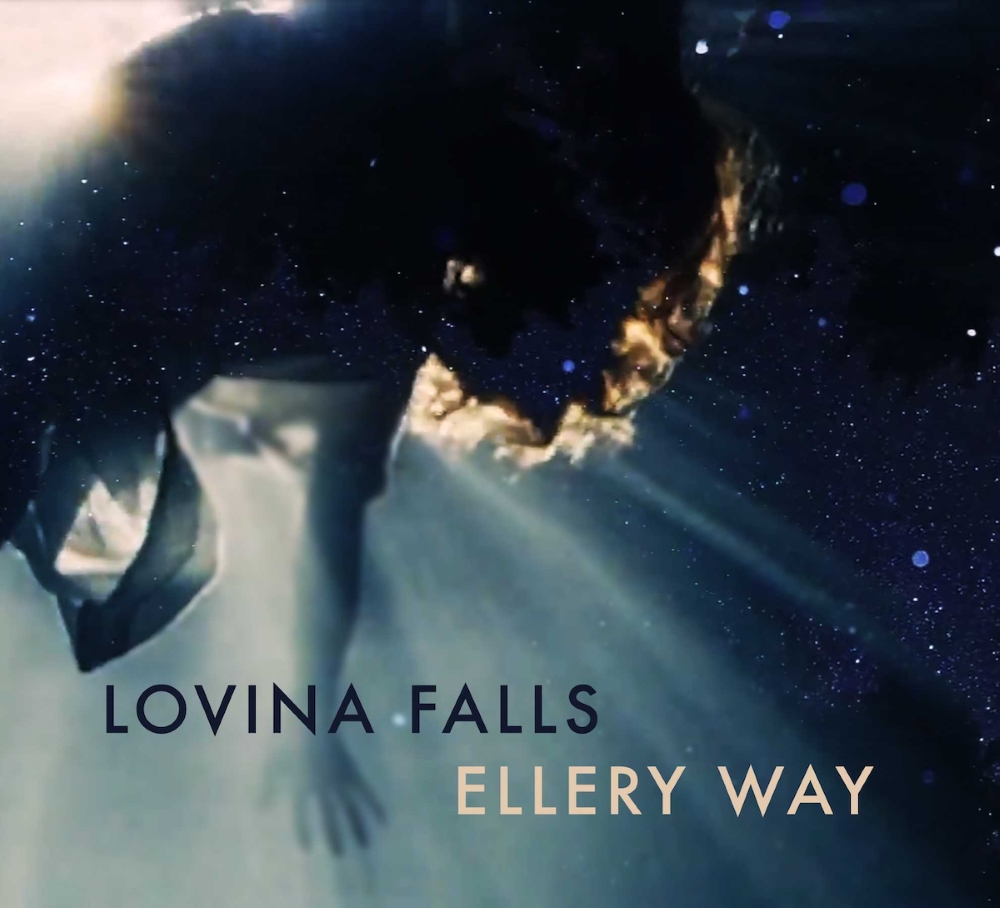
Lovina Falls – "Ellery Way" cover art

image credit: Spencer Frost; image courtesy of Knyvet

“Ellery Way,” on the other hand, haunts from the beginning. You know somethin’ just ain’t right while listening to this song, but the music is too hypnotic to be able to focus on the lyrics enough to really follow them. And that’s probably a good thing, allowing you to avoid focusing on them unless you really want to. Musically, an electronic buzz combines with a steady rhythm and Forgione’s powerful, emotively edgy-yet-smooth vocal delivery to create an all-encompassing, atmospheric alt-rock-ish musical mural. And yes, you’ll find yourself singing along with “Ellery Way is just as different by day when I walk with you.”

These singles were follow-ups to Lovina Falls’ 2023 debut album Calculating the Angle of Our Descent. And, though I’ve not delved into that album, the two songs I’ve reviewed here are enough to convince me that a Lovina Falls live set is likely to be an enrapturing, fully immersive event. As hard as the music is to describe, it’s likely to appeal to fans of any flavor of rock music from straight-up rock to alt-rock to electronic rock, especially if you’re drawn to great songs.
 

Single Review: Preston Lydotes – “Wrong”

Single Review of Preston Lydotes: “Wrong”

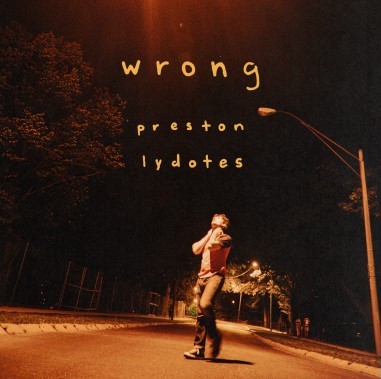
Preston Lydotes – "Wrong" cover art

image courtesy of Preston Lydotes

Boston-based singer-songwriter Preston Lydotes delivers a powerful and tuneful message in “Wrong.”

The song, a mea culpa for mistakes made, starts softly, confessionally, with simple acoustic guitar plucking and a vulnerable vocal that seems to crack a lot more than it really does – there’s really only one spot that goes beyond just a hint. That’s the sign of a talented vocalist.

As the song continues, the power builds along with the richness of the soundbed and the volume and fullness of the vocals, producing a solid emotional lump in the listener’s throat by the midpoint of the song.

Preston Lydotes

photo courtesy of Preston Lydotes

In total, this is an exceptional single, despite its relatively simple instrumentation – or perhaps because of it. If you don’t get emotional while listening to “Wrong,” you’re at least somewhat heartless. And yet, whether or not you enjoy getting all emotional, you’ll agree “Wrong” is a must-hear.

Before and After

“Wrong,” released this past fall, was the first release following Lydotes’ 2023 EP Is There Anyone? More recently, per his bandcamp page, the singer-songwriter has dropped “The Fallout” (December 2024), “The Critic in Me” (January 2025), and “5 to 9” (April 2025). Just a quick listen to some of those records, and you’ll realize Lydotes covers a lot of musical ground, often much more energetically than on the very emotional “Wrong.” I’ve seen him dubbed a folk/pop-rock singer-songwriter. I’d advise considering that to be inclusive of folk, pop, and rock rather than a specific sound mixing the genres. This dude’s got range!

Single Reviews: Lucas Horne – “Secret” and “When Did the Sun”

Lucas Horne

photo courtesy of Groot PR

Single Reviews of Lucas Horne: “Secret” and “When Did the Sun”

“Secret” and “When Did the Sun,” the first two singles released in advance of Lucas Horne‘s 2024 album Seventeen, showcase an impressive range for big-sound pop-rock vocalist Horne.

“Secret” begins tunefully, with a straight-up pop storytelling delivery that continues through the verses. The bridge and the chorus, though, with the “hey, oh! oh! oh!” background vocal, ratchet up the energy level. Most people would likely just bop their head to the higher-energy beat and/or sing along, but I could see more energetic fans potentially pogoing to it at a live gig. Regardless, this is a very cool song that’ll get stuck in your head and live alongside much more famous pop anthems.

Lucas Horne

photo courtesy of Groot PR

On “When Did the Sun,” meanwhile, Horne slows things down a bit, displaying versatility. Equally pop-worthy, but this time a painfully heartfelt ballad. It’s smooth, emotional, and easy to listen to, atop a warm, rich soundbed, with nifty soft-pop/rock guitarwork from time to time, particularly in the closing fade-out.

Pop/rock and slower pop, both with enough of a rock edge to reach a broad audience but not so much as to scare aware more pure pop fans… Lucas has the range and the talent. And if you’ve not yet heard of him, these two songs are a great introduction.

More Recently

Since the release of Seventeen, the album that featured both “Secret” and “When Did the Sun,” Lucas has dropped several more singles, which you can find on his Spotify page. There are more than enough for another EP, so for those of you who like your music in multi-song bundles… well, I don’t know if there are plans to do that, but you can always bundle them yourself.

Album Review: Anthony Geraci – Tears in My Eyes

Anthony Geraci promo photo

photo by Marilyn Stringer; photo courtesy of Anthony Geraci

Album Review of Anthony Geraci – Tears in My Eyes (Blue Heart Records)

I love a good blues piano player, and Anthony Geraci is one of the best. Tears in My Eyes is Geraci’s second release on Blue Heart Records. On this record, Geraci is joined by guitarist Barrett Anderson, bassist Paul Loranger, and drummers Marty Richards and Kurt Kalker. Vocals are most often handled by Sugar Ray Norcia. And Mario Perrett (saxophone), Drew Davies (saxophone), and Anne Harris (violin) all make appearances, rounding out Geraci’s all-star line-up.

Geraci’s rolling keywork and Norcia’s gruff, enthusiastically downtrodden, steady vocals drive album-opening “Broken Mirror, Broken Mirror,” a perfect introduction to this soulful blues record.

Peppy instrumental “Owl’s Nest” follows, with a groovy, hip rhythm supporting Geraci’s adept keywork and Davies’ prominent saxophone. It’s very likely my favorite instrumental on this album, feeling more jazzy than blue, as Tears in My Eyes showcases its musical breadth.

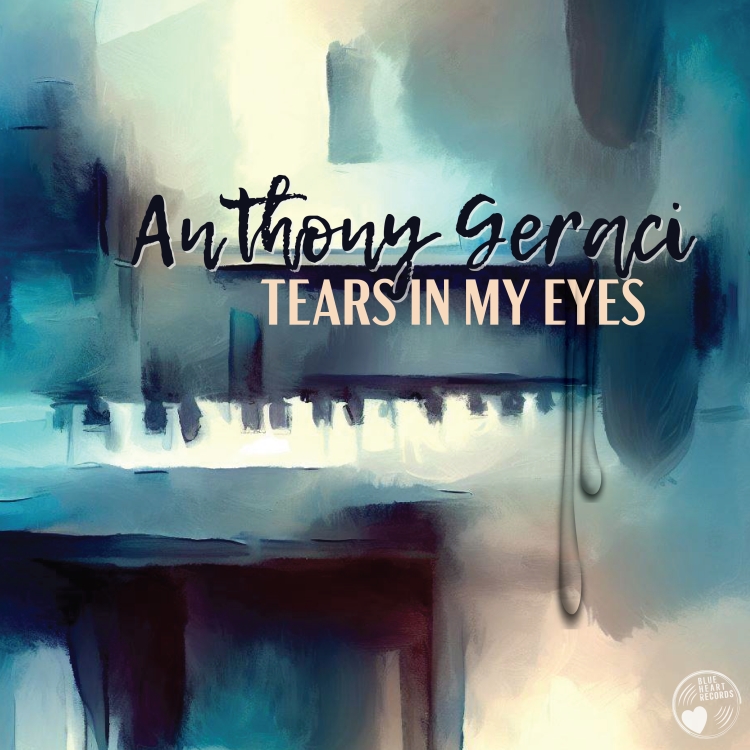
Anthony Geraci – Tears in My Eyes album cover

image courtesy of Blind Raccoon

The title track is up third on this record. Barrett Anderson handles the vocals on “Tears in My Eyes”; his tone blends well with Geraci’s energetic ivorywork and, in a couple of spots, with Anderson’s own small guitar runs. “Tears in My Eyes” is mainstream enough to fit well on adult contemporary radio alongside soft rock songs, perhaps alongside one of Chicago’s hits or even, with a nod to the guitar riffs, a softer classic rock number. I’d consider “Tears in My Eyes” to be the most likely multi-genre crossover song on this record.

The whole album is solid, and it’s a fun beginning-to-end listen, but I’ll stick to a few of my personal favorites the rest of the way. (Your favorites may differ.)

“Judge Oh Judge” is an interesting standout, with Norcia’s vocal delivery, plentiful saxophone fills, and old-school, traditional pianowork recalls the sort of music you might expect in a Prohibition-era speakeasy. Really cool stuff!

The piano-playing on instrumental “Oh No” reminds me a bit of Blog favorite Bob Malone, with saxophone offering some playful back-and-forths.

Though it’s not an instrumental, the pace and tempo of “Ooeee” is consistent throughout, offering opportunities for the musicians to show off, riffing off the steady rhythm line, and whenever the “ooeee” vocal appears, I could easily hear the audience singing along. It’s a cool song, and I bet it’s a big crowd favorite when performed live.

“Memphis Mist” stands out, as the addition of a violin adds a unique flavor to this instrumental that strolls along like a walk through a quiet cityscape. Perhaps, I guess, that city is supposed to be Memphis in the mist. (I’ve never been to Memphis, so in my mind’s eye I picture New York, walking alongside Central Park.)

After the rollicking, modest-tempoed blues rocker “Witchy Ways,” the album closes with a pair of mellow numbers, “Now What” and “Lonely Country Road Blues,” the latter fully instrumental, to set the listener down with a soft, blue landing.

The musicianship on this record, beginning to end, makes it an enjoyable, easy listen. Blues fans of any ilk should check it out. And, of course, keep an eye out for any opportunity to see Anthony Geraci perform live. From this record, I can tell that the breadth and depth of his pianowork would be mesmerizing in a performance setting.

Album Review: Viruette – Your Lacuna

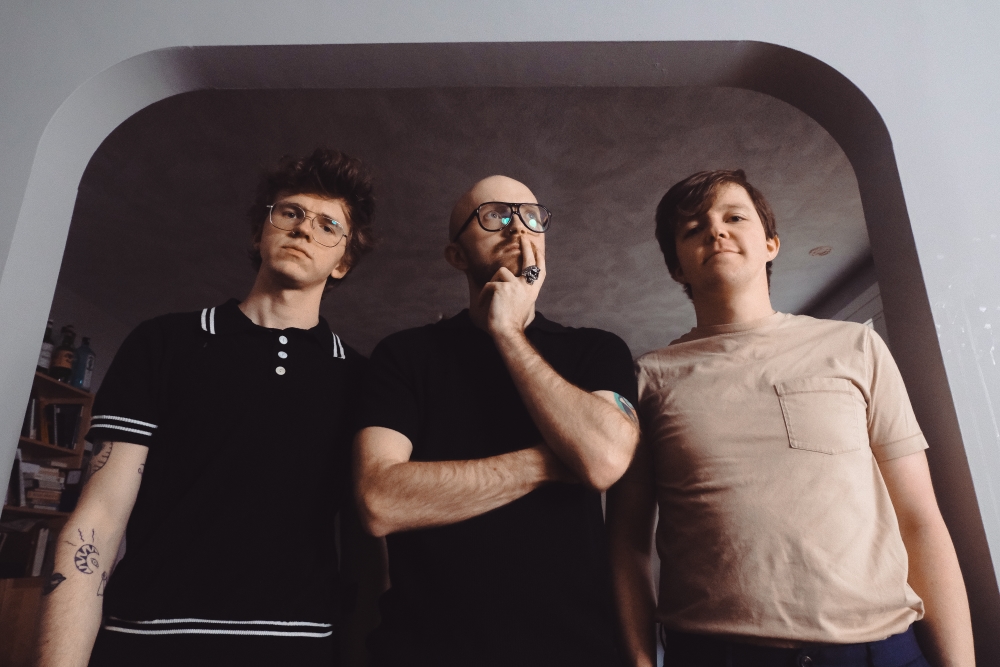
Viruette band photo

photo by Jimmy Del Ponte; photo courtesy of Viruette

Album Review of Viruette: Your Lacuna

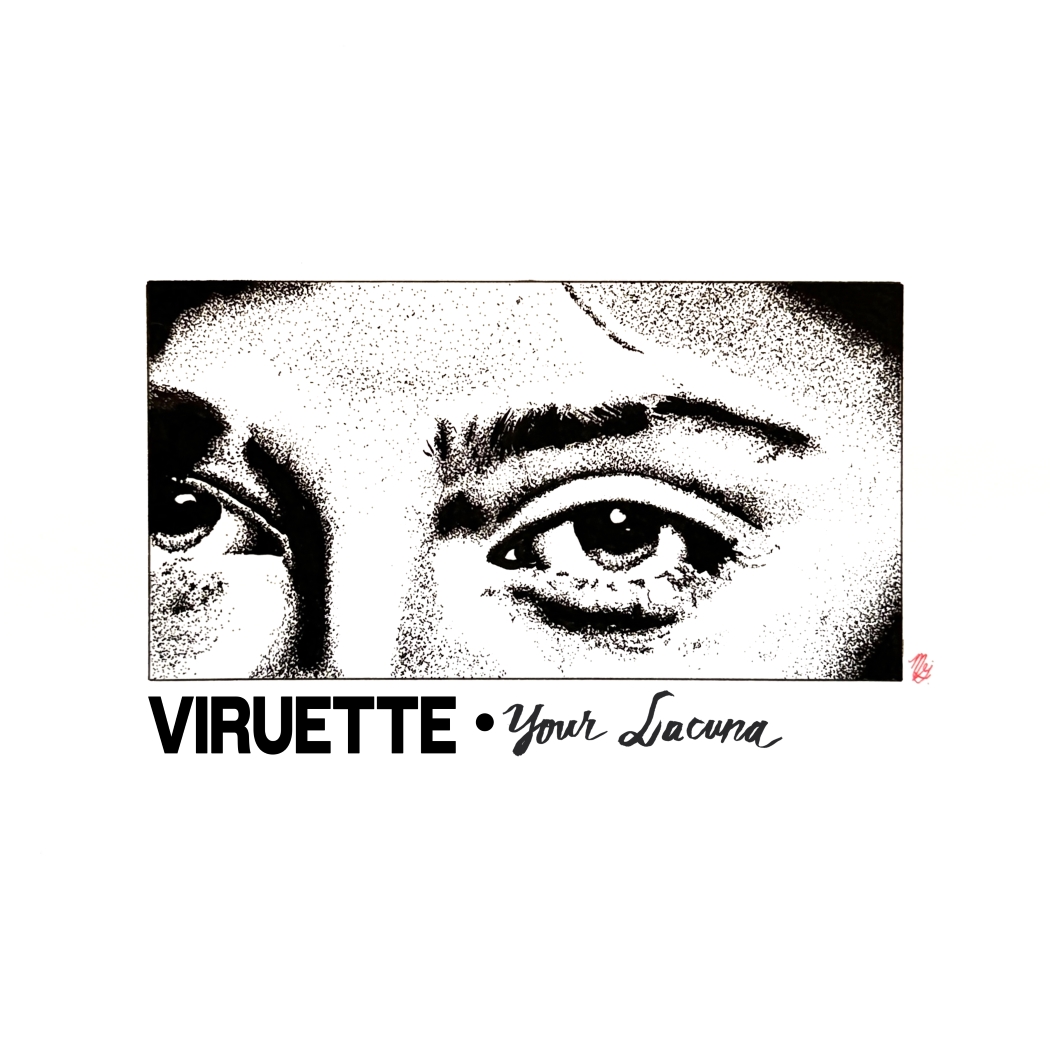
Viruette is a Boston-based indie rock outfit with a very cool, uniquely original sound. I dug into Viruette’s off-kilter delivery last year in my review of the band’s EP Waylaid in Aspic. Well, Your Lacuna is thirteen tracks of offbeat alt-rock uniqueness, allowing Viruette to explore more song formats, vocal patterns, and stylistic influences. It’s a feast for the ears. And hellish to try to describe. (Yeah, um, thanks for that, guys.) Seriously, though, if anyone ever approaches this sound, now I’ll be able to say “well, they sound kind of like Viruette.” So who does Viruette sound like? A little bit of a lot of people but not a lot of anyone. Tuneful, lyric-driven, progressive/experimental alt rock, I suppose. I’m really just trying to avoid repeating what I wrote last year, but what the heck, Viruette’s music is, as I said in my Waylaid in Aspic review, “long form, loosely structured, tunefully-sung musical poetry with an edge.”

Viruette – Your Lacuna album cover

image courtesy of Viruette

Viruette is Harry Bee (vocals/guitar), George Heffernan (bass), and Andrew Ring (drums), with Harry the songwriter for most of the tracks on Your Lacuna, with George also writing a couple songs.

Like a baseball team giving their starters a night off, Viruette uses an opener, the 38-second, mildly floating table-setter “I Bloodied My Fingers,” to kick things off on Your Lacuna.

“You Are the Belletrist” brings on the first real dissonance and frantic vocal delivery, very clearly diving into Viruette’s trademark style, a bit frantic with tempo changes, unique musical interludes, and a raw, frenetic energy.

The first single from this album, “Big Fat Nothing,” one of several favorites in this collection, comes next, featuring one of my favorite lyrical runs, “I vomited twice at Euston and once in bed.” The song’s combination of topics and very-on-brand cadence-driven vocals in which thoughts, lyrical phrases, and vocal phrases are matched up at best randomly… well, that’s what you’ll come to expect and enjoy from Viruette. It makes the band unique and fun to listen to.

“Detach” combines Viruette’s style with a jazz lounge vibe. The press release says bossa nova, which is a great description, but one that escaped me until I read the promo material. I’m guessing this song has the most memorable lyric on Your Lacuna; namely, “You are the best ex-Soviet lesbian I ever met.” Top that!

Viruette band photo

photo by Jimmy Del Ponte; photo courtesy of Viruette

“Something for the Dread II” takes the mood down a bit, but “Faceblind” brings the energy right back up with a really fun mish-mash of lyrics that… well, I’m not gonna turn this review into a collection of my favorite lyrics. Just listen for the lyrics when you hear these songs.

Viruette continues through the rest of the record by altering tempos and moods, with experimental music arrangements and well-placed use of dissonance supporting its creative, lyric-heavy vocal delivery.

Several more favorites populate the back half of the record. For example, there’s the floaty, not quite dreamy “Capture,” which might have the best shot at crossover success with ’80s/’90s mainstream alt-rock fans.

The album’s second single, “Lamenter,” is airier and more jazzy than most songs on the disc but features cool subject matter and a word I actually had to look up. “Threnody.” So much cooler than “lament.” Plus it sort of rhymes with “remedies,” which made it the perfect choice for this song. (If “threnody” starts finding its way into my writing, now, Viruette, it’ll be all your fault!)

“Maimed” is another standout song, probably the one song on the record I sway along with. And I’m now singing along with the lyric “in a recursive way.” Yes, in falsetto, obviously. But the more obvious singalong lyric is “I’m getting maimed again.” Though not entirely standard, the song structure of “Maimed” may be the most straightforward on the record. I know I love Viruette’s uniqueness, but here they prove they could clearly excel at more standard alt-rock fare. (Keep in mind, this would be the least standard song on most of those bands’ records, so “normal” is a relative term.)

“Anhedonia” and “Wrecked Car” close the record, the final two of the thirteen unique songs, with Viruette’s original sound not quite like any other you’ve heard, yet not so far outside musical convention to make it truly alien. In fact, if you’re going to become a Viruette fan, it’s probably because you dig the band’s one-of-a-kind overall sound. It’s interesting from the start, then it grows on you. Plus, beyond just being a cool recorded listen, Viruette’s style suggests an exceptionally fun live show, particularly at a seedier-than-you-might-think college rock venue. Viruette’s Instagram account mentions a couple opportunities to see the band live in the near future. Check ’em out!

Album Review: Cryin’ Out Loud – Play Loud & Smoke Often

Cryin' Out Loud – Play Loud & Smoke Often

image courtesy of Frank Roszak Promotions

Album Review of Cryin’ Out Loud: Play Loud & Smoke Often

This is a good ol’ rowdy, smoky barroom-era rockin’ blues (and bluesy rock) record. On Play Loud & Smoke Often, Cryin’ Out Loud, comprised of Ben Chute (guitar), Brandon Stallard (vocals, guitar), and Jim Fratini (bass, background vocals), welcomes guest appearances from Erik Lawrence (Little Feat), the late, great Paul Nelson (The Paul Nelson Band), and Brooks Milgate (Ana Popovic’s band).

The first three songs kicks things off with some raucous, playful, rockin’ blues energy, letting the listener know this band knows how to create (and enjoy) a good time. Right off the bat, vocalist/songwriter Stallard leaves no doubt about the band’s proclivity with the raucous, fun, rockin’ blues number “I Smoke Cigars and I Play the Blues.” The energy level remains high with “I’m Gonna Drink My Way to Memphis,” at least once the song amps up and gets groovin’. And a swingin’ opening provides a new nuance to the bands style while maintaining the fun energy, as “You Can Dance to the Blues” kicks into groove. Play Loud & Smoke Often, a great record throughout, is front-loaded with electric energy.

Finally, the band slows things down with the methodically thumpin’, slow blues wailer “If You’re Gonna Leave.” Personally, I like the lyric, “When you leave, honey, be sure and take your momma, too.” That’s some downhome blues.

The rest of the disc remains solid and varies a bit more. I won’t name every song to rest of the way; I’ll focus on a few personal favorites. “Unconditionally,” for example, is soft and heartfelt – the only song on this record that doesn’t seem to be at all blues, but rather more like a Southern folk number. However, you can see why it’s on the disc. It’s a sweet song about daddy missing his little girl that’ll put a lump in your throat. “Tell Her” is a blues-based rocker featuring very Bob Seger-styled vocals, with maybe a hint of The Boss, and sporting a pace of delivery that maybe a little Mellencampy. “Moonshine Love” is another cool departure, a more swingin’, ’50s rock-influenced blues number with an almost Joe Cocker-ish edge to the vocals.

Finally, “Time Away From You” closes things with a fun energy, opening with the nifty line “I need a drink. I need a smoke. I need to run around with a girl I don’t know. I need to laugh. I need to sing. I need time away from you, if you know what I mean.” Its moderately-fast tempo and bluesy lyrical snark are a great way to end this entertaining record.

Looking Ahead

The “Events” tab of Cryin’ Out Loud’s Facebook page lists numerous shows around Maine throughout the rest of the year. Mainers, this is good news for you. For the rest of us, especially here in New England, it might be worth a trip. I mean, a visit to Maine is always a great idea, but it might be worth wrapping the trip around a Cryin’ Out Loud gig.

Album Review: Edoardo Liberati “Synthetics” Trio – Turning Point

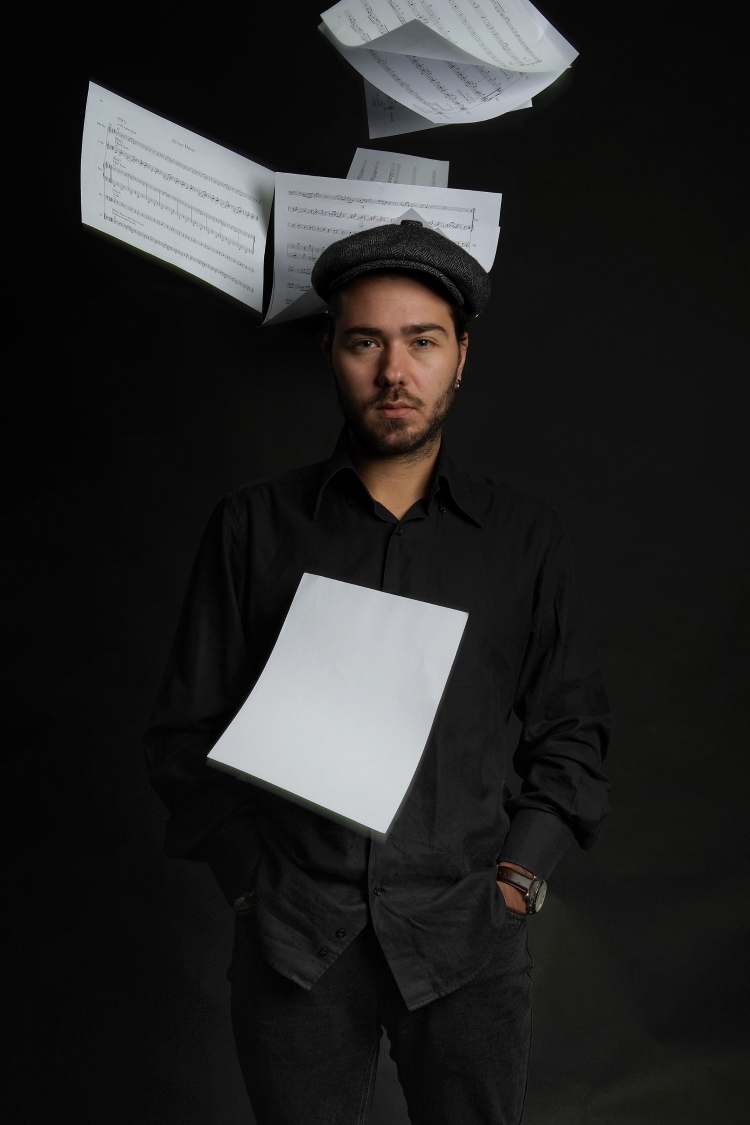
Edoardo Liberati

photo by Pino Donato; photo courtesy of Edoardo Liberati

by Eric Harabadian, Contributing Blogger

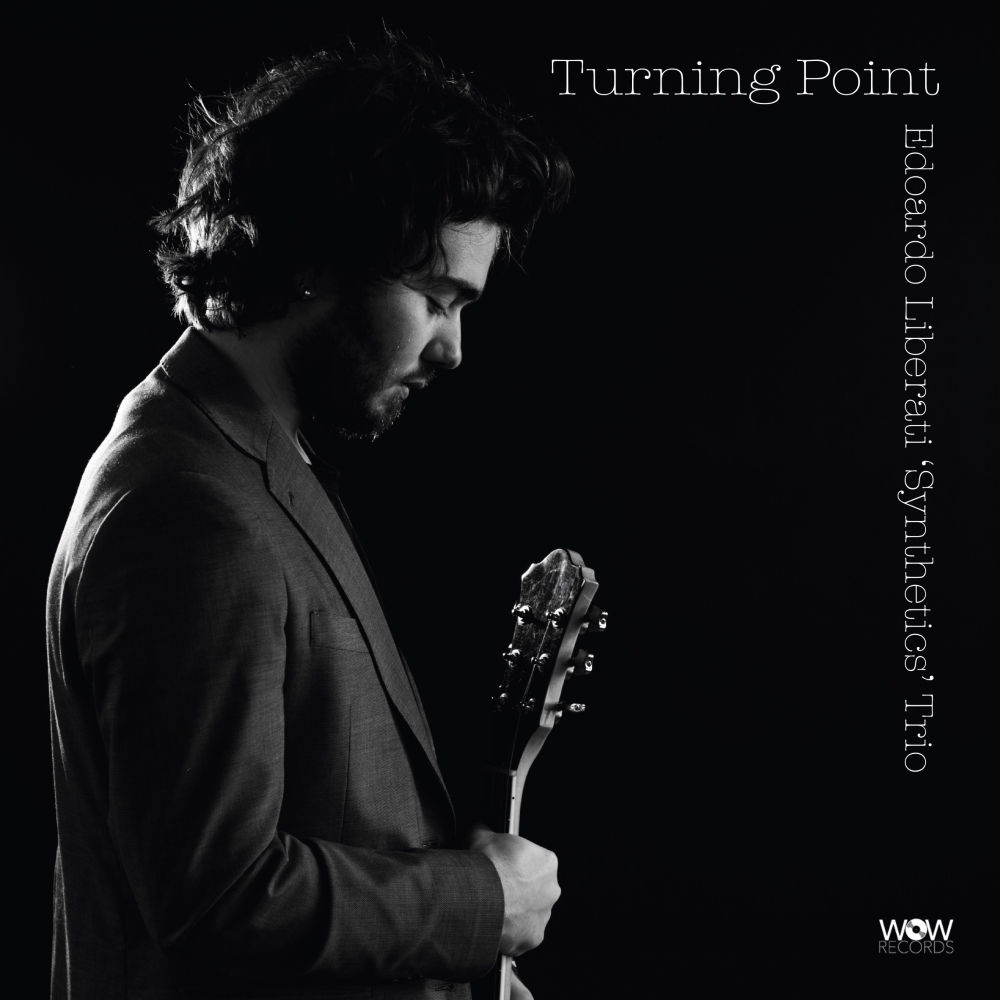
Album Review of Edoardo Liberati “Synthetics” Trio: Turning Point (Wow Records)

Edoardo Liberati is an Italian jazz guitarist extraordinaire who works in a variety of musical mediums. He is an accomplished composer who wrote seven of the nine tunes on this freewheeling and free-flowing trio date. He is joined by Dario Piccioni on double bass and Riccardo Marchese on drums.

Edoardo Liberati "Synthetics" Trio – Turning Point album cover

album cover photo by Pino Donato; photo courtesy of Edoardo Liberati

Stylistically, Liberati is influenced by a mix of classic and modern masters of jazz and improvisational guitar. Everyone from John Scofield and George Benson to Julian Lage and Kenny Burrell seem to rise to the surface when this young burgeoning talent hits the strings.

Upon the first listen to this album, perhaps the trio’s strongest suit is their ability to listen and play off one another. There is simpatico in their relationship where they are tight in their ideas, rapport, and connectivity. These are all the qualities that should be the goals of any successful band. And this group has it in spades. Liberati may be the leader, but they are the “Synthetics” Trio and are a fully functioning unit in every sense of the word.

Edoardo Liberati

photo by Roberto Ceccaroni; photo courtesy of Edoardo Liberati

“Dear Jane” begins the album, with a sweet and delicate melody that sounds like a love letter to someone special. There is plenty of air and space in the way the notes and solos are placed that it allows the listener to truly absorb and take in the enormous beauty this tune has to offer. Overall, the tune has a lilting quality that recalls some of Pat Metheny’s early work. Liberati’s acoustic work is superb and blends nicely, with the light cymbal and snare interplay from Marchese and Piccioni’s bass solo.

“Porcelain” is a rare and surprising addition to the roster. It is a deep cut from Red Hot Chili Peppers’ Californication album, and it gets a respectful and slightly re-harmonized treatment here. Liberati is faithful to the contemplative quality of the song. He pays great attention to each phrase and note within the verse. Both the guitar and bass work in concert and focus on sustain and ambience. The result comes off like a very hip lullaby.

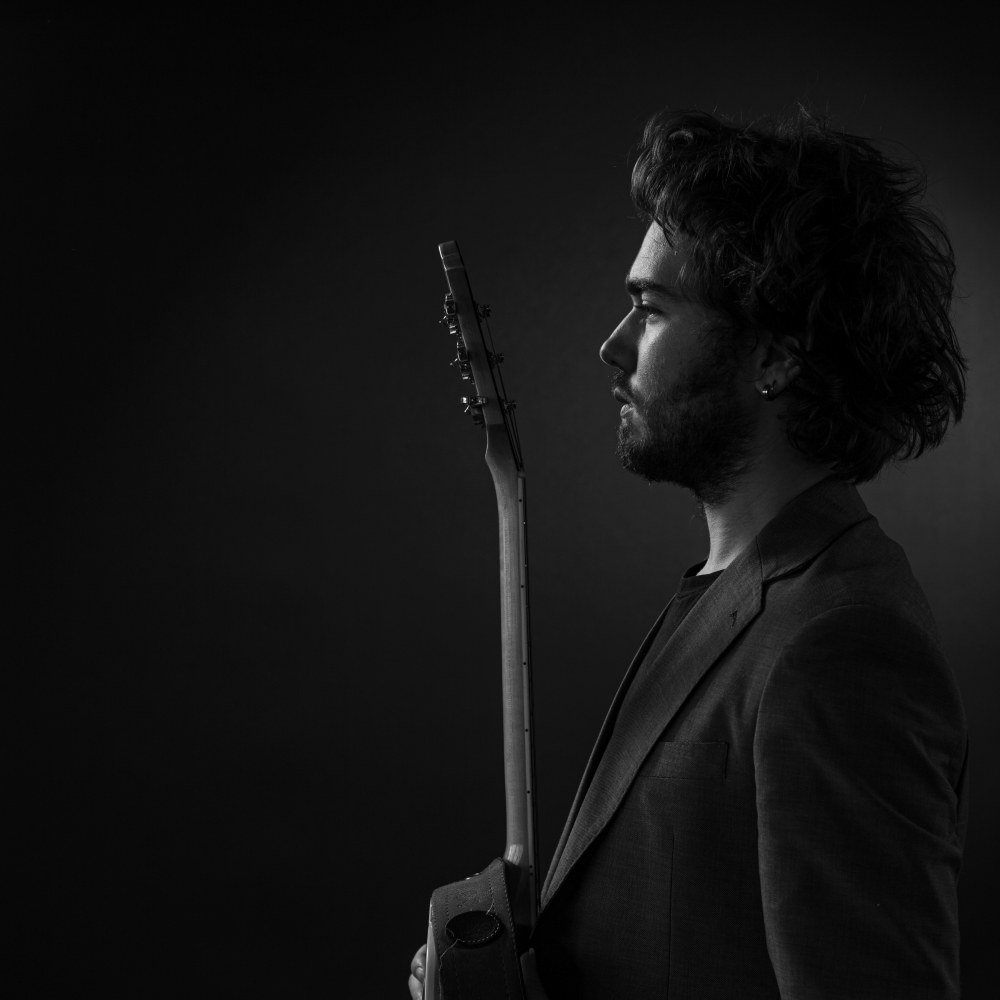
Edoardo Liberati

photo by Pino Donato; photo courtesy of Edoardo Liberati

“One For Uncle John” is dedicated to one of the young guitarist’s heroes, the aforementioned John Scofield. It’s a smooth slice of modern bop, with an asymmetrical feel that bobs and weaves via the subtle rock steady inertia of Piccioni and Marchese’s interplay. Liberati also alters his tone slightly and emits a mild growl and bite to his chords and single note lines.

The stylistic diversity continues on the tune “Apnea.” It’s got a waltz-like time signature and has a very open vibe, not unlike some of John McLaughlin’s Mahavishnu Orchestra or early solo material. The mid-section features beautiful and energetic support from the bass and drums as Liberati works subtle volume swell-induced soundscapes into the mix. It’s a dreamy head trip of a journey.

The trio goes for a traditional jazz feel, with the title track, “Turning Point.” Upon the first downbeat, what captures your ear right away is Marchese’s lithe snare brush work. He delicately stirs it up and lays the groundwork for Liberati’s wonderful Pat Martino-like lyricism. Once that’s established, Liberati takes the first solo, which features a deft and thoroughly engaging blend of modal flourishes and dazzling intervallic leaps. When he passes the solo baton to Piccioni he provides ample space, with open chords and light anchor notes.

Edoardo Liberati

photo by Roberto Ceccaroni; photo courtesy of Edoardo Liberati

Inspired by the great George Benson, Liberati performs a solo guitar version of the Hoagy Carmichael classic “Stardust.” It’s a lovely and serene adaptation that finds the ambitious axe man weaving in and out of the traditional structure of the song, yet retaining its integrity along the way. “Another Story” tells another tale in regard to the “Synthetics” Trio. Seemingly built on some atonal-like chord changes , a musical dialogue is created between, first guitar and drums, and then guitar and bass. They each trade solos back and forth. As the tune builds, so does the intensity of the interplay. It’s probably one of the more “out there” tunes on the album.

Again, within the context of the trio setting, Liberati leads this group through folk and country-type waters on the track “Small House.” The guitarist goes acoustic here and, even, takes on a gypsy Django Reinhart-like quality in his phrasing and tone. Marchese employs the brushes while Piccioni digs in, with a muscular edge. It almost kind of bookends the album, with that touch of lightness found in “Dear Jane.”

Edoardo Liberati

photo by Roberto Ceccaroni; photo courtesy of Edoardo Liberati

They conclude, with the lively and uptempo “Round Town.” There is a decidedly gritty veneer to the guitarist’s tone. It’s a tad brighter and the chords sharper, as the melody ascends and descends at a moderately brisk pace. The drums and bass follow in kind, and the tune crescendos in a no holds barred vamp.

Edoardo Liberati “Synthetics” Trio is doing some amazing things in the name of modern jazz and improvisational music. They can take contemporary rock/pop or traditional fare and craft it to suit their collective and expansive vision. Liberati and company deserve all the accolades they have received thus far. They are truly taking instrumental music into exciting new directions.

Where to Follow Edoardo

You can find Edoardo online at his website. You can also stay up-to-date with his latest goings-on by following him on Facebook or Instagram.

Single Review: D.C. Anderson – “No Kings Live Here”

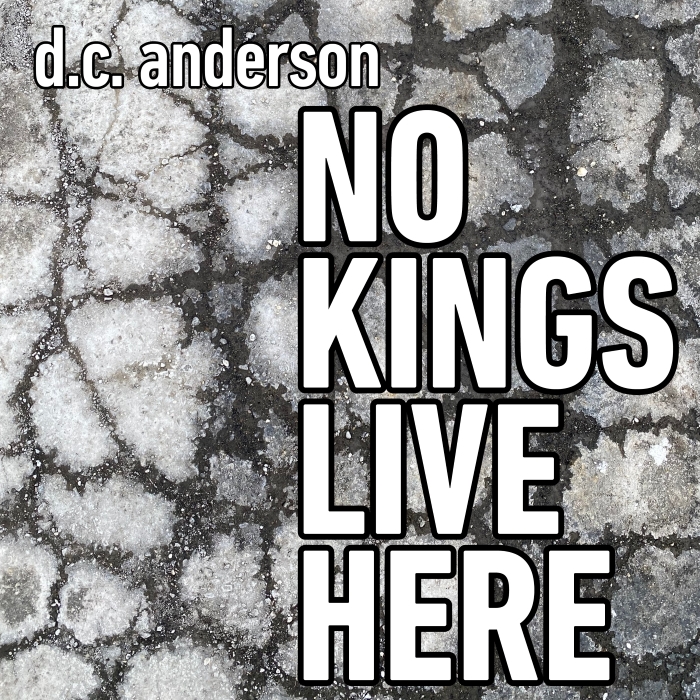
D.C. Anderson – "No Kings Live Here" cover art

image courtesy of D.C. Anderson

Single Review of D.C. Anderson: “No Kings Live Here”

This timely single, D.C. Anderson‘s “No Kings Live Here,” was released on April 4, the day before the “Hands Off” protests occurred in 1,000 cities across the U.S. It would have made an ideal song for the events, if those in attendance knew about it. But it can serve as a reminder and a rallying cry for those who attended.

I’ve seen social media posts, like this one, asking where all the protest songs are. Well, this is one. D.C. notes that “No Kings Live Here” was inspired by the t-shirt U.S. Representative Maxwell Alejandro Frost wore at this year’s U.S. State of the Union address.

On this song, Gantt Kushner mans the guitar, while D.C. sings. D.C.’s delivery, as is his style, is very theatrical. You’d almost wonder if, in addition to being a singer-songwriter, maybe he’s also a highly-regarded stage and screen actor or something. “No Kings Live Here” is delivered enthusiastically, in such a way that it seems as if D.C. is leading a singalong. And that, my friends, is what makes it a good protest song.

Lyrically, the song is a little word-dense, and its storytelling style – really more of a combination of teaching and fact-proclaiming in addition to storytelling – is along the lines of Schoolhouse Rock. Remember the one about how a bill becomes a law? OK, maybe it doesn’t sound like that. But “No Kings Live Here” would still make an entertainingly educational soundtrack for a Schoolhouse Rock cartoon.

Lyrics in the song include “The man who would be king has put democracy on pause. The man who would be king thinks he’s above our U.S. laws” and various versions of the chorus such as “No kings live here. No tyranny, no fear. No kings live here. The Constitution’s clear.” And “No kings live here. We do not serve him whim. No kings live here. We will not bow to him!”

But hey, check it out for yourself. You can watch the lyric video here on Vimeo if you want to learn the song. It’s also handy if you want to sing along while listening. If you’ve been searching for a modern-day protest song, this might just be what you’re looking for.

Album Review: Dirtbag Republic – Bad Decisions

Dirtbag Republic

photo courtesy of Dirtbag Republic

Album Review of Dirtbag Republic: Bad Decisions

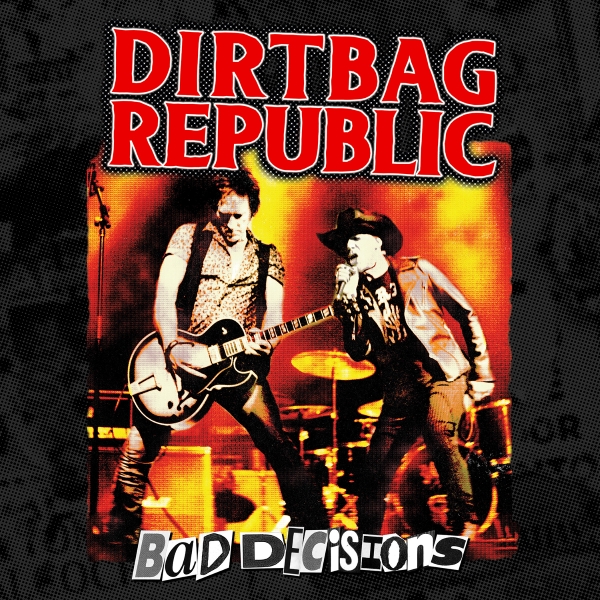
On the heels of the instant classic Tear Down Your Idols, Dirtbag Republic returns with the band’s fourth studio album, Bad Decisions, a new collection of raw, rowdy, unrepentant rock ‘n roll songs pandering to fans of cleverly-phrased, energetic, filthy-catchy anthems. Recalling the early-eighties Sunset Strip bands whose gritty demos belied their mammoth hooks and blistering axework, Dirtbag Republic is energetically raucous, and this album is like a slow-moving virus. Slowly, as your battered brain begins to adept to the album’s fast pace and the music sheen of white noise, it discovers an album of soon-to-be favorites. If I had to pick a band to compare them to, Hanoi Rocks would come closest, but these guys are Dirtbag originals.

The album kicks off the a jangly dirty-glam rock guitar riff before Sandy Hazard’s inimitable voice – a tuneful, rough-hewn, does-he-gargle-razor-blades?-tinged classic rock wail – takes over, and by the end of the song you’re singing along with “I don’t care about nothin’.” And, like most of the disc, the music elicits the sound and feel of the sort of dark, sticky live music clubs that smell like flop sweat and desperation, places where all the best nights of your young life happened.

Dirtbag Republic – Bad Decisions album cover

image courtesy of Dirtbag Republic

One of the coolest things about these guys – and I’ve gotta go here in part because there are only so many ways to describe fun, raucous, guitar-driven rock songs – are the songs’ lyrics. Someone here is a songwriting savant. Sure, some song titles give it away – for example, you know you’ll soon be singing along with the title lyrics of turn-it-to-ten, energetic “Bipolar Rollercoaster” – and others sound interesting (“Streetlight Parasite”) while the memorable lyrics are thematically title-adjacent, but sometimes the coolest lyrics – and the ideal sonic and vocal deliveries – come in less obvious locations.

“I Fought Them All,” for example, amid its fast-driving tempo and relatively blistering, attention-grabbing, late-song axework, and what you think is going to be the singalong title lyric, “I fought them all, I fought them all,” sneaks in surprisingly clever elocutive riffs like “Beatdown a-comin’, don’t stop a-runnin’. It’s up to you, my friend. Bitchslap a-comin’ don’t stop a-runnin'” and the Mr. T-esque “you think you’re better than me, fool.” Yeah, I know. It’s not just the lyrics; it’s also the delivery.

And on dive-bar anthem “Bad Decisions,” the band paints a vivid picture with the lyrics “I’m warning you lady, I know you’re on a mission. Don’t come any closer, you smell like bad decisions” supported by the appropriate steady, thumping drum beat, jangly guitar riffs, and grizzly vocal tone. Again, the well-oiled, favorite dive-bar sound makes sense… and, in this case, scents. Well, OK, I guess mabye that one is title-adjacent.

Dirtbag Republic

photo courtesy of Dirtbag Republic

But I think my favorite lyric, certainly of the last year and quite possibly of the decade, comes in “Hard in the City.” Compared with the other songs here, there’s a bluesier, blues-rock edge right from the start. But the sneakiest favorite lyric is hiding in plain sight in the chorus: “Raining hard down in the city, washing away the piss and despair…” Yes, that’s right. Now try not thinking of that lyric whenever you’re in a city in the rain. Makes me think of Paris. Fondly.

Of course, it’s not all about the lyrics. Even without the clever wordsmithing, Bad Decisions would be a fun favorite record. And it’s not all an adrenaline ride. Dirtbag Republic can take it down a notch, too, though they rarely do. However, this disc contains one of those classic open-space songs – is that organ in there? – “Here I Am,” replete with a Billy Joel-ish late-song keys solo and some lyrical runs that remind me a little of Blog favorite rockabilly-ish alt-country singer Adam Lee.

The album’s penultimate track, “Cocaine Heart,” digs a little deeper and channels a little more ’70s classic rock energy. And it’s followed by energetic disc-ender, “Light Your Fuse,” with a tempo that’ll get your blood pumping.

So yeah, Bad Decisions is yet another instant-classic record from Dirtbag Republic. The production and delivery are a little rawer than I typically favor, which causes my listening habits to recall the first time I heard Dirtbag Republic. The music grows on me slowly, with the sneaky hooks slowly digging in, and by a few listens, I can’t imagine these catchy songs – so many of them new favorites at this point – being performed any other way. Give these guys a listen. You’ll probably love the whole album like I do. But for sure you’ll at least find a couple new favorite tunes.

Album Review: Sado-Domestics – Camouflage: Stories by T.J. Gerlach

Sado-Domestics band photo

photo courtesy of the Sado-Domestics

by Eric Harabadian, Contributing Blogger

Album Review of Sado-Domestics – Camouflage: Stories by T.J. Gerlach

Sado-Domestics – Camouflage: Stories by T.J. Gerlach album cover

image courtesy of the Sado-Domestics

Sado-Domestics are a Boston-based collective of singer-songwriters and instrumentalists that draw from heavy folk, blues, pop, rock and Americana roots. Chris Gleason and Lucy Martinez lead the charge vocally and composition-wise. They are joined by Jimmy Ryan on mandolin, Eric Royer on pedal steel, Jim Gray on bass, and Jeff Allison on drums.

The band has a series of releases out, with their latest being based on fictional short stories by author T.J. Gerlach. All the songs on this album were inspired by Gerlach’s process of “die-cut” word play. The author would take significant words from various other authors’ books he admired and create his original nuggets of fiction derived from snippets of borrowed words. Hence, Gleason and Martinez employed that same approach to the songs. The result creates a world that resides somewhere between the literal and the impressionistic.

Sado-Domestics

photo courtesy of the Sado-Domestics

The dozen songs here feature the exquisite harmonies of Gleason and Martinez where the stories are right up front and the band totally supports the message in subtle and nuanced reflection. Songs like “Dusk” and “Shale” run the emotional and musical gamut from ambient, tuneful and melodic to a slow burning country feel, with Royer’s tasty pedal steel work running throughout.

Martinez simply shines on the song “Hands.” It features a crisp and brisk mid-tempo rock feel. “Shades” ushers in brilliant harmonies from Martinez and Gleason. Ryan’s mandolin and all the other elements converge to give this one a decidedly Celtic and bluegrass intent. “Phantom Punch” sounds like it could be an outtake from a latter day Byrds or Little Feat record.

Sado-Domestics

photo courtesy of the Sado-Domestics

Other tracks that seem to jump out and emotionally grab you in multiple ways are the dreamy ambience of “Corridor,” the traditional country lilt of “Deep Blue,” the melodic alternative and sparse rhythms coupled with angelic vocals that define “Photographs,” the lackluster Tom Waits-like “Everyone is From the Past,” and the slightly experimental and eerie, yet melodic “Apocalypse.”

Camouflage is a great listen and should appeal to fans that appreciate all facets of Americana music and its offshoots. But, lyrically, it differs from other albums in the Sado-Domestics’ catalog in that they base all their concepts on Gerlach’s somewhat unorthodox methods to storytelling. However, kudos go to the brain-trust of Gleason and Martinez.  As primary songwriters they chose to go off script in a fresh and creative direction. Some of the songs may seem obtuse or obscure, but they are so worth the emotional investment.

More Recently

Since the release of Camouflage, the Sado-Domestics have released three more singles – “Big Cat,” “Good Day,” and “Chancer” – which can all be found on the “Music” page of the band’s website.

Sado-Domestics band photo

photo by Jenny Jarrad; photo courtesy of the Sado-Domestics

Looking Ahead

You can find several upcoming performances on the “Shows” page of the Sado-Domestics’ website. (Notice that you should click “Next” at the bottom of the list of shows to see additional dates.) There are several shows listed above and beyond the “Second Sundays” shows at the Square Root in Roslindale, MA.