Single Review: Stonetrip – “Fame”

photo courtesy of BJF Media

Single Review of Stonetrip: “Fame” (Golden Robot Records)

Melbourne rockers Stonetrip are Mark Ritchie (vocals), Mick Malusa (guitars), Sebastian Barahona (bass), Simon Croft (guitars), and Brett Spicer (drums). The band’s latest hard-rocking single, “Fame,” just dropped a few weeks ago. And from its opening lyrics, you immediately know it’s not a song celebrating “Fame.” The song begins, “You don’t want for anything that doesn’t give you fashion or fame. You showed me your true colors when you tainted me with your stain.” Well!

image courtesy of BJF Media

Musically, you may notice just a hint of “Sweet Emotion” in the opening riff, but that’s the last you’ll think of Aerosmith, at least as a comparison, though stylistically Stonetrip would be a good tour pairing with just about any classic rock act. After the opening riff, the song quickly evolves into a raucous, slightly Southern rock-seasoned, guitar-driven, classic hard rock number. There’s a sidewinding bluesy element in the guitarwork atop a strong, though not exactly straight-ahead, drum beat. No the drumming’s a lot more interesting than that, even as the rhythm section relentlessly drives the song forward. It’s also worth noting a late-song guitar solo that’ll appeal to fans of nifty axework. Throughout, the vocals are rough-hewn, pure old-school rock vocals, with a tunefulness just barely tempers the intensity. In all, this is just a damn good classic rock/metal-influenced hard rock song with just enough of a hook in the guitarwork and vocals to make it memorable.

Hard-rockers, this is a song you should hear, particularly if your tastes favor classic rock and/or classic Southern rock influences.

Single Review: Lars Behrenroth – “Deep Ocean”

image courtesy of Deeper Shades Recordings

Single Review of Lars Behrenroth: “Deep Ocean” (Deeper Shades Recordings)

Every so often, so house music comes across my desk that’s exceptionally cool. Something that can be appreciated beyond just core house music fandom because it has elements than can appeal to more traditional music fans, as well. Lars Behrenroth‘s “Deep Ocean” is a song like that. It’s something you might hear at a mainstream dance club because of its insanely danceable rhythm. In fact, it reminds me a little of the dance music I used to hear when I’d visit my friends in New York in the early ’90s. The New York part of that statement is probably less important, since those visits were the only times I’d go to this particular type of club. The early ’90s bit, though, may be more relevant, though “Deep Ocean” has a more modern house music veneer.

Again, I don’t often review house music, but this has some familiar elements and musical nuances that help it appeal to a broader crowd – including me, for example – so you don’t need to be a hardcore fan of the genre to enjoy the song; click through and check it out.

More Information

Since the release of “Deep Ocean” in April, per the Deeper Shades of House bandcamp page, Lars has released “10mL” and “Untrue.” (Though “Untrue” lists an August 7th official release date, the song is available for download now.)

You can explore Lars’ radio show here at this link. You can also find a bio here on this page, which also lists upcoming DJ gigs. He’ll be in Los Angeles on July 6th, in Long Beach on July 12th, and in Villajoyosa, Spain on September 26th. Of course, check back at his website for additional details and updates.


Single Review: Alex Lahey – “Don’t Wanna Know” b/w “Rock & Roll Queen”

Photo by Rachel Bennett; photo courtesy of Murmuration Music

Single Review of Alex Lahey: “Don’t Wanna Know” b/w “Rock & Roll Queen”

Alex Lahey is an Australian alt-rock singer-songwriter who has achieved some success in her home country – her three albums have peaked at 55 or higher on the Australian charts, with debut record I Love You Like a Brother reaching number 15. With that in mind, I’m not in Australia, so I hadn’t heard her music until I stumbled upon “Don’t Wanna Know,” which is so damn cool I just had to share it with you.

“Don’t Wanna Know”/”Rock & Roll Queen” cover art

“Don’t Wanna Know” is a catchy modern pop-rock, suggesting an artist who might share a double-bill with Jimmy Eat World. There’s an enthusiastic pop attitude, a clear pop-punk energy in the verses, and a hookily memorable delivery of the song’s chorus “Don’t wanna know, don’t wanna know, don’t wanna listen anymore.” There’s even a nifty pop-alt-rock breakdown serving as a late song bridge, where the instrumentation mostly pulls back, leaving just the drumbeat and, well, whatever the other instrument is that softly noodles its way through the bridge. Lahey’s vocals are pleasant, expressive, and varied, bringing energy to the song, with smooth edges befitting an artist who could reach a broad listenership, eschewing the edginess that can limit some alt-rock singers’ audience reach. And yeah, I like that song-closing guitar riff. A very alt-rock-live-show thing to do.

photo by Pooneh Ghana; photo courtesy of Murmuration Music

The “B side” of the single is a cover of The Subway’s “Rock & Roll Queen,” and while Lahey delivers this song in an edgier fashion than she deployed on the “A side,” it’s still a cleaner vocal more likely to appeal to a broader audience. In other words, since I like a little cleaner sound, I’d probably prefer this cover to the original, but it’s still a version that sticks true enough to the original that The Subway’s fans are likely to dig it, too. And, like the original, Lahey has a cool, distorted, rockin’ guitar solo in the late-song bridge. It’s a great number to pair with “Don’t Wanna Know,” offering up a fun, pop-alt-rockin’ two-fer.

The recording, available exclusively through Lahey’s bandcamp page, was released on March 30th to fundraise for a cool cause. All proceeds from the song’s release through the end of April were slated to be donated to Trans Lifeline, which, per the liner note, is “a grassroots hotline and non-profit organization offering direct emotional and financial support to trans people in crisis.”

Two cool songs for a good cause from a talented artist. If, like me, you hadn’t heard of Alex Lahey before, be sure to check her music out. Start with “Don’t Wanna Know” because if you’re at all inclined to like Alex’s style of music, it’ll be an instant favorite. And if it’s any indication of her songwriting talent – and that’s certainly what her accolades suggest – you (and I) are gonna like what we hear when we explore her back catalog. Of course, if you’re already an Alex Lahey fan but hadn’t known about this release, well, go check it out!

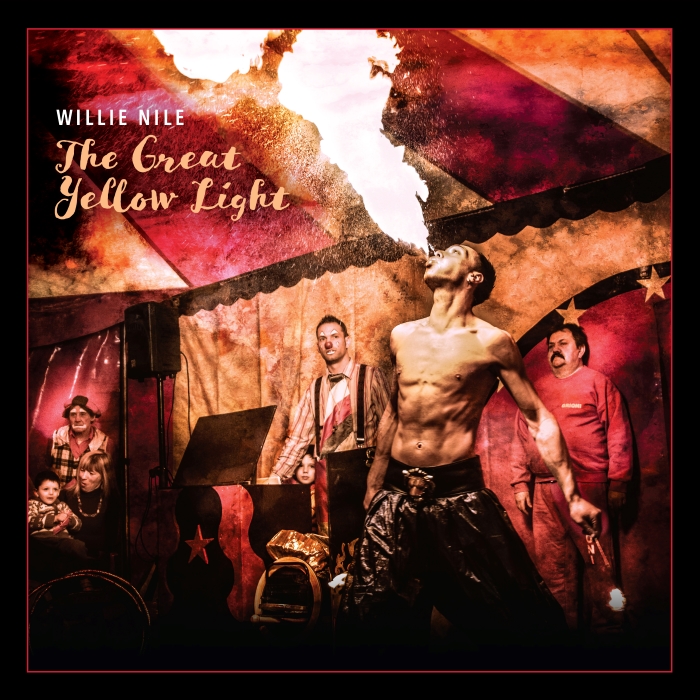
Album Review: Willie Nile – The Great Yellow Light

image courtesy of Howlin’ Wuelf Media

Album Review of Willie Nile: The Great Yellow Light

My introduction to Willie Nile‘s music was a fortuitous accident. I was in New York, traveling for work, in the City with one day free in 1998, and one of my favorite artists, Lisa St. Ann, who I had reviewed and interviewed for Geoff Wilbur’s Renegade Newsletter, was playing at The Mercury Lounge. The other artist on the bill for the late afternoon show was Willie Nile. (I have always loved that you can catch amazing music from before dinner until early morning in the City. There is only one New York!) I mean, he’s Willie Nile – I’ve discovered what that means in the subsequent years – so obviously it was a great concert. A great double-bill. Interestingly, in part because I rarely seek out music because so much more is sent to me than I can possibly review, I haven’t had an opportunity to write about Willie again since wrote a short blurb of that show for GWRN… until now! And it’s been far too long. Before I share some more of my own words about Willie Nile, I’ll share one quote that I was able to find thanks to his promo material – New Yorker called Willie Nile “one of the most brilliant singer-songwriters of the past 30 years.” Well, they’re not wrong.

Willie’s newest album, The Great Yellow Light, his 21st long-playing (LP) recording, is brand spankin’ new – it was just released on June 20, 2025. No, I didn’t turn the review around this quickly. I’m always at least a couple months behind. In this case, I had an advance copy, so I’ve become very familiar with this record over dozens of listens, just as is generally the case with almost everything I review. I am, however, completely psyched to tell you how great this album is, and why you’ve gotta hear it! I know, that’s not exactly a spoiler alert, since I only review my favorite few percent of the music I receive (plus music some I proactively seek out) and, as a result, every review at the Blog is a recommendation.

Every song on this record is unique and original, so I’ll just share this thought – Willie Nile is a meticulous, versatile singer-songwriter and dynamic performer, and this shows throughout his latest album. So many of the songs on this record are energetic, catchy, guitar rock-era potential hits that’ll get you out of your seat. Now, let’s dive in; I’ll share my thoughts on my personal favorites.

photo by Cristina Arrigoni; photo courtesy of Howlin’ Wuelf Media

The record begins with “Wild Wild World,” an energetically raucous, fun rock ‘n roll number. Clever lyrics hint at social awareness, but Willie doesn’t go as deeply into the details as he does elsewhere on the record. Instead, it’s an entertaining song built upon a ’50s and ’60s style pre-psychedelic rock ‘n roll style but with more modern guitar rock energy and hint of lyrical nihilism.

“We Are, We Are” follows, with a Queen-reminiscent guitar opening that becomes an anthem with a singalongable chorus: “We’re young and strong – we are, we are! We’re righting wrongs – we are, we are!” This is the record’s “we can do it!” song, an important motivational listen for those wanting to tackles the social issues Nile mentions elsewhere on the album.

Mostly, though, this is simply a rock ‘n roll album with the occasional issue-driven song. For example, next up, “Electrify Me” is a straight-ahead raucous rocker that plugs a punk rock energy into a fun lyrics-and-guitars rock ‘n roll singer-songwriter song package, replete with a catchy rhythm and thumping beat.

“An Irish Goodbye” is a fun change-of-pace, obviously channeling a good Irish pub song stylistically a bit, but chock full of clever lyrical turns of phrase, channel phrases like “here’s fire in your whiskey, here’s mud in your eye” throughout the song. You’ll find yourself swaying along to the song, trying to memorize the words, and singing along with the parts you remember. Obviously, since the chorus repeats a few times, that’s what you learn first. The whole friggin’ song is fun, though. Also notable, it was recently dubbed “Coolest Song in the World This Week” per Little Steven’s Underground Garage. How cool is that?

You almost feel like the Irish swagger carries over into the vocal delivery on the title track, the steady, straight-ahead rock song “The Great Yellow Light.”

Willie picks up the energy again on rhythmic, almost hoedown-styled, bar-rocker “Tryin’ to Make a Livin’ in the U.S.A.” You know what you’re in for from the lyrics that kick off the first verse: “There’s nothing wrong with a hit record wouldn’t cure. The blues and the clap, yeah, they all can reoccur. But a song on the charts can do a lot of good. Why, I’d run buck-naked through my neighborhood.” It’s a fun romp about the difficulty of making a living as an artist – with some perhaps-exaggerated benefits of writing that elusive hit – that’ll be a quick favorite and leave a smile on your face.

“Fall On Me” is another straight-up mid-tempo rock song emotionally delivered that’ll connect with listeners going through rough times. The album then trends toward the hopeful – at least, that’s the way it plays for me – on “What Color Is Love,” a song that’ll leave a lump in your throat as you listen to Willie’s grizzled vocals, wondering if love will be recognizable.

The big protest song on the record is next, and it’s catchy as all. “Wake Up America” starts a little edgy, with a nervous tempo, including lyrics like “Wake up America. Red, white, and blue. You used to be great. What happened to you?” When the song reaches the first chorus, the music becomes richer and louder. Stylistically, it has a Mellencamp-ish feel. Or maybe, though stylistically quite different, it gives off that old Coca-Cola commercial vibe, with everyone holding hands singing “I’d like to teach the world to sing.” The song intensifies on the back half, with lyrics like “Wake up America. Do you know who I am? I’m one of the millions. Do you even give a damn. I’m the son of immigrants, I’m a daughter of slaves. I’m Native indigenous, stop digging my grave.” It’s a really hopeful song with a positive energy, despite lyrics that sometimes point out faults. The closing lyrics of “open your eyes, open your eyes” pleadingly offer the solution.

The song closes with a soaring, flowing number, “Washington’s Day,” that also touches upon social issues but stylistically feels uplifting, leaving the listener with a good, warm feeling after a listen to the complete record. And it’s a helluva record! An instant rock ‘n roll classic from longtime critically acclaimed rock troubadour Willie Nile.

I can’t believe it’s taken me this long into my writing career to review a Willie Nile record. Well, if you’re not familiar with him – or if you know of him but don’t yet own one of his records – The Great Yellow Light would be a great place to start. It’s a helluva disc! And if you’re already familiar with Willie Nile – which, I’m pretty sure, includes everyone within a 100 mile radius of New York, plus a whole lot of lucky people elsewhere – you just need to know this: Willie has a new album out. If you haven’t yet, be sure to get a copy of The Great Yellow Light. It won’t surprise you at all that this record kicks ass!

Looking Ahead

I feel lucky to have caught Willie Nile live once, but that was back in the 20th century, so I probably need to see him perform again. The “Shows” page of his website lists a smattering of shows on the east coast, in the middle of the country (MO, OK, TX), and one in Vancouver, BC, but nothing particularly close to me. I’ll keep an eye out for additions. And if you don’t spot anything near you at the moment, I’d suggest checking back periodically, too.

EP Review: Falsely Accused – Unbroken

photo courtesy of Falsely Accused via Knyvet

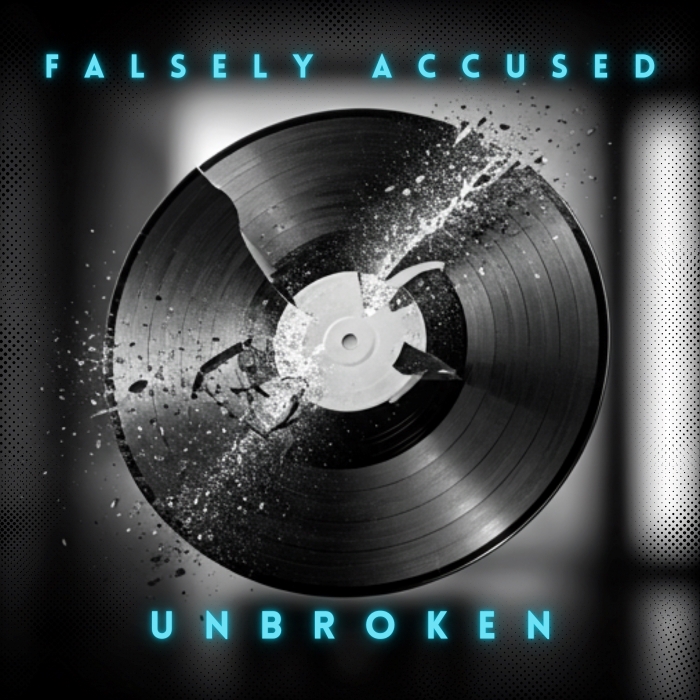
EP Review of Falsely Accused: Unbroken

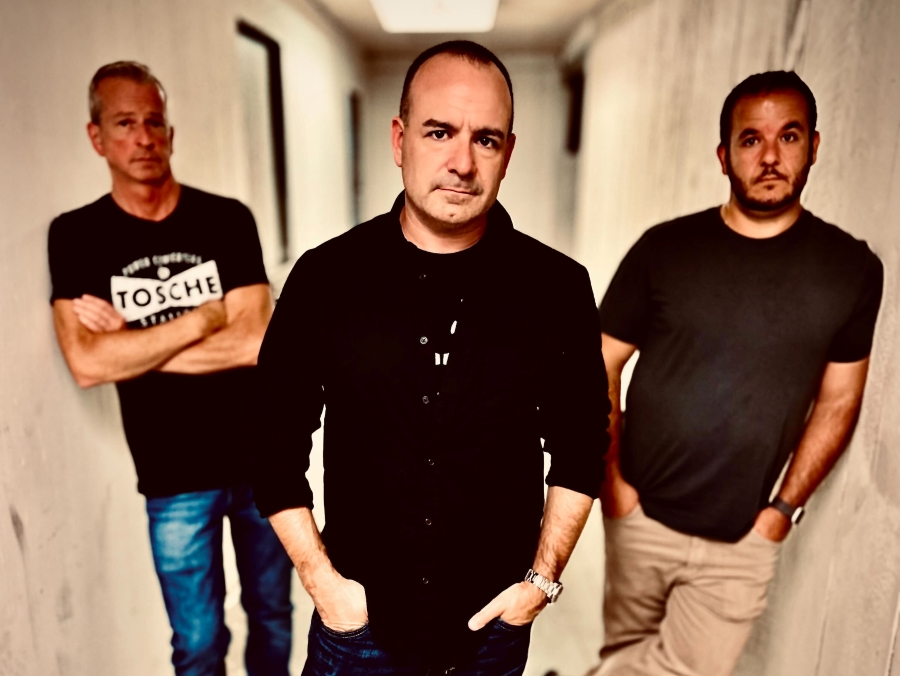
Unbroken is Falsely Accused‘s follow-up to 2021’s Compression, a sequel long in the making for Matt Tavano (lead vocals, bass), Mark Young (guitar, backup vocals), and Mike Azzolino (drums, percussion, backup vocals). Says Tavano, “It’s been three years since our last record and to say we’re excited to get our new music out into the world would be an understatement. We worked hard tocreate a record with new ideas, new sounds and concepts, not just rehashing the same sound from Compression. As we evolve, so must the music.”

Now, I haven’t listened to Compression, but on Unbroken, Falsely Accused’s music is distorted, guitar-driven, heavy rock with a wall of noise well-suited to fill medium-sized barrooms and small clubs with an electric energy, the kind that leaves gig attendees buzzing for hours afterward, looking forward to the next live performance.

artwork by Matt Tavano; image courtesy of Falsely Accused via Knyvet

Opening cut “A Drink Before the War” was the first single, released last fall in advance of the EP, and it’s the track with the biggest hook, most likely to be radio fodder on an alt-leaning hard rock station – or a heavy-leaning alt-rock station. If listeners are going to choose just one song to add to a multi-genre playlist, this is probably the song with the broadest appeal. With varied vocals and chord progressions that lead the listener from point to point, it’s a well-constructed, memorable number.

For a little variety, there’s kind of a western vibe – open-spaces, though not country – in the tone of song number four, “Drifting.” It’s a little bit of a jam-band type of song, so the structure may not carry the mainstream appeal that the sound does. However, if you’re attending a gig with someone who’s not as into heavy music, “Drifting” is about song for which they’re most likely to comment, “Oh, I like this one.”

The remaining three songs on the EP are less likely to be singled out by casual listeners but are probably more important to establishing Falsely Accused’s heavy, distorted, wall-of-sound persona, the type that provides the overall vibe of a beginning-to-end listen and the aura of a memorable, cohesive live performance.

“Castaway” has a heavy, rhythmic, steady but slow, foreboding, heavy rock tempo and a little ragged, near-psychedelic late-song guitar bridge. This is a song perfectly-suited to an electric, audience-enthralling live performance, particularly the new-rock axe noodling that closes the song.

“Witches” is a dense, heavy number that recalls ’70s classic heavy metal, though again some of the axework, while referencing that time period, utilizes somewhat more modern garage rock riff patterns.

And EP-closing song “Soul Crush” is a seven-plus minute, long-form epic rock ‘n roll number that is perhaps the most ’70s-recollecting AOR song on the EP, structurally, at least, and perhaps also in the distorted elements of the guitarwork. While the guitar runs are timeless, some of the rhythms deployed that hold the song together are more modern heavy rock-flavored. Still, black light posters and lava lamps wouldn’t be entirely out of place when listening to the collection’s closing number, particularly if you’re sitting in a bean bag. It’s a cool, updated, ode to rock history, while still fitting well into the staticky wall-of-noise aura Falsely Accused has cultivated on Unbroken.

Looking Ahead

In case you hadn’t noticed, in addition to “check out this EP,” my other recommendation is “get thee to a live show”! Well, the “Shows” page of the band’s website doesn’t list any upcoming performances, but I’m gonna keep checking back. I’ll also follow the band’s socials to remain abreast of upcoming events. You’ll find all of those links – and others – on the band’s linktree.

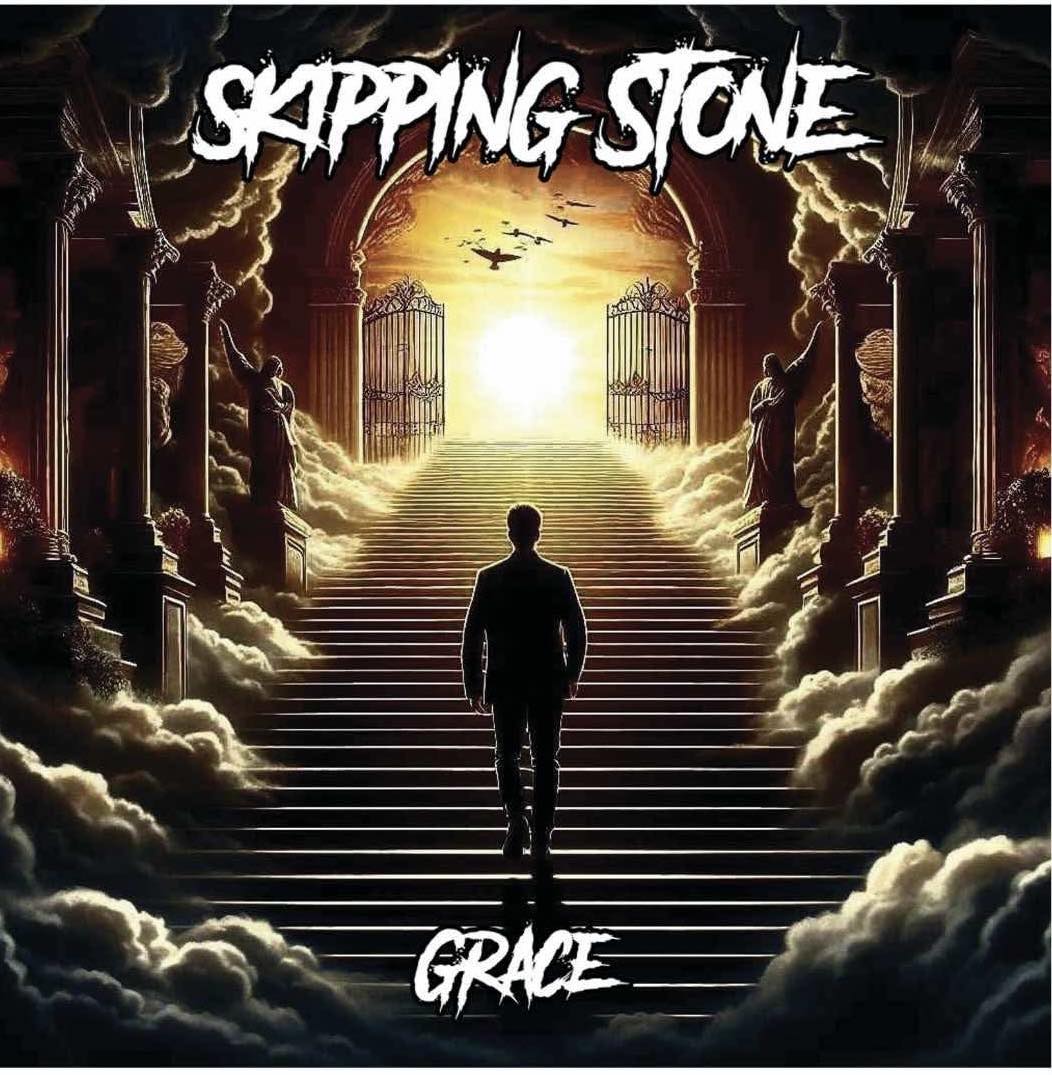
Single Review: Skipping Stone – “Grace”

image courtesy of Spaur Music PR

Single Review of Skipping Stone: “Grace”

Louisville-based Skipping Stone delivers a memorable soaring, heavy alt-rock tune in “Grace.” The power is evident, even if it’s mostly restrained – barely, at times – remaining largely-controlled in deference to the song’s steady, almost inevitable/unstoppable beat.

photo courtesy of Spaur Music PR

The band’s lineup for this song is Chris Bindner (vocals, keys), Joshay Wright (drums), Thomas Hicks (guitar, vocals), and Kelly Hood (guitar), with Jordan Bailey (bass) making a guest appearance.

Back to the song, though, something about the opening of “Grace” recalls for me “Billowy and Broken,” a powerful Lucid Fly rock song. However, while Lucid Fly bends its dark, foreboding tone toward heavy-prog, Skipping Stone’s “Grace” branches out from its contemplative, steady, dark beat toward the heavy rock anthem direction. “Grace”‘s slow tempo allows it to slowly build to power, as it most certainly does, extending the build for most of the song’s five-plus minutes of runtime. As the song reaches its final stages, a little heavy metal-ish growl creeps into the vocals, adding to the power structure in the final ramp-up of “Grace.” Beginning to end, the song has an arena rock feel, big enough to fill a stadium… with angst, I suppose, but it’d be a stadium full of angst.

If you like powerful, slow-build metal (or power rock), you need to hear Skipping Stone’s “Grace.”


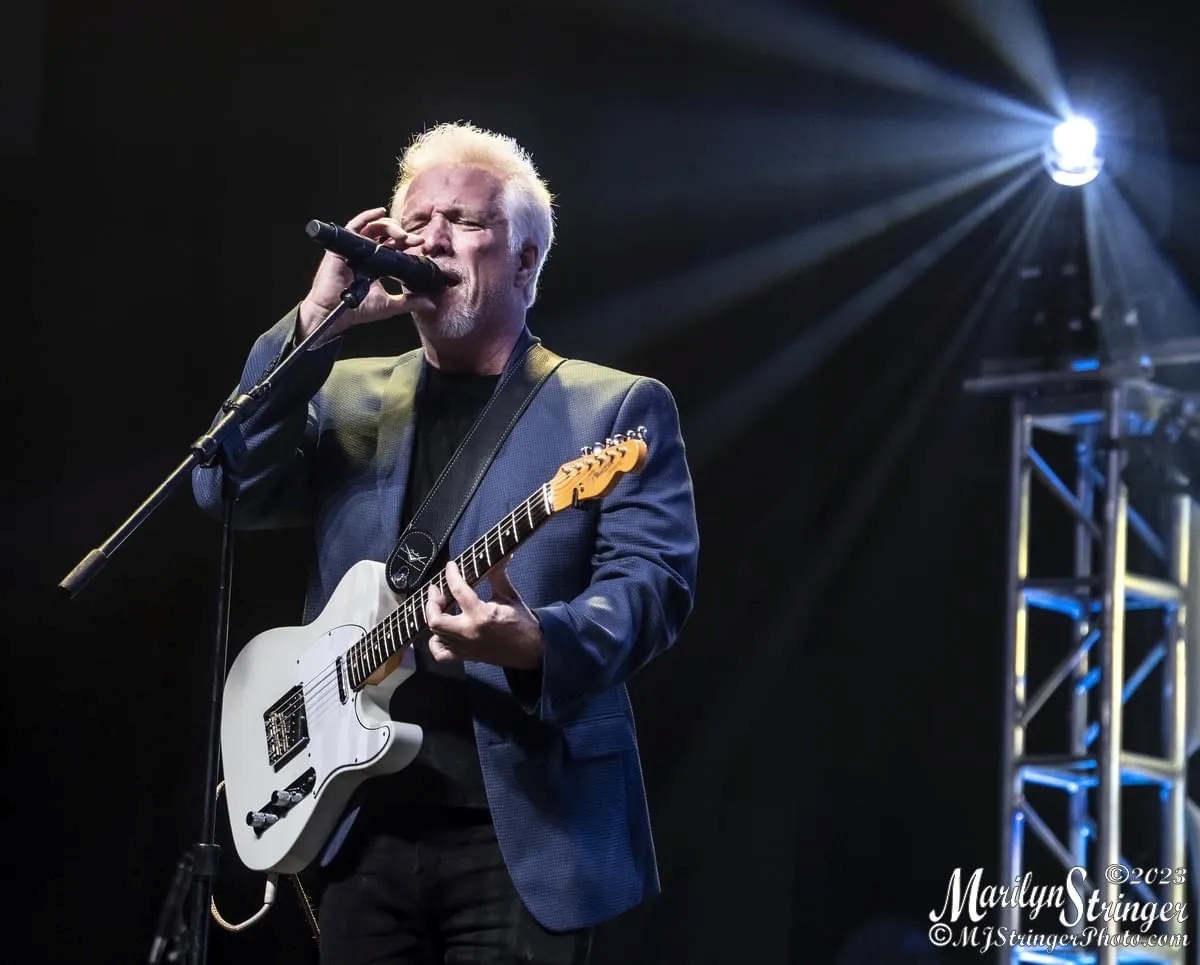
Album Review: Greg Nagy – The Real You

photo by Marilyn Stringer; photo courtesy of Greg Nagy

Album Review of Greg Nagy: The Real You

If you’ve been reading this blog for a long while – or if you live in Michigan – you know Greg Nagy is one of Michigan’s best bluesmen. (I reviewed his album Stranded in 2016.) Well, I hate to spoil the suspense in the first paragraph, but he’s only getting better, if that’s possible.

Greg Nagy’s voice and guitarwork form a style that’s uniquely his own. It’s a familiar mix of old-school blues, soul, smoother R&B, and even at times a hint of a modern big band-inspired pop sound, all in an identifiably unique combination. You know, probably a lot of that is the vocals – smooth but not too smooth, rich but not particularly deep, deploying phrasing that can be emotionally piercing, and a just slightly uniquely original tone. Sure, at his musical core, Nagy’s a bluesman’s bluesman, but the other elements in his music open it up to potentially appeal to a broad audience, obviously on some songs more than others.

The Real You is Nagy’s fourth album. It contains a mix of blues classics, Nagy originals, and inspired covers with arrangements and delivery styles that help Nagy make them all his own.

image courtesy of Greg Nagy

The album kicks off with a Nagy original, the title track, a smooth, soft blues ballad. Or near-ballad, at least. The horns, which add both depth and emphasis, are sometimes more enthusiastic than in a typical ballad, though they’re also responsible for moments in this song that hint at a big band influence – very cool. But yeah, you can slow dance to it, so it’s a ballad. Maybe at a wedding reception, for example, with lyrics like “I want to know the real you. I want to share the real me, too,” and especially with the uplifting vocal delivery Nagy employs on the song.

Track number two is one of the two old-school blues covers on the record. For “Mississippi Blues,” a modestly-paced number, Nagy relies on the grittier edge of his vocal range, pulling the anguish out of the lyric. He’s joined on this song by Ray Goodman on dobro and Peter Mudcat Ruth on harmonica. Indeed, the harp plays an important part in the feel of the song, particularly riffing off of the vocal line.

Jumping ahead to track five, the other old-school blues cover – and actually, it’s an old-school soul number – is “Come to Poppa.” Most familiar to those of us with Michigan roots as a Bob Seger tune, I investigated the song’s variants and discovered that Nagy’s rendition is a much closer match to Ann Peebles’ original recording of it, “Come to Mama.” Of course, Nagy’s rendition is more modernized, and the bass beat thumps a bit more as a good blues-rock number naturally would, though the pace is more that of a mid-tempo blues crooner.

Another cover worth noting is the very theater stage-styled, slow-blues-drenched rendition of the Beatles’ “Something.” It’s performed as a duet with Detroit’s Queen of the Blues, Thornetta Davis (whose Honest Woman album was reviewed here at the Blog by Detroit-based contributor Eric Harabadian, back in 2018). Before I return to Nagy’s originals, I want to comment on the two remaining covers, “Crazy” and “The Joke.”

Personally, while I absolutely love the Gnarls Barkley original, I think Nagy’s version of “Crazy” is an upgrade, at least for those of us with a particular fondness for mainstream-leaning blues and blues-rock. With a warm vocal tone in the verses, pleading vocal edge in the chorus, and varied phrasing, punching the right syllables while delivering some of the lighter lyrics wryly, Nagy pitches a perfect game with his vocals. Meanwhile, the music bed is rich and full, almost orchestral at times, with organ carrying some of its bridges and verses, delivering a memorable blues-infused, soft-rocking result that’s my pick for most likely to appeal to mainstream radio listeners.

photo by Wahwah Whitus; photo courtesy of Greg Nagy

If I’m wrong about that statement, it’s because the closing number on the record, “The Joke,” has broad appeal, too. It’s a brave and welcome choice for Nagy, putting his own spin on the Brandi Carlisle number that represents those who don’t fit the molds of modern society. It’s a song for the marginalized, the misfits, the underrepresented. The arrangement is rich and powerful, getting fuller and fueled by guitarwork that builds to power in key emotional sections. The arrangement – and Nagy’s vocal – will give you chills and leave a lump in your throat when he reaches the climactic vocal, “I have been to the movie. I’ve seen how it ends. The joke’s on them.” I’d still suggest “Crazy” as the more likely radio hit because “The Joke” is 5-and-a-half minutes long, and the opening is a little slow – effectively so, but we’re talking radio-friendliness here, not just quality. This is, however, almost certainly the most powerful song on this record. A great way to end the album.

However, if you’re a blues fan, you’re maybe more likely to like one of Nagy’s originals. In particular, “You Were Never Mine,” featuring top-shelf bluesman Larry McCray on guitar. And there are some filthy guitar riffs, indeed, on this tune, at times wailing in accompaniment with the smoothly-sung pain in Nagy’s vocals, particularly during the title lyric.

“What Took Your Love” comes later in the disc but has a mid-tempo blues-rock vibe, perhaps a touch more blues-rock than blues when compared with “You Were Never Mine,” at least in the guitar riffs.

“Where Do We,” with Bobby Murray handling the lead axework, is a straight-ahead, modestly-tempoed, thump-along, rockin’ blues number, for which Nagy utilizes his deeper, rougher-hewn, lean-into-the-blues vocal style.

Ballad “All I Need (Is You)” is lightly-instrumented, with a raw, live, man-and-his-guitar singer-songwriter feel, giving it an emotional honesty. It’s actually the record’s penultimate track, with its uncomplicated production flowing nicely into the soft, emotional opening of “The Joke.”

Finally, if you dig instrumental blues, as I do – it’s always nice to have one really good one on a blues record – “Cornell Ala King” is a nifty vocal-less entry. I found a recording of this song from 2010 on YouTube, so Nagy has been playing (and perfecting) this song for a while, and it shows! Guitar, organ, and horns all get their own opportunities to drive the song forward, resulting in an entertaining number with structured dynamics that would have made vocals unnecessary and redundant. Just kick back and enjoy, though the song isn’t particularly long, so it’s over almost before you know it.

In total, The Real You is an instant classic from the reliably exceptional Greg Nagy. It contains five potential crossover hits for mainstream music fans – two of the record’s five covers (“Crazy” and “The Joke”) and three of its six originals (“The Real You,” “You Were Never Mine,” and “What Took Your Love From Me”). At the same time, edging beyond the mainstream, “Where Do We” is likely to be a new favorite among blues and blues-rock fans. And the rest of the disc is a great listen, as well, even if I’m not predicting strong radio interest in the remaining tracks; they’re excellent songs that are ideal fits for the album. If you’re a blues fan, you should be waiting in line outside the record store on the release date (metaphorically) for each new Greg Nagy release. Rock and mainstream music fans, also, though, should give this record a listen, as there’s something here for everyone.

Looking Ahead

Greg has plenty of upcoming shows listed on the “Gigs” page of his website. All of his listed dates at the moment are from coast to coast in Michigan, except for one. On July 5th, my California readers can catch the Greg Nagy Band at the Sebastiani Theater in Sonoma. This is a rare opportunity, so get yourselves to wine country and don’t miss it!


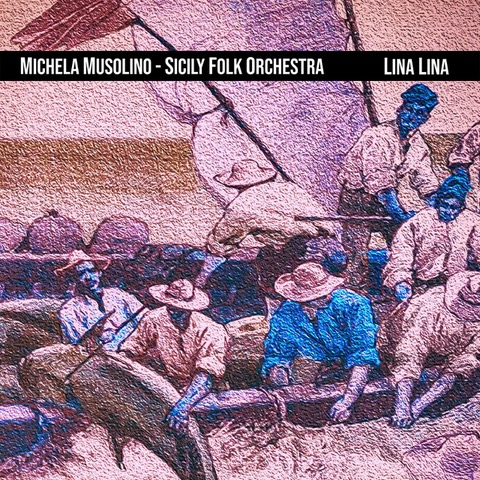
Single Review: Michela Musolino – “Lina Lina”

image courtesy of Dog Ranch Music PR

Single Review of Michela Musolino: “Lina Lina”

Sicilian-American Singer Michela Musolino, along with Sicily Folk Orchestra, a “concept band” of Sicilian folk artists I Beddi, released this recording of an ancient Mediterranean folk song. “Lina Lina” is an ancient chant tuna fisherman sung while hauling in their nets during the spring tuna slaughter, called the mattanza.

Of course, I’m not familiar with Sicilian folk music (except for the tiny bit I’ve just learned today), but the accordion that provides the rhythm for the full 3 minutes and 15 seconds is joyful and will get you bouncing and swaying in your seat. Musolino’s voice is tuneful and piercing, as she seems to specialize in traditional music. The supporting band provides excellent harmonies and echoing vocals. I know I don’t often write about non-English-language traditional-based folk music, but I wanted to share this song because it’s fun and catchy. I’ve heard enough traditional folk music from around the world to know this performance is exceptional.

If you’re a fan of traditional European folk-inspired music, this is a well-performed and produced song from top-flight musicians that’ll likely appeal to you. I’m also enough of a fan of mainstream pop-rock and surrounding music style to know when something from outside that mainstream might be an appeal to fans of mainstream music. If you’re a pop/rock/English-language mainstream folk music fan and want to add something different to your playlist for variety, this recording of “Lina Lina” is likely to be a great fit for you, too.

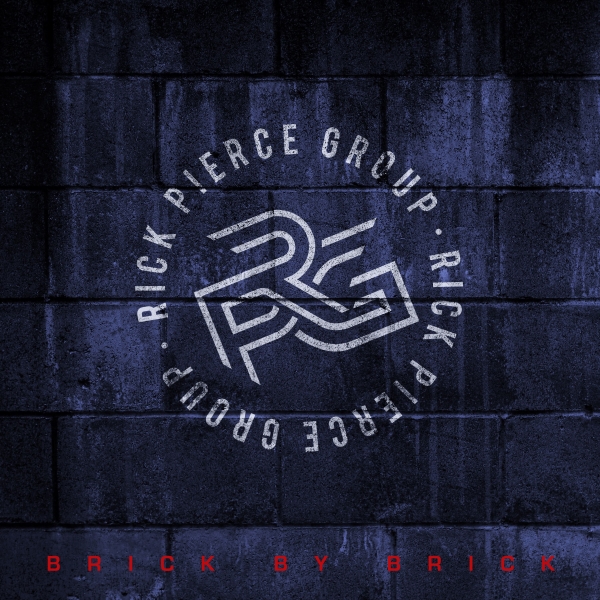
Album Review: Rick Pierce Group – Brick By Brick

photo courtesy of BJF Media

Album Review of Rick Pierce Group: Brick By Brick (Golden Robot Records)

Brick By Brick is the debut album of the Rick Pierce Group. The band is comprised of guitarist Rick Pierce (guitar), Chris James (vocals), Izzy Rehaume (bass), and Frankie Rongo (drums). Brick By Brick was produced by Floyd Rose, notable in part because Pierce and Rose were two of the co-founding members of Seattle rock supergroup Q5 in 1983.

Brick By Brick is a hard rock album, heavy enough to be dubbed metal in some circles, likely to be able to keep up with similarly-style classic hard rocking bands like Judas Priest. From the very beginning of the very first song, the rock guitars are impressive, and you can identify the songs’ tunefulness, and James’ voice is melodically capable but with a slightly rough edge ideal for this brand of classic heavy rock. A couple songs stand out, but so many of the hooks are subtle. It takes a few listens to unlock some of them. If you love an album that starts strong and grows on you more and more with each listen, Brick By Brick is an album you’ll dig.

Album-opener “Tick Tock” kicks off with a thumping beat and aggressive guitar riffs, but James’ intense but expressive voice and the finesse in Pierce’s axework (including an occasionally recurring guitar riff that niftily soars and circles back on itself and serves as one of this song’s hooks) broaden the appeal of “Tick Tock” to all guitar rock fans. This is true of just about every song on Brick by Brick to varying degrees. In fact, the very next song, title track “Brick By Brick,” deploys a similar tactic.

image courtesy of BJF Media

Most of the songs can be described similarly as guitar driven heavy rock songs, with guitar riffs either subtle or more apparent that serve as unique hooks from song to song, occasionally varied hard rock/classic metal rhythms, and melodic heavy rock vocals. The songs are differentiated by vocal or guitar nuances, so you’ll have your own favorites, but they’re stylistically very cohesive.

In addition to “Tick Tock,” my other personal favorites on Brick by Brick are songs that add nuances to the style that appeal to my particular musical taste. For example, “Only” varies the formula slightly, with opening riffs that at least slightly bring to mind “(Don’t Fear) The Reaper” and a memorably heavy, tuneful “ohh, ohh, ohh” – deeply sung and very metal but still varied enough from what you’d typically hear in heavy rock songs that it’s attention grabbing.

“Remember the Bataclan,” meanwhile, takes a slower, more steady pace than most of the other tracks, plodding forward at a pace that fits in well with the hypnotic, rhythmic chant – unique to this song – that’s the sort of thing you might expect from a hard rock band. The closest I can think of is the chanting in Savatage’s “Morphine Child,” but on this song it’s more rhythmic and tuneful and follows along with the song’s rhythmic drum beat. It’s just – to repeat myself – hypnotic.

“Can You Feel It” is a pretty straight-ahead classic hard rocker but with some attention-grabbing guitar flourishes. “Love Hate” is a more plodding, rhythm-driven heavy rocker with the vocal abruptness used when singing the title lyrics, “love, hate,” intentionally obtrusive to drive home the song’s point; plus, it has a neat little 15-second run of blistering axework about two-thirds of the way through the song that serves as a bridge.

Album-ender “A Storm Is Coming” adding a slight blues-rock tint to the band’s power-rock formula. The guitarwork and drums work together to build an ominous musical backdrop for James’ vocals, which have an almost Southern rock-blues edge to them that matches the supporting music. The song is also an ideal album-ending song because it ends with nearly two minutes of drum-supporting guitarwork sans vocals, and that’s always a cool way to end a guitar-driven rock album, particularly when it offers a showcase for an axeman like Pierce.

Brick by Brick is an album all classic rock and classic metal fans should spin a few times. Whether you’re listening for the exceptional guitarwork, the power rock vocals, or the heavy rock vibe in general, you’ll enjoy this record. And as the hooks begin to dig into your brain, you’ll develop a couple of clear favorite songs – for me, they’d be “Tick Tock” and “Only,” and sometimes “Remember the Bataclan.” (Depending upon my mood, I’m either more or less psyched about the chanting.)

One of the better ways to keep up with the Rick Pierce Group’s latest news appears to be via the band’s Facebook page.

Single Review: Overhaul – “Happy Little Rocker”

photo courtesy of Overhaul

Single Review of Overhaul: “Happy Little Rocker” (The Label Group)

Overhaul is a Scottish rock band comprised of Andy Gallagher (guitar/vocals), Kenny Johnson (bass/vocals) and John Malone (drums/backup vocals). On the single “Happy Little Rocker,” Overhaul is joined by guitarist Dan Murphy (Soul Asylum, Golden Smog, The Scarlet Goodbye).  Prior Overhaul releases have also included some impressive guest appearances, so this is a band that enjoys working with other top musicians. “Happy Little Rocker” was cowritten by Gallagher and Trace Foster (Close Enemies).

image courtesy of Overhaul

Overhaul touts its rock, alt-rock, and grunge influences. “Happy Little Rocker” leans toward to rockin’ end of alt-rock. From the start, it reminds me of a song I might hear from briefly-existing Boston alt-rock supergroup Desk, whose 2016 album All-American Awesome I reviewed here at the blog. There’s plenty of the sort of crunchy, talent-displaying guitarwork that would make mainstream rock fans salivate, but the song also sports a slightly off-balance tempo and a jangly, distorted alt-rock-styled guitar sound. Lead vocals are tuneful but edgy, while rock-styled, rough-but-in-tune harmonies add depth and substance to the song’s audio palate. An echoey, distorted intro to the track’s more traditional late-song guitar solo also appeals to both alt-rock and mainstream guitar rock audiences. In the end, “Happy Little Rocker” is a catchy, memorable rock ‘n roll song that’s likely to appeal to at least two distinct subgenres of rock fandom, so if you like your guitar rock either crisp or distorted – or a little of both – give “Happy Little Rocker” a listen. There’s a good chance you’ll add it to your personal playlist like I have.

Coming Soon

Overhaul plans to release its next single, “Spanish Lilt,” on June 27th, according to this Facebook post. Keep an eye out for it! Or, easier yet, presave save it at the music service of your choice.