Live Review: Debo Ray at Sanctuary

photo by Geoff Wilbur

Debo Ray

Sanctuary (Barside), Maynard, MA

June 13, 2025

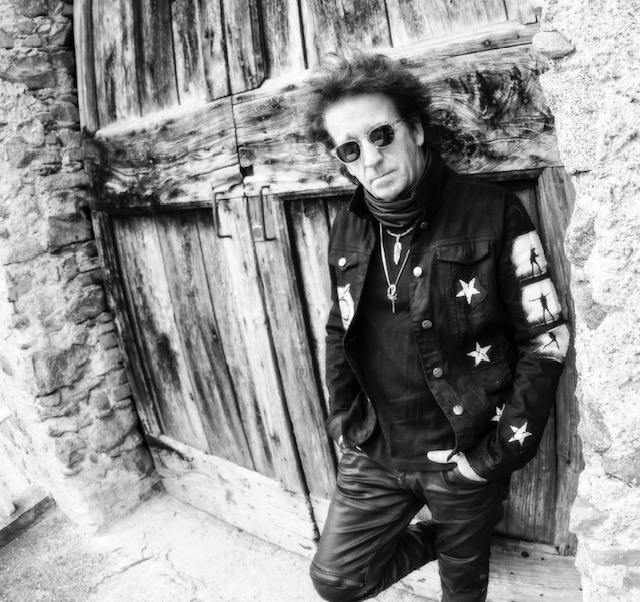
As I’ve mentioned before, so many early evening shows at Sanctuary’s bar feature the Boston area’s best musicians, many of whom you rarely see this far out in the suburbs, offering a cool chance to see the top talent of the region without having to travel into the big city. Singer Debo Ray was joined by Scott Tarulli on guitar on this particular evening at Sanctuary.

Debo Ray’s vocal talents cover a broad range, from soft and smooth to powerful, with the ability to adeptly handle the soaring notes and the nearly-spoken ones, working the full gamut of emotions into her performance. Debo included a varied mix of originals and covers into the evening’s performance. As is usually the case, the originals were very well-suited to Debo’s skills, while the covers she selected for the evening were equally good at showing off the range of her vocal talent.

photo by Geoff Wilbur

One of the other standout features of Debo Ray’s performance during the evening was her between-songs banter – a skill that doesn’t come easily, if at all, to a lot of top musicians of her caliber. She had great stories to tell and connected very well with the crowd, something particularly important in an intimate setting like the small bar at Sanctuary. The banter added to the appreciation of the songs and left the audience feeling as if they were getting to know Debo a bit over the course of the evening. Not only does this make an evening’s performance enjoyable, but it’s a great way to get fans coming back again and again.

Early in the first set, the audience was treated to the grooving, soulful original “Time With You.” Debo followed it up with her rendition of Corinna Bailey Rae’s “Closer,” a very heartfelt performance with just the lightest instrumentation helping keep the focus on her powerful vocals.

Next up were a pair of originals. The first, “Tell Me What You Want,” delivered a variation of tempos and rhythm, showcasing a fair bit of Debo Ray’s vocal range, from soaring to nearly spoken. The next, “Filly,” serves up funky rhythm with vocal power at times, nuance at others. By design, there’s not a lot of soft subtlety on this song, but Debo’s vocal power remains strong even when nuanced.

Sanctuary; photo by Geoff Wilbur

A pair of covers followed. Debo Ray delivered a very soulful rendition of Gnarls Barkley’s “Crazy” serving up vocals with range, power, and personality. That was followed by a cool cover of Emily King’s “Distance,” which featured lots of vocal runs – something heard not just here but frequently elsewhere in other songs, as well, the sort of thing that plays exceptionally well for a skilled vocalist in a live performance.

Debo closed the set with an original and another cover. On the original, “Now You’re Here,” the opening vocals hit oh, so sweet! It’s a smooth, swaying song, with a lyrical rhythm in the verses that’s next-level, particularly the way she delivers it. Next up was a rendition of Roberta Flack’s “Killing Me Softly” that Debo kinda absolutely nailed.

The second song of set number two returned to Roberta Flack, this time with “Fell Like Makin’ Love,” in which Debo worked a bunch of vocal gymnastics.

It was followed by an original, “Gaslight,” that is next-level when performed live. There was something almost theatrical in Debo Ray’s delivery, so intense and pretty raw.

She followed that with a couple of covers. First, to cleanse the palate with smoothness following the raw emotion of “Gaslight,” Debo served up Alicia Keys’ “If I Ain’t Got You,” proving she’s fully able to deliver the vocal richness necessary to sing an Alicia Keys number. Then she dealt the fun, with a warm, rich, full-vocalled, emotionally-voiced performance of Chris Stapleton’s “Tennessee Whiskey.”

photo by Geoff Wilbur

With the show nearing a close, original “Take That” was next. It’s a really powerful, self-empowered proclamation-driven song, very much a song for people psyching themselves up to take control of their lives. Just wow, the emotional strength in the vocals of this powerful ballad!

Next up, Debo turned to Aretha. Specifically, Aretha Franklin’s “(You Make Me Feel Like a) Natural Woman,” an to be honest, I had considered making an Aretha comparison earlier, but, well, after I heard Debo’s strong performance of this song, if I had any doubts before (which I didn’t), she erased them by proving she has a voice capable of being mentioned favorably in the same sentence with Aretha.

Debo closed the night with another original, “Cope.” Penned during pandemic, it’s a thoughtful, jazzy number.

And that brought to an end yet another Sanctuary bar show, as the venue continues to bring Boston’s top talent out to Maynard, close enough that I can easily get in to hear them perform… and to let you know that you shouldn’t miss them.

Looking Ahead

I know that, among those of you in the Boston area who read this blog, many of you are much closer to the city than I am. Well, good news for you. According to the “shows” page on Debo Ray’s website, she has a bunch of shows coming up. From now through the end of the year, in addition to several Boston shows, she’ll be in Medford, Malden, Somerville, and North Andover. And there’s a February 28, 2026 concert booked for the big stage at Sanctuary in Maynard. Debo Ray’s vocal talent with a full band? It’s a double-bill with The ABeez. If your schedule permits, that’ll be a must-see event for those of us in the outer burbs… or for folks travelling out from the city. So many good restaurants in Maynard to make an evening of it. Just sayin’.

Album Review: Dekel – Starlings

image courtesy of Dog Ranch Music PR

Album Review of Dekel: Starlings

Israeli singer-songwriter Dekel has delivered, in Starlings, an album with catchy, pop-accessible singer-songwriter fare with rich musical backdrops, with a lot of the flowing sounds often – though not always – owing their flowing nature to string arrangements and, it seems, accordion. Stylistically, it might remind you of Tori Amos with more folk leanings. Dekel’s press materials’ “for fans of” suggestions also mention Beirut, Joni Mitchell, Regina Spektor, and Keren Ann, and as much as I prefer to come up with my own comparisons, that’s a much better triangulation than I was ending up with on my own. I will add that, vocally, Dekel’s singing reminds me, in places, of Sophie Ellis-Bextor’s on her Familia album, which I reviewed several years ago. Specifically, the shape and roundness of some of the vocals, particularly on certain vowels.

Dekel’s music is catchy and fun to listen to, but as I don’t typically dig deeply into the indie folk-pop genre. Even moreso, the unique sounds on this record, which – and thankfully I have press material to lean on here – include “an abundance of Eastern European sounds with Jewish Ashkenazi melodies” mixes in with the pop-folk and layered production I’m more familiar with. What really stands out about this album for me are how catchy the songs are – as in, crossover to popular music fans kinda catchy. Starlings is, at its core, a song-driven pop music album whose rich sound is unique because of the musical palate in which Dekel works.

photo by Shahar Hilla; photo courtesy of Dog Ranch Music PR

The opening song “Starlings” starts things off cheerily, with Dekel’s vocal cadence adding a quirkiness that gains your attention atop a rich music bed. “Season to Season” is similar but with a different tempo and strumming pattern, plus some uneasiness guided both by the music and an edgy tone in Dekel’s vocals, though toward the end the mood lightens as if the new “season” includes rebirth.

Next up, “Black Cat” is one of my favorites on this record. It’s light with a playful tempo and accordion-playing that bring to mind gypsy music, at least based on the old black and white movies that serve as my entire understanding of what gypsy music sounds like. But yeah, it’s playful and fun.

The playfulness continues on the next song, “So Much Logic,” a song you’ll find yourself swaying to pretty quickly. It’s such a fun song that I constantly have the urge to sing along with the chorus, though I can’t keep from getting tonguetied on the lyrics: “So much logic has left me, no answer. I said, so much logic has left me, no answer. So I walk in the fields. Dip me in the sea. Burn in the sun.”

Dekel continues with “The Frog Prince,” a mostly-soaring song (with some cool, brief instrumental mood changes placed as necessary to drive the song and its story forward) that verbally and musically creates brilliant imagery, centering around idea that “every prince I kiss turns [turned] into a frog.”

“Sing With Me Sisters” is musically playful and vocally soulful with dramatic strings entering abruptly each time the chorus begins, providing lively, deep support until the next verse.

“I Know I Will” has a kind of frantic feeling, especially following a smooth song like “Sing With Me Sisters.” “I Know I Will” has a nervous energy about it. The thought  central to the song’s tension is “I know I will ’cause I finally understand who I am.” The anxiousness isn’t fear; rather, it’s an uneasy but confident rebirth. Oh, and there’s some cool fiddlework to close the song that those of us with mainstream musical experiences will most easily be able to compare with the violin playing in Fiddler on the Roof. I’m sure I’m using a horrifyingly simplistic comparison, but that’s what I have. “Meet Me Halfway” follows, also with an uneasy tempo but with a pleasant overall tone. And man, I wish I had some album credits for this to figure out precisely which instrument is playfully meandering through the arrangement, but it is very cool.

“My Song” is a very personal song for Dekel. The opening accordion sounds like music you might expect from the opening scene-setting scenes of a sixties movie, maybe starting Audrey Hepburn, set in southern Europe. Somewhere with cobblestone streets and hills. Probably Italy, right? Maybe Monaco. Possibly Greece. Somewhere along the Mediterranean coast, that’s for sure. Given Dekel’s background, I know I’m several countries away from the actual instrumental influences, but you know, that’s where the movies the music brings to mind would have been set. The theme of this inward-facing song for Dekel is the lyric “It’s not enough. It’s not enough. But my strong is all I had to keep me strong.” It is, indeed, her song.

Finally, the record closes with “Borrowed From the Soul,” is a jazzy, soulful, slightly folky pop song straight out of the ’60s or ’70s, in more stylish circles, something you might hear in the soundtrack of a James Bond movie or any movie scene where people are gathered at a party, not dancing but standing around holding martinis. I included the adjective “folky” because there’s a hint of a Judy Collins or Joni Mitchell vibe in there, too, especially in the verses, but the chorus is echoingly sophisticated, stylish, and cool.

I didn’t know quite what to expect from this album when I first listened to it, as indie world folk music isn’t anywhere near an area of strength for me. But even if I had known what to expect, this wouldn’t have been it. Sure, there a variety of influences that’ll be unfamiliar to American pop music ears. (I’m raising my hand here.) But the songs are personal and on universal topics, delivered with a very pop sensibility, regardless of the regional or historical origins of some of the instrumentation and melodies. Several of the songs on this record are simply pop songs with a potential for mainstream appeal. My recommendation is to give this album a listen and choose a few favorite songs, then work out from there. The favorite songs will be easy to find.

EP Review: Kier Byrnes & the Kettle Burners – Before the Fall

photo by Monica Sager; photo courtesy of Knyvet

EP Review of Kier Byrnes & the Kettle Burners: Before the Fall

If Kier Byrnes & the Kettle Burners were a movie, their program guide listing would be: “Really good, powerful, jangly Americana with accordion.” That’s it. Heck, that’s my review. Not enough? Yeah, you’re probably right. This is a terrific EP, so if you’re willing to stick with me and not check out the music until after you’ve read a few more paragraphs, I’ll keep going.

OK, maybe just click through and start playing “White Russian,” then come back and read while you listen. Who am I kidding? You can’t pay attention to anything else while you’re listening to “White Russian”! The EP-opening track is a raucous, accordion-fueled, rhythmic audio circus that’ll have you singing “la da da da da white Russian!” by the end of the first time you hear the phrase. It’s infectious. It took me several days to realize there was more than one song on this EP because I just kept replaying “White Russian.” It’s a fun, exhausting, energetic romp.

image courtesy of Knyvet

It’s followed by “Quarter-Life Crisis,” which I’d love to tell you about, but I don’t have any adjectives left. Actually, I do, mostly because this song requires an entirely different set of descriptors than its predecessor. It’s slower Americana. Mostly. It’s an introspective number, as you’d probably guess a song called “Quarter-Life Crisis” might be. The song sways gently for the most part early on, but the vocals reach a pain-releasing wail in sections of the chorus, and then the song builds in power and noise-level as it progresses. This is what Americana music would sound like if it came out of ’90s Athens, Georgia. But without the twang, of course, ’cause Kier & company are Yankees. Probably Red Sox, actually, since they’re New Englanders, but in Athens, we’d all be carpetbaggers.

“When the Money’s All Gone” has an almost Gypsy-esque accordion part (even more Gypsy-esque than accordion music ordinarily is), and it shares some good folky advice, with the chorus delivering these wise words: “You say that you love me, I tell you you’re wrong. I’ll know that you love me when money is all gone.” This track has a bit of an Irish drinking song feel, particularly as it begins to drift more into singalong territory with words that are easy to remember after several drinks – “la da da da da da” – and seems to carry an undercurrent of the idea that things are not going to end well, but hey, let’s all keep drinking and singing.

image courtesy of Knyvet

“Train’s Off the Rails,” next, starts slow and picks up speed. Like a runaway train, you might say. The kind of sidewinding, janky rhythms and carnival barker-ish vocal delivery recall a couple of my favorite Los Goutos songs. As you get past the midpoint, the vocals and accordion seem to compete to see which can pick up the tempo the fastest, but it’s really the guitar solo that ups the ante because nothing’s as fast as a shredding guitar part. Oh, the vocals return and try, but just as things are about to spiral off the rails – to extend the train metaphor – the brakeman apparently steps in, and you can hear the song and the vocals crawl before stopping.

“Hurting or Helping” is another raucous, fast-tempoed Americana number that looks internally, thinking about the relative merits of pursuing money versus more selfless or creative endeavors. However, relatively early on, the lyrics say, “so I asked my dear ol’ pal, ChatGPT, to finish writing this here verse of the song for me.” That gave me an idea, so I asked ChatGPT to “Write a 50-word review of the Kier Byrnes & The Kettle Burners’ song ‘Hurting or Helping,'” and it came up a not-so-accurate description that you wouldn’t realize was inaccurate unless you actually listened to the song. It also used a helluva lot more than 50 words. And it threw in a couple em-dashes without a space before or after, so I guess what I’d heard about the em-dashes is true. Personally, I tend to use a lot of en-dashes, and I like to place spaces before and after them, so I guess that’s two data points that suggest I am not a robot, just in case you were wondering, something that might be up for debate if you’ve ever seen me try to select all the squares with streetlights in them. As for “Hurting or Helping,” it’s a fun, bar-rattling number not extremely unlike “Train’s Off the Rails” but not nearly as out-0f-control-seeming.

“Dark Eyes” is a lively, guitar-pickin’-driven number the likes of which you might expect the Three Amigos to dance to while the bad guys are shooting at their feet. And that accordion kind of oompas like it’s working a polka, particularly mid-song. Sometimes, also, it sounds a little like a sped-up version of that song from Dr. Zhivago; you know, in a really cool way.

After listening to this six-song EP… well, first after the almost-frantic tempos of some of the songs, you’ll want to thank the band for stopping after six songs so you can catch your breath. Then you’ll probably start from song one again. And you’ll look to see when you can catch a live show because if it’s anything like this EP, it’ll blow the doors off. The band plays all over New England. Just look for the venues that have lost their doors, and you’ll know Kier Byrnes & the Kettle Burners are there. Either that, or check the “calendar” page on the band’s website. Of interest to readers in Belgium and the Netherlands – and I’ve reviewed Belgian and Dutch blues artists already this year, so hopefully you’re still reading the blog – 2024 New England Music Awards Americana Act of the Year Kier Byrnes & the Kettle Burners will be touring your fair countries from July 3rd to July 13th, so check out their concert calendar to see when they’ll be near you, and have a rollicking time!

Album Review: Shannon Curtis – 80s Kids

photo by Nancy Schoeggl; photo courtesy of Saint Cloud Records

Album Review of Shannon Curtis: 80s Kids

I first encountered Shannon Curtis‘ music more than a decade ago. I have on my computer a 2014 Sampler EP, which I assume I received when I signed up for her mailing list way back then. A song from that sampler, “Paris Can’t Have You,” remains one of my favorites, a song you’ll see pop up on my “#PhoneOnShuffle playlist” from time to time on X or Threads. Of course, the sampler was dated 2014; the song itself was the title track of Shannon’s 2008 EP. So this was one of the artists I had started listening to in the run-up to returning to music journalism by launching this blog in 2015, specifically to share all of the great artists I had started listening to in the preceding couple of years. Well, it has taken some time, but I’m finally letting you know what kind of cool music you’re missing out on if you haven’t yet discovered Shannon Curtis.

Another thing about Shannon is that she puts together massive house concert tours. So did I get out and cover one of her house concerts? No. Did I get out to catch an 80s Kids tour concert in a non-house venue? No. Did I review any of her original albums, EPs, or singles? No, I’m reviewing an album of covers. Mostly, it’s just because this is her current album, and I was paying enough attention to get ahold of it and review it. However, this is also a very special album. Ten of the 1980s hits – songs we all know if we grew up in the ’80s – meticulously recreated by someone who clearly loves these songs and that decade as much as we do – or, and I love this turn-of-phrase – carefully recomposed by “synthpop spouses Shannon Curtis and Jamie Hill.” “Synthpop spouses”? Is it just me, or is that clever af? Yeah, that’s a phrase used in the liner notes at the 80s Kids Bandcamp page. Regardless, the biggest difference between these versions and the originals is simply that it’s clearly Shannon Curtis’ voice. And the vocals are so good because she’s singing in an octave appropriate to her voice (and/or she selected songs with that in mind). Also, the synth-driven performances are missing any small guitar parts. But the attention to musical detail means you wouldn’t even notice most of the differences unless you were playing the originals side-by-side. And the pacing, the vocal intonations and phrasing… they’re impeccable.

Shannon kicks off 80s Kids with “Wouldn’t It Be Good,” the Nik Kershaw classic. Shannon dispenses with the song’s extended intro – DJs would’ve been talking over that anyway back in the day; she starts right about where I remember the music kicking in anyway. For this song, I actually watched the original on YouTube, and if anything, Shannon’s version sounds more like the way I remember the song in the first place, so that’s an obvious win.

Next up are detailed covers of The Cars’ “Drive” and A-ha’s “Take On Me” – because “Take On Me” is an absolute necessity for an ’80s synthpop cover album, and Shannon and Jamie do a fantastic job with it! Also, I’m sure she sings some of the lyrics more clearly than the Norwegian A-ha; it’s fun to realize “oh, that’s what that lyric was!”

If there’s one thing about the ’80s, it’s that we all had a lot of crossover music knowledge thanks to both top 40 radio and MTV. For example, that’s why an old rocker like me knows so much pop, R&B, country, and other genres’ music from that time period. So it’s not surprising to find a rock singer’s song on this disc, especially since even rock singers like Don Henley deployed synth sounds in the ’80s. Yes, Don Henley’s synth-heavy dance-rock number “The Boys of Summer” is the first of two rockers’ tunes on this disc. Eagles fans should skip the next sentence. I think I might like this version as much as the original.

After a really cool version of Pet Shop Boys’ “West End Girls” with meticulous attention to musical detail, Alphaville’s “Forever Young” is the next song to get the Shannon Curtis treatment, the song with the lyric “are you gonna drop the bomb or not?” Looking at the album cover, it looks like it may have been dropped on Vegas. Which 80s Kids version is most likely to replace the original on my ’80s playlist? Probably this one, in part because Shannon vocals are simply more powerful in the booming late-song build-up than the original’s.

I didn’t realize Erasure’s “A Little Respect” came so late in the ’80s. In retrospect, it does have a richer synth sound than some of the earlier ’80s songs in that genre. Anyway, it’s here in all its bouncy danceableness.

Song number eight, next, is the most rockin’est song in the collection, as Shannon tackles Bruce Springsteen. Probably his most danceclub-ready song, “Dancing in the Dark.” The song that brought us Courteney Cox, who we ’80s kids reconnected with in our young adulthood in the ’90s when she became one of our F•R•I•E•N•D•S. As far as the song goes, Shannon’s voice isn’t as gruff as the Boss’s, but she does a helluva job carrying the song’s energy.

Next up, she forges through “A Question of Lust,” the emotionally powerful Depeche Mode song that’s the one song on here I think only heard years later. It’s a killer, heavy, strong song, but hey, it never charted here in the States. Then, finally, Shannon leaves us with Orchestral Manoeuvres in the Dark’s “If You Leave.” Or OMD, for those of us who knew we weren’t supposed to spell it “maneuvers” but didn’t know what the extra vowels were or where they went. It’s still one of the words I have trouble spelling in British English. The song, however, was ubiquitous in the ’80s, full of synth and sax. Because is it really the ’80s without a saxophone in a dance song? Anyway, Shannon and Jamie layer on the musical layers, closing 80s Kids in all of the 1980s plush musical fullness.

The question you’re asking yourself now is whether or not you need a cover album of ’80s hits. You may not need an album of them, but this album of them is something special. I know some of this is the ’80s nostalgia talking, but not all of it is.

Oh, and while you’re on Shannon’s Bandcamp page, check out some of her originals, too. After all, that’s why I signed up for her e-mail list in the first place! I already told you my favorite of Shannon’s originals, so I’d suggest you start there, but absolutely explore more!

Geeky footnote: Shannon Curtis is on Mastodon. She’s the first musician I’ve spotted on there, thanks to noticing the link on her Bandcamp page. (If you’re looking for me, my Mastodon link is https://techhub.social/@geoffwilbur, but I rarely post. If you follow me over there, you can be my – checks notes – 7th follower!)

Single Review: Steve Geraci – “Voice in My Head”

photo by Jennifer Geraci; photo courtesy of Knyvet

Single Review of Steve Geraci: “Voice in My Head”

Boston music scene veteran Steve Geraci, frontman of The Tear Downs, released his solo EP Coming From Your Blind Spot in April 2024. He followed it up with the alt-rock single “Voice in My Head” a little less than three months ago, in March. On this single, Geraci handles guitar, bass, and vocals; he is joined by Dave Westner on drums and piano.

cover photo by Jennifer Geraci; image courtesy of Knyvet

The song opens with blasts of guitar and light drums – sparse musically but still slightly abrupt and jarring, like old-school alt-rock but perhaps a little more polished than that. Geraci’s vocals are also kind of angular, spoken/not-quite-shouted-sung. Again, he’s got that edgy alt-rock thing goin’ on. There are a couple verses, though, where he sings more rough-edged tunefully atop some “ooh” backing vocals. Geraci’s voice is all his own, but the vocal delivery and song tempo are akin to something you might expect from David Byrne/early ’80s Talking Heads.

Indeed, I’m not the only one to make the Talking Heads reference. After finishing my first draft of the review, I noticed it’s in the press material, too. It almost makes me want to come up with something more original, but no, I wasn’t an early ’80s alt-rocker, so that chapter of my artist thesaurus isn’t very long – there’s not a better comp in my arsenal. Regardless, it’s a cool song. Light, fun, and a little alt-rock-ishly dissonant.

Lyrically, the song is fun and interesting, representing – as if you hadn’t guessed from the song title – those intrusive thoughts that creep into our brains. You know, that “voice in (our) head.” Be sure to mentally check off the ones that frequent your brain while you listen to the song.

Looking Ahead

There’s a “Voice in My Head” video, too. Here’s the link: https://youtu.be/pyBKLJDQnHU. It just dropped three days ago.

Album Review: Thundermother – Dirty & Divine

Thundermother

photo courtesy of BJF Media

Album Review of Thundermother: Dirty & Divine (AFM Records)

Swedish hard rock band Thundermother delivers a 10-song melodic hard rock romp that’s a high-energy adrenaline ride from start to finish. It’s not even that the pace is super-fast as much as it’s relentless, without a break. The tempos vary a bit, too, so even though they’re all pretty hard-rocking, they avoid the trap of some fast-paced records, which can become monotonous after a few songs. In fact, every song, beginning to end, has something to like about it, though a few of them in particular snag me with their massive hooks.

The band opens with a sidewinding guitar and a steady rhythm on first track “So Close,” with vocals that are equal parts Janet Gardner (Vixen) and Doro – melodic but heavy. The recurring yin-yang of the “so close yet so far” lyrics combine with the guitar hook to carry this song into memorable territory.

Thundermother – Dirty & Divine album cover

image courtesy of BJF Media

After “Can’t Put Out the Fire,” a fun track with a party-song atmosphere, Thundermother follows with a big, memorable likely concert crowd favorite, “Speaking of the Devil.” No, it’s not at all Ozzy-esque, and it’s not a new twist on a Motley Crue classic. But the chorus, beginning with “Here we come, speaking of the devil,” has a catchy delivery, and the song features some impressive shredding, well-conceived tempo changes, and a change-of-pace “woah-oh-oh” segment. Probably a little too much packed in to be a radio hit, but they have those elsewhere on this disc. “Speaking of the Devil” is sure to be a live performance favorite!

“Feeling Alright” is a softer-touch, harmonious number that’s aligned with some mid-tempo ’80s guitar rock hits, maybe something you’d have heard from Starship. And, of course, there is one line that’ll get stuck in listeners’ heads, even though it’s not part of the chorus. Yes, about one-third of the way into the song, the band sneaks in the lyric “I want to be naked together.” You know, just in case you weren’t paying attention.

“Take the Power,” next opens with an almost “Wango Tango”-ish guitar riff, then cotninues an energetic power rock number.

Thundermother

photo courtesy of BJF Media

Next up is another of the potential big hits on Dirty & Divine, “I Left My License in the Future.” It starts off with a nifty guitar riff, holds a steady rhythm through the first verse, a Great White-ish seeming placeholder with barely noticeable, tiny flourishes that suggest patience, that something big is coming soon. Indeed it is, as the song then explodes into the super-catchy chorus, beginning “I left my license in the future, oh oh oh oh!” and ending with a guitar noodle, with the song carrying the elevated energy the rest of the way. Geez, this song’s got hops!

“Dead or Alive” is a straightforward rock number with a soft vocal bridge that leads to little echoey southwestern guitar noodling a little past the two-minute mark. “Can You Feel It” has a flirty dancing guitar line atop a steady rhythm and a straight-up anthemic-ish heavy rock approach.

Then the disc closes with a couple of additional hit-worthy numbers. The first, “Bright Eyes” has a neat bluesy hard rock guitar hook and singalongable chorus. Album closer, “American Adrenaline” is downright explosive. It’s a fast-paced, well… adrenaline ride. It’s a fun, full-throttle rollick with guitar, drums, and vocals all moving full-tilt but all with a bit of character. And it’ll leave you catching your breath after it’s over.

Beginning to end, Dirty & Divine is a fun listen. I was a little impressed with Thundermother’s previous album, Black & Gold, and it just barely missed my review list – if it hadn’t been a sparse year for my writing, it might have made the cut. Well, I know I’m writing a lot more this year, but there would have been no ignoring Dirty & Divine. Thundermother kicked it up a notch in the intervening couple of years. There’s simply no denying them now; they’re one of hard rock’s best!

My picks for oughta-be hits as standalone singles are “So Close,” “I Left My License in the Future,” “Bright Eyes,” and “American Adrenaline.” Probably also “Feeling Alright.” Yes, I know that’s half the album. And “Speaking of the Devil” is my pick for a big concert favorite. But the whole disc is great, with each song – even those I didn’t mention in this paragraph – adding something to the complete package. It’s a solid beginning-to-end listen, just like any kickass classic hard rock album.

Album Review: D.C. Anderson – Believe, Breathe and Sing

D.C. Anderson – Believe, Breathe and Sing album cover

cover art by Alan M. Richards; image courtesy of D.C. Anderson

Album Review of D.C. Anderson: Believe, Breathe and Sing

I’ve reviewed D.C. Anderson a few times already here at the blog. In 2023, I reviewed his intimate-sounding album House Concert. About a year ago, I discussed Sharing the Night with Darkness, his collection that included a lot of heavy and/or personal life-issue oriented songs, often touching upon difficult subject matter. And just a couple months ago, I covered D.C.’s protest song, “No Kings Live Here,” one of a small series of protest singles he issued this spring. Now it’s time to take a look at D.C.’s October 2024 release, Believe, Breathe and Sing.

The songs on D.C.’s most recent full-length release, Believe, Breathe and Sing, cover a lot of ground, from melancholic and insightful to dark and heavy. Indeed, a whole lot of thoughtful and heavy. And, in a couple of instances, it’s joyful and silly. As I always note, D.C.’s presentation style on almost all of his songs is very stage-like, though not necessarily big-stage theatrical. Sometimes it’s small and intimate, as in a cozy theater where every breath can be heard. The amount of deep songs on this record make it a rewarding listen, but if you’re not at full emotional strength when you begin, it can be a bit overwhelming as D.C.’s voice is so effectively able to delve deeply into every strong emotion of every song, so many of which are weighty and introspective. Beyond that, it’s hard to sum up a 19-song record like this into an abbreviated yet thoughtful review, so I hope you don’t mind that I’ve decided share my thoughts as I go through it song by song.

The album opener – title song “Believe, Breathe and Sing,” is a perfect example of an intimate, soft-spoken (but clearly enunciated and dramatically phrased) song. In this case, the singing turns nearly spoken-word for emphasis. Quite effectively, I might add.

The Alan Schmuckler-penned “Sparrow,” next, is a melancholy number that D.C.’s voice emphasizes with well-placed cracks in the vocals, while the music is smooth. It’s one of the more memorable tracks on the record, exceptionally well-suited for D.C.’s delivery of this sort of soft, heartfelt song.

“Whiskey Blues” is a song from Jahn Sood’s folk opera The Disappearing Man, one of four tracks on this record from that musical. D.C.’s delivery of “Whiskey Blues” puts a solid, unique stamp on the original, taking a rougher-edged tack that, in this case, is very Simon Scardanelli-esque in many ways. Simon has long been a blog favorite, but I can’t recall ever before hearing another artist’s song that captures a similar tone, let alone also with a well-worn, bemused yet sincere delivery. For me, this is a standout track, though in part for that very specific reason.

“A Kiss” follows with some pleasant pianowork supporting D.C.’s subtly soft vocals. “Twenty Twenty Five,” next, is a nice – and, unfortunately, quite prescient – follow-up, as it supports similarly soft-touch vox with an acoustic guitar’s strum. Like the “Twenty Twenty Four” single I reviewed last year at the end of my the Sharing the Night with Darkness album review, “Twenty Twenty Five” is a D.C. Anderson co-write with Luke Wygodny.

Next, in the midst of such serious and/or heavy material, it’s nice when D.C. drops in a silly, playful number like “Fish Fry and Guava Pie,” with songwriter Ritt Henn’s consistent ukelele strum adding to the fun.

D.C. returns to weighty music with the softly-voiced, emotionally-wrought “Ethan and Emily,” then a song, “Love Song to a Friend,” that’s just as heavy but full of humanity and warmth, if still sadly so. And “The Worst Thing We Ever Did” follows with depth that revolves around religious contemplation, kind of tugging upon a thread that was buried in the previous number.

“Oh, My Diana” is a full-voiced, warmly-delivered rendition of the song penned by Matt Vinson and Matte O’Brien for a musical adaptation of Anne of Green Gables. There’s some important, supportive string work on this song. Digging through the credits, I assume this is the contribution of cellist Audrey Q. Snyder.

“Other Mother” is perhaps one of my favorites of the deeper songs on this record. It has a warm, pleasant humanity… and a more clear happy progression and ending than many of the other weighty songs on this album.

“Don’t Put My Baby Down” is slow and soft. It allows D.C.’s voice to soar briefly – but not too loudly – from time to time, as even its pleasantness feels a little ominous.

D.C. returns to The Disappearing Man the next track, this one “Old No. 22,” finally raising his voice to rich power for the first time in several songs. Then he pivots an energetic performance of Bryce Kulak‘s absurd – and absurdly fun – “Pelican,” with vocals, pianowork, and lyrics that are thoroughly entertaining, before returning to two more songs from The Disappearing Man. The first of those, “Sara,” is a rich, broadly-voiced number supported by a pleasant finger-picked guitar, which saddens toward the end. Then “Arms” is much more delicate, ending with “I will follow you as far as life is long,” a lyric D.C. sets down gently at the song ends.

“Funeral Blues” is, lyrically, the poem by W.H. Auden, with music written by Bryce Kulak. That’s some serious stylistic range for Bryce, too, when compared with “Pelican”! Kulak’s musical arrangement takes a much richer, darker tone on “Funeral Blues,” as does D.C.’s voice. David Robison‘s pianowork is a powerful backdrop, with the vocals employing the necessary power to equal the keys on the performance of this number.

“When the Angels Come to Call” features guitar, I believe, that’s picked almost as one would a harp, befitting this number that’s lighter, though no less serious, than much of the rest of the collection.

D.C. ends the record with an even lighter, quite pleasantly instrumented song, “For My Luck, I Suppose.” A song about the good people in D.C.’s life. As the lyricist, I suppose it’s his life, anyway: “Have I told you I love you? If I haven’t, it’s so. The best part of my luck is the people I know. My friends and my neighbors, the truest of hearts. Gentle, thoughtful and kind, equal parts.” And it’s the reason the memory of this album doesn’t seem so dark, when looking back, after completing each listen. In fact, I was a little surprised by its seriousness when I actually sat down to write the review in part because the closing number leaves the listener with a pleasant final thought, a warmth and reminiscence of all the good people in one’s life.

Of course, I love the light songs “Fish Fry and Guava Pie” and “Pelican.” These almost felt like Shakespearean comic relief, silliness to lighten the mood during a drama that’s otherwise full of tragedy. In this case, a lightness to serve as a pause from the album’s seriousness. My other personal favorites on this record include “Sparrow,” “Whiskey Blues,” “Other Mother,” and “Funeral Blues,” all very serious songs – that describes most of this record, after all.

A D.C. Anderson album is always a worthwhile listen. It’s often a journey, both within each song and throughout the record. And you always leave with a few new favorite songs. If you’re even remotely interested in folk music, theater music, or simply exceptionally well-performed songs with thoughtful lyrics, you’ll be glad you gave this album a listen.

More Recently

While I was writing and proofreading this review, D.C.’s new album, Song Stay Sung, was released – just a couple days ago, in fact, on June 6, 2025. I look forward to hearing D.C.’s new release.

Live Review: Danielle Miraglia and Cheryl Arena at Sanctuary

photo by Geoff Wilbur

Danielle Miraglia and Cheryl Arena

Sanctuary (Barside), Maynard, MA

June 5, 2025

As I noted when I reviewed Dennis Brennan’s Sanctuary gig a couple weeks ago, this is the show I expected to be the first to get my out to this Maynard nightspot. The first Thursday of every month at 5:30pm is a Danielle Miraglia “Drinks with Friends” performance, and I’ve had every first Thursday this year circled but only just finally got to one last night. Danielle is one of Boston’s best blues artists, regularly a finalist or winner at local and regional music awards, and she is joined each month by another top area musician. On this particular month, she was joined by Cheryl Arena, one of the best blues harmonica players you’ll ever hear. (I’ll let her bio do the bragging.)

Of course, you’ve read both of these artists here before. We’ve reviewed three of Danielle’s album and five – now six – live performances, though this is our first live review since my 2019 review. I’ve only covered Cheryl once before, when I caught her 2016 concert at The Backyard.

photo by Geoff Wilbur

Given the caliber of the evening’s performers, it’s no surprise the bar at Sanctuary was pretty full.

The first set covered a range of blues styles. I walked in during what I think was a Bob Dylan cover. It was followed a folky “advice” song, “Shave That Stubble Off.”

Danielle’s vocals can range from soft and introspective to booming and powerful, and she broke out her full-on powerful blues voice on her version of “C.C. Rider,” which appeared on Danielle’s Bright Shining Stars album. One thing, too, was apparent on this song, as it was throughout the night. Everything sounds better with Cheryl Arena on harmonica.

The two shifted lead vocal responsibilities back and forth this set and throughout the night. Cheryl’s vocals are a little more on the rougher-edged end of the blues. She led the way on “Temptation” and employed a very rough and ragged blues vocal on “Big Road.”

Danielle took the lead were a new original she tentatively calls “Mess in Your Room,” a song about the mess the next generation will inherit with the prominent vocal “Children don’t bother…”

photo by Geoff Wilbur

Danielle closed the first set with a Little Walter tune, “Can’t Hold Out Much Longer.”

After a break, Danielle and Cheryl continued to wow the crowd with a broad variety of mostly-blues. Cheryl took the lead with a cool rendition of “Can’t Let Go.” Danielle followed by belting out her original “Monster”, from her All My Heroes Are Ghosts album. For fans who don’t remember song titles, it’s the “make your own news” song, and it uses a majority of Danielle’s stylistic range while sporting a funky rhythm.

Cheryl took over the lead vocals again on the next song, an energetic “Con Man” that brought a bit more energy to the audience that I’d seen at any other point in the night. From a crowd-energy standpoint, it was probably the evening’s highlight.

Next up, Danielle turned to a Bruce Springsteen song. She gave a nice, tuneful delivery on an engaging acoustic rendition of “Hungry Heart,” with Cheryl adding an inspired guitar solo. When harmonies were called for, they were noticeably good, as well, and not just because Kevin So, who was in the audience and who will be Danielle’s “Drinks with Friends” guest at Sanctuary later this year, accepted Danielle’s invitation to step up to a microphone and join the duo.

The night’s two closing numbers were standouts, too. Danielle always makes her cover of Tom Waits’ “2:19” here own, and last night was no exception; as always, she delivered with that identifiable mostly-sincere-but-slightly-smirky vocal inflection that’s hers and hers alone.

And Cheryl took the lead on the evening final number, “Nobody Knows When You’re Down and Out,” a soulful, slow blues lament with a nifty harmonica part.

As is always the case when Sanctuary brings Boston’s best musicians out to this small bar space, the performance had an intimate feel you usually can’t find this far out in the burbs.

Single Review: Sunday Junkie – “Holy, Holy”

cover art design by Tom Martin; image courtesy of Knyvet

Single Review of Sunday Junkie: “Holy, Holy”

Worcester’s Sunday Junkie is duo Tom Martin (vocals, guitars, bass, synth, lyrics) and Shawn Pelkey (drums, additional percussion). “Holy, Holy” was released in February in advance of the May release of Sunday Junkie’s self-titled debut album. It was the duo’s third single, following “Vultures” and “Haunted Head,” but it was my first introduction to Sunday Junkie.

“Holy, Holy” opens with echoey drum beats, instantly reminiscent of a specific brand of ’90s-era, synth-driven, not-particularly-mainstream alt-pop, the kind you might hear at subterranean nightclubs, though the more engaging songs of that style could break into broader danceclub playlists from time to time and, if the elements hit just right, into the broader music consciousness.

photo courtesy of Sunday Junkie via Knyvet

Following the echoey opening of “Holy Holy,” more ethereal sounds follow, providing an almost unearthly backdrop perfectly suited – perhaps blasphemously so – to a song entitled “Holy, Holy.” You can hear the anguish in the Martin’s vocals. As the song progresses, the music mix broadens, and particularly following a mid-song section that repeats the initial verses, the song amps up its energy. Much of the middle and end of the song are firmly in more mainstream alt-rock territory, potentially helping the track reach a broad audience. Yeah, the mix may be a little noisier than typical mainstream listeners are accustomed to during the song’s final minute, but not so much that an invested mainstream listener would be dislodged.

All in all, Sunday Junkie plays a style of music that’s hard to pin down and a little outside the mainstream, as the duo incorporates a variety of stylistic influences in an unique way, but from the cool opening drum beats and the mid-song rhythmic breakdown to the anguished vocals and the late-song build-up in intensity, “Holy, Holy” engages and maintains my attention. After a few listens, I looked forward to it coming up while listening through my review queue the last several weeks.

I had this single review already half-written before I even heard the whole album, so I decided to just review the single but mention the album. So what about the album? Well, if Sunday Junkie’s style is in your wheelhouse, you should go directly to the whole album via this link and listen to it beginning to end. If your tastes are more mainstream, I’d suggest starting with “Holy, Holy.” It’s the most likely song in Sunday Junkie’s repertoire to appeal to fans crossing over from other genres. Your next best bets might be my favorites on the full-length disc besides “Holy, Holy,” which are “Death Defier” and “Sister,” probably because they both sport a wall-of-noise melodic alt-rock vibe, and despite my love of variety and willingness to experiment musically, my taste in music still tends to center on the mainstream. Whether you dig the whole album or just a few songs, though, you ought to be able to find something you like from Sunday Junkie.

Album Review: Juliet’s Not Dead – This World is Ours

photo courtesy of BJF Media

Album Review: Juliet’s Not Dead – This World is Ours (TMR Records/Earache Digital Distribution)

My most recent full-on album recommendation for melodic hard rock fans is Juliet’s Not Dead‘s This World is Ours. Powerfully soaring vocals, aggressive guitar shredding, and heavy beats support a collection of well-written, hook-laden hard rock songs. The songs are classic hard rock-inspired but with a modern sound, mixing plenty of the soaringness found in new melodic power metal and the buzzy wall of sound typical of newer alt-metal, but steeped in a more timeless delivery style that is likely to appeal to both new metal and old metal/hard rock fans alike.

One of the modern touches in the band’s music is the aggressive drumming and bass thumping. In fact, the band uses this technique significantly on its first two tracks, “Sinner or Saint” and “Thrillseekers.” Drummer Jack Corbett and bass player Niall Whittaker deliver the supportive power that steeps the heavier songs, as well as the lighter ones, in metal street cred. Vocalist Stevie Stoker has voice that can cut through the loud music bed, all while it carries a variety of emotion in the verses and delivers the power in the choruses. Mix in the axework of Dan King, understated in places but capable of impressive shredding when solos are called for, and you have the complete hard rock/melodic metal package.

image courtesy of BJF Media

My first personal favorite on the album is the third song, “Open Fire,” in which both the guitar and drum dance around during the verses, then the power amps up leading to the chorus, and the main line, “take your aim and open fire,” actually pulls back a little from the rest of the chorus’ power. It has a really cool, impactful effect. The main hook here, though, I think is the relative brief musical pause right before the build up to the chorus, though it’s on as effective as it is because of the attention-grabbing softer-vocal effect in the chorus and the instrumental “dancing.” Regardless, it’s a lethal combo. You’ll remember this song!

Next up, “Battle Scarred” is a heavy rocker that starts off mellow, with the softer opening revealing a lyrical and musical vulnerability during the verses before the song builds up to greater power in the chorus. This is the record’s only song that seems to have an almost alt-rock soul and vibe, though it’s mainstreamed a bit by the “woa-oa-oah” harmonies. The lyric has depth that’ll connect with a lot of people: “I get lost sometimes. I’m still broke from that look in your eyes. Always stay true to my heart ’cause you left me battle scarred.” The song is accompanied by a cool music video, featuring actor Darren Morfitt (on a therapist’s couch, natch, given the lyrics), that mixes story scenes with live performance.

“Notorious” attracts me from the very beginning in part because the early-song twisting and turning, interest-maintaining guitar line strikes me as something one of my favorite pop-punk bands, Next Stop Atlanta (a band I reviewed in my blog-opening “Road Back to Music Journalism” series nearly ten years ago) might deploy in some of my favorite tracks of theirs. But, of course, that’s where the comparison ends, as the drums and vocals are much more metal-aggressive, driven as much by the heavy bass and drums as by the twisting and turning guitar line.

photo courtesy of BJF Media

Juliet’s Not Dead takes a bit of a departure on its sixth song, “Passing Ships.” On it, the guitar line is softer and the vocal style changes, reminding me a lot of the perennially underestimated David Cook (a mainstream rock favorite of mine). In fact, after hearing it on “Passing Ships,” I also notice that Cook-like tone to Stoker’s voice a bit elsewhere, at least when I listen for it. Interestingly, I never notice it if I’ve not played this album for a while until after playing this song. Some of the band’s harsher edges are absent in this song, so, while it’s still a power-rock song, it’s also probably the most likely to appeal to more mainstream pop-rock fans. In other words, if you’re trying to get a non-metal friend or family member into Juliet’s Not Dead, this is the “gateway drug.”

“Double Life,” next, is another power rock song. It has a little more edge than “Passing Ships” but is also mainstream-accessible. In a weird coincidence, this song reminds me a lot of a different singer from David Cook’s American Idol season. Particularly the way the title phrase is delivered, it always makes me think of the way Daughtry sings “it’s not over” in his hit song “It’s Not Over.” No, it doesn’t sound like “It’s Not Over,” but the song carries much of that energy, combined with healthy doses of modern heavy power-rock, of course.

“Last One Standing” is another Juliet’s Not Dead song that’ll grab you right from the beginning. It begins with a bit of energy, but as the music bed builds, the tempo begins to pick up. Still, if you pay close attention, the tempo actually seems a lot faster than it really is, an effect that might occur because the drumming isn’t as fast and frenetic as the rest of the instrumentation and vocals. In addition, the density and energy level of the music picks up during the chorus. It’s a cool total package.

“King and Queen,” the penultimate track, really is a faster-paced song, with a new-rock vocal edge and heavily-thumping, edgy instrumentation in the chorus before the instruments all join together to power through the chorus as a single unit. And guitar fans will dig the late song solo. Topically, the lyrics “we could be king and queen of the murder scene, what’s the fuss?” suggest a darker side to this song. The video suggests a Bonnie and Clyde-like couple behind the song’s story. I wonder if that’s what inspired this song, or if it’s something else; it seems like the sort of song that’d be inspired by “true crime,” new or old.

The album’s last song is an excellently-delivered power ballad, “Capsize.” This would’ve been a slow-dance favorite back when these sorts of slow songs ruled, back when we used to ignore power ballads’ uptempo guitar solo-driven bridges – which, on this particular song, is almost the song’s entire second half – and just dance right through it. And as much as the song is mostly dark, the final lyrics end gently: “You watched my capsize. I won’t watch you capsize.”

If I were to choose my three personal favorites on this disc, they’d be “Open Fire,” “Passing Ships,” and “Last One Standing.” But, like any favorite album, I dig the entire album experience, and on some days, one of the “other” songs is my favorite, depending on my mood. Anyway, if you’re an old-school rock or a modern hard rock/metal fan, if you’ve not yet heard Juliet’s Not Dead, give ’em a listen; they’ll likely become one of your new favorite bands.