
Album Review: Will Hawkins – Cartas No Enviadas

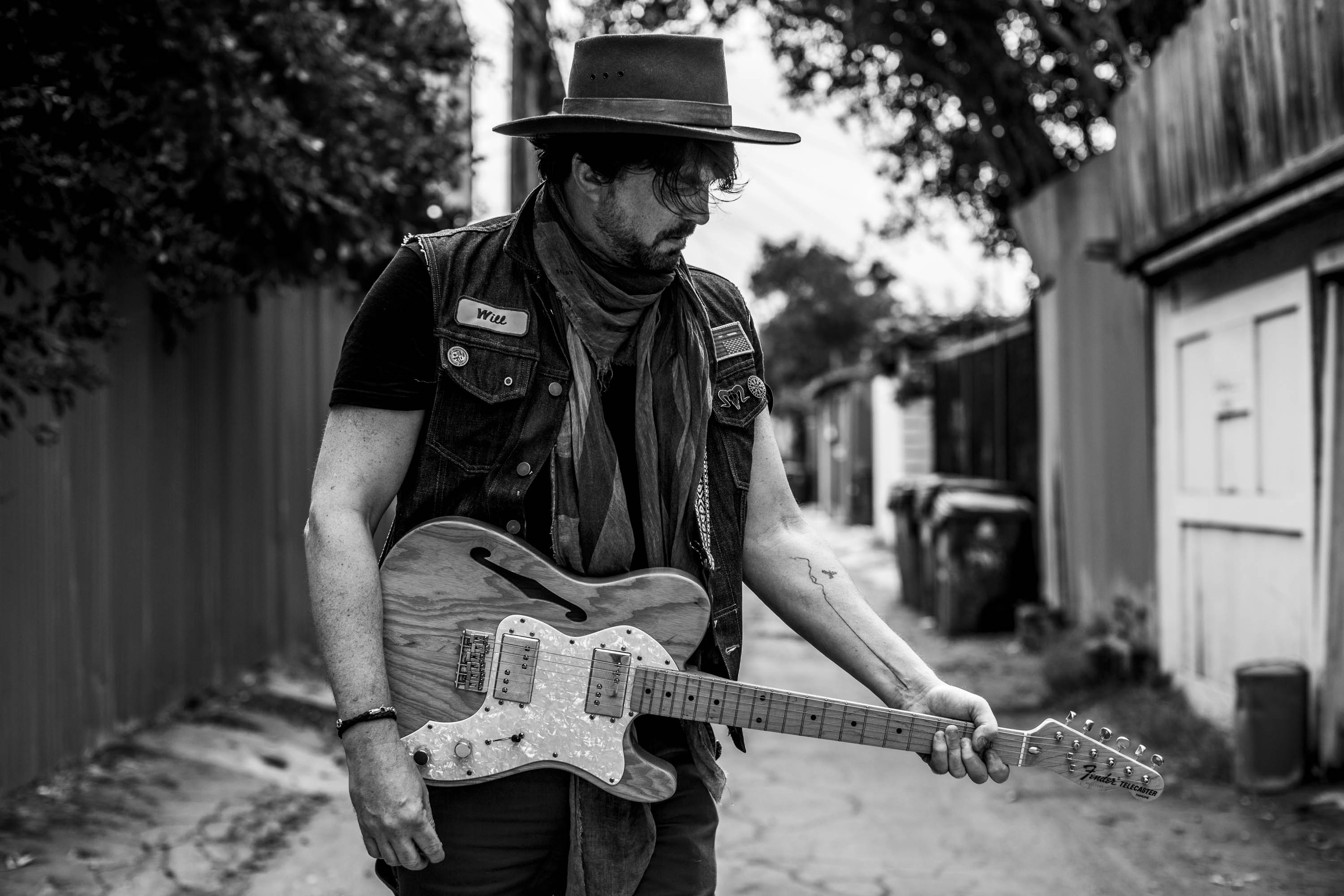
photo courtesy of Will Hawkins

by Eric Harabadian, Contributing Blogger

Album Review of Will Hawkins: Cartas No Enviadas (Fastback Records)

Will Hawkins is a Los Angeles-based singer-songwriter who is best known as the frontman for the band Nine Mile Station. That band’s debut 2023 album BAZAR received many accolades from the music cognoscenti for its lyrical songs, vivid storytelling, and dynamic production.

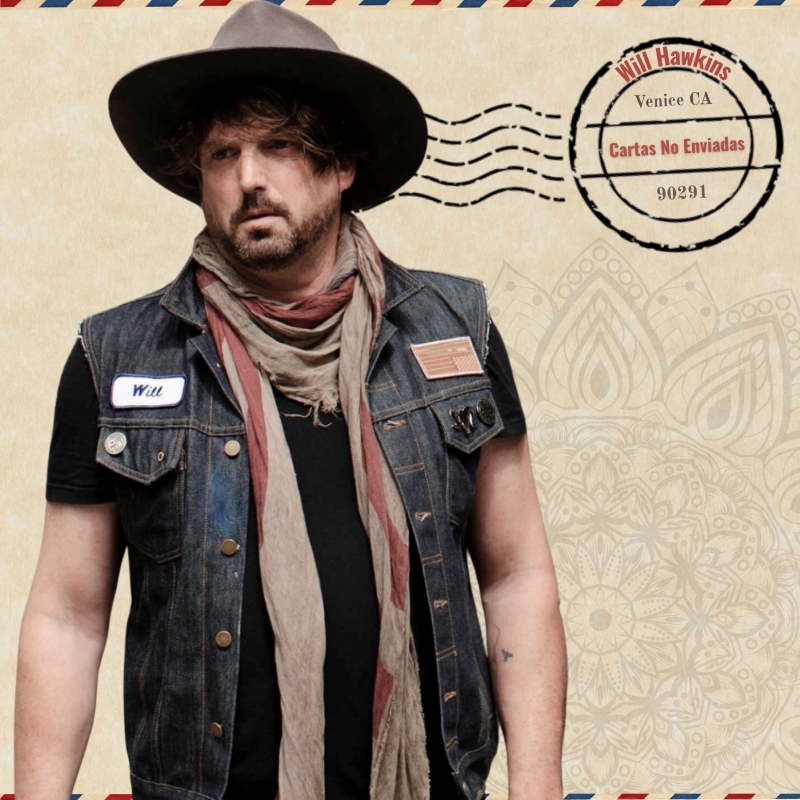
With this new solo release Cartas No Enviadas (Unsent Letters), there is that same creative spark and territory mined in his previous, lauded band context. Actually, the album title suggests each song as a note or message, yet to be delivered to the subject or receiver in question. Hence, the album, in total, almost plays like variations on a theme or concept.

image courtesy of Will Hawkins

“What Your Words Say” opens the album loud and proud, with a declarative and plaintive urging to a significant other, stating it’s time to get out of each other’s way and lay it on the line. There’s an honesty and passion in Hawkins’ delivery that really seals the deal here in terms of pure emotional connection. “As Good As it Gets” follows and features great hooks and a memorable chorus. The song is a reflection on life and how one places themselves in the world. Dan Nachimson’s brilliant piano playing really illuminates the sentiments here.

“C’Mon Now” is sort of an open-hearted song. Hawkins’ dynamic and unvarnished words cry out for someone to be transparent. Musically, there is a smooth mid-section shift from odd rhythms to an uptempo break. The song really builds to a stunning crescendo that’s very effective. “Messy” is a cover of British pop star Lola Young, and Hawkins takes the angst and swagger of the original to another level. Session man, indie artist and producer extraordinaire Fernando Perdomo provides the surrounding ambience of the track via minimal keys, drums, and spacey guitar.

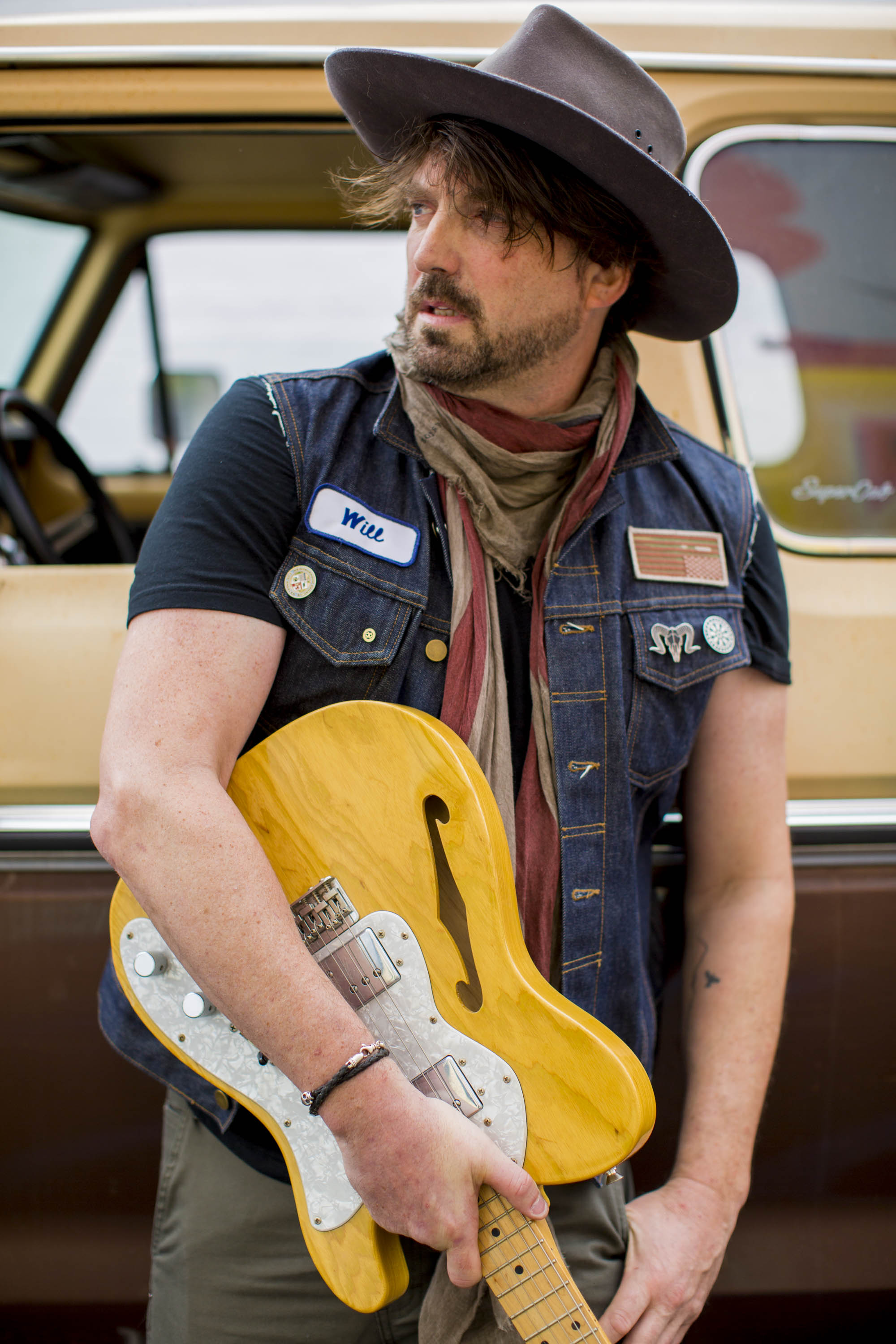
photo courtesy of Will Hawkins

“New Friends” is a cover of David Poe and brings out some of Hawkins’ east coast Springsteen-type roots. It’s upbeat, with a great hook. And Lainey White’s swirling violin even suggests a Dylan-meets-Mellencamp vibe. The Colin Hay nugget “Waiting For My Real Life to Begin” gets a thoughtful and pensive reading here. Phil Parlapiano is the pianist on this track, and his decorative and prominent accompaniment adds gorgeous luster to this treatise on living in the moment and appreciating what’s happening in the now.

“California” talks about the wanderlust and desires of a young man seeking the bright lights and fame of Hollywood. Gerald Menke’s pedal steel guitar gives the song an early Jackson Browne and the Eagles kind of feel. “Anything” is a tune from Hawkins’ formative years in NYC. Recorded live at The Baggot Inn, it’s a nice original ballad that drifts into jamming in sections. It’s a nice stretch out for the band. The album concludes with a dedication to Hawkins’ father entitled “May the Road Rise to Meet You.” It’s a traditional Scottish proverb that is lovingly detailed, including the artist’s own bagpipe playing in the fade-out.

Will Hawkins is a talented and multi-faceted musician and producer who presents a contemporary Americana and West Coast sound that is timeless. His songwriting is reflective of CSN&Y and all the greats to arise from the classic Laurel Canyon period of the ’60s and early ’70s. But he is also on the cutting edge with modern troubadours like Dawes, Jason Isbell and others. Hawkins is an artist to keep on your radar.

Album Review: The Far Out – Greetings from The Far Out

photo by Jackie Vlahos; photo courtesy of Knyvet

by Eric Harabadian, Contributing Blogger

Album Review of The Far Out: Greetings from The Far Out

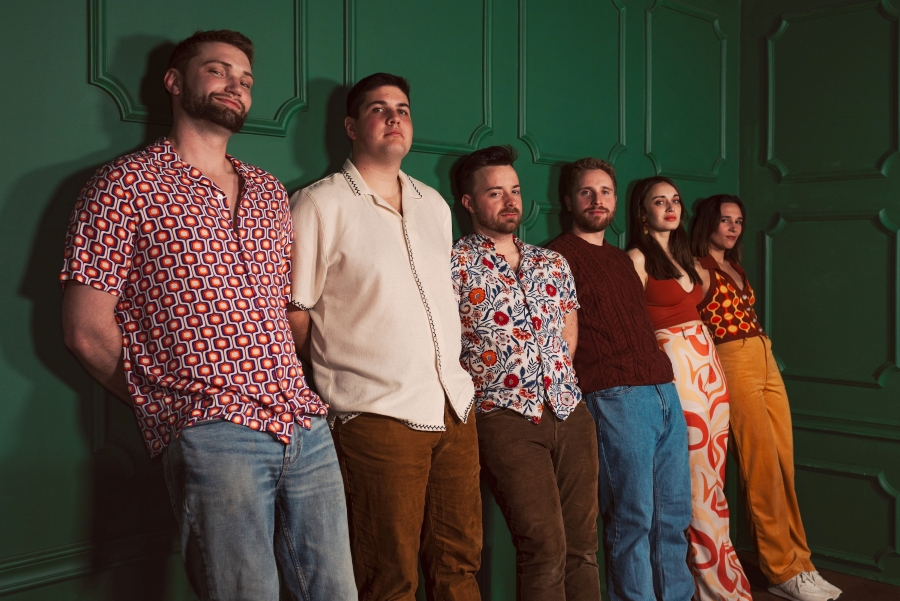
Boston’s award-winning funk/pop trailblazers The Far Out essentially developed their act during the downturn years of the global pandemic. But this vibrant and vivacious sextet has been friends for several years before that. Ellie Dolan (trumpet, vocals), Ryan Fremont-Smith (bass, vocals, saxophone), Olivia Lowe (guitar, flute, vocals), Drew Phillips (drums), Colin Senechal (saxophone, guitar) and Henry Zagarella (keyboards, vocals) comprise the crew that oozes with clever arrangements and unbridled talent.

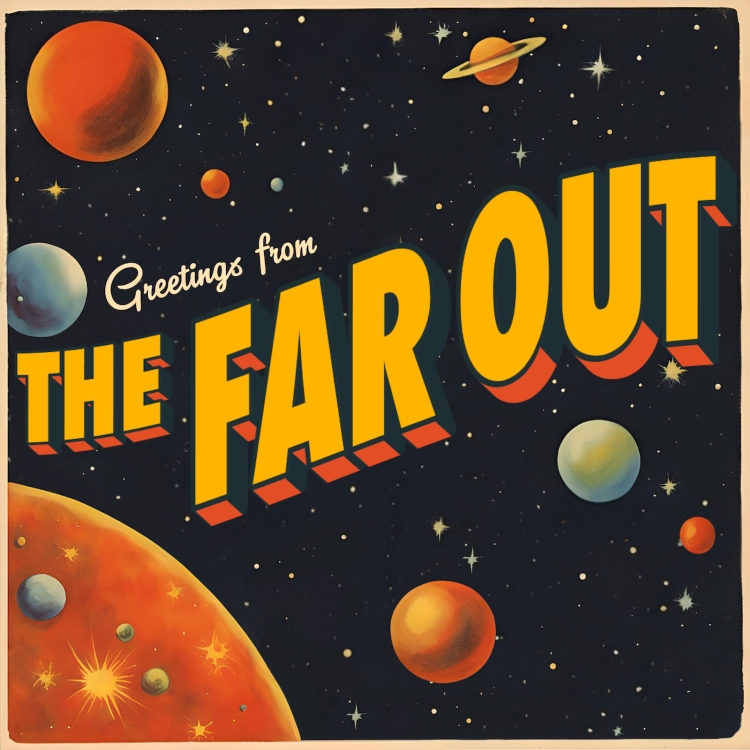
artwork by Olivia and Ezra Lowe; image courtesy of Knyvet

On the path of some well-received singles, this eclectic and danceable outfit caught the attention of the New England Music Awards. In 2024 The Far Out were honored as the “New Act of the Year” and, assuredly, a band with a bright future and a lot of promise.

“Infectious” is a word that, perhaps, gets overused a lot when one talks about musical acts and performers that exude a ton of energy and attitude. But that is exactly what you get when you take on this album in its entirety. From track to track, The Far Out creates an aural experience that works on a number of levels: emotionally, physically, spiritually and, even, intellectually. Their songs will get you on the dance floor, but you’ll also be engaged by the clever wordplay and snappy arrangements.

photo by Jackie Vlahos; photo courtesy of Knyvet

Eight songs in total; they explode in a colorful array of personality and charm. “Need a Win” opens the album and answers that call, with a bouncy and uplifting beat. Fremont-Smith’s intrepid bass lines grab you from the get-go. “Funkadelic Gas” is not only a great title but locks in a killer groove framed by some of the tastiest horn charts this side of Average White Band. “Lazy Lover” is a bit of a departure that features a punchy feel and some great gnarly crunch on the guitar. “Laurel” follows and is one of the catchy singles that first caught this reviewer’s attention prior to the release of this album. The lead vocals are bright and clear, with smart nuanced breaks and classic-sounding horn accents. “Putt Strut” is a somewhat humorous tune, with some overt golf references and cheeky lyrics a la British prog rockers Caravan. “Long Weekend” is a great sentiment that offers more of a laid back pace. But that sets the stage for the Motown-like “Packed To Go.” This one is straight up R&B, with a grooving breakdown from Phillips. For the finale, they display their jazzy side on the provocatively titled “See Red (You’re Dead).”

photo by Jackie Vlahos; photo courtesy of Knyvet

Perhaps keyboardist and vocalist Zagarella typifies The Far Out’s goals and state of mind: “I hope that you can hear our camaraderie through the music. These songs are built on the foundation of strong friendships. And while that’s easy to see when we play live, I would love for people to hear it at home too!”

RIYL: Parliament Funkadelic, Average White Band, Earth Wind & Fire, Swing Out Sister, Squeeze, and Brand New Heavies.

Looking Ahead

Per the “Shows” page on The Far Out’s website, you can catch them in Massachusetts, Vermont, Rhode Island, New Jersey, and Connecticut between now and mid-September. Be sure to check the band’s website to see when and where they’ll be performing near you.

EP Review: Billy Dodge Moody – Ephemera

photo courtesy of Billy Dodge Moody via Knyvet

EP Review of Billy Dodge Moody: Ephemera

The first musical comparison that comes to mind when listening to Billy Dodge Moody‘s Ephemera is the Moody Blues. The full, rich sound and pleasant, pop-friendly rock melodies on Ephemera recall that classic radio-(soft)-rocking sound.

The first single from this EP, “Meaning to Disaster,” is a soft-touch tune with a full sound that builds in both power and lushness over the course of its three-and-a-half minutes, supporting thoughtful lyrics with a sneaky-catchy chorus that turns this ballad into an unexpected earworm.

image courtesy of Billy Dodge Moody via Knyvet

“Nobody,” which was the second single released in advance of the EP, is a more uptempo strummer, a song that hides its melancholy lyrics behind a relaxed yet uptempo, on-vacation-ish, hooky soft-pop energy.

Track three, “Made to Decide,” takes a more introspective tone musically, adding harmonious backing vocals from Hannah Foxman to the mix, supporting more obviously sad lyrics and a thoughtful pick-and-strum, all combining to bring a lump to the listener’s throat. Yes, even when you’re not paying particularly close attention to the lyrics, which were inspired by the agonizing decisions brought about by Billy’s ailing cat. (Knowing the inspiration, I can relate even more.)

Album-ender “Suddenly” ties things together nicely, helping provide a consistent style for the EP but also adding a few new elements to the mix, as the introspective number adds a harmonica and a moderately folky guitar picking style while maintaining the record’s rich, full production style.

Unless your heart is stone-cold, you’ll be touched by this record. Subtle differences between the songs ensure that, while you’re likely to enjoy the entire collection, you’ll probably also have a favorite track. Maybe two. Or possibly a different one each day, depending on your mood. Regardless, with this EP’s timeless broad appeal, anyone who enjoys song-driven music needs to at least give it a test-drive.

Album Review: Jason Miles – Cosmopolitan

photo courtesy of That Jazz Girl

Album Review of Jason Miles: Cosmopolitan

Jason Miles (keyboards, synth) recorded Cosmopolitan back in 1979 with Michael Brecker (tenor sax), Gerry Niewood (saxophone), Marcus Miller (bass), Ricardo Silveira (guitar), and Jeff Williams (drums), with Badal Roy on tabla, percussionists Armen Halburian and Henry Castelanos, and vocalist Clarice Taylor. However, that record was shelved for… 46 years before its 2025 release.

image courtesy of That Jazz Girl

The jazz fusion album that resulted from those 1979 sessions, Cosmopolitan, is simply remarkable. The title track is so engaging that its 7:15 runtime simply flies by. The entire album is that way, in fact. Album-opener “Cosmopolitan,” though, in addition to incorporating some actual city sounds in the opening, delivers a lively very city-like tempo, with energetic, sometimes abrupt horns, an occasional funky beat… it’s a jazz fusion representation of the sound of a lively city, of the City. Very cosmopolitan.

And yeah, that’s my favorite track among the six on this 37-38 minute-long album. But not by much. The next song, “Powder,” meanders a lot more, slowing the pace down a bit, before “Gale Warnings” splits the difference a bit more. While the first two tracks leaned heavily into wind instruments (Spotify lists featured performers for each song, and saxophonist Gerry Niewood was featured on the first two cuts), “Gale Warnings” gets things rolling with some noticeable synth-work before the song notably begins to delve into other instrumentation, as Michael Brecker (tenor sax) is mentioned as the featured collaborator on this track.

“The Man Who Pushes the Buttons,” also featuring Brecker, is a bit more angular and frenetic than the record’s preceding songs. “Kashmirian Twist,” meanwhile, lists as featured artists both Niewood and Badal Roy, who plays tabla, which I was completely unfamiliar with. (Google found me this “What is Tabla?” article.) And indeed, the tabla (pair of drums) did add a unique sound as a co-featured instrument, probably bringing forth the suggestion – for me, at least – of a subway car rattling a bit as part of yet another cityscape-evoking number.

“Poetry” closes the record with a smoky barroom-scented piano opening that belies the forthcoming liveliness, as this number, with Niewood again listed as the featured artist, recovers some of the liveliness of the album-opening title track, providing nice bookends to this broad-appeal jazz fusion collection.

As I hope you know by now, I love sharing music that’s brilliantly-assembled and fun to listen to, and that is most definitely true of Cosmopolitan. With its lively rhythms and cool cityscape-recalling sounds, this record is likely appeal well beyond its particular subgenre’s core audience. So give it a listen. And yes, start with the opening number because it’s the most likely to get you hooked. But then play the record in order to appreciate Miles and his collaborators’ collective vision.

EP Review: Micki Free – Dreamcatcher

image courtesy of Frank Roszak Promotions

EP Review of Micki Free: Dreamcatcher

Micki Free is a Grammy winner and recipient of a Native American Hall of Fame Lifetime Achievement Award. His 2024 EP release, Dreamcatcher, is an excellent mostly-blues album, with a bit of musical variety and variations among the songs, making for a fun listen that’ll soon become a welcome addition to your music collection or playlist. Micki’s band is comprised of Cindy Blackman Santana (drums), Benny Rietveld (bass), and Ray Green (vocals). Dreamcatcher also features guest appearances from Rhonda Smith (Prince, Jeff Beck) on bass and Mark “Muggie Doo” Leach (Buddy Miles) on Hammond organ and piano.

The album kicks off strong with my personal favorite in the collection, the rollicking blues number “When The Devil’s At Your Door.” It’s followed by the funky blues – or perhaps it’s bluesy funk – “My Sweet Honey.”

The instrumental “Dreamcatcher,” next up, has kind of an adult contemporary vibe, a bit reminiscent of ’70s mellow blues-based rock ‘n roll, and features the notable inclusion of some Native American flute musical runs (played by Micki, per the liner notes). It’s followed by “Night Crawler,” a heavy, moderately psychedelic, throwback blues rocker with a rattling, omnipresent background buzzing wall of sound.

“We Are One,” the last studio recording on the EP, has kind of an acoustic vibe, with the guitar strumming giving it an almost folky blues flavor, though the electric guitar line that dances through the song add a classic rock ‘n roll energy to the song, too. It’s a very cool arrangement!

Finally, the sixth song is labeled a “bonus track.” It’s “Dreamcatcher Live,” a live version of the instrumental number “Dreamcatcher.” Surprisingly, it’s much shorter than the studio version of the song, and I think it levels up the song by imbuing it with an energy that’s hard to duplicate outside a live setting.

In all, Dreamcatcher is a very cool EP, one I simply couldn’t resist sharing with you via review. Definitely worth checking out!

Album Review: Smoking Popes – Lovely Stuff

photo by Meredith Goldberg; photo courtesy of Howlin’ Wuelf Media

Album Review of Smoking Popes: Lovely Stuff (Anxious and Angry)

Smoking PopesLovely Stuff is like a brand new blast from the past. The band, whose broadest mainstream success came in the ’90s, clearly hasn’t lost a step with this new release. For those (few) of you who’ve followed my writing from the early days, all the way back to when I launched my print publication, Geoff Wilbur’s Renegade Newsletter, you’ll recall that I was based in East Lansing, Michigan. The rock bands in Midwest college towns like East Lansing had a trademark sound in the mid-’90s. The biggest band to emerge from the East Lansing scene was The Verve Pipe, but that scene had several equally talented bands that very easily could have equaled or exceeded The Verve Pipe’s success. It was almost shocking that a half-dozen bands didn’t emerge from that scene; East Lansing for a couple years there seemed like it might be the next Athens. But we were a little myopic in the East Lansing scene; in fact, that alt-rock/college rock sound with catchy hooks and a pop sensibility was thriving throughout the Midwest. One of the bands that emerged with a similar sound, though musically a bit more aggressive and punkier, at least around the edges, was Chicago’s Smoking Popes. So, you know, not a sibling of the East Lansing sound but maybe a first cousin.

In the 1990s, the Smoking Popes had modest success, with their sophomore album, 1994’s Born to Quit reaching 37 on the Billboard Heatseekers Albums chart and that album’s top single “Need You Around” reaching 35 on the Billboard Heatseekers Songs chart in 1995, due in part to its inclusion on the Clueless soundtrack.

Lovely Stuff is the first Smoking Popes album in seven years, the band’s first release since 2018’s Into the Agony. Of course, I haven’t heard the band since the 1990s, so, as I mentioned in the review’s first sentence, this really does sound like a blast from the past. There’s not a lot of new music being made with this jangly, classic Midwestern college-town alt-rock sound these days. Still, it’s not too far off from modern alt-rock with a dash of pop-punk’s mainstream sensibilities. Still, the classic warmth and fullness atop the sometimes-frantic strumming is the mainstream appeal that many of today alt-rockers often miss.

The jangly guitars in disc-opener “Golden Moment,” as well as the tone of the vocals in the verses, are almost reminiscent of 1980s-era U2. But then the song jumps into uplifting, faster-paced alt-pop-rock mode when it reaches the chorus. It’s a nifty blend that makes “Golden Moment” a memorable song and a terrific choice for kicking off the disc.

I think the next track, “Fox River Dream,” might be the album’s most engaging, as the drum and guitar runs following the ends of the chorus are cool elements that unexpectedly push the song forward following the big harmony-driven chorus, something that would seem to call for a pause. That’s not just the only pop-friendly element in the song, as “Fox River Dream” is somehow noisy and raucous while, at the same time, being big and warm.

photo by Chris Tracy; photo courtesy of Howlin’ Wuelf Media

Where “Fox River Dream” may be the most engaging, I think “Never Gonna Break” might be my favorite song on the record. One of two, anyway. The verses start out steady, the beat picks up in the lead-up to the chorus, and then the chorus’ key-change makes it absolutely pop, as lead singer Josh Caterer’s voice delivers raw and tunefully cracking, as if he’s singing in anguish, “My heart is never really gonna break. It’s only gonna bleed a little while. I won’t be falling all the way apart. That’s not my style. You’re never going to have the satisfaction of knowing that you hurt me any more than I could take, ’cause my hear is never really gonna break.” Yeah, sure. It’s not entirely convincing, which is part of what makes it such a cool lyric. You can’t expect any better than this from a broken-heart rock song.

My other personal favorite is stylistically similar “Young and Dumb.” The sound is a bit more broad and open in the verses, and the guitars are steady. The post-chorus full-stop is well-executed. There’s a cool variety of complementary musical styles, with the broader more open sound that accompanies the verses standing in contrast to the more frantic, noisy, anarchic sound-filled backdrop that accompanies the main chorus phrase “always for someone else, never for us.” Tack on the rhythmic basswork and open space vocals repeating “oh to be young and dumb again” in what seems to be late song bridge but actually just bridges to the song’s close, and it’s a memorable song.

“Racine,” “To This Very Day,” “When the Sun Goes Down” – these are all also songs similar in style to most of the songs on the record, though each with their own variances (like the guitar squeal at the opening of “When the Sun Goes Down”) that are likely to make each of them other people’s personal faves. They’re great songs in their own right, but I’m gonna run out of descriptive phrases if I try to go track-by-track, so I won’t.

Tucked in near the middle of the album is “Madison,” the closest Smoking Popes come to pure, modern pop-punk on this record. The verses have a somewhat slower, more flowing tempo, but you may just find yourself pogoing to the song opening and the verses, so be sure to listen in a safe space… or a padded room, perhaps. There’s also some cool guitarwork in the song because you can’t be a rock band from the ’90s without giving your guitarist a chance to show off – fitting within the context of the song, natch – every now and then.

As the album nears its close, Smoking Popes shake things up. The penultimate track on Lovely Stuff, “You Will Always Have My Heart,” is a softly instrumented strummer, almost stylistically folk-rock, though you’d never mistake the rough rock ‘n roll edges of Caterer’s voice for those of a folk singer. As for the lyrics, if you learned only one thing from TV’s The Big Bang Theory, it should have been that “always” always makes it worse.

The band continues its detour from its types style on album-ender “Over the Rainbow.” Yes, it’s a raucous, noisy, distorted guitar rendition of the song Annie made famous. It’s crunchy, it’s rocking… it’s a surprisingly strong way to end an alt-rock record: “Why, oh why can’t I?!” That’s Lovely Stuff, indeed.

Album Review: Willie Nile – The Great Yellow Light

image courtesy of Howlin’ Wuelf Media

Album Review of Willie Nile: The Great Yellow Light

My introduction to Willie Nile‘s music was a fortuitous accident. I was in New York, traveling for work, in the City with one day free in 1998, and one of my favorite artists, Lisa St. Ann, who I had reviewed and interviewed for Geoff Wilbur’s Renegade Newsletter, was playing at The Mercury Lounge. The other artist on the bill for the late afternoon show was Willie Nile. (I have always loved that you can catch amazing music from before dinner until early morning in the City. There is only one New York!) I mean, he’s Willie Nile – I’ve discovered what that means in the subsequent years – so obviously it was a great concert. A great double-bill. Interestingly, in part because I rarely seek out music because so much more is sent to me than I can possibly review, I haven’t had an opportunity to write about Willie again since wrote a short blurb of that show for GWRN… until now! And it’s been far too long. Before I share some more of my own words about Willie Nile, I’ll share one quote that I was able to find thanks to his promo material – New Yorker called Willie Nile “one of the most brilliant singer-songwriters of the past 30 years.” Well, they’re not wrong.

Willie’s newest album, The Great Yellow Light, his 21st long-playing (LP) recording, is brand spankin’ new – it was just released on June 20, 2025. No, I didn’t turn the review around this quickly. I’m always at least a couple months behind. In this case, I had an advance copy, so I’ve become very familiar with this record over dozens of listens, just as is generally the case with almost everything I review. I am, however, completely psyched to tell you how great this album is, and why you’ve gotta hear it! I know, that’s not exactly a spoiler alert, since I only review my favorite few percent of the music I receive (plus music some I proactively seek out) and, as a result, every review at the Blog is a recommendation.

Every song on this record is unique and original, so I’ll just share this thought – Willie Nile is a meticulous, versatile singer-songwriter and dynamic performer, and this shows throughout his latest album. So many of the songs on this record are energetic, catchy, guitar rock-era potential hits that’ll get you out of your seat. Now, let’s dive in; I’ll share my thoughts on my personal favorites.

photo by Cristina Arrigoni; photo courtesy of Howlin’ Wuelf Media

The record begins with “Wild Wild World,” an energetically raucous, fun rock ‘n roll number. Clever lyrics hint at social awareness, but Willie doesn’t go as deeply into the details as he does elsewhere on the record. Instead, it’s an entertaining song built upon a ’50s and ’60s style pre-psychedelic rock ‘n roll style but with more modern guitar rock energy and hint of lyrical nihilism.

“We Are, We Are” follows, with a Queen-reminiscent guitar opening that becomes an anthem with a singalongable chorus: “We’re young and strong – we are, we are! We’re righting wrongs – we are, we are!” This is the record’s “we can do it!” song, an important motivational listen for those wanting to tackles the social issues Nile mentions elsewhere on the album.

Mostly, though, this is simply a rock ‘n roll album with the occasional issue-driven song. For example, next up, “Electrify Me” is a straight-ahead raucous rocker that plugs a punk rock energy into a fun lyrics-and-guitars rock ‘n roll singer-songwriter song package, replete with a catchy rhythm and thumping beat.

“An Irish Goodbye” is a fun change-of-pace, obviously channeling a good Irish pub song stylistically a bit, but chock full of clever lyrical turns of phrase, channel phrases like “here’s fire in your whiskey, here’s mud in your eye” throughout the song. You’ll find yourself swaying along to the song, trying to memorize the words, and singing along with the parts you remember. Obviously, since the chorus repeats a few times, that’s what you learn first. The whole friggin’ song is fun, though. Also notable, it was recently dubbed “Coolest Song in the World This Week” per Little Steven’s Underground Garage. How cool is that?

You almost feel like the Irish swagger carries over into the vocal delivery on the title track, the steady, straight-ahead rock song “The Great Yellow Light.”

Willie picks up the energy again on rhythmic, almost hoedown-styled, bar-rocker “Tryin’ to Make a Livin’ in the U.S.A.” You know what you’re in for from the lyrics that kick off the first verse: “There’s nothing wrong with a hit record wouldn’t cure. The blues and the clap, yeah, they all can reoccur. But a song on the charts can do a lot of good. Why, I’d run buck-naked through my neighborhood.” It’s a fun romp about the difficulty of making a living as an artist – with some perhaps-exaggerated benefits of writing that elusive hit – that’ll be a quick favorite and leave a smile on your face.

“Fall On Me” is another straight-up mid-tempo rock song emotionally delivered that’ll connect with listeners going through rough times. The album then trends toward the hopeful – at least, that’s the way it plays for me – on “What Color Is Love,” a song that’ll leave a lump in your throat as you listen to Willie’s grizzled vocals, wondering if love will be recognizable.

The big protest song on the record is next, and it’s catchy as all. “Wake Up America” starts a little edgy, with a nervous tempo, including lyrics like “Wake up America. Red, white, and blue. You used to be great. What happened to you?” When the song reaches the first chorus, the music becomes richer and louder. Stylistically, it has a Mellencamp-ish feel. Or maybe, though stylistically quite different, it gives off that old Coca-Cola commercial vibe, with everyone holding hands singing “I’d like to teach the world to sing.” The song intensifies on the back half, with lyrics like “Wake up America. Do you know who I am? I’m one of the millions. Do you even give a damn. I’m the son of immigrants, I’m a daughter of slaves. I’m Native indigenous, stop digging my grave.” It’s a really hopeful song with a positive energy, despite lyrics that sometimes point out faults. The closing lyrics of “open your eyes, open your eyes” pleadingly offer the solution.

The song closes with a soaring, flowing number, “Washington’s Day,” that also touches upon social issues but stylistically feels uplifting, leaving the listener with a good, warm feeling after a listen to the complete record. And it’s a helluva record! An instant rock ‘n roll classic from longtime critically acclaimed rock troubadour Willie Nile.

I can’t believe it’s taken me this long into my writing career to review a Willie Nile record. Well, if you’re not familiar with him – or if you know of him but don’t yet own one of his records – The Great Yellow Light would be a great place to start. It’s a helluva disc! And if you’re already familiar with Willie Nile – which, I’m pretty sure, includes everyone within a 100 mile radius of New York, plus a whole lot of lucky people elsewhere – you just need to know this: Willie has a new album out. If you haven’t yet, be sure to get a copy of The Great Yellow Light. It won’t surprise you at all that this record kicks ass!

Looking Ahead

I feel lucky to have caught Willie Nile live once, but that was back in the 20th century, so I probably need to see him perform again. The “Shows” page of his website lists a smattering of shows on the east coast, in the middle of the country (MO, OK, TX), and one in Vancouver, BC, but nothing particularly close to me. I’ll keep an eye out for additions. And if you don’t spot anything near you at the moment, I’d suggest checking back periodically, too.

EP Review: Falsely Accused – Unbroken

photo courtesy of Falsely Accused via Knyvet

EP Review of Falsely Accused: Unbroken

Unbroken is Falsely Accused‘s follow-up to 2021’s Compression, a sequel long in the making for Matt Tavano (lead vocals, bass), Mark Young (guitar, backup vocals), and Mike Azzolino (drums, percussion, backup vocals). Says Tavano, “It’s been three years since our last record and to say we’re excited to get our new music out into the world would be an understatement. We worked hard tocreate a record with new ideas, new sounds and concepts, not just rehashing the same sound from Compression. As we evolve, so must the music.”

Now, I haven’t listened to Compression, but on Unbroken, Falsely Accused’s music is distorted, guitar-driven, heavy rock with a wall of noise well-suited to fill medium-sized barrooms and small clubs with an electric energy, the kind that leaves gig attendees buzzing for hours afterward, looking forward to the next live performance.

artwork by Matt Tavano; image courtesy of Falsely Accused via Knyvet

Opening cut “A Drink Before the War” was the first single, released last fall in advance of the EP, and it’s the track with the biggest hook, most likely to be radio fodder on an alt-leaning hard rock station – or a heavy-leaning alt-rock station. If listeners are going to choose just one song to add to a multi-genre playlist, this is probably the song with the broadest appeal. With varied vocals and chord progressions that lead the listener from point to point, it’s a well-constructed, memorable number.

For a little variety, there’s kind of a western vibe – open-spaces, though not country – in the tone of song number four, “Drifting.” It’s a little bit of a jam-band type of song, so the structure may not carry the mainstream appeal that the sound does. However, if you’re attending a gig with someone who’s not as into heavy music, “Drifting” is about song for which they’re most likely to comment, “Oh, I like this one.”

The remaining three songs on the EP are less likely to be singled out by casual listeners but are probably more important to establishing Falsely Accused’s heavy, distorted, wall-of-sound persona, the type that provides the overall vibe of a beginning-to-end listen and the aura of a memorable, cohesive live performance.

“Castaway” has a heavy, rhythmic, steady but slow, foreboding, heavy rock tempo and a little ragged, near-psychedelic late-song guitar bridge. This is a song perfectly-suited to an electric, audience-enthralling live performance, particularly the new-rock axe noodling that closes the song.

“Witches” is a dense, heavy number that recalls ’70s classic heavy metal, though again some of the axework, while referencing that time period, utilizes somewhat more modern garage rock riff patterns.

And EP-closing song “Soul Crush” is a seven-plus minute, long-form epic rock ‘n roll number that is perhaps the most ’70s-recollecting AOR song on the EP, structurally, at least, and perhaps also in the distorted elements of the guitarwork. While the guitar runs are timeless, some of the rhythms deployed that hold the song together are more modern heavy rock-flavored. Still, black light posters and lava lamps wouldn’t be entirely out of place when listening to the collection’s closing number, particularly if you’re sitting in a bean bag. It’s a cool, updated, ode to rock history, while still fitting well into the staticky wall-of-noise aura Falsely Accused has cultivated on Unbroken.

Looking Ahead

In case you hadn’t noticed, in addition to “check out this EP,” my other recommendation is “get thee to a live show”! Well, the “Shows” page of the band’s website doesn’t list any upcoming performances, but I’m gonna keep checking back. I’ll also follow the band’s socials to remain abreast of upcoming events. You’ll find all of those links – and others – on the band’s linktree.

Album Review: Greg Nagy – The Real You

photo by Marilyn Stringer; photo courtesy of Greg Nagy

Album Review of Greg Nagy: The Real You

If you’ve been reading this blog for a long while – or if you live in Michigan – you know Greg Nagy is one of Michigan’s best bluesmen. (I reviewed his album Stranded in 2016.) Well, I hate to spoil the suspense in the first paragraph, but he’s only getting better, if that’s possible.

Greg Nagy’s voice and guitarwork form a style that’s uniquely his own. It’s a familiar mix of old-school blues, soul, smoother R&B, and even at times a hint of a modern big band-inspired pop sound, all in an identifiably unique combination. You know, probably a lot of that is the vocals – smooth but not too smooth, rich but not particularly deep, deploying phrasing that can be emotionally piercing, and a just slightly uniquely original tone. Sure, at his musical core, Nagy’s a bluesman’s bluesman, but the other elements in his music open it up to potentially appeal to a broad audience, obviously on some songs more than others.

The Real You is Nagy’s fourth album. It contains a mix of blues classics, Nagy originals, and inspired covers with arrangements and delivery styles that help Nagy make them all his own.

image courtesy of Greg Nagy

The album kicks off with a Nagy original, the title track, a smooth, soft blues ballad. Or near-ballad, at least. The horns, which add both depth and emphasis, are sometimes more enthusiastic than in a typical ballad, though they’re also responsible for moments in this song that hint at a big band influence – very cool. But yeah, you can slow dance to it, so it’s a ballad. Maybe at a wedding reception, for example, with lyrics like “I want to know the real you. I want to share the real me, too,” and especially with the uplifting vocal delivery Nagy employs on the song.

Track number two is one of the two old-school blues covers on the record. For “Mississippi Blues,” a modestly-paced number, Nagy relies on the grittier edge of his vocal range, pulling the anguish out of the lyric. He’s joined on this song by Ray Goodman on dobro and Peter Mudcat Ruth on harmonica. Indeed, the harp plays an important part in the feel of the song, particularly riffing off of the vocal line.

Jumping ahead to track five, the other old-school blues cover – and actually, it’s an old-school soul number – is “Come to Poppa.” Most familiar to those of us with Michigan roots as a Bob Seger tune, I investigated the song’s variants and discovered that Nagy’s rendition is a much closer match to Ann Peebles’ original recording of it, “Come to Mama.” Of course, Nagy’s rendition is more modernized, and the bass beat thumps a bit more as a good blues-rock number naturally would, though the pace is more that of a mid-tempo blues crooner.

Another cover worth noting is the very theater stage-styled, slow-blues-drenched rendition of the Beatles’ “Something.” It’s performed as a duet with Detroit’s Queen of the Blues, Thornetta Davis (whose Honest Woman album was reviewed here at the Blog by Detroit-based contributor Eric Harabadian, back in 2018). Before I return to Nagy’s originals, I want to comment on the two remaining covers, “Crazy” and “The Joke.”

Personally, while I absolutely love the Gnarls Barkley original, I think Nagy’s version of “Crazy” is an upgrade, at least for those of us with a particular fondness for mainstream-leaning blues and blues-rock. With a warm vocal tone in the verses, pleading vocal edge in the chorus, and varied phrasing, punching the right syllables while delivering some of the lighter lyrics wryly, Nagy pitches a perfect game with his vocals. Meanwhile, the music bed is rich and full, almost orchestral at times, with organ carrying some of its bridges and verses, delivering a memorable blues-infused, soft-rocking result that’s my pick for most likely to appeal to mainstream radio listeners.

photo by Wahwah Whitus; photo courtesy of Greg Nagy

If I’m wrong about that statement, it’s because the closing number on the record, “The Joke,” has broad appeal, too. It’s a brave and welcome choice for Nagy, putting his own spin on the Brandi Carlisle number that represents those who don’t fit the molds of modern society. It’s a song for the marginalized, the misfits, the underrepresented. The arrangement is rich and powerful, getting fuller and fueled by guitarwork that builds to power in key emotional sections. The arrangement – and Nagy’s vocal – will give you chills and leave a lump in your throat when he reaches the climactic vocal, “I have been to the movie. I’ve seen how it ends. The joke’s on them.” I’d still suggest “Crazy” as the more likely radio hit because “The Joke” is 5-and-a-half minutes long, and the opening is a little slow – effectively so, but we’re talking radio-friendliness here, not just quality. This is, however, almost certainly the most powerful song on this record. A great way to end the album.

However, if you’re a blues fan, you’re maybe more likely to like one of Nagy’s originals. In particular, “You Were Never Mine,” featuring top-shelf bluesman Larry McCray on guitar. And there are some filthy guitar riffs, indeed, on this tune, at times wailing in accompaniment with the smoothly-sung pain in Nagy’s vocals, particularly during the title lyric.

“What Took Your Love” comes later in the disc but has a mid-tempo blues-rock vibe, perhaps a touch more blues-rock than blues when compared with “You Were Never Mine,” at least in the guitar riffs.

“Where Do We,” with Bobby Murray handling the lead axework, is a straight-ahead, modestly-tempoed, thump-along, rockin’ blues number, for which Nagy utilizes his deeper, rougher-hewn, lean-into-the-blues vocal style.

Ballad “All I Need (Is You)” is lightly-instrumented, with a raw, live, man-and-his-guitar singer-songwriter feel, giving it an emotional honesty. It’s actually the record’s penultimate track, with its uncomplicated production flowing nicely into the soft, emotional opening of “The Joke.”

Finally, if you dig instrumental blues, as I do – it’s always nice to have one really good one on a blues record – “Cornell Ala King” is a nifty vocal-less entry. I found a recording of this song from 2010 on YouTube, so Nagy has been playing (and perfecting) this song for a while, and it shows! Guitar, organ, and horns all get their own opportunities to drive the song forward, resulting in an entertaining number with structured dynamics that would have made vocals unnecessary and redundant. Just kick back and enjoy, though the song isn’t particularly long, so it’s over almost before you know it.

In total, The Real You is an instant classic from the reliably exceptional Greg Nagy. It contains five potential crossover hits for mainstream music fans – two of the record’s five covers (“Crazy” and “The Joke”) and three of its six originals (“The Real You,” “You Were Never Mine,” and “What Took Your Love From Me”). At the same time, edging beyond the mainstream, “Where Do We” is likely to be a new favorite among blues and blues-rock fans. And the rest of the disc is a great listen, as well, even if I’m not predicting strong radio interest in the remaining tracks; they’re excellent songs that are ideal fits for the album. If you’re a blues fan, you should be waiting in line outside the record store on the release date (metaphorically) for each new Greg Nagy release. Rock and mainstream music fans, also, though, should give this record a listen, as there’s something here for everyone.

Looking Ahead

Greg has plenty of upcoming shows listed on the “Gigs” page of his website. All of his listed dates at the moment are from coast to coast in Michigan, except for one. On July 5th, my California readers can catch the Greg Nagy Band at the Sebastiani Theater in Sonoma. This is a rare opportunity, so get yourselves to wine country and don’t miss it!

Album Review: Rick Pierce Group – Brick By Brick

photo courtesy of BJF Media

Album Review of Rick Pierce Group: Brick By Brick (Golden Robot Records)

Brick By Brick is the debut album of the Rick Pierce Group. The band is comprised of guitarist Rick Pierce (guitar), Chris James (vocals), Izzy Rehaume (bass), and Frankie Rongo (drums). Brick By Brick was produced by Floyd Rose, notable in part because Pierce and Rose were two of the co-founding members of Seattle rock supergroup Q5 in 1983.

Brick By Brick is a hard rock album, heavy enough to be dubbed metal in some circles, likely to be able to keep up with similarly-style classic hard rocking bands like Judas Priest. From the very beginning of the very first song, the rock guitars are impressive, and you can identify the songs’ tunefulness, and James’ voice is melodically capable but with a slightly rough edge ideal for this brand of classic heavy rock. A couple songs stand out, but so many of the hooks are subtle. It takes a few listens to unlock some of them. If you love an album that starts strong and grows on you more and more with each listen, Brick By Brick is an album you’ll dig.

Album-opener “Tick Tock” kicks off with a thumping beat and aggressive guitar riffs, but James’ intense but expressive voice and the finesse in Pierce’s axework (including an occasionally recurring guitar riff that niftily soars and circles back on itself and serves as one of this song’s hooks) broaden the appeal of “Tick Tock” to all guitar rock fans. This is true of just about every song on Brick by Brick to varying degrees. In fact, the very next song, title track “Brick By Brick,” deploys a similar tactic.

image courtesy of BJF Media

Most of the songs can be described similarly as guitar driven heavy rock songs, with guitar riffs either subtle or more apparent that serve as unique hooks from song to song, occasionally varied hard rock/classic metal rhythms, and melodic heavy rock vocals. The songs are differentiated by vocal or guitar nuances, so you’ll have your own favorites, but they’re stylistically very cohesive.

In addition to “Tick Tock,” my other personal favorites on Brick by Brick are songs that add nuances to the style that appeal to my particular musical taste. For example, “Only” varies the formula slightly, with opening riffs that at least slightly bring to mind “(Don’t Fear) The Reaper” and a memorably heavy, tuneful “ohh, ohh, ohh” – deeply sung and very metal but still varied enough from what you’d typically hear in heavy rock songs that it’s attention grabbing.

“Remember the Bataclan,” meanwhile, takes a slower, more steady pace than most of the other tracks, plodding forward at a pace that fits in well with the hypnotic, rhythmic chant – unique to this song – that’s the sort of thing you might expect from a hard rock band. The closest I can think of is the chanting in Savatage’s “Morphine Child,” but on this song it’s more rhythmic and tuneful and follows along with the song’s rhythmic drum beat. It’s just – to repeat myself – hypnotic.

“Can You Feel It” is a pretty straight-ahead classic hard rocker but with some attention-grabbing guitar flourishes. “Love Hate” is a more plodding, rhythm-driven heavy rocker with the vocal abruptness used when singing the title lyrics, “love, hate,” intentionally obtrusive to drive home the song’s point; plus, it has a neat little 15-second run of blistering axework about two-thirds of the way through the song that serves as a bridge.

Album-ender “A Storm Is Coming” adding a slight blues-rock tint to the band’s power-rock formula. The guitarwork and drums work together to build an ominous musical backdrop for James’ vocals, which have an almost Southern rock-blues edge to them that matches the supporting music. The song is also an ideal album-ending song because it ends with nearly two minutes of drum-supporting guitarwork sans vocals, and that’s always a cool way to end a guitar-driven rock album, particularly when it offers a showcase for an axeman like Pierce.

Brick by Brick is an album all classic rock and classic metal fans should spin a few times. Whether you’re listening for the exceptional guitarwork, the power rock vocals, or the heavy rock vibe in general, you’ll enjoy this record. And as the hooks begin to dig into your brain, you’ll develop a couple of clear favorite songs – for me, they’d be “Tick Tock” and “Only,” and sometimes “Remember the Bataclan.” (Depending upon my mood, I’m either more or less psyched about the chanting.)

One of the better ways to keep up with the Rick Pierce Group’s latest news appears to be via the band’s Facebook page.