EP Review: Lovina Falls – Would That It Were

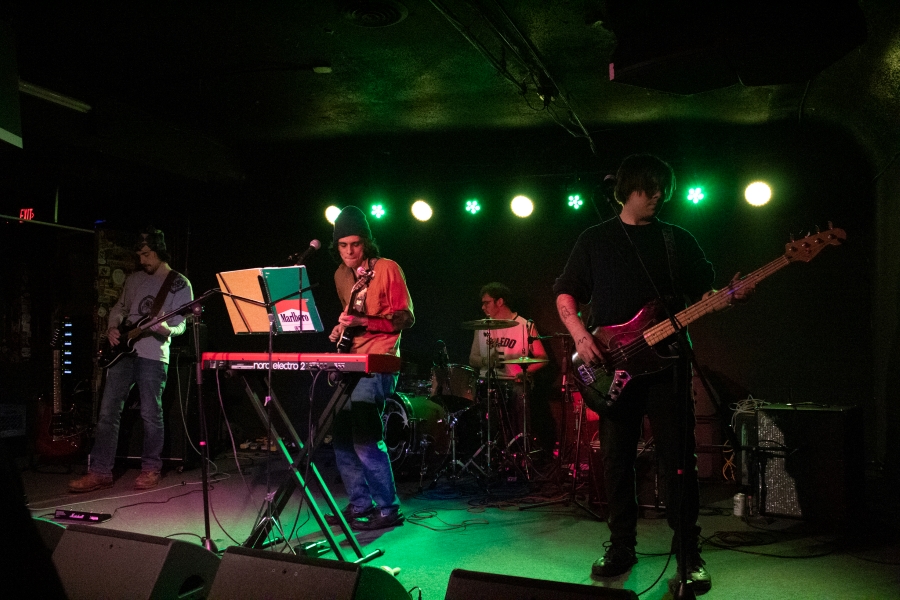
photo by Ken Rothman; photo courtesy of Knyvet

EP Review of Lovina Falls: Would That It Were

Lovina FallsWould That It Were is a five-song EP that features the two singles I reviewed last year – “Tragedy” and “Ellery Way” – and adds three additional catchy, memorable, jangly alt-rock bangers, a bit rooted in an ’80s New Wave style but with depth and, often, ominousness that’s modern and timeless.

The band is Valerie Forgione’s project, and she’s joined by a variety of collaborators – Brenden Cobb (guitar on “Tragedy” and “Ellery Way”), Todd Demma (drums on “Light and Low,” “Tragedy,” and “Ellery Way”), Chuck Ferreira (drums on “In The Corner”), Matt Klain (bass on “Ellery Way”), David Minehan (guitar on “Light And Low,” “About The Sun,” and “Tragedy”), Alice Lee Scott (guitar on “About The Sun” and “Tragedy”), with Carrie Ingber credited with “special thanks… for the mix assist.”

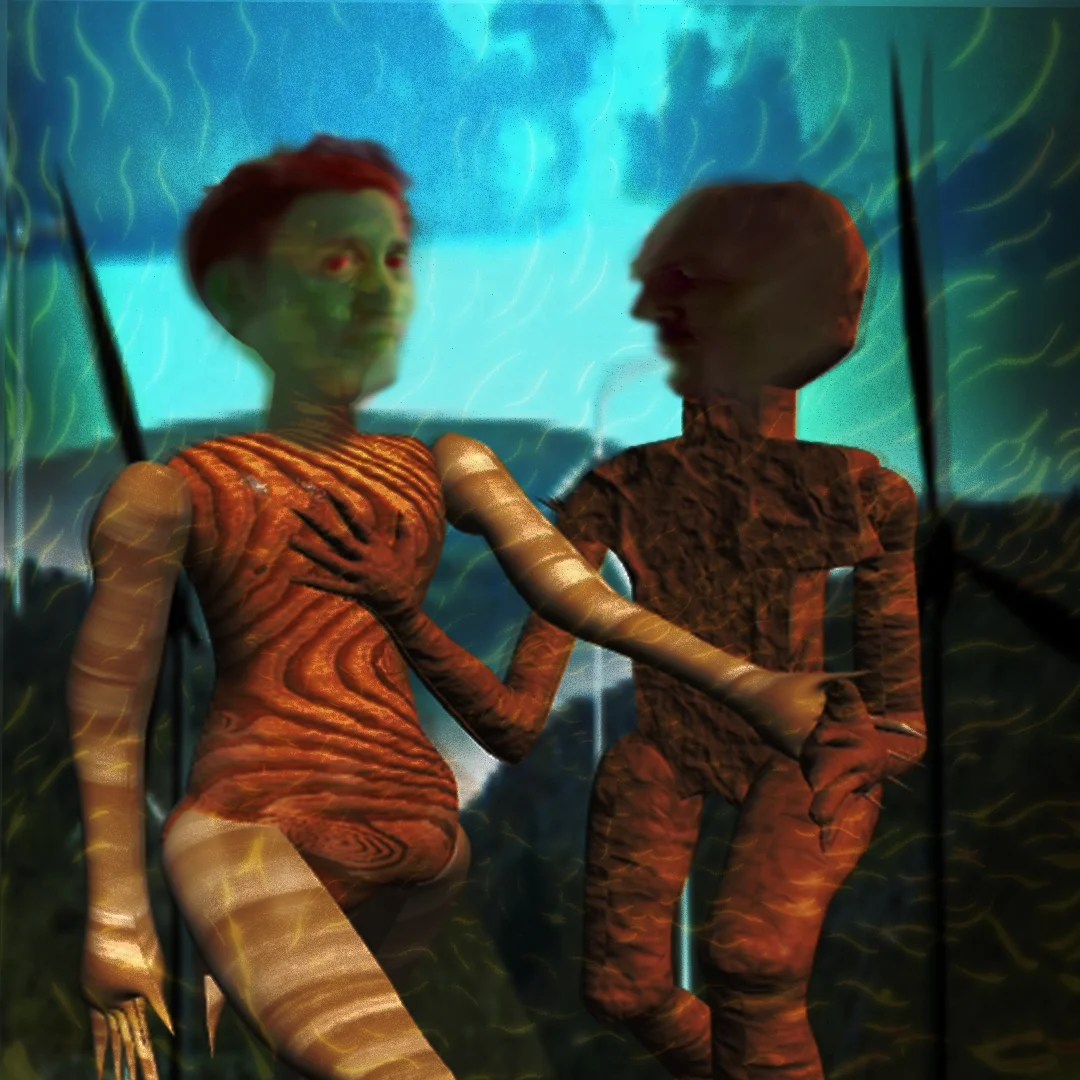
cover design by Valerie Forgione; image courtesy of Knyvet

None of the songs on Would That It Were are straightforward rockers. Rather, they’re creative, offbeat, alternative and art-rock creative productions steeped in the more exploratory, experimental tenets of rock tradition, the branch of rock ‘n roll that encompasses David Bowie, Lady Gaga, the Eurythmics, and the B-52s. I’m reminded of each of them during different songs on this EP.

The exploratory yet rockin’ nature of “Tragedy” recalls Bowie for me; it’s probably the track most likely to appeal to straight-up rock ‘n roll fans. The Gaga connection isn’t as obvious, in that I’m not sure I hear a song she’d sing on this album, though groovy EP-opener “Light and Low” comes closest, though even with its hypnotically swirling, flowing nature, it perhaps strays too far from any big-vocals moments to properly take advantage of Lady G’s vocal range. It’s for damn sure she’d appreciate it, though! In fact, “Light and Low” is the song from the EP’s three new entrants that most often just pops into my head unannounced; it’s hypnotic, I tell ya!

“In the Corner, a Fire,” the most electro-rock song on the record, hints at an Annie Lennox vehicle in a couple of its more brooding spots, though the rhythm and groove are really more B-52s-ish. That’s not to say any of these songs sound like any of the referenced artists. Rather, Valerie Forgione makes them all her own, with her subtle musical stylings and identifiable vocal traits evident on each and every track.

The only other song on this EP I didn’t write about last year, “About the Sun,” has a hauntingly old-west twangy guitar part, with some of the rhythmic, almost cheer-captainish vocals (Gwen Stefani, anyone?) seem abrupt and out-of-place when introduced but then blend back into the song as if they’ve always belonged there. In the end, the livelier vocals provide an interesting counterpunch to the otherwise floating, dream-rock style of the rest of the song. With each listen, it comes across as increasingly clever.

I also like that the EP ends with “Ellery Way,” which, if I had to assign a sound to Lovina Falls, seems the closest to a signature song on the record. It’s so uniquely, persistently, simultaneously alt-rocking and dreamy, its steady rhythm seeming to measure the song’s relentless advancement. The haunting vibe of the song is as engaging yet unsettling as it was when I previously reviewed it. “Ellery Way” is so wonderfully unique and creative that this song alone would be worth the price of admission (to the EP, I suppose, though that’s a weird way to phrase it, so I’m going to pretend I mean admission to a Lovina Falls concert, which I’m also firmly convinced would also be wicked-cool).

In any case, if you’ve not yet heard Lovina Falls, this record is an ideal audio travelogue of the band’s musical style. For Bostonians, Lovina Falls (aka Valerie Forgione and friends) is a band you must know to call yourself an engaged member of the local music scene. (Not a big ask; you’re really gonna like Would That It Were.) For those elsewhere, it’s a chance to check out some of the most forward-looking, enjoyably creative music comin’ outta Boston’s local scene.

Album Review: Robert Scheffler – Truce

image courtesy of Howlin’ Wuelf Media

Album Review of Robert Scheffler: Truce

Singer-songwriter Robert Scheffler‘s album Truce showcases the singer’s talent and versatility, as the songs cover a broad range of influences, all centered by Scheffler’s storytelling ability and his hoarse, emotional vocal delivery. His breadth of range and the depth of the imagery and circumstance reminds me in some ways of Billy Joel, though Scheffler has a distinct style of his own. Scheffler has a tone that’s reminiscent of some of my favorite rock ‘n roll singer-songwriters – a bit of It Comes in Waves-era Martin Briley in some spots – and a bit more singer-songwritery in others, more like blog favorite Davey O., but perhaps a bit grainier. And when he’s soft-rocking with a little more tempo, I hear a little Don Henley in there. I’d love to hear some of the people Scheffler reminds you of – I know there are other names out there that escape me, but stylistically, Scheffler’s sound is, while being distinct, also very familiar, easy to get comfortable with and enjoy. I know strumming soft rock isn’t an easy category to break huge in – it takes a song that really touches somebody, perhaps tied to a favorite movie scene – but this dude has as much talent as those who do get their big breaks, and he’s got some songs here that, with the right placement, would launch him into the world’s musical consciousness. Regardless, this is a cool disc you should hear, and if nothing else, it can be one of your favorite albums of this subgenre.

Album-opener “Excuse the Mess” sets the tone from the get-go, bright and summerly strumming with tunefully compelling vocals. While that first song is acoustic – honestly, I had to listen back, even after reading that it was acoustic, to be sure because the song has so much energy – the disc is mostly electric, and that begins with song two. Indeed, Scheffler goes a little more nostalgic – to the extent present-tense can be so – with “Hang On, Skyline.” Just the lyric, tempo, and subsequent guitar riff of the line “Hang on, skyline; hang on, moon; I’ll be there soon” is an earworm that’ll leave an impression on you. Both of these first two numbers push ahead steadily, compellingly, even working in some nifty guitarwork. “Basher,” which follows, has its energetic stretches, and its calling card is a crunchy, distorted guitar riff, but it also slows down when the lyrics call for a little more intimacy.

photo by John Matthews; photo courtesy of Howlin’ Wuelf Media

“All in Good Time” is a melancholic, emotionally sung ballad. “Where Do I Know You From?” is funky-pop-rock, with an opening that suggests it could be related to Peter Gabriel’s “Sledgehammer” before it slides into being a smoother mid-tempo rocker. Still, it’s got some edge in its arrangement and subtle flamboyance in the vocal delivery. Then it’s followed by the middle song of this 11-song collection, a soft number that’s mellowly reminiscent, the sonically and nostalgically regretful-sounding “Truce,” paying off with the lyric: “How much longer can I cry for the promise of a truce gone by?”

You’ll get some tempo back on “Carry On Without Me.” The vocals don’t, in fact, sound like Don Henley, except for a bit of an insistent edge, but this absolutely sounds like a song you’d hear Henley sing on one of his albums. Or, at least, a song you’d hear on the radio played alongside “The Boys of Summer” or “The Last Worthless Evening.” The energy amps up a little more, though still remains in the same sonic neighborhood, with the next track, “Blue Sky Mess.”

Then, just when you get into a whole mid-tempo soft rockin’ groove, Scheffler changes things up and goes full-on acoustic with one of the more memorable songs on the album, “I Don’t Love You Like I Should.” I mean, as much as I love the electric stuff, this might be the number that’d most easily reel in new fans because it’s just so dang cool. It sounds like something you’d hear on a Barenaked Ladies record – their weird, acoustic, uniquely catchy stuff – yet it somehow works on this album, almost entirely because of Scheffler’s identifiable vocals. And the nice turns of phrase in the lyrics, well, those would help this song work in just about any setting.

Before you settle in too much, though, a peppy drum beat and energetic strum greets you on “Punch Line,” a song whose beat, tempo, and rhythm make it a musical fraternal twin – or at least a close, best-pal cousin – of “Hang On, Skyline.” The second song of the record stylistically matching the second-to-last? It’s just one of those little things that ties this record together as a cool listening experience. For me, this is my singalong song on Truce. It gets me up to sing and dance every single time.

So how does a classic, mainstream-friendly soft rock singer-songwriter end an excellent record like Truce? With melancholy, of course. Duh! “We’re All Waiting” will end your listening experience with a sniffle.

Truce is a satisfying record, with so much lyrical depth and about as much stylistic variety as you can expect from a soft rock singer-songwriter’s album, simply an impeccable 11-song collection.


Live Review: KC & The Sunshine Band at the Bally’s Event Center

photo by Luca DePalo

by Luca DePalo, Contributing Blogger

KC and the Sunshine Band

Bally’s Event Center, Lincoln, RI

May 9, 2026

On a Saturday night in Lincoln, Rhode Island, the famed KC & the Sunshine Band played to a sold-out crowd at the Bally’s Event Center. This show, which pushed two hours, turned a night of dull weather into a full-on disco party, remembering all of those ’70s classics.

photo by Luca DePalo

KC & the Sunshine Band was founded in 1973 in Hialeah, Florida and are still known as one of the most influential disco/funk bands to ever exist. With chart-topping hits like “Get Down Tight,” “That’s The Way (I Like It),” “I’m Your Boogie Man,” “(Shake, Shake, Shake) Shake Your Booty,” and “Please Don’t  Go,” the band continues to tour with founder and lead singer Harry Wayne Casey. This, being my third time seeing the band, I couldn’t wait to hear the setlist!

As the lights slowly dimmed down, the powerful 14-piece band slowly took the stage, performing a long medley of covers: “I Wanna Dance with Somebody (Who Loves Me),” “I’m So Excited,” and a mix of other ’80s classics. Although I didn’t expect this, it felt perfect to introduce every band member.

photo by Luca DePalo

The band is musically directed by Nyne, who plays the keyboards and sings lead/background vocals. The rest of the band includes Fermin Goytisolo on the percussion, David Simmons on the drums, Stephen Lashley on the bass, John Reid and Cisco Dimas on the trumpet, Miles Fielder on the trombone, Felipe Lamoglia on the saxophone, Michael Joy on the keyboards, and Christopher Lane on the guitar. Following the band are the background vocalists and dancers: Maria De Crescenzo, Anika Ellis-Mungin, Nadia Albulet, and Tarian Green.

photo by Luca DePalo

After each member strutted onto the stage, then came Harry Wayne Casey, instantly kicking into “(Shake, Shake, Shake) Shake Your Booty,” with me and the rest of the crowd rising from our seats. Instantly, I realized that even though his voice wasn’t in perfect shape like past performances, he still had the charm like it was 1976 all over again.

Going up to the front of the stage, Casey shouted, “Good evening Lincoln! How we doin’ tonight?” He continued, “Let’s go back to back to 1977 with Saturday Night Fever,” before performing the famed “Boogie Shoes,” which showed off how he still has those boogie shoes even at the age of 75.

photo by Luca DePalo

Following that track, the hits just kept coming. “Please Don’t Go” brought the emotion, “I’m Your Boogie Man” lit up the horn section, and “Keep It Comin’ Love” lifted everyone up from their seats. Another shocking moment was during the song “Rock Your Baby,” where Casey walked right past me, through the crowd, and sang with passion. I never had the opportunity to meet him in the past, so being about five feet from him felt like I was face-to-face with a superhero!

photo by Luca DePalo

One of the key moments of the evening that stood with me was about halfway through the show when Casey had a short speech. Casey stated “I hate to tell you, but if you came here with any expectations, thinking you were gonna see a 23-year-old me up here tonight, you missed that 55 years ago.” With humor, Casey stated “What the hell happened to me? I mean, I can’t even remember if that’s the way I like it. And getting down tonight is easy, but getting back up… not so much! And yeah, then the pandemic came along and I gained all this weight, I’ve never weighed this much in my life. I thought, we may have to rename KC & the Sunshine Band to KFC & the Sunshine Band!”

photo by Luca DePalo

Soon after came the mega hits. “Give It Up” created a huge dance routine and “That’s the Way (I Like It)” allowed for a beautiful sing-along. With each member walking to the front of the stage and being greeted by applause, the band then ended with “Get Down Tonight,” the perfect track to end a disco party.

Overall, KC & the Sunshine Band proved yet again how they are the founders in funk music. The other members in the crowd and I just couldn’t get enough! Everybody needs a night out in life, and it just felt like the perfect time to have fun.

As always, I love attending all of these local shows. Go support live music and put on your “Boogie Shoes” when KC & the Sunshine Band comes nearby you sometime soon!

Album Review: Hat No Hat – Hat No Hat

photo courtesy of Hat No Hat

Album Review of Hat No Hat: Hat No Hat

Hat No Hat is the eponymous debut album from – you guessed it! – Hat No Hat. If you’ve been around this blog at all over the years, you’re familiar with rockin’-meets-folky-meets-Americana singer-songwriter Jimmy Lee (James) Morris. He’s a seriously talented dude, and he’s half of Hat No Hat (with his son Archie Morris). The duo’s debut album really takes advantage of having 100% more guitarists than James had as a solo act. The energy, the rocking-ness! This is probably, definitionally, and Americana album (from a British duo), but it’s likely to appeal to rock fans well beyond the level its heaviest song due to the tempo and axework, as well as fans of genres like country, folk-rock, and several flavors of Americana.

image courtesy of Hat No Hat

The two main characters of Hat No Hat (Archie and James) were joined on this record by the talented Beth Lees (vocals/flute), Neil Williams (double bass), Max Gibson (slide guitar), and Joss Love (drums), who helped fill out the rich sound on the record.

The self-titled disc kicks things off with no-nonsense energy and a message we all need to take to heart but be careful not to scream along with, at least when we’re not alone and especially at work. That’ll be hard because it’s so fucking catchy! Oh, yeah, I should mention you might find yourself swearing a lot more after listening to this album, in part because of it’s memorable singalong album-opener “Not My Fucking Problem”!

photo courtesy of Hat No Hat

Oh, but there’s plenty more swearing. Well, at least on a couple songs. Third tune “Fuck Right Off,” for example, is quite an earworm itself, though I’d still give the edge to the album’s leadoff track. And still, I hesitate to tell you, these are even kind of tame compared to song seven, “Sweary Rant.” The only person appearing on this record who I didn’t already mention, by the way, Pat Bollard, sings the “Sweary Rant” vocals, helping give this track a flavor you won’t find elsewhere on the disc.

I think I’m giving you the wrong impression, though. I can’t even recall any swearing in James’ solo work – not saying there’s none, but it’s not prominent. Mostly, he’s a thoughtful singer-songwriter, and Hat No Hat continues in that vein. On the seven non-swearing-based songs, sure, but also a bit on the blue numbers, as well.

photo courtesy of Hat No Hat

In fact, “I Knew Everything” is a peppy light pop-rocker with some interesting intricacy to its bluesy-country guitarwork, while “Rat Race” has more of a noir-ish vibe (the sort that might fit in alongside songs from the Gentlemen’s Anti-Temperance League).

“Whiskey Blues” is also a standout, a bluesy twanger with lead vocals that, based on prior reviews – or near-reviews, in this case, as while James Morris has penned a couple, while I wasn’t able to get mine written within the necessary time frame – are very clearly the exceptional voice of Beth Lees. In any case, it’s a perfect fit for her vocals and adds some variety to the disc while fitting in with the overall Hat No Hat style.

Not to be outdone, the next song, “Monkey Brain,” is an energetic number that’ll soon have you singing along with the chorus because it’s catchy and fun, all while employing some usefully subtle guitar flourishes and a flamboyantly-picked guitar solo.

photo courtesy of Hat No Hat

“Horsefish,” a late-disc instrumental that follows “Sweaty Rant,” is a helpful palate cleanser, showcasing cool strumming with what sounds like flute (there’s Beth Lees again!) that kind of sounds snakecharmer-ish. Even those who are primarily lyric-lovers are likely to enjoy this nearly-two-minute music-only interlude.

Beth’s vocals play a key role in the penultimate song, the duet “Winter is Coming.” The guitars build the song’s power alongside the somewhat haunting vocals, with only a playfully-picked guitar solo briefly providing respite from the tension before it returns. The song isn’t necessarily ominous, though it could be construed that way, though it’s definitely a warning. Unlike anything else on this album – adjacent to the common thread but a little more psychedelic in nature – “Winter is Coming” is likely to be a subset of fans’ clear favorite among the ten songs in the collection.

And, speaking of the ten songs in the collection, the final, “Hoyer ’65” is another instrumental. It leans into the guitar picking but also carries the feeling of a closing musical signoff from an educational public television video. I worry I may have made this sound less cool than it is. Believe me, this is a neat way to end the record. Guitar players, I imagine, might particularly enjoy listening to its guitar-driven musical journey. But I, as a non-guitar-player, also really enjoy this number.

And that’s a wrap. I’ve gotta say, this is one of the favorite albums I’ve received for review in the last year. Sorry I’ve taken so long to write the review and share it with you, but the good news is that Hat No Hat is working on a second album right now, noting in a Facebook post a planned release date of July 3rd – so now you won’t have to wait as long to hear a follow-up to your new favorite band’s first record. Forget the apology, then; for saving you a long wait for your next fix, you’re welcome!

EP Review: Preston Lydotes – Stranger at Best

image courtesy of Preston Lydotes

EP Review of Preston Lydotes: Stranger at Best

Preston Lydotes is a talented singer-songwriter who moved from Boston to Nashville to continue pursuing his art during since I reviewed his killer single “Wrong” last year; hey, anything that helps him build his career and share his talents is good for music fans. Well, “Wrong” is one of the five exceptional songs on Lydotes’ Stranger at Best EP.

The EP kicks off with the title track, “Stranger at Best,” on which Lydotes’ plaintive wails combine with a sonic wall of rich, alternative pop-rock power to create a moving number that’s so overpowering you’re almost glad it clocks in at just 2:12 because you’d be nothing but a quivering puddle of human jelly on your living room floor from trying to withstand the sheer power of the song – even moreso if you paid attention to the love-lost lyrical content – if the track had lasted even three minutes, let alone a more typical four. To be fair, though, none of the songs on the EP reach four minutes. Length isn’t necessary because Preston wastes no time in painting his musical pictures.

photo by Asher Thomas; photo courtesy of Preston Lydotes

“Stranger at Best” is a great lead-in to the slower-building “Wrong,” which is so mellow and chill in the beginning that it offers a chance to catch your breath. Better do it fast, though, because “Wrong” is a slow-build that reaches the same powerful heights as the EP’s title track did before employing a stylish fade at the end. If this is your first exposure to Preston Lydotes, this will be the point at which you realize you’re listening to a truly special, exceptionally talented artist, one who’s probably gonna take you on one emotional roller coaster ride after another with his powerful songs. And that’s fine ; you’re not gonna mind.

“The Critic,” next, is musically sweeter and more thoughtfully introspective, mixing chart-topping ’90s jangly guitar (Matchbox 20, anyone?) with a rich, modern music bed that’s oh-so-clearly mid-2020s, all tied together by Lydotes’ emphatic, emotional, piercing vocal wails.

Track four, “5 to 9,” provides a new sound, its opening guitar licks falling somewhere between George Thorogood and the Georgia Satellites. It’s a very cool twist on Lydotes’ sound, signaling the EP’s most energetic, pop-rockin’ entry. To me, “5 to 9” seems like the most likely song on the EP to have the broadest cross-genre (and cross-generation) appeal. It’s also the Stranger at Best song that’s most likely to fill a dancefloor.

“The Fallout” slows things down significantly to close this 5-song collection. It’s a heartwrenching, richly-textured balladic sad song, utilizing a wide-open spacey arrangement and softly emotional vocals to bring the listener all the way down to near-tears, with the lyrics noting “Well I hope you always know that I loved you from the start. But the fallout is a lit cigarette and a broken heart.” Sniff. I’m not crying, you’re crying.

Yeah, it’s just five songs, not quite even 15 minutes, but damn, that’s a full collection. Preston Lydotes doesn’t need more than that to let you know he’s a rare talent. Check out this EP. Start following him now. And hopefully join me to enjoy a lifetime of powerful music from this young artist.


Album Review: Mike Ward: Psychosongs – The Time That Remains

photo courtesy of Mike Ward

Album Review of Mike Ward: Psychosongs – The Time That Remains

Mike Ward is a Detroit-area folk singer-songwriter with an identifiable vocal delivery – in other words, a combination of his voice and the way he uses it that causes the listener to quickly know who he is and remember how much they like his music. As a singer-s0ngwriter, that’s important; it’s the difference between a good singer whose performances are enjoyed when experienced and a memorable one whose performances are sought out for the experience. Indeed, I have no doubt, Mike’s gigs attract fans who’ll travel to hear him perform.

image courtesy of Mike Ward

I became a Mike Ward fan while reviewing his previous album, Love Never Rests, last year, so I was psyched to get my copy of The Time That Remains, and yeah, this disc doesn’t disappoint. (There was, in fact, an EP in-between these two full-length discs.) If you’re a fan of Mike’s earnest, warm voice and his well-constructed, carefully designed, sometimes light and playful yet other times tear-jerking lyrics, you’ll enjoy this album as much as you enjoyed his prior efforts. On this record, Mike mans the acoustic guitar and lead vocals. He’s joined by David Roof on bass for all songs, as well as various other instruments and supporting vocalists in the mix here and there. Indeed, the two are accompanied by a variety of additional talented artists throughout the record, varying from song to song.

photo of the 1947 Gibson LG 2 from the song “Instrument For Good,” a family heirloom Mike still play at shows; photo courtesy of Mike Ward

The Time That Remains opens with a message song, “Why Not,” that kicks off with the lyric “Why not do something good today with the time that we’ve got,” leading into a soft, thoughtful folk number. Sara Gibson’s cello performance stands out as a strong contributor to this kickoff number, as do the background vocals from Annie Bacon, Kate Hinote, and Emilia Ward.

“Instrument for Good,” next, plays upon the dual meaning of “instrument,” both Mike’s guitar and his “hoping one day it could make me an instrument for good.” Like the disc-opener, it’s a smooth, pleasant, earnestly-sung number, thoughtful yet occasionally light, the latter often due to slightly amusing word choices.

“Paycheck” niftily adds mandolin from Jason Dennie (the first of three songs on the records) and pedal steel from Larry LaBeck (the first of his two appearances on the record) to sprinkle a twangy, slightly countrified seasoning on this swaying country-folk song, lifted by Mike’s additional vocal energy during the song’s chorus.

photo courtesy of Mike Ward

“Ride of Their Lives” is a wonderful, slowly rolling song – soft, but the liveliest song on the album so far – telling the life story of a couple, starting with their meeting as teenagers and extending into old age. It’s one of those songs that gives you chills if you’re in an even slightly sentimental mood. Oh, so very cool! Following that, “Paul” starts out as if it’s going to be similarly reminiscent, but then it turns tragic. (Thanks for the gut-punch, Mike!) I mean, it’s still reminiscent, but now sadly and thoughtfully so, about the impact of the song’s tragedy upon family and friends. Neat thing about this song, though, is that it’s the first of two appearances on Mike’s disc of decorated Detroit-area singer Michelle Held as a background vocalist. (Yes, I’ve reviewed Michelle once, and there’s another of her singles in my queue.) “Paul” is a great song, but the twist is not unlike getting unexpectedly slashed by the goalie while standing in front the net waiting for a centering pass.

“Pet Peeves,” next, is a playful ditty, with both picking and strumming cadences intertwined as Mike lists off oh, so many pet peeves, with some help from guest background vocalist Judy Brown. Stuff that irks Mike ranges from Ticketmaster fees to group texters, from the thought that “if only insurrectionists would get what they deserve” to stuck pant zippers. Honestly the only one of Mike’s gripes really raises my hackles is his dislike of daylight saving time, mostly because my personal dislike is standard time. But it’s a fun list, a playful tune, and oh, exactly what you need to hear after the tragedy of the preceding song.

photo courtesy of Mike Ward

“Let the New Renew You,” the first of three numbers on which Mike is joined by violinist Emily Slomovits, is an uplifting piece that’ll erase any lingering frustration with some of Mike’s pet peeves. It’s followed by “How Are You Today?” Joined again by Gibson on cello and Ward on backing vocals, both noticeably contributing to the song’s feel, the tide rises and falls pleasantly as Mike cycles back to the recurring lyric “when we had more life, why didn’t we live more?”

“Left to Ourselves” mixes smoothness in lyrics like “what is our nature, beyond DNA?” with a hoarse edginess and some uncomfortably thoughtful lyrics. Pace changes, as well, power this song, which, as a listening experience, consistently outperforms its simplicity. It kinds of blends into the next track, the somewhat sonically similar but lyrically quite different “When Kindness Comes Your Way.”

from the “Why Not” video; photo courtesy of Mike Ward

Penultimate track “Wipe Away” is a fun little guitar-pickin’ ditty, with LaBeck’s pedal steel combining to provide a tapestry that pleasantly differs from the preceding songs – the variety of instrumentation and styles, in fact, are part of what makes The Time That Remains a more interesting journey, providing twists and turns during a beginning-to-end listen that extend beyond simple song differences.

The album concludes with “What Prayer,” a super-mellow, almost lullaby-like final statement, though I suppose on a song called “What Prayer,” perhaps it’s a commandment: “Love of one another is the only truth. Love yourself first then love will follow you.” So love this album. Love each other. And love a chance to catch Mike Ward perform live, if and when it presents itself.

Album Review: The Squirts – III

photo courtesy of Head First Entertainment

Album Review of The Squirts: III

The Squirts are a talented rock band whose latest album, III, its third, though released nearly two decades after the band’s second, is full of catchy songs, stylistic variance within the rock genre, and a broad variety of influences that are a testimony to the great artists with whom the members have performed. The Squirts – Matt Bissonette (lead vocals, bass), George Bernhardt (guitars, backing vocals), and Rodger Carter (drums, percussion) – first teamed up as The Squirts while all three were members of Rick Springfield’s backup band, even performing as the opening act and then returning to the stage as members of Springfield’s band during the same concert. Fast-forward to more recent times, and the seeds of this third album were planted during COVID lockdowns, with ongoing work on the record leading to its 2025 release.

As for the album itself, this quickly became one of my all-time favorites. The songs are guitar-laden and catchy, with tempo changes, stylistic variance, and hooks galore. I hear shades of bands like Enuff Z’Nuff, recent new favorite The Outfit, and a plethora of other song-driven bands that trace their lineage through energetic guitar-driven pop-rock back to the Beatles.

image courtesy of Head First Entertainment

The opener, “Gotta Believe You Now,” kicks off with a rough, staticy, raucous guitar intro before revealing Bissonette’s tuneful, smooth-to-edgy vocals, pleasant, emotive, and versatile enough to support an entire record full of listening. The build and release nature of “Gotta Believe You Now” helps it soar, grounded by the heavy pounding of the drums and nifty little guitar flourishes during pauses in its otherwise hard-driving main line.

A testament to the peppiness of this record is its second track, an energetic, cheerfully rockin’ number, a lighter vibe that’s a little unexpected considering its title, “When We Die.” It’s followed by “Funny You Should Ask,” a tempo-changing pop-rock number that includes an almost beat poet breakdown, albeit brief, just past its halfway point.

“Didn’t See That Coming” is a rhythmic pop-rocker that interestingly reminds me a bit of the Ryan and Pony album I reviewed several years ago. It’s perhaps due to the slightly off-kilter vocal work during the bridges that drive the lyrics forward during stretches that are usually just a sound bridge – the first an unusually long stretch – but instead serve as a vocal soundbed. Add some crashing rockwork and the funky noodling at the end of the song, and the result is a memorably fun tune.

And yet, it’s followed by such a silly number that its fun may go largely forgotten in the midst of a beginning-to-end listen because, well, track five is “Not a Good Time for a Clown.” It’s a well-designed pop-rock song to begin with, made even more fun and memorable by the subject matter.

I mentioned that one of the bands The Squirts remind me of is The Outfit. Well, “White Noise” is the first of three songs I think would have fit well on The Outfit’s Go album, which I reviewed last year. I find it a little odd because each of the three songs that sound connected for me features a different aspect of the bands’ sounds. “White Noise” is the heaviest of the three, with aggression serving as the key component of the featured axework. The guitarwork connects some lyrically dense yet smoothly sung vocal segments, sure, but inevitably it marks this as one of the more aggressive songs on III. The next song, “Over the Moon,” also fits in this grouping, though in this case due to its progressive rock-reminiscent, open-spacey, meandering structure. Skipping forward to “The Other Side of Paradise,” it’s the final of this trio. In this case, it’s because “The Other Side of Paradise” is a straightforward rocker that opens up into some soaring segments, with guest voice Irene Bernhardt’s late-song whispering of one of the track’s recurring lines, “let’s get married,” being on-brand for both bands. Seriously, guys, The Outfit and The Squirts would be a terrific double-bill for a big rock theater tour.

Stepping back a song now, “Pins and Needles” is the song that makes me think the most of the Beatles – and not just because of the “silver beetle” mention in the lyrics. No, and it’s not really the Beatles it reminds me of as much as maybe the other bands’ songs the Fab Four inspired; it’s more of a third-generation-removed comparison. “Pins and Needles” is a melody-driven number with a modest temp and the guitar mostly just supporting the song throughout. In that respect, very Beatles-esque in nature. The occasional very-bluesy elements are a nice touch, too, adding to the allure of this engaging number.

The record closes with “Nothing New Under the Sun,” an energetic, uplifting, power-pop-rocker. There’s a hint of that classic rock style that incorporates some small prog elements into a primarily pop-rock number. The song’s tone is bright and sunny, a grin-inducing tune with dashes of guitar shredding for the axe fans but mostly just a terrific, uplifting, album-ending vibe.

Beginning to end, The Squirts’ III is a record that you’ll gladly play for repeat listens, over and over. My personal favorite tracks are probably “Gotta Believe in You,” “Didn’t See That Coming,” “Pins and Needles,” “The Other Side of Paradise,” and “Nothing New Under the Sun.” Yes, I know that’s half the album, but even so, all of the songs on the album are all so good, there’s a fair chance your favorite won’t even be one of my top five. This is a killer rock and roll album, beginning to end!

Album Review: Sam Bergquist – Devils & Doves

photo courtesy of Broken Jukebox Media

Backstory

I was planning to review Sam Bergquist‘s outstanding 2025 release, Racing Down the Valley, but just as it rose high enough in my review queue to start to get occasional listens while I worked, an advance of Sam’s 2026 album, Devils & Doves, landed in my inbox, so I dropped it into the queue in place of Racing Down the Valley; with my long review queue, this happens sometimes. Anyway, if Devils & Doves sounds cool to you after you read the review, be sure to also check out Sam’s previous releases, because I was psyched about potentially reviewing the previous album, too!

Album Review of Sam Bergquist: Devils & Doves

image courtesy of Broken Jukebox Media

Sam Bergquist is a singer-songwriter with a memorable storyteller’s voice, well-suited to the twangy-folk songs he writes. His most recent collection of expertly-penned numbers, Devils & Doves, was released just a couple months ago, on March 13th. Sam’s voice is wonderfully identifiable, part country, part folk, full of world-worn gravel and an emotional connection to his songs that rides palpably on the surface of each word he sings. The songs are generally in the range of what you could call a knee-slapping tempo, though obviously varied, and you’re free not to slap yourself anywhere to the rhythm of the music if you don’t want to.

The tempo of album-opener “Envy Blues” is at least as much a head-bobbing number as it is a knee-slapper, but mostly it’s just engaging, clever, and catchy. And Sam’s voice is so emotive it feels as if he’s revealing secrets when he’s really just singing clever lyrics, like “Envy, envy. I’ll be you and you be me. I hear it all the time, I want what’s yours, you want what’s mine.” Of course, the song suggests a cure for the “Envy Blues,” but I’ll suggest listening to the song to hear it for yourself. Nonetheless, it’s a fine example of the clever and insightful lyrics you’ll find on Devils & Doves.

photo courtesy of Broken Jukebox Media

“Smoke,” next, has an underlying California laid-back rock style behind clever guitar-picking and a funky, jerky-rhythmic pop vibe. It flows into “Landfill,” which is more smooth, soft, and free-flowing beneath Bergquist’s character-filled, emotive lead vocal.

“In a Box” drifts even mellower, with sparse instrumentation, particularly during the opening, setting the tone. I wouldn’t be surprised to hear this sort of thought-filled musing from a man sitting in a bayou with a guitar.

Before the album gets too mellow, though, Bergquist brings back the energy, with a bluesy guitar line supporting the semi-rocking, folk-flavored tempo of “The Rifle and the Dove.” The song evolves into a mellow vocal and guitar semi-jam at the end, then fades out neatly.

“Louisiana Lightning” puts into music the mellow, jangly musing of a veteran, and just as “In a Box” had a bayou feel to me, this song has a bayou in the lyrics – “the water’s rising on the bayou” – in a way that’s indicative of the cohesion of this record.

photo courtesy of Broken Jukebox Media

“Redwood Tree,” next, lifts both the tempo and the mood, as its playful, plucky energy – plus well-placed harmony vocals from Georgia Bowder Newton – ensure a pleasant experience, even if you’re not entirely sure what you’re listening to, though it’s apparently an ode to a redwood tree from an appreciative soul.

“Song on the Wind” is a pure Americana-folk number, with a little twang and rich instrumentation sitting atop this straightforward singer-songwriter tune, though nothing’s completely straightforward with Bergquist, as his “woooo-hoooo” vocal transition is unexpected but still wholly representative of the hint of quirkiness he brings to his songs, that je ne sais quoi that makes a song easily identifiable as a Sam Bergquist number, once you’ve become familiar with his style, even if it’s hard to explain why.

Penultimate track “Goin’ Out Walkin'” works some technology into a downhome, this-is-my-vibe kinda tune. Its increase in energy, then, serves as a nice lead-in to the album-ender, “New Day,” a song that helps close the listener’s Devils & Doves experience with a smile.

Beginning to end, Devils & Doves is engaging, though as you become familiar with the songwriting talents of Sam Bergquist, it’s not at all surprising. If you’re into folky Americana, quirkily identifiable yet comfortably familiar vocals, or clever songwriting, this is an album you should check out!

photo courtesy of Broken Jukebox Media

Looking Ahead

Devils & Doves serves as a great calling card for Sam Bergquist, as was true of his previous recordings; it’s clear he’s the sort of artist who’ll stage a memorable live performance. So be sure to check the “Shows” page of Bergquist’s website periodically to see when he’ll be playing near you.

Currently, his site lists a pair of upcoming gigs in Somerville, MA, a show at a personal favorite venue in Maynard, MA, and a house concert in Arlington, VA. Now, if you’ve never been to a house concert, in my experience, they’ve been dependably some of the most fun venues in which to experience a performance, so my DC-area readers should try to get out to this event. Of course, if I can get out of work in time for Sam’s show on July 22nd, you’ll see me, perhaps knee-slappin’ even, at Sanctuary in Maynard.


Album Review: The Ghouls – Handle With Care

photo by Kira Emery; photo courtesy of Knyvet

Album Review of The Ghouls: Handle With Care

Handle With Care is the debut album from The Ghouls. It’s a raw and frequently raucous romp.

The band won the 2024 Rock & Roll Rumble and were named Rock Artist of the Year at the 2024 Boston Music Awards. In 2025, The Ghouls were again nominated in the Rock Artist of the Year category, with the Handle With Care album and the song “Lovestruck” nominated in the Album of the Year and Song of the Year categories, respectively. George Danahy (lead vocals, guitar), Peter Trainor (guitar), Jacob Babcock (bass), and Bryce Maher (drums) have taken the Boston-area music scene by storm, and deservedly so.

cover art by Peter Trainor; image courtesy of Knyvet

Handle With Care‘s opening track, “Pocket of Gold,” makes a stellar first impression, kicking off immediately with a raucous, raw, garage rock throwback energy, with just a hint of Jimmy Eat World-ish, catchy pop-punk sensibility, wrapped in a cynical but highly energetic romp of a song that I guarantee would have The Rat (Boston’s infamous Rathskeller) jumping and hopping back in its late ’80s/early ’90s era. The Ghouls are absolutely the sort of band I’d have expected to see there, though I’d be exiting the show commenting “Wow, this band is so much more memorable than the bands we usually see at The Rat. Eh, it happens sometimes; that’s why we keep going back.”

But I digress. The energy continues with song two, “Garfield,” as does the hookiness. There’s just so much barely-controlled (or perhaps not-so-controlled) frenetic energy on the this album’s first two songs. Wow!

As song three, “Lovestruck,” begins, you’ll find yourself thinking “OK, I was expecting the melancholy at some point, and here it is.” Well, sort of. The song’s intro deceives a little, as once it kicks in it’s a little peppier, though not at all energetic like the first two tracks. Still, it’s light, pleasant, with a subtle rhythmic hook and an on-brand low-fi, short guitar bridge whose musicality slightly obscures its lyrics’ introspective, oh-so-familiar indecisiveness.

“Hellbound” brings back the energy, with a heavy rhythm and offbeat edginess that serve as the song’s original flourish. “For You,” then, backtracks to the band’s airier, rawly light, introspective stylish alter ego, replete with anguished wails in the vocals.

“Scopophobia” falls somewhere between its two preceding tracks, lowkey for the first minute before bursting forth with a bit more energy, though in this rare case clearly restrained. Vocally it’s comparatively steady and temperate, mostly (for The Ghouls; not for almost anyone else), and there’s even an ’80s New Wave-ish recurring segment. Somehow, though, the song’s antiestablishment complaintancy sneaks up on you, and the last minute or so channels bands like Green Day with a vibe of full-on-noise-driven disdain. The path this track takes, it’s almost more of a composition than just a song in the typical sense, but it’s a well-designed, fun journey.

“Reach for the Sky” returns to the slow-tempo anguish. Honestly, you need a few of these respites from the unabashed energy of the rest of the tracks on the record, and only in that sense can you really call it a respite, as this and The Ghouls’ other similar songs are certainly complicated enough to keep the mind engaged, and they’re not exactly thematically relaxing. But yeah, if appreciates song sequencing, you’re gonna enjoy the various tracks’ placement on this record, with “Reach for the Sky” being a prime example.

Penultimate number “Game” is as pop as a full-on garage rock band gets. The first minute’s music bed is just light distorted guitar, helping focus attention on the semi-detachedly emotional, raw vocals. Even the more heavily instrumented parts of this record are of more a pop-rock caliber than at a garagey-alt-rock level, keeping focus on the song’s cool melody and tempo, and lyrics like the clever “I guess that’s why they call it ghosting, ’cause I feel the haunts” and the late-song repeat of “You can’t stop screaming. I’m up here dreaming. You’re gonna make me go find someone else.” The song then closes with a power build and a nifty guitar riff because, you know, this is a f*ckin’ rock band. If we’re judging by desire for repeat listens, then this probably ranks alongside “Pocket of Gold” and “Garfield,” for me at least, as must-adds to my personal playlist.

Having said that, the band closes with another contender, “Goodbye,” which is both raucous and tightly tuneful, replete with that “piss off, we’re rocking here” attitude at the core of many of the very best garage rock bands, as well as that of the song’s first-person subject, who seems blissfully unaware that his story is supposed to be a cautionary tale.

All in all, Handle With Care is a helluva rock and roll disc. If you like rock, pop-rock, garage-rock, guitars, the edgier pop-punk, or more mainstream-friendly old-school punk, The Ghouls and their award-nominated collection are a must-listen.

Album Review: Sean Harrison – Ghastly Love (and Other Dubious Tales)

photo by Denis Sayer; photo courtesy of CDA Publicity & Marketing

Album Review of Sean Harrison: Ghastly Love (and Other Dubious Tales)

Sean Harrison has one of those voices. It’s the rich, expressive voice of a modern folk troubadour. Most of all, he’s a storyteller. His lyrics are deep and thoughtfully-constructed, occasionally (OK, frequently) clever and humorous. He delivers his stories in the form of singing, mostly, but also as spoken word, when appropriate. There’s a hint of country, but at the folk storytelling end of that genre’s stylistic spectrum. And the arrangements are varied to fit the song subjects.

Sean kicks things off with an especially clever song, “Good Cover Story,” that’s a bit of a blues-folk blend with an old-school art-pop-rock beat and a noir vibe befitting its slick lyrics and crime-based subject matter. It’s a moderately energetic song that’s one of the album’s more likely tracks to reach broad appeal well beyond the record’s core audience. In other words, especially if this album doesn’t sound like it’s in your wheelhouse, maybe at least give “Good Cover Story” a listen.

“Home Where I’m Loved,” next up, is a mellow anthem for those whose home lives are a source of strength and blessing, particularly those like the songwriter whose pasts may have been a bit more scandalous.

image courtesy of CDA Publicity & Marketing

Speaking of scandalous, the next song, the title track, “Ghastly Love.” It’s the sort of song you might imagine Gomez singing to and with Morticia, flamboyantly, full-throated, imaginative, and fun.

“3 Part Strategy,” next, has a rock ‘n roll edge to it, full of energy, accompanied by bluesy distorted guitarwork, all leading to the periodical reveal of Sean’s 3-part strategy: “Get shit done!”

“Ghost of the Old Wire Road” slowly things down, going mostly spoken-word in this storytelling number, telling the story of the Old Wire Road. The song is an enthralling listen, and the topic is an interesting Wikipedia read. If you listen to the song first, you’ll recognize much of the road’s story.

Sean brings back the energy with the raucous “Black Beer,” a twangy country-rocker that’s given a memorable edge thanks to Sean’s matter-of-fact vocal delivery style, as storytelling on rockers like this as it is on the folkier-rhythmed numbers.

The uptempo, truly silly “Doggy Dog World” follows, delivering a musical ray of sunshine and catchy vocals; it’ll get stuck in your head and have you seeing the world through the wonder of a child’s eyes for days after just a few listens.

As much fun as this album is, mostly at least, it really does end on a downer, a 7-minute lightly musical examination of the awareness that the brain lives slightly longer than the body, examining a human’s “Final Thoughts.” It’s delivered a little whimsically and thoughtfully – an interesting listen – but man, the topic is serious and heavy.

As a whole, Sean Harrison’s Ghastly Love (and Other Dubious Tales) is a cool, often fun collection of songs that you really do need to hear. The guy’s a very talented true original, and you’ll find some new favorites when you give this record a listen.