Album Review: Red Sammy – Holy Fluorescent Light

photo courtesy of Red Sammy

Album Review of Red Sammy: Holy Fluorescent Light

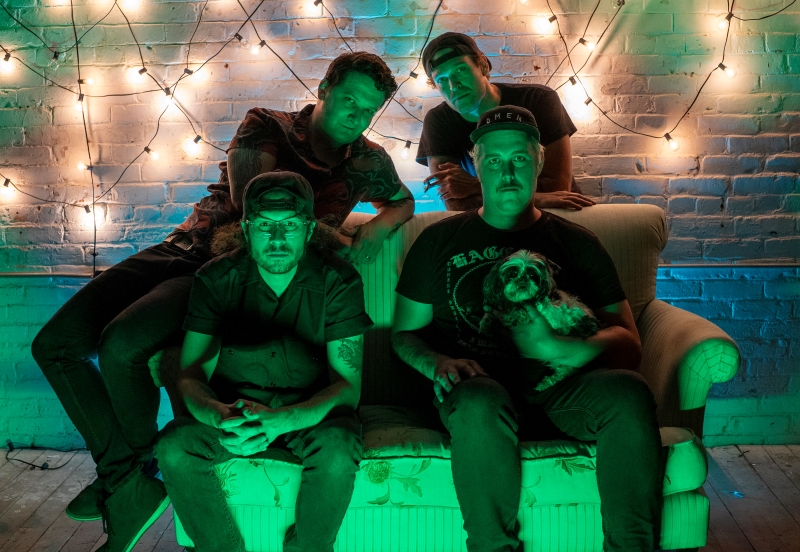
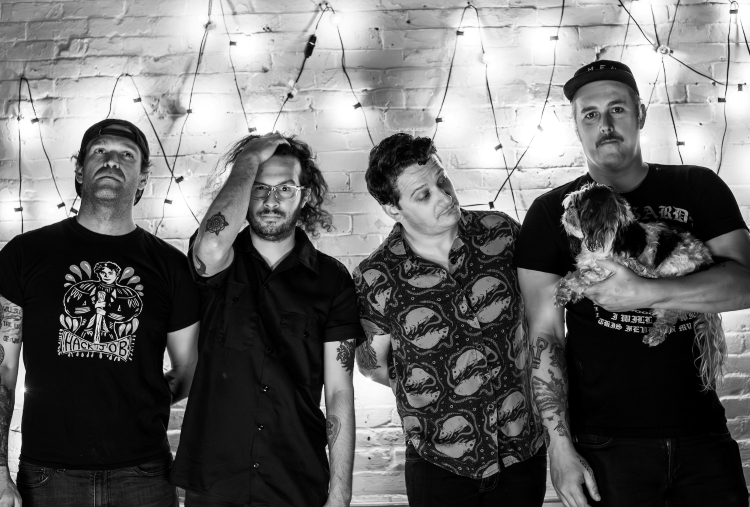
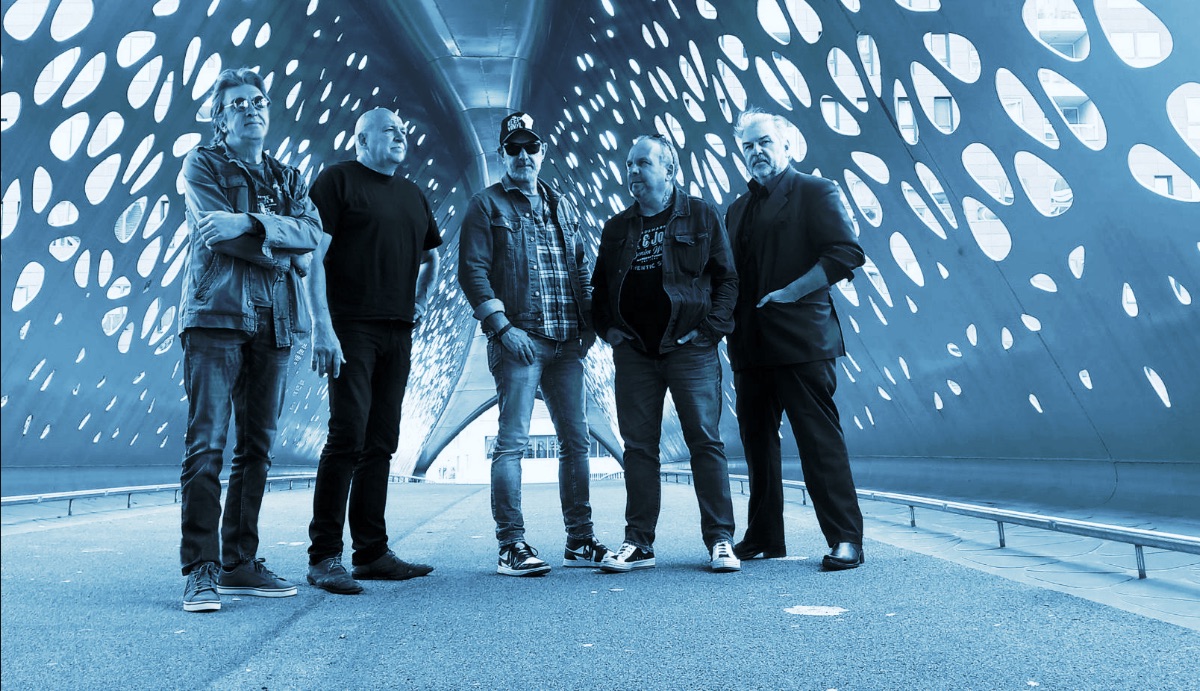
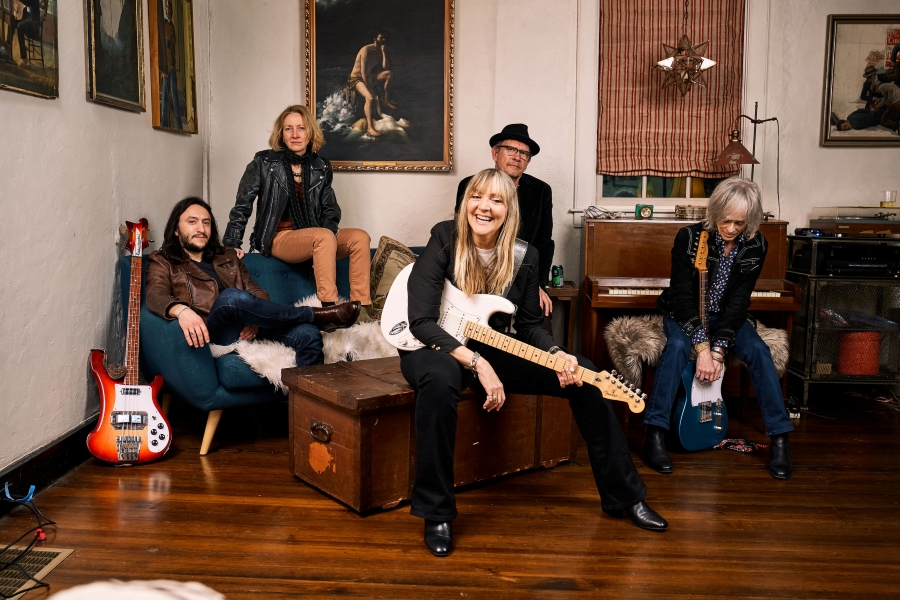
A year ago, I reviewed Red Sammy’s very cool single, “Some Days I Feel Crazy.” That song is track number two on Red Sammy‘s newest 8-song album, Holy Fluorescent Light, that dropped early this year. Founded by bandleader/singer/songwriter Adam Trice in 2007, this newest release in Red Sammy’s ten studio album. On this album, Trice (guitar, vocals) is joined by Bruce Elliott (guitar), Greg Humphreys (bass, backing vocals), and Kenneth Noble (drums, percussion).

image courtesy of Red Sammy

On Holy Fluorescent Light, Red Sammy delivers a variety of tempos and energy levels. Some of the songs on the disc are rattly and raucous, while others are more truly mellow. Regardless, though, the songs carry a laid-back vibe that runs through all of Red Sammy’s music, while the distinctive songwriting and Trice’s unique vocals further provide that inter-song link. Ah, those vocals. They’re a sort of mumbled warble with a folky drawl but a college alt-rock delivery; combined with the music, the resulting style might be described as Bob Dylan meets R.E.M. In any case, the whole album – beginning to end – is a cool listen. If not by the end of your first listen, then certainly within a few listens, you’ll be hooked on this jangly sound that I’m convinced must translate exceptionally to a live performance. Across a broad range of venues, in fact; it’s a style that’d be capable of entertaining audiences equally from the big stages of open-air festivals or in the cramped confines of college dive bars.

Red Sammy’s Adam Trice; photo courtesy of Red Sammy

The whole collection makes for a fun, cohesive listen, but I’ll point out a few of my personal favorites. Album-opener “Gettin’ It Over” chugs along moderately energetically, a great way to kick things off. It’s followed by the previously-reviewed single, the catchy, quirky Americana-rocker “Some Days I Feel Crazy.” And I’m kind of fond of the mellow, strumming growler “I Couldn’t Find a Way Home Last Night,” which Trice delivers as if he may have had a rough time last night and was truly unable to find a way home. But you, know, it’s all cool.

“Don’t Know What to Say” has a distinctive guitar line that connects with the Parrothead-ish vibe I mentioned in my review of the band’s single late last year. Meanwhile, album-ender “I Worry Sick About You” has a singalongable chorus – well, the line “I worry sick about you,” basically.

Beginning to end, Holy Fluorescent Light offers a cool listen of college rock-flavored Americana with fun, identifiably quirky songwriting and delivery. The album serves as a nice introduction to Red Sammy for new listeners or equally as a well-anticipated tenth studio album for longtime fans.

photo courtesy of Red Sammy

Looking Ahead

Be sure to check the “Upcoming Shows” page of Red Sammy’s website for concert dates. It looks like the band will be performing at the Apollo Civic Theatre in Martinsburg, WV on Saturday, February 22nd. Keep an eye out for additional shows as they’re added.

Album Review: Jaime Kyle – Wild One

photo courtesy of BJF Media

Album Review of Jaime Kyle: Wild One

Jaime Kyle is a talented rock ‘n roll singer-songwriter. Her songs have been covered by a variety of artists. In fact, this album’s title track, which Jaime co-wrote, was recorded 30 years ago by Faith Hill. Rest assured, when you listen to this album (if you’re not already familiar with Jaime), you’ll notice her chops are every bit as exceptional as her songwriting. (I mean, natch. I only review music I would recommend.) Wild One, the album, ranges from rollicking rockers to heartfelt ballads, playing to Jaime’s myriad vocal strengths, even hinting at country on one ballad; of course, she knows how to write for country, so that’s probably not much of a stretch for her.

image courtesy of BJF Media

Jaime roars out of the gates on this record with the title track, a full-throttle, anthemic rocker. Song number two “Driving with the Brakes On,” is only slightly less persistent, with a little more texture in the verses but no less energy in the chorus.

“Change” is kind of a Pat Benatar-ish softer rock number – one of those tracks with a not-quite-slow-enough-to-be-a-ballad tempo, but it’s definitely a slow song. It’s a song that requires an almost whispery soft-touch vocal as well as cutting vocal power, showcasing the versatility in Jaime’s chords. And it’s followed by “Blue Night,” a true ballad that hints at country. Or, at least, explores rock-country ballad territory a little.

photo courtesy of BJF Media

Next up, “Perfect Love” is a playful rock ‘n roll romp, an uncredited duet that excels in part due to the exceptional vocal interplay. “Lie,” meanwhile, is a song so full of spit and vinegar you’d might expect it to be covered by Miranda Lambert at some point.

The rest of the disc is equally a mix of slow songs and rockers; I’ll mention a few of my faves. “Not About Love” is the closest thing to a soaring torch song you’ll find on this disc. “Dirty Goodbye” is a mid-tempo rocker that feels as if it exceeds that medium energy level thanks to some well-placed, divine guitar riffs. And the disc closes playfully and fun with the upbeat, sunsplashed “Happy Town.”

For those who like big, open, catchy rock albums with a nice mix of rockers and ballads – and maybe the stray vocal or guitar riff that hints at country – you’ll dig Jaime Kyle’s Wild One.

Album Review: Jason Charles Miller – Cards on the Table

photo courtesy of BJF Media

Album Review of Jason Charles Miller: Cards on the Table (Golden Robot Records)

Jason Charles Miller‘s eighth solo studio album, Cards on the Table, should be an instant classic. It’s hard-rocking, powerful, and catchy. On this disc, Jason combines the angry swamp rock intensity I’ve referenced when reviewing Kristian Montgomery and the Winterkill Band with the sidewinding hard rock power of bands like Love and a .38.

Cards on the Table hits hard from the very opening with kind-of-ominous power rocker “The River” and revs up the energy on persistent, hard-charging “Reckless.” Yet, Jason Charles Miller shows the ability to slow things down effortlessly, too, on the power rock ballad “Day After Day.”

Southern-flavored, explosive rocker “Losing My Way” – my recommendation for the second song to check out on this album, by the way – twists, twangs, and soars, all driven by an incessant straight-ahead rhythmic beat. The first song you should check out? Well, that’s “You’re About To,” a song so filled with attitude you’ll be screaming along with the lyric “If you don’t know by now, you’re about to!” before the end of your first listen.

image courtesy of BJF Media

As much as I love those two songs, though, the first single I’d have released from the album, if I were Miller’s label (and rock radio still ruled the airwaves) would be “Chasing the Sun” (featuring Austin Hanks). It has a twangy Southern rock flair, a sunshine-bright warmth, and some the way-too-cool opening lyrics: “I’m from one of those towns where you leave the windows down, truck’s unlocked outside your place, where the born-to-runs are gone by twenty-one, and the stick-arounds get stuck in their ways.” The perfect song for cruising down the highway with your windows down. And a lot of us grew up in “one of those towns.”

There’s really not a weak song in this collection – even though I’ve skipped a few in my review – but I’d be remiss in not finishing with a mention of the album-ender, Jason’s heartfelt, soft country-rock, by-now (because I’ve taken so long to review the album) critically-acclaimed (and rightfully so!) cover of Iron Maiden’s “Wasted Years.” It’s a mellow-rockin’ friggin’ work of art.

This is probably one of my favorite albums of the last few years. I’ve placed 8 of the 11 tracks on my phone, making them potential selections for my #PhoneOnShuffle playlist. (Twitter/X followers will be familiar with this, a recurring post I’m trying to occasionally feature on Threads too, for variety, though I’m still getting a lot more engagement with it on X. 1,600+ of my favorite songs on shuffle; the phone decides which ones I hear.) So yeah, I think this is a helluva record, and if you’re a rocker, too, I bet you’ll agree.

More Recently

Cards on the Table was a 2023 release. Jason has since released Knives in the Dark, which I’ve only just sampled a few songs from on Spotify. Seems like an excellent ninth release, so after you’ve checked out Cards on the Table (and after it’s become on of your all-time favorite albums), you can join me in looking forward to exploring Knives in the Dark.

Album Review: Zanov – Lost in the Future

photo courtesy of Zanov

Album Review of Zanov: Lost in the Future

Lost in the Future is French electronic music innovator Zanov‘s follow-up to his 2020 release Chaos Islands, which contributor Eric Harabadian reviewed here at the blog three years ago. A synth wizard since the 1970s, Zanov knows his way around a composition and delivers an enjoyable, engaging musical journey with Lost in the Future.

image courtesy of Zanov

As some of you may recall, I’ve discovered how useful it is to have instrumental music on my playlist, as I typically listen to my review queue while I work, and certain portions of my work lend themselves better to playing lyricless music while I work. Bland music is boring, but there’s a sweet spot instrumental collections can hit that make them well-suited for a brain-work soundtrack, with varied, interesting, engaging tempos, rhythms, and movements but without lots of attention-disrupting aural assaults. Lost in the Future hits such a sweet spot, with some of the interesting musical patterns perhaps even enhancing my ability to do quality analytical work.

Album opener “Quantum World” kicks things off with a little spacy energy before broadening the wall of sound and settling into a softly energetic mid-tempo progression whose insistent energy belies the song’s modest pace. It’s always a good call to start a record with a strong number, making “Quantum World” a wise introductory offering.

photo courtesy of Zanov

The following track, “Conscious Machines,” begins slow and sparse, gradually building in density and intensity before settling down again toward the end. For me, it’s an album track that sets up what follows.

What follows is “Brain to Brain,” which features a recurring sonic theme that becomes familiar and recognized with each additional listen. There’s a journey – from brain to brain, I suppose – as musical, synthesized synapses travel forth purposefully. I can’t quite tell if the song’s audio overtones are hopeful or foreboding; most likely, a little of both.

“Extended Life” opens with haunting, organic synthwork that reveals a meandering, exploratory musical canvas before reverting to its foreboding origins.

photo courtesy of Zanov

“Living With Robots” returns to the more tentative, explorative patterns from the middle of the preceding number, extending the musical theme into a richer, deeper sound throughout the track.

“Interstellar Travel” follows, initially with an echoing, church sanctuary-esque reverberation of the “Living With Robots” theme, then adding synth runs that seem to move through the composition, a movement that recalls and befits this song’s title.

The album closes with “Time Manipulation,” which pulls together the musical themes and sound sequences found elsewhere in Lost in the Future, providing a concise offramp for this well-crafted, synth-driven musical journey, reaching a moderately zippy tempo by its middle section, particularly when compared to the meandering nature of much of the rest of the collection.

In its entirety, Lost in the Future has, for the last several months, provided an enjoyable soundtrack to some of my analytical work. Now that I’ve written this review, I’m going to miss it. If your sector of the musical galaxy includes synth-driven instrumental music, Zanov’s Lost in the Future deserves a listen.


Interview with Derek “Mo” Moore of Nektar and Album Review of Nektar – Mission to Mars

Nektar – Mission to Mars album cover

image courtesy of Chipster PR

by Eric Harabadian, Contributing Blogger

Interview with Derek “Mo” Moore of Nektar and Album Review of Nektar: Mission to Mars

Nektar is a band that originally was entirely British but found early success in the late ‘60s in Germany. Guitarist-vocalist Roye Albrighton, keyboardist Allan “Taff” Freeman, bassist-vocalist Derek “Mo” Moore, drummer-vocalist Ron Howden and lighting/effects specialist Mick Brockett comprised the original group which formed in 1969. They broke out on the U.S. charts in the early ‘70s, with influential and conceptual albums like A Tab in the Ocean, Remember the Future, Down to Earth, and Recycled.

Mission to Mars is Nektar’s 16th studio album, and that’s not counting a plethora of legit live albums, as well. They’ve always been a great live act due to their tight and collaborative sound as well as a phenomenal and entrancing light and images show.

The current lineup of Nektar consists of long-time guitarist-vocalist Ryche Chlanda, keyboardist Kendall Scott, bassist-vocalist Derek “Mo” Moore, vocalist Maryann Castello, and drummer Jay Dittamo. The album Mission to Mars is the first part of a proposed trilogy of albums for the band. Chlanda and Moore co-wrote the lyrics and came up with the universal space concepts, which will act as set pieces for songs going forward.

Recently we sat down with original bassist-vocalist and songwriter Moore to discuss the new album and the history of one of rock’s most enduring and prolific acts.

Mission to Mars was co-produced by Moore and Chlanda and includes themes about outer space, the Universe, spirituality and positive vibes. Moore really lights up when discussing the origin of their current record and the production scheme behind it. “We did the mix with the goal of being able to hear everything,” says Moore. “We planned where everything was gonna be placed and what vocals were gonna go from left to right. And once we got that done we had it mastered by Leon Zervos, who used to be with Sterling Sound in New York City. Our friend and engineer Joe DeMaio has a studio called Shorefire in Long Branch, New Jersey and he did the basic live tracks with us. We always do the basic tracks live because that retains the freshness and it doesn’t sound too clinical.”

And from the opening title track, Mission to Mars erupts from the gate, with a rhythmic bravado and rocking presence that deftly blends sci-fi imagery with vibrant audio colors and pulse. Chlanda’s full-bodied guitar work and gritty vocals lead an uplifting chorus of “Celebrate, scream and shout. Love yourself and let it out.” The song takes some collective thematic detours by way of Kendall Scott’s bubbly synthesizers as the harmonies establish this revived assemblage of the band as simply sublime.

“We mastered the vinyl and CD versions separately,” says Moore. “When you do digital, some of the frequencies are cut out because your ears hear things different, and it sort of compensates for that. But you can’t do that on vinyl. On vinyl, you can have all the frequencies there by keeping the length of each side down to about 16 minutes. That way you get a bigger groove, with the bottom end of the bass and drums. And the rest of it takes up the top. It makes for a very warm sound. We went to a lot of trouble to make sure the CD sounded perfect too. And then we switched to vinyl.”

“Long Lost Sunday” is the second song in the track order on the new album, and it takes the listener further into the galaxy of complex emotions in the search for a higher self. It’s heady stuff that finds balance in memorable riffs, taut staccato rhythms, and free flowing vocals. By the time the song builds to the vocal climax of “Don’t walk away… don’t walk away,” you’re hooked in the somewhat atmospheric grandeur of it all. It’s a powerful piece of music.

“One Day Hi One Day Lo” is another track that had major co-writing contributions from Scott. He provides the orchestral arrangements at the beginning that unfold into a multi-tiered Beatles-esque trip through space tempered with Dadaist existential themes.

Alas, Nektar’s latest venture is somewhat bittersweet amid the loss of original drummer-vocalist Ron Howden. Howden performed on the band’s last live 2 CD/Blu-ray release two years ago entitled Journey to the Other Side (Live From the Dunellen Theatre). And, unfortunately, that was his last performance with the band. Returning valiantly from a bout with cancer, he was on the ground floor of talks with Chlanda and Moore about recording what would become, Mission to Mars, but a brain aneurysm took him days after their last meeting, and it was not meant to be.

“Ron died last September,” says Moore. “I played with him for 60 years. It was very sad. But we know Ron would’ve wanted us to continue, so we finished putting the songs together. And our drummer Jay used to play with Kendall and Ryche in Ryche Chlanda’s Flying Dreams, so it was a great fit.”

The final track on Mission to Mars is called “I’ll Let You In,” and it proved to be a very emotional song for Chlanda, in particular, to sing. It’s a dreamy and ethereal ballad, with a resonant chorus that has hope and an inclusive message of renewal, healing, and celebration.

“That song actually got picked up by some Christian radio stations across the country,” says Moore. “I handle a lot of the radio marketing with a friend of mine. And I told him I thought ‘I’ll Let You In’ could cross over into the Christian market. We’ve got about ten stations in the U.K. and about 40 in the U.S. playing ‘Mission to Mars’ and ‘I’ll Let You In.’ I think we stand a chance with this album of making it on mainstream radio.”

Watch for Nektar to be booking new tour dates for the U.S. and Europe in 2025.

Album Review: D.C. Anderson – Sharing the Night with Darkness

photo by Sam Pickart; photo courtesy of D.C. Anderson

Album Review: D.C. Anderson – Sharing the Night with Darkness

D.C. Anderson is an accomplished stage and screen actor and recording artist, with a delivery style very much of the stage. If you like Broadway cast albums – or if you like sincere, well-crafted singer-songwriter music – then D.C.’s albums of intimately sung, theatrically-styled offerings are likely to be right up your alley.

Sharing the Night with Darkness is a collection of songs many of which touch upon issues like aging and mortality. It’s an incredibly moving collection, meaning I have to pick my listening moments, reserving this album for times when I’m in the mood to be deeply moved and emotionally affected. For a glimpse into the topics and emotions behind each of the songs on this disc, I’d direct you to D.C.’s Facebook post where he discusses this album.

D.C. is joined by David Robison on piano for some songs, Luke Wygodny on guitar for others, and vocals-only with no accompaniment for still others. Other musicians chip in during one or two songs each: Audrey Q. Snyder (cello) on “Mail Order Annie” and “Such Fine Things” and Lem Jay Ignacio (piano) and Lemy Ignacio (guitar) on “You Do Something To Me.”

album art by Julia Mann; image courtesy of D.C. Anderson

D.C. opens his heart in the album’s opening song, “Again,” about falling love with his husband over and over again. As mentioned, D.C.’s delivery style is very theatrical, so a touching song like this brings to mind a solo performance on a stage, just the singer in a spotlight, delivering a heartfelt appeal at a crucial moment in the storyline. Or, perhaps, a closing monologue-type song, one that reflects on the play’s happy ending after a night of twists and turns on the stage. Regardless, it’s easy to place this song on Broadway, even though it’s not.

“Market Girl” is a song I enjoy for a very different reason. It’s plucky and playful. As is D.C.’s rendition of Cole Porter’s “You Do Something to Me.”

D.C.’s voice soars on songs like “A Tree” and Harry Chapin’s “Mail Order Annie.”

D.C. serves up serious, powerful stage vocals on tracks like “I Am Anger” and “I Am the Dream.”

“Twenty Twenty Three” is styled more like a folk song, though D.C.’s vocals assert his position as an emphatically emotional troubadour when he plays that role.

Then there are other songs, like his ominous cover of Bob Dylan’s “Dark Eyes,” styled like a sad pub drinking song. Similarly styled, from a pub dirge perspective, is “Sully’s Pail,” an enthralling vocals-only cover of the Dick Gibbons-penned lyric that was put to music by Tom Paxton several decades ago. (You can hear Paxton’s version here.)

D.C. touches upon some heavy topics that can make for some rugged listening. “When I Get Quiet” is thoughtful and pensive. “I’ve Come Looking For You” is heart wrenching, as is “Night, June 1988,” a song with an interesting arrangement that’s split between interspersed spoken-word and musical delivery. “I Must Know You” is intensely delivered from the point of view of someone suffering memory loss. And “Epilogue,” while less difficult than the other songs I mention in this paragraph, is an Andrew Ratshin-penned song about a man looking back on his life from his funeral; it’s less difficult because it’s not anguished and the music is a bit more upbeat. Still, though, a heavy topic.

The penultimate song on Sharing the Night with Darkness is D.C.’s exquisitely voiced cover of “I’ll Never Find Another You.” D.C. notes, in that Facebook link I suggested you read above, that it’s his tribute to The Seekers’ Judith Durham. D.C.’s version is, of course, more melancholy than the original, which is further emphasized by his a capella delivery.

The album closes with “Such Fine Things,” with vocals about as close as you can find to crooning in this collection.

In all, with so many dark and/or heavy songs on this exceptionally crafted album, a particular frame of mind is required to choose to listen to Sharing the Night with Darkness. When that sort of introspection and depth of thought and emotion are what you seek, though, this album offers a well-designed vehicle for that experience.

image courtesy of D.C. Anderson

More Recently

On January 16th, D.C. released the single “Twenty Twenty Four,” planned to potentially be the title track of D.C.’s next album. Recorded with Luke Wygodny, who lent his guitar-playing to the single and shares songwriting credit for creation of the music to D.C.’s lyrics, “Twenty Twenty Four” places a strumming, folky guitar beneath D.C.’s vocals, moving from soft and thoughtful to loud, quivering, and somewhat angry, as it contemplates the power of love to bring an end to war, or at least its power to yearn for peace and its resolve not to stay silent. You can find a lyric video for “Twenty Twenty Four” via this link.

Looking Ahead

Well, there looks to be a new album on its way. Twenty Twenty Four. As of the eponymous single’s release a few months ago, a spring release date was targeted.

If you’d like to catch D.C. in person, he is scheduled to appear with Ritt Henn at noon on June 1st at the Upstream Gallery in Hastings on Hudson.

Beyond that, I’m not sure of the best way to remain abreast of D.C.’s latest goings-on, but a good place to start would be to follow him on social media: Facebook, Instagram, and X.

Single Review: Deaf Rat – “Say Your Lies”

photo by Georgios Grigoriadis; photo courtesy of BJF Media

Single Review of Deaf Rat: “Say Your Lies” (AFM Records)

Sweden’s Deaf Rat are vocalist Frankie Rich and guitarists Pat Kramer and Max Lander. “Say Your Lies” is the band’s most recent single.

image courtesy of BJF Media

Upon first glance at the main lyric, you might think this is simply an updated, more tuneful, more verbose “Shout at the Devil,” and in a roundabout way it isn’t entirely not that, but Deaf Rat’s “Say Your Lies” has a touch more harmonies, tunefulness, and soaring power. And, of course, it’s catchy. You’ll find yourself singing along to “Say your lies before the devil,” but don’t sleep on the guitar hook, which is pretty cool, too. You can hear the classic hard rock influences in the song, elements from guitar-based, anthemic hard rock’s ’70s, ’80s, and ’90s heyday, replete with a pulsing rhythm sure to induce moderate-tempo headbanging and/or air guitar swaying – seriously, there’s some awesome guitar solo shredwork that’s perfect for air guitaring. But Deaf Rat avoids going full-on retro; the band’s style and crisp but heavy production tap into the soaring power of modern melodic hard rock, kind of like AFM Records labelmates Lansdowne but with a more old-school melodic vocal style.

“Say Your Lies” is accompanied by a cool animated lyric video that’s definitely worth checking out.

photo by Georgios Grigoriadis; photo courtesy of BJF Media

A Little Farther Back

In mid-2023, Deaf Rat released its prior single, “Schizophrenic Part of Me.” Melodic hard rock, full of power and wall of sound. Harmonies. Every bit as catchy as “Say Your Lies.” It’s been a while since the last full album from these guys. It’s been since 2019, when Deaf Rat released Ban the Light, and as kickass as the group’s sound was on that disc, judging from the pair of singles the band has released in the past year, Deaf Rat has leveled up. I’m psyched for a full-length album from these kick-ass rockers… soon, I hope?


Single Review: Wyn & the White Light – “Can the World Change”

photo by Marion Earley; photo courtesy of Wyn Doran

Single Review of Wyn & the White Light: “Can the World Change”

Wyn & the White Light are 2023 New England Music Awards Female Performer of the Year nominee Wyn Doran and, presumably, the White Light: Lucia Jean (bass/vocals) and Heidi Tierney (drums/vocals). The day after Christmas, this trio dropped “Can the World Change,” a song about Wyn’s near-death experience in her twenties, an event that landed her in the hospital for a week and a half, starting the day after Christmas. (There you have the inspired connection to the December 26th release date.)

cover art by Wyn Doran and Lucia Jean; image courtesy of Wyn Doran

“Can the World Change” is a soaring, haunting, whirling cauldron of pop-rock energy. If done with just an acoustic guitar, it could be a haunting folk song, but the extra instrumentation turns the song into a cyclonic listening experience. The lyrics are minimalist but incisive, guided by a Ben Folds “six line” songwriting challenge, and exceptionally effective. This isn’t a song to sing along to. This isn’t a song to dance along to. It is a song to be felt and experienced. And with that as the goal, Wyn & the White Light have achieved it exceptionally well.

More Recently

As is so often the case, with my extensive review backlog right now, even though I received an advance copy of this single, I’m reviewing “Can the World Change” nearly three months after its release date, and Wyn & the White Light have released more music since then. “Statue” (featuring Josh Knowles, whose impressive talent I wrote about in my coverage of the “Behind the Songs 2” event a few years ago) dropped in late February. And on March 19, Wyn & the White Light released their first album, Luck, featuring “Can the World Change,” “Statue,” and eight more tracks.

Looking Ahead

You can catch Wyn & the White Light live on April 13th at The Overlook in Lowell, MA.

Album Review: Emma Wilson – Memphis Calling

image courtesy of Frank Roszak Promotions

Album Review of Emma Wilson: Memphis Calling

What a voice! Emma Wilson‘s Memphis Calling is a powerful rhythm and blues record. While I’d primarily classify it as blues, it is a very soulful blues with some pop-friendly melodic playfulness. In any case, I can see why Emma’s press material refers to her as rhythm and blues rather than simply blues, and I’m convinced by this record that it’s an appropriate distinction.

But about that voice? Emma shows it off throughout the album, but she wastes no time getting the listeners’ attention, showcasing its texture, power, and versatility in the catchy “A Small Word,” with the singalong lyrics “Love is just a small word. Why is it so hard to say?” Ooh, yeah! “A Small Word” is one of the four songs (out of Memphis Calling‘s nine) on which Emma has a songwriter credit.

Mid-to-up-tempo “Water” follows, starting slow but quickly building to power, showcasing Emma’s soulful vocal power with playful blues instrumentation supporting her. It’s an update of singer/songwriter Eddie Floyd’s 1968 original. I gave the sixties original a listen, and it’s impressive how modern that original sounds; Emma didn’t have to update it much to make it sound fully modern, and she duplicates Eddie’s vocal power. Indeed, it was a perfect selection for her voice. The song’s playfulness is engaging, its recurring instrumentation hooky, and it will quickly become a favorite.

“Watching You Leave” is a good choice for a third track. After two such energetic numbers, it changes the pace a little. I mean, the horns quickly establish that it’s not a true ballad, but it is slower paced and smoother than the two more dynamic numbers preceding it. And Emma restrains the urge to showcase her vocal runs, mostly, sticking to remaining dynamic within the song structure. The following song, “I Still Love You,” is an even slower number, a true ballad.

“What Kind of Love” features Don Bryant as guest vocalist, and the pair’s vocals meld well in this funky, playful, moderately-paced blues strutter.

“I’ll See You in the Morning” is the first song to operate at the high end of Emma’s range, a raw, ragged, thin, emotional vocal that serves this song well. Even the early/mid-song guitar solo adds to the feeling of a weary day, a little emotionally strained to match Emma’s vocals. Oh, and I’ve gotta mention the cool organ coming in at the end adding that final touch.

“Drug” is a thicker-textured song, with some heavy horns and a funky beat, while “Hoochie Coochie Mama” is a full-on return to the blues, a gender-swapped update of the Willie Dixon-penned Muddy Waters standard, “Hoochie Coochie Man.”

Emma then ends Memphis Calling with her understated rendition of the slow, slow crooner “Since I Fell For You,” with the organ giving the song a bit of a Gospel blues feel.

Emma Wilson’s voice and versatility make Memphis Calling an exceptional blues recording, beginning to end. My favorites are the two energetic album-openers, “A Small Word” and “Water” – and, aside from the ballads of course, those are probably the two songs with the biggest crossover appeal beyond core blues fans – but if your stylistic tastes differ from mine, you may find your favorites elsewhere on this strong, solid record.

Looking Ahead

Emma has several concerts, all in the UK, currently listed on the “Shows” page of her website. Tonight, March 23rd, she’ll be performing at the
Beastie Fest Blues and Rock Festival at Boom in Leeds, with her next show scheduled for May 23rd in Sunderland. Check Emma’s website for more information about those shows and the others on her calendar.

Album Review: Video Age – Away from the Castle

photo by Horatio Baltz; photo courtesy of Video Age and Throwin’ Bo’s

Album Review of Video Age: Away from the Castle

I found Video Age‘s album while diving down a Bandcamp rabbit hole. After far too many near-misses (and complete misses), I stumbled upon Video Age’s Away from the Castle, and it was not merely good but interesting and new enough that I reached out to the band to get a review copy. I am impressed Away from the Castle‘s funky, disco-influenced, laid-back, light, old-style pop smoothness, steeped in ’70s pop cheerfulness with perhaps a few ’60s harmonies and the occasional ’80s new wave synth thrown in for good measure. It’s groovy music that makes you feel good.

image courtesy of Video Age and Throwin’ Bo’s

“Ready to Stay,” the first song on the album, is a great introduction. Its instrumental opening reminds me a little bit of Human League, but then the vocals are more of a smooth, tuneful groove atop a lush music bed. And even though the song feels good from the first listen, enticing the listener to offer repeated listens, it’s not until after several listens that the chorus hook really starts to dig in, often the sign of a song with staying power.

“Better Than Ever” has a similar groove but more tempo and energy; a theme that recurs throughout the album is a cohesive sound but enough variance to keep things interesting.

Title track “Away from the Castle” is also catchy and fun with a few new wrinkles. Then “Adrian” shows a new side of Video Age, with a funky Prince-esque influence figuring prominently in the song’s catchy style.

The smooth, breezy, dreamy “In the Breaks” follows, with a rolling, swaying feeling, driven in part by Video Age’s lyrical phrasing choices.

photo by Horatio Baltz; photo courtesy of Video Age and Throwin’ Bo’s

Pretenses of other influences are dropped on “Just Think,” a pure, cool disco number that gets more fun with every single listen. The Bee Gees would be proud. Try not to bounce in your chair – or even get up and dance – to this number. I dare you.

“Anything For You” slows things down again, with strong vocals and a rich sound bed.

“A Knight Shining With No Armor,” at just over a minute, is an electronic reminder of Video Age’s versatility, setting up its most ’80s new wave-meets-BritPop song on the album, “Is It Really Over?”

Finally, Video Age closes this exceptional, enjoyable, very original album with “Golden Sun,” kind of a synthy Alan Parsons Project-worthy number. The rhythm will have you swaying in your seat, enjoying the last few minutes of the album, feeling full of “golden” sunshine, perhaps ready to re-start the album from the beginning again.

Looking Ahead

You can catch Video Age on tour right now. According to the “Tour” page of the band’s website, tonight, March 22nd, they’re playing at the Treefort Music Fest in Boise, ID. West Coast and Mountain Time Zone shows follow, then a swing through Texas, leading to an April 13th show back home in New Orleans. Be sure to catch them on this tour if you can. This tour ran through Boston a couple weeks ago; I wasn’t paying attention, so I was completely unaware. Maybe I’ll catch the next Video Age tour.