
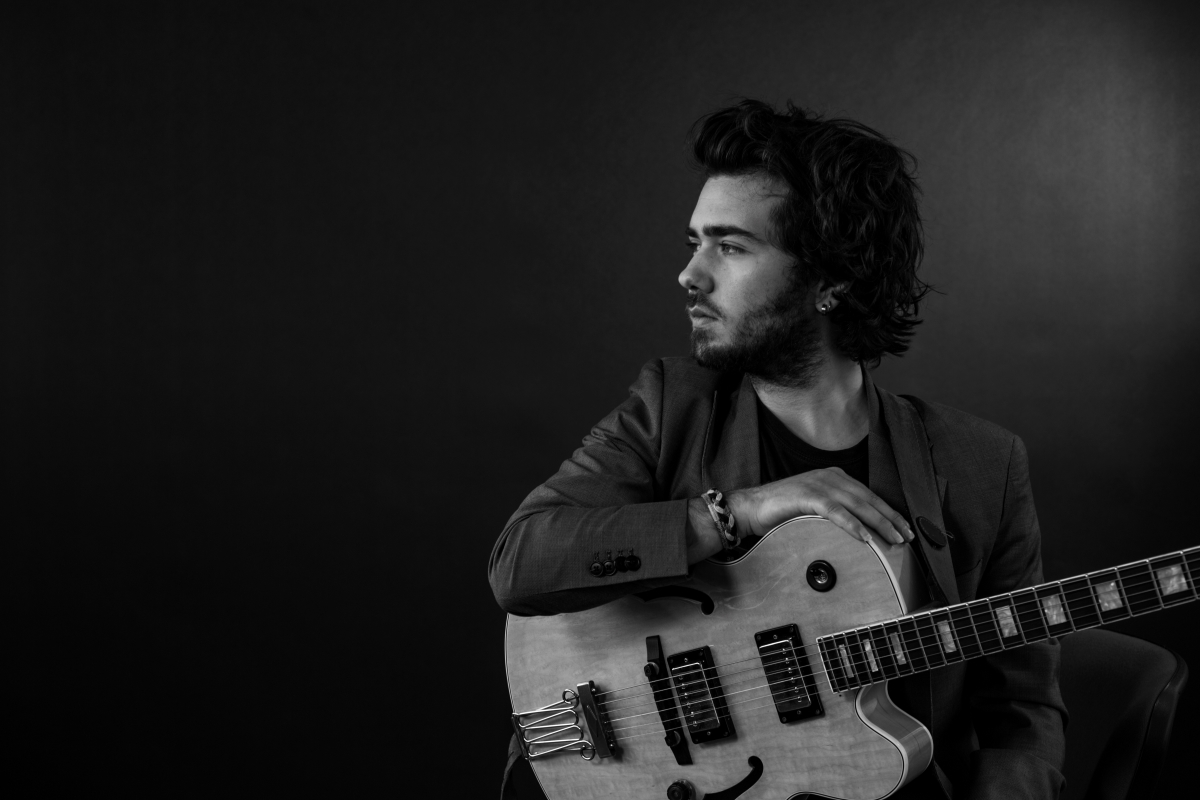
photo by Pino Donato; photo courtesy of Edoardo Liberati
by Eric Harabadian, Contributing Blogger
Album Review of Edoardo Liberati “Synthetics” Trio: Turning Point (Wow Records)
Edoardo Liberati is an Italian jazz guitarist extraordinaire who works in a variety of musical mediums. He is an accomplished composer who wrote seven of the nine tunes on this freewheeling and free-flowing trio date. He is joined by Dario Piccioni on double bass and Riccardo Marchese on drums.
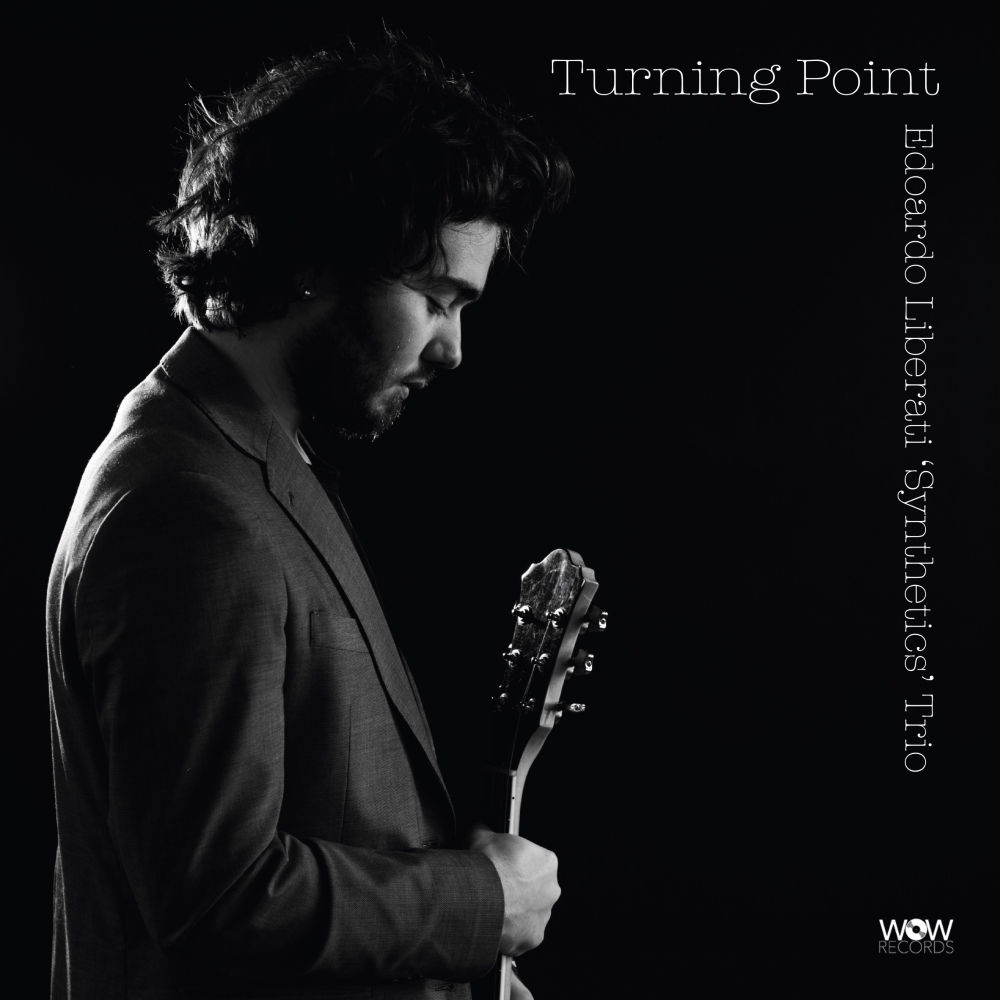
album cover photo by Pino Donato; photo courtesy of Edoardo Liberati
Stylistically, Liberati is influenced by a mix of classic and modern masters of jazz and improvisational guitar. Everyone from John Scofield and George Benson to Julian Lage and Kenny Burrell seem to rise to the surface when this young burgeoning talent hits the strings.
Upon the first listen to this album, perhaps the trio’s strongest suit is their ability to listen and play off one another. There is simpatico in their relationship where they are tight in their ideas, rapport, and connectivity. These are all the qualities that should be the goals of any successful band. And this group has it in spades. Liberati may be the leader, but they are the “Synthetics” Trio and are a fully functioning unit in every sense of the word.
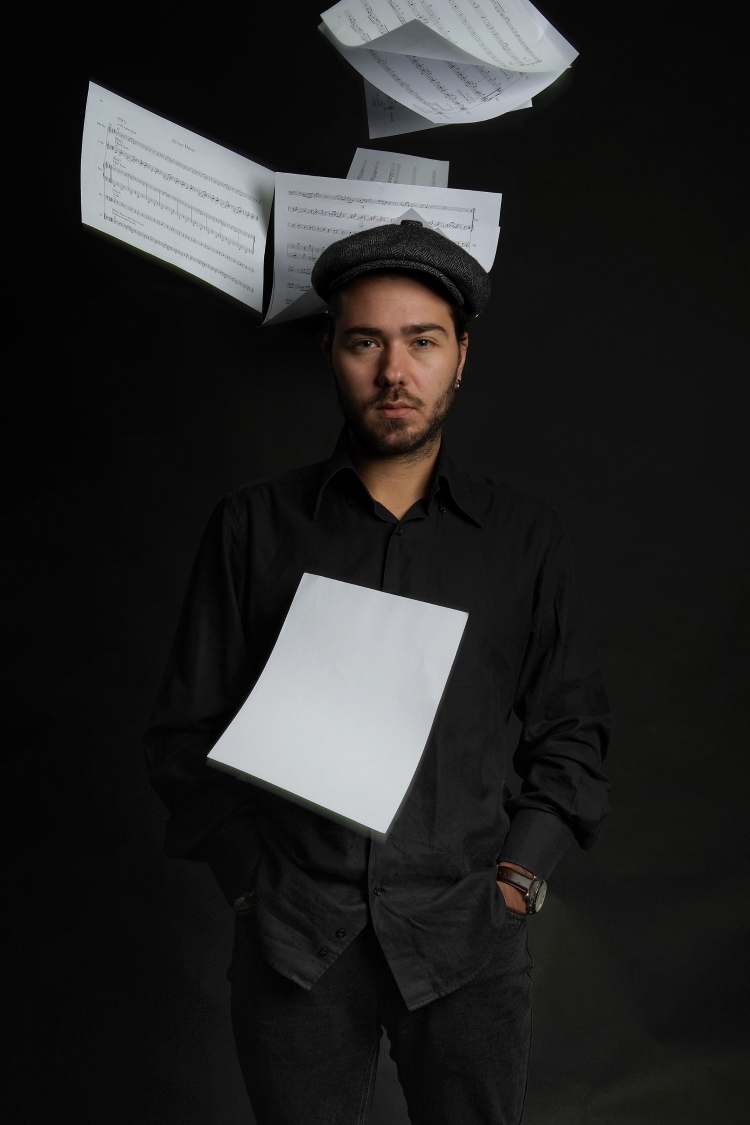
photo by Roberto Ceccaroni; photo courtesy of Edoardo Liberati
“Dear Jane” begins the album, with a sweet and delicate melody that sounds like a love letter to someone special. There is plenty of air and space in the way the notes and solos are placed that it allows the listener to truly absorb and take in the enormous beauty this tune has to offer. Overall, the tune has a lilting quality that recalls some of Pat Metheny’s early work. Liberati’s acoustic work is superb and blends nicely, with the light cymbal and snare interplay from Marchese and Piccioni’s bass solo.
“Porcelain” is a rare and surprising addition to the roster. It is a deep cut from Red Hot Chili Peppers’ Californication album, and it gets a respectful and slightly re-harmonized treatment here. Liberati is faithful to the contemplative quality of the song. He pays great attention to each phrase and note within the verse. Both the guitar and bass work in concert and focus on sustain and ambience. The result comes off like a very hip lullaby.
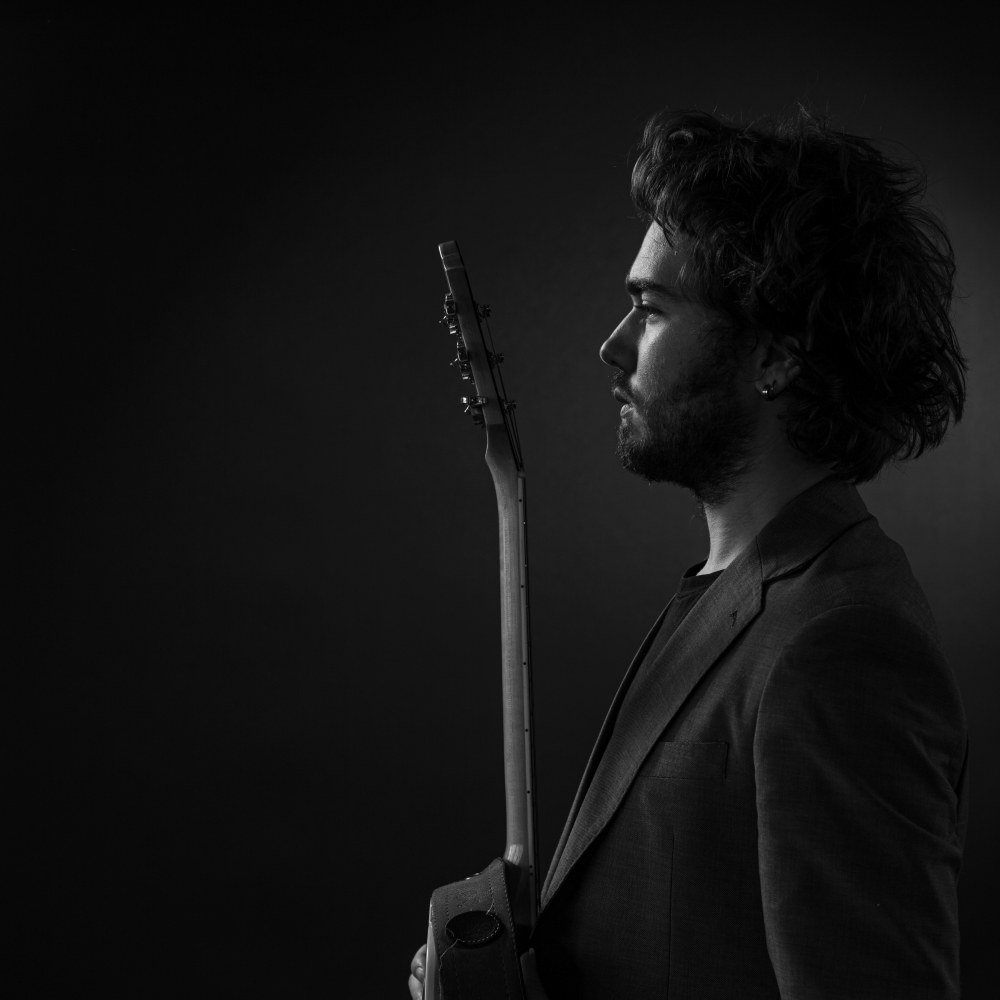
photo by Pino Donato; photo courtesy of Edoardo Liberati
“One For Uncle John” is dedicated to one of the young guitarist’s heroes, the aforementioned John Scofield. It’s a smooth slice of modern bop, with an asymmetrical feel that bobs and weaves via the subtle rock steady inertia of Piccioni and Marchese’s interplay. Liberati also alters his tone slightly and emits a mild growl and bite to his chords and single note lines.
The stylistic diversity continues on the tune “Apnea.” It’s got a waltz-like time signature and has a very open vibe, not unlike some of John McLaughlin’s Mahavishnu Orchestra or early solo material. The mid-section features beautiful and energetic support from the bass and drums as Liberati works subtle volume swell-induced soundscapes into the mix. It’s a dreamy head trip of a journey.
The trio goes for a traditional jazz feel, with the title track, “Turning Point.” Upon the first downbeat, what captures your ear right away is Marchese’s lithe snare brush work. He delicately stirs it up and lays the groundwork for Liberati’s wonderful Pat Martino-like lyricism. Once that’s established, Liberati takes the first solo, which features a deft and thoroughly engaging blend of modal flourishes and dazzling intervallic leaps. When he passes the solo baton to Piccioni he provides ample space, with open chords and light anchor notes.
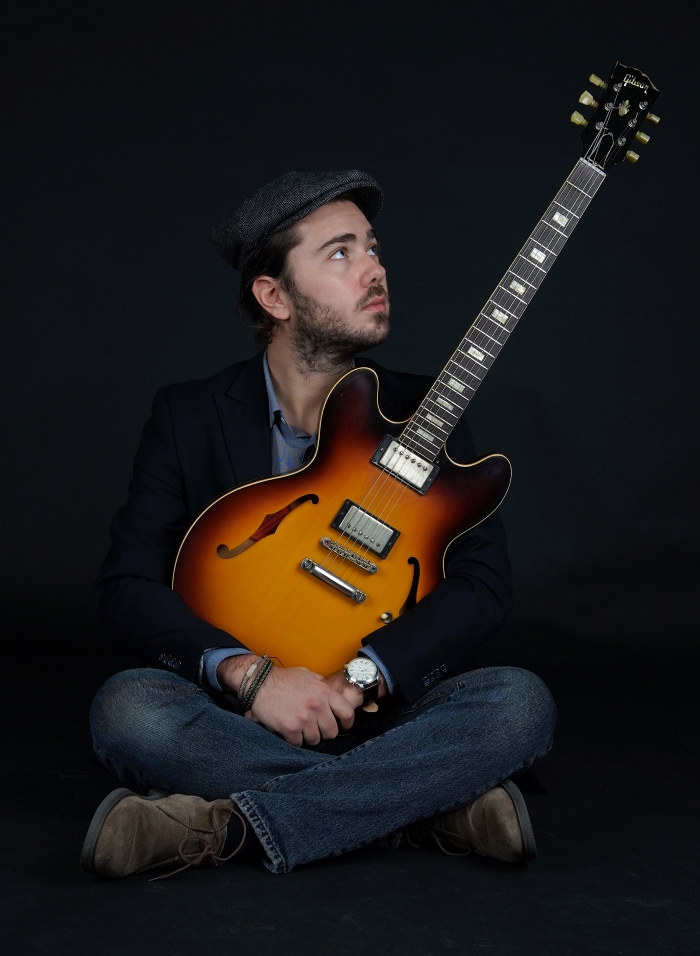
photo by Roberto Ceccaroni; photo courtesy of Edoardo Liberati
Inspired by the great George Benson, Liberati performs a solo guitar version of the Hoagy Carmichael classic “Stardust.” It’s a lovely and serene adaptation that finds the ambitious axe man weaving in and out of the traditional structure of the song, yet retaining its integrity along the way. “Another Story” tells another tale in regard to the “Synthetics” Trio. Seemingly built on some atonal-like chord changes , a musical dialogue is created between, first guitar and drums, and then guitar and bass. They each trade solos back and forth. As the tune builds, so does the intensity of the interplay. It’s probably one of the more “out there” tunes on the album.
Again, within the context of the trio setting, Liberati leads this group through folk and country-type waters on the track “Small House.” The guitarist goes acoustic here and, even, takes on a gypsy Django Reinhart-like quality in his phrasing and tone. Marchese employs the brushes while Piccioni digs in, with a muscular edge. It almost kind of bookends the album, with that touch of lightness found in “Dear Jane.”
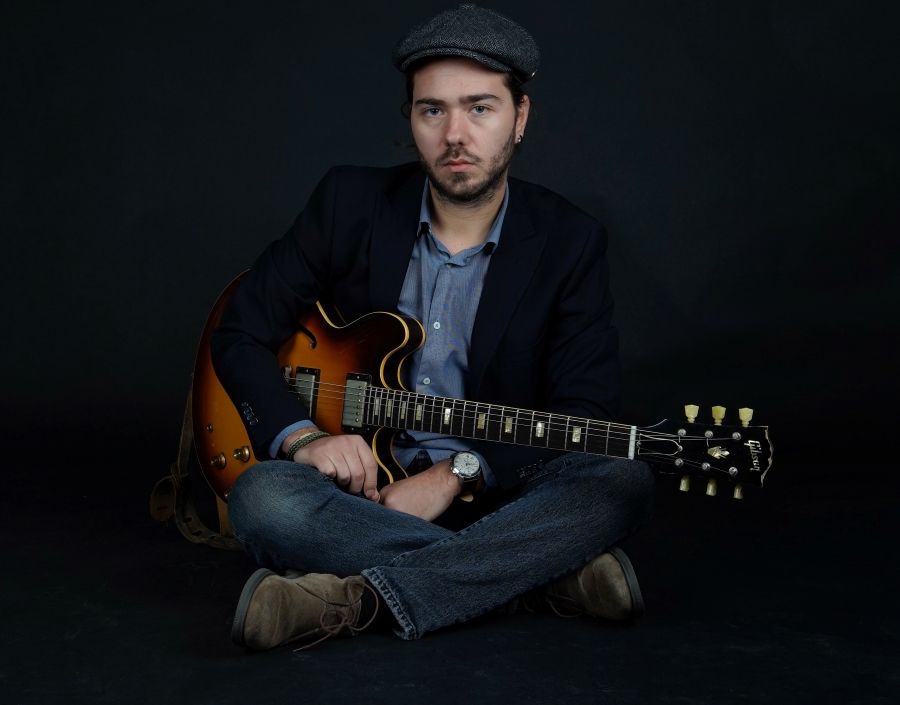
photo by Roberto Ceccaroni; photo courtesy of Edoardo Liberati
They conclude, with the lively and uptempo “Round Town.” There is a decidedly gritty veneer to the guitarist’s tone. It’s a tad brighter and the chords sharper, as the melody ascends and descends at a moderately brisk pace. The drums and bass follow in kind, and the tune crescendos in a no holds barred vamp.
Edoardo Liberati “Synthetics” Trio is doing some amazing things in the name of modern jazz and improvisational music. They can take contemporary rock/pop or traditional fare and craft it to suit their collective and expansive vision. Liberati and company deserve all the accolades they have received thus far. They are truly taking instrumental music into exciting new directions.
Where to Follow Edoardo
You can find Edoardo online at his website. You can also stay up-to-date with his latest goings-on by following him on Facebook or Instagram.
 Geoff Wilbur's Music Blog