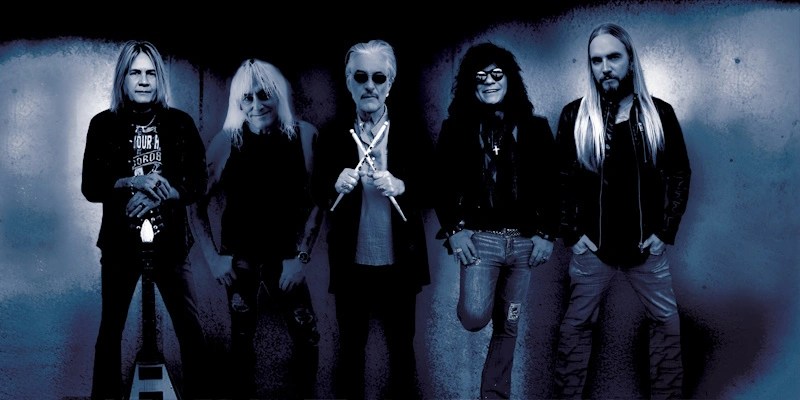
Album Review: King Kobra – We Are Warriors

King Kobra

photo courtesy of Glass Onyon PR

Album Review of King Kobra: We Are Warriors (Cleopatra Records)

I first got into King Kobra‘s music back in mid-eighties, when the band was touring in support of its 1985 debut album Ready to Strike. The band’s latest recording, We Are Warriors, features original members Carmine Appice (drums) and Johnny Rod (bass). Vocalist Paul Shortino has been with King Kobra since 2010, though many classic rockers may remember Shortino best as the widely-lauded lead singer of Rough Cutt in the mid-eighties. Guitarists Carlos Cavazo (Quiet Riot) and Rowan Robertson (Dio) round out the line-up for this release.

With so many of classic hard rock’s best players on this album, you can expect songs that showcase the guitarists’ shredworthiness and Appice’s legendary skinswork. And, of course, Shortino’s trademark powerful rock ‘n roll wail. The album lacks that obvious, in-your-face, hook-filled hit single that grabs the listener’s attention right off. The songs are well-crafted, showcasing the band’s musicianship in the way album-oriented rock discs from the seventies and eighties typically did. Throughout, We Are Warriors is a strong collection of songs with staying power. And the hooks are there, they’re just a little subtler; after a few listens, favorites emerge.

King Kobra – We Are Warriors

image courtesy of Glass Onyon PR

Album-opener “Music is a Piece of Art” is a representative introduction to the band’s 2023 sound; it’s a solid rock number that features Appice’s drumming coming to a peak, stopping, then continuing. Shortino convincingly sings his ode to music, with lyrics like “you are my passion, you’re heaven-sent, you’re my companion without end.” And the song features a classic mid-song guitar solo, more soaring than shredding, taking the listener on a brief journey before returning to the melody.

It’s not the only ode to music on the album, though. It’s immediately followed by the funkier-rockin’ “Turn Up the Music,” another song extolling the band’s love affair with music.

“Secrets and Lies,” next, ratchets up the energy; it’s a more intense rocker with a catchy sidewinding rhythm; it’s drum-heavy and the first song on the album to showcase some serious shredding in the guitar parts.

Several more songs stand out on the disc. For example, “One More Night” coolly cycles through three tempos from verse to bridge to chorus, with the frequent changes giving the song a more progressive rock feel.

King Kobra’s cover of “Love Hurts” is well-done, featuring the power and anguish of the original, though I’ll never understand why so many online lyric sheets – and this song – use the lyric “love wounds and marks” instead of Nazareth’s – and the Everly Brothers’ original – “love wounds and mars,” which has the added benefit of rhyming with the previous line. But that’s a personal pet peeve. Ignoring that, the song is well-done and, stylistically, it fits neatly and cleanly into this collection.

Following “Love Hurts,” the rest of the disc tends more toward album tracks that showcase the band’s skills, not quite as hooky as the first half but enjoyable songs to kick back and enjoy. In fact, with the exception of the title track, the rest of the songs I’d release as singles – those with the catchiest hooks – are found on “Side A.” As any AOR fan knows, that doesn’t mean I’m slagging on “Side B”; it’s called album-oriented rock for a reason.

“Darkness” connects with the listener quickly with its funky rock rhythm, crunchy axework, and soaring vocals. The song somehow feels densely-packed with instruments (perhaps due to Appice’s hard-hitting drumming) yet airy enough for the guitars and vocals to dance around a bit. Pretty cool stuff.

Title track “We Are Warriors” is a heavily playful ode to the L.A. rock ‘n roll lifestyle (opening lyrics: “I like hitting the Strip, there’s action everywhere…”) with a beat that seems to keep constantly pushing forward, with the drums imploring the song to speed along faster. Alternately, the guitars and vocals could be seen to be running behind, sitting at the back of the rhythmic envelope, as it were. However you choose to describe it, it sounds cool and maintains an engaging tension. Old-school ’80s rockers are gonna enjoy this song.

Disc-ender “Side By Side” is one of the softer songs on the album, still with a steady, driving rhythm but with a softer edge and guitarwork that soars, like the vocals, more than it shreds.

In its entirety, We Are Warriors is an exceptional classic hard rock album that showcases the talents of several of the genre’s icons. The instrumentation is exceptional and varied, and Shortino is one of hard rock’s iconic voices. Although each listener will have different favorites, every song is well-conceived and performed. Indeed, if you’re an eighties hard rock fan, assuming you give this disc a few spins and take the time get to know the songs, you’ll dig it. More with each listen.

Album Review: Bob Lord – The Six Observables

Bob Lord – The Six Observables

image courtesy of Bob Lord

Album Review of Bob Lord: The Six Observables

Experimental progressive rock music is some of the hardest to decide to write about. It’s rarely apparent from a first listen how the listening experience will evolve over multiple trips through the album, whether the music will reveal nuances upon repeated listens, whether it will embed itself into the brain as a familiar friend over time, or if the music will devolve into gimmicky quirkiness after several runthroughs. In the case of Bob Lord‘s The Six Observables, I had more than just his accolades to go by; past personal experience was also on my side. I’ve previously reviewed two of Bob’s band Dreadnaught’s albums and one of his solo releases, so I expected to grow increasingly fond of The Six Observables over the course of repeated spins. I suppose you can never be certain, but in this case, my presumption was correct.

The album itself is primarily a collection of mostly-brief soundscapes. Or, perhaps, spacescapes. The album consists of short tracks of less intense music using a location and date naming convention, suggesting encounters at various times and places, with each short track being followed by a longer instrumental performance. Stylistically, the music suggests space encounters, and Bob’s comments accompanying the album’s release, noted in this blog post on his website, reveal the album content to be UFO-related.

Among the short cuts, you get some Schroeder-esque light piano on “USS Nimitz Tic-Tac Encounter – 2004.” “Miracle of the Sun at Fatima – 1917” sounds a bit like a music box. “Black Traingle From the Atlantic – 2019” is really just a long buzz with beeps. “Betty & Barney Hill Through Franconia Notch – 1961” sounds like the occasional jangle of piano keys you’d expect to hear from a jazz pianist between songs. And the album-closing short track, “The Incident At Exeter – 1965” – the longest of the short entries at 1:21 – sets the musical ship down nicely, quietly, subtly landing the ship, setting us all down for our next adventure.

As I noted, in between the short cuts are longer songs. Among the more substantial numbers, you find aggressive guitar noodling and distorted thumping, tied together with an incessant rhythm on “Instantaneous Acceleration,” a title that’s exceptionally fitting; at 1:19 it’s actually shorter than the longest short number, but both stylistically and in the scheme of the album, it clearly qualifies as a longer cut. “Low Observability,” meanwhile, is more than three minutes of a humming buzz with spacey, atmospheric beats and twoinks bubbling up throughout. (Yes, I said “twoinks.”) “Hypersonic Velocities,” probably my favorite track on the album, particularly if you’re searching for a track to be enjoyed as a standalone song, has a peppy tempo, a thumping rhythm, a playful recurring hook, and a mostly-empty-space bridge that provides a mini-reset, helping extend the listener’s interest, allowing the faster tempo to resume, carrying the song’s energy to its abrupt end. And “Biological Effects” features the sort of spacey sounds you hear throughout the disc but through a lens of psychedelic rock distortion, replete with whining guitar and thick, chunky drums. The longer numbers cover a lot of ground, all within the album’s cohesive, experimentally spacey sonic lane.

The songs are carefully ordered on this disc, as there are some cool connections between the short and long tracks. Most notably, I can’t imagine “Transmedium Travel” without the “Black Triangle From the Atlantic – 2019” lead-in, but all of the transitions are well-considered.

When all is said and one, how The Six Observables makes for an enjoyable listen is something I can’t entirely explain. It’s the curse of trying to review experimental rock music. If it’s done well, an active listener will discover an enigma wrapped in a riddle. But I can tell you that the album is very well assembled, with the space/UFO encounter theme tying everything together, while the music is sonically expressive of such a theme. And yes, The Six Observables will grow into an old friend, albeit a weird old friend, after several listens.

Previous Geoff Wilbur’s Music Blog Coverage

You can find my review of Bob Lord’s April 2021 release, Playland Arcade, via this link. You can also find my reviews of two albums from Bob’s band Dreadnaught – Hard Chargin’ and Northern Burner – at the Blog.


EP Review: Chain Reaction – Still in the Game

Chain Reaction

photo by Lisa Hagopian; photo courtesy of Chain Reaction

EP Review of Chain Reaction: Still in the Game

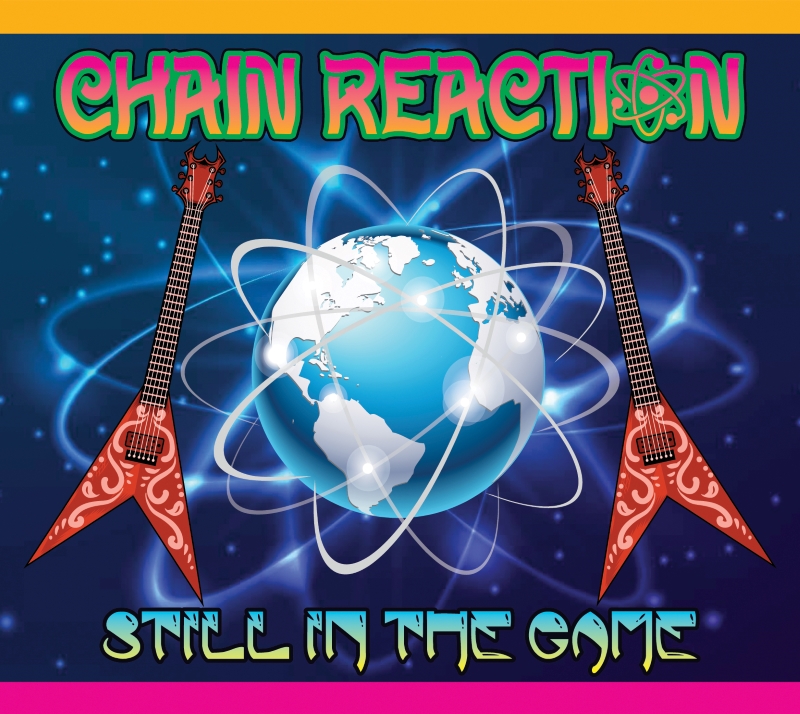
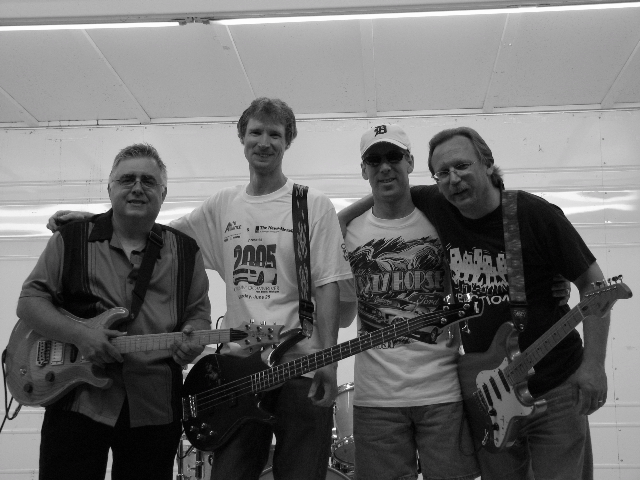
I first reviewed a Chain Reaction album 25 years ago. And, as the new album’s title suggests, these straight-up classic rockers are Still in the Game, writing fun, catchy songs and delivering them with gusto, definitely appealing to a classic rock audience. Of course, a nice byproduct of discovering Chain Reaction was getting to know vocalist-guitarist Eric Harabadian. We connected 25 years ago after I wrote a review about how kickass his band was, and Eric has written for my various publications ever since. So yeah, this is Blog contributor Eric’s band. Well, the guys in Chain Reaction – Bobby D (guitars, vocals), Eric Harabadian (lead vocals, guitars), Larry Fritzley (bass), and Jeff Phillips (drums) – still kick it, which is several steps up from simply being “still in the game.”

Chain Reaction – Still in the Game

image courtesy of Chain Reaction

To prove their mettle – metal? no, classic rock – Chain Reaction kicks off the first song, “Playmaker,” with a very AC/DC-like guitar riff. The song sports a rhythmic pace, a chorus that’ll have you anticipating the song title as you listen, and fun lyrics like “save the drama for your mama” that invite you listen closely for clever turns of phrase.

“Still in the Game,” the title track, is a classic-styled, rattling, jangly, mid-tempo classic rocker. The rhythm of the verses is likely to lull the listener into a steady-tempoed complacency before being jolted by the more insistent chorus; it’s an attention-maintaining trick used deftly by Chain Reaction in this never-too-old-to-rock anthem.

“In Our Own Image” has a peppier yet more sidewinding rhythm than the previous tracks. The vocal change of pace delivered early on during the lyrics “keep on, keep on lookin’ back” is one of the song’s many clever whiplashy tempo adjustments, which distract you from its thoughtful lyrics, requiring intentional listening to pay attention to the song’s thoughtful message. (Worry not, you’ll remember to pay closer attention next time.)

Chain Reaction

photo by Lisa Hagopian; photo courtesy of Chain Reaction

“American Son,” the penultimate track, is the most progressive rock-influenced song on this EP. The instrumentation is less dense than the previous cuts, while harmony vocals combine with the lyrics to craft an almost middle earth quest-like prog rock vibe.

Final track “Rumors of War” shows that Chain Reaction doesn’t shy away from difficult topics. The second-most proggy song on the EP, this would be a terrific rock ‘n roll entry for an issue-based anti-war compilation album with lyrics like “History has shown that when the tension’s overblown, it’s hard to see the forest for the trees.” Though not quite as memorable as Wyld Stallyns’ primary mantra, Chain Reaction, on this song seems to be imploring the world to “Chill out! And live in peace, dudes!”

As a whole, Still in the Game is raw and lightly produced, replicating the energy of a live Chain Reaction performance. It marks the first release in a quarter-century from one of metro Detroit’s finest classic rock acts, and it’s well worth the wait!

Looking Ahead

While this album showcases Chain Reaction’s capabilities as a live act, the band does not appear to currently have any live shows scheduled. But keep an eye on the “Live Shows” page of the band’s website and be sure to follow Chain Reaction on Facebook for the latest band news, including the announcement that the first video from this EP, for the title track “Still in the Game,” is soon to be released.

Album Review: Phil Jamieson – Somebody Else

Phil Jamieson

photo by Lindsay Moller Productions; photo courtesy of BJF Media

Album Review of Phil Jamieson: Somebody Else (Goldon Robot Records)

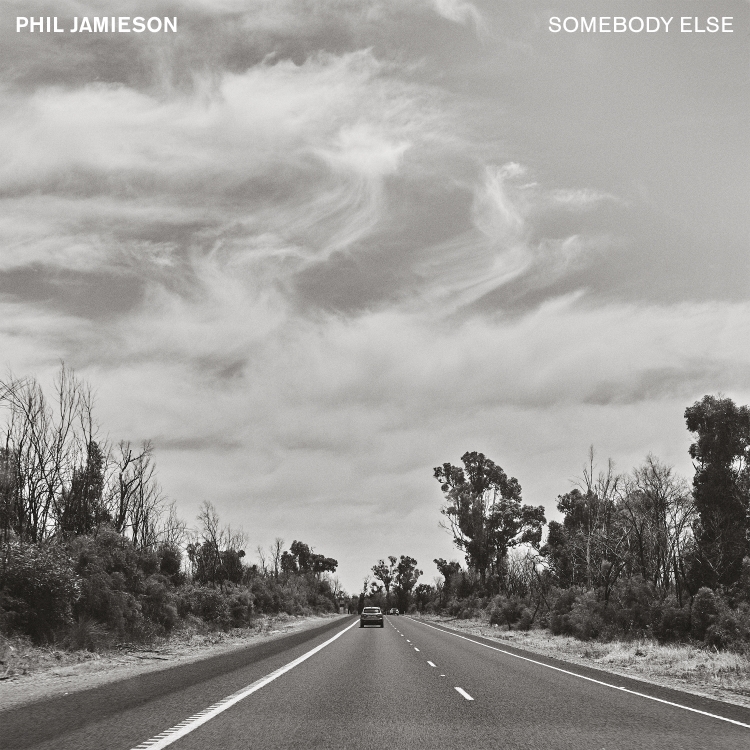
Sometimes I know from the beginning of the very first song that I am going to review an album. Even if the rest of the album was weak, I needed to tell you about the first song. Well, in the case of former Grinspoon frontman Phil Jamieson‘s Somebody Else, the opening number (the title track) was such a song, while the rest of the album is most certainly not weak, containing several other soon-to-be-favorites. In fact, it’s a cool, chaotic, moderate-paced, buzzy, mainstream-ish, classic alt-rock album with distorted guitar hooks and pop songwriting sensibilities.

Phil Jamieson – Somebody Else

image courtesy of BJF Media

“White Wedding”-era Billy Idol, Blondie, Duran Duran, The Cure – Phil Jamieson’s Somebody Else doesn’t sound like any of these bands. In fact, each of those artists I mentioned is farther from Phil’s sound than the one before. However, I wouldn’t be surprised to find Phil sharing a bill or a radio playlist with any of them. By the same token, I’d add bands like Green Day and Heart to that playlist, as well, to connect with the crisper side of the pop-friendly tunefulness in Phil’s sound. In the end, Somebody Else is simply an album of well-conceived rock songs, varying in style around an identifiable center, from the lead singer of a popular Australian rock band whose biggest hits were mostly two decades ago. That is to say, with Phil’s rock ‘n roll pedigree, it’s no great surprise that this is a good record.

Album-opening title track “Somebody Else” begins with a guitar buzz and a neatly-voiced call to arms, drawing the listener in before turning to into a classic, funky alt-rock number. Well-phrased vocals, a wall of sound that’s at-times static, some distant drums tapping, twangy guitars, and an insistent, driving vocal that holds everything together. The songwriting somehow corrals a seemingly disparate array of sounds into an engaging, catchy, memorable tsunami of sound and melody. Simply put, this song is oh, so very cool! By itself, worth the price of admission.

Phil Jamieson

photo by Ian Laidlaw; photo courtesy of BJF Media

But it doesn’t end there. The talented af Jamieson has many more tricks up his sleeve. “Trouble,” next, begins with his anguished, slow-building vocals leading to a distorted guitar-filled chorus. Then the song pauses, starts slow again, and builds toward the chorus. At this point, the album may remind you of Ryan and Pony’s Moshi Moshi, which I reviewed here, but on acid.

These songs all sound so familiar, and yet very original. “Lights On” sports a lot of distortion and buzz, but it also goes on these almost pop-soul runs that I swear I’ve heard somewhere before, but I can’t quite place from whom. It’s just a really wicked cool vibe with a defiantly youthful rock energy.

“Rebecca” could be a ’90s pop-rock hit. Low-fi tinny guitar strums keep time for Phil’s voice, which is the song’s real star. Meanwhile, the lyrics are so well-written that, after you’ve gotten past digging the sound and start digging into to the verses, you’ll enjoy the song on a higher level. For reference, this is the sort of song you might expect from an edgier Howard Jones.

Phil Jamieson

photo by Ian Laidlaw; photo courtesy of BJF Media

“Kapow!” is light and airy yet rebellious, sounding a bit like a U2 song but cheerful, quite probably thanks to the playful guitar line with just a smidgeon of punk rock distortion.

“YCBM” follows, opening with a haunting, Addams Family-ish tone, then develops into a statically ethereal, somewhat psychedelic number. (The chorus reveals the cryptic song title in the lyric “you could me mine.”)

“Rubberband” is jangly singer-songwriter fare, with an electronic buzz accompanying Phil’s sometimes cracking, hoarse vocal delivery.

Phil goes full-on haunting again to close the collection. “Little Pickle” features anguished vocals supported by a floatingly atmospheric, spacy soundbed.

Phil Jamieson

photo by Darren Chan; photo courtesy of BJF Media

And that’s it. Eight songs. One of the coolest albums you’ll hear this year. And, by that I don’t just mean that I enjoy the album. No, it seems like an album that’s too cool for you. An album so cool it’d wear sunglasses at night. And yet you’re being allowed to listen to it. But the music is so impressive and the songs are so memorable, you’ll forgive the album for its hubris.

Looking Ahead

If you scroll down to the “Tour Dates” section of Phil’s web page,  you’ll see that he’ll be touring extensively throughout Australia early next year, starting on Thursday, January 11th in Kings Beach and concluding on Sunday, February 11th in Longley. Catch him if you can.

Album Review: The Vintage Explosion – Havin’ Such a Good Time

The Vintage Explosion

photo by Andy Laing; photo courtesy of Lander PR

Album Review of The Vintage Explosion: Havin’ Such a Good Time

So, do your musical tastes include swing and soul-infused, ’50s-style rock ‘n roll? The Vintage Explosion delivers a lot of music you might expect at a Happy Days sock hop or at Back to the Future‘s Enchantment Under the Sea dance, but the band’s repertoire extends far beyond that, as well. Riding the inimitable, versatile voice of singer/bandleader William Hitchell, the group’s talents span great swaths of early rock ‘n roll, swing, and even blues. How good is Hitchell’s voice? As the band notes in its promo material and on its website, Rod Stewart has stated, “The Vintage Explosion’s Willie is the best white soul singer I’ve ever heard.” Stewart’s high praise is certainly not misplaced.

Among famous contemporary artists, who’s most comparable to The Vintage Explosion right now, you ask? Well, if you’re a Michael Bublé fan, you’ll love these guys. Will you like them better than Bublé? Their delivery, while similar, is a little different, so it’s a toss-up.

The Vintage Explosion – Havin' Such a Good Time

image courtesy of Lander PR

The Vintage Explosion boasts a following that fills clubs, concert halls, and theaters, yet Havin’ Such a Good Time, is the band’s first album of originals. It’s an album with a big, theater-filling sound centered in ’50s soul-inspired rock ‘n roll. As you listen to the disc, you’ll be sure you’ve heard many of these songs before, they sound so familiar. They’re also so well-written that, in many cases, you’ll be sure they’re old favorites. They’re not. I’ve checked. They’re new favorites.

The title track, “Havin’ Such a Good Time” is, itself, a good-time rocker with a bluesy lyric and a humorous turn of events over the course of the song, so pay attention. Featuring flashy ivory-tickling, including as the opening lead-in, a prominent, rhythmic horn line, and an old-school, ’50s rock guitar solo, the song showcases a broad range of The Vintage Explosion’s capabilities, including the fact that, regardless of what’s happening musically, Hitchell’s expressive, “vintage” voice is always the star.

“Tired of Runnin’,” next, is a slow-paced crooner, ideal for the first slow dance of the night.

“Stupid Heart” is a jump, jive, and wail kind of uptempo oldies rocker, with some cool use of the drums to bring about mid-song resets each time the musical energy comes to a head, providing some attention-maintaining variance to the tempo.

“Take My Troubles Away” is a soulful, blues-leaning song, with vocals and harmonica providing a different vibe to the group’s by-now-familiar big, swinging rock ‘n roll sound.

The Vintage Explosion

photo by Andy Laing; photo courtesy of Lander PR

“Ain’t Got Enough (Money Honey)” is another swingin’ rock ‘n roll number. If you’re up for it, try doing the twist to this short, barely two-minute-long, fun song. Some Jerry Lee Lewis-esque piano-playing and jazzy hornwork help drive this song at breakneck pace.

“Lay in Your Arms” is a mournful ballad that reminds me a bit of “Try a Little Tenderness,” particularly in the opening. (I can almost hear Bull Durham‘s Nuke LaLoosh misquote the lyric “she may get woolly.”) But I digress. “Lay in Your Arms” is powerful, in no small part thanks to the way singer Hitchell gets at least five syllables out of the word “arms” during certain runs through of the chorus.

Soulful mid-tempo ’50s rock ‘n roll returns next, on “Just a Little Bit.” It’s a very AM-radio, oldies-station number with some clever back-and-forth between the lead and background singers to distinguish the song’s vibe a little from the other tunes in this collection.

“That Girl is Mine” is a fun, uptempo number driven by a plucking, thumping bass line. The song accelerates ever so slowly throughout until it’s at nearly a breakneck pace by the time the extended late-song horn solo comes along, closing at an almost-quick stop, like a good swing number or as in many ’50s TV theme songs.

The Vintage Explosion

photo by Andy Laing; photo courtesy of Lander PR

The penultimate song, “Don’t Knock Upon My Door” is yet another crooner, the third true danceable ballad on this album, even though there’s a little stronger soulful wail than in some ballads and some places where the tempo speeds up that’ll need to be ignored to maintain that good ol’ sock-hop slow-dance sway.

Havin’ Such a Good Time closes with perhaps my favorite song on the album, “Rockin’ Chair.” It’s a song that sounds so familiar I had to check a few times just to believe it’s a new original. It’s another song I might try twisting to, but mostly I just sing along. You, too, will find yourself joining in on the lyrics “Get out! Get out! Get out of my rockin’ chair.”

And that, sadly and far too soon, is the end of the album. In Havin’ Such a Good Time, The Vintage Explosion has composed a clever, invigorating, nostalgic album – pre-nostalgic for most of us, in fact. It’s a style not widely available in the music marketplace right now, which may be one reason this album is so much fun. The other reason, of course, is that the performance is nearly flawlessly executed. And, while The Vintage Explosion maintains a cohesive, identifiable sound throughout the album, it’s the small song-to-song differences that make Havin’ Such a Good Time such a wonderful listen. Take my word for it – give this LP a spin!

The Vintage Explosion

photo by Andy Laing; photo courtesy of Lander PR

Looking Ahead

The Vintage Explosion has shows scheduled in the UK and Ireland, from a November 29, 2023 gig at The Cavern Club in Liverpool to a November 9, 2024 concert at Usher Hall in Edinburgh, with several other dates scattered in-between. Be sure to check out the “Tickets” page on the band’s website to see when and where, and then check back periodically to discover new dates as they’re added.

Looking Back

Before Havin’ Such a Good Time, The Vintage Explosion released a couple albums of covers. Earlier in 2023, the band released Live at The Liquid Room, and in 2022, the group released The Vintage Explosion (Live at The Blue Arrow Club). On those cover song albums, you can find the band’s renditions of classics like “Why Do Fools Fall in Love” and “Smoke Gets in Your Eyes.” You can stream those releases, along with the new album, on the band’s Spotify page and elsewhere.

EP Review: Davey O. – Some Days

Davey O.

photo by Dave Snyder Photography; photo courtesy of Davey O.

EP Review of Davey O.: Some Days

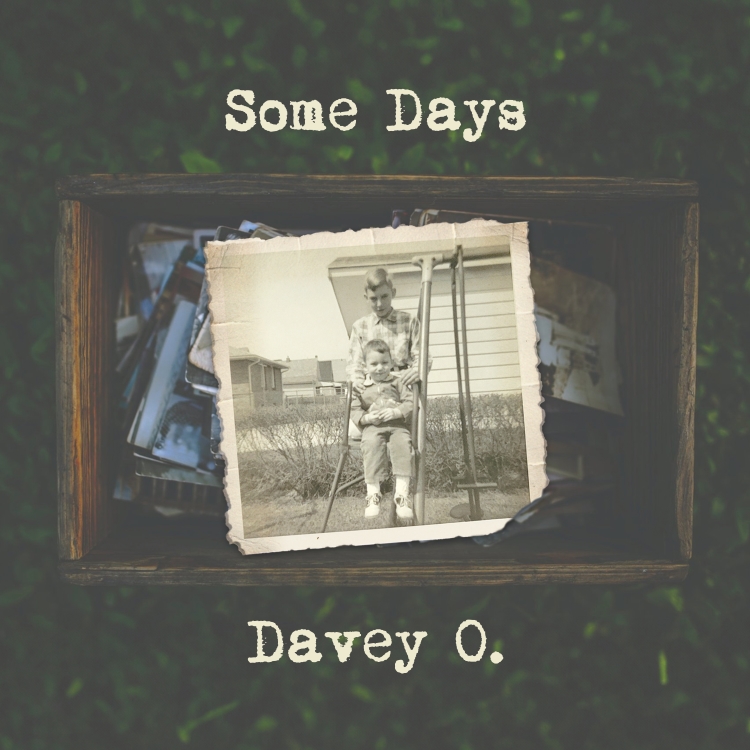
Davey O. is a hoarse-voiced, folk-leaning, singer-songwriter everyman who draws upon common human thoughts, feelings, and experiences to produce music that’s warm, welcoming, and capable of touching the emotions of his listeners. His music is sometimes introspective, other times observational, frequently insightful. His coarse, emotionally straining voice is thoughtful and earnest. There are a lot of acoustic guitarslingers out there – so much so that they often seem to blend together. Well, Davey O. doesn’t blend; seemingly subtly, he stands out. So, it’s with great pleasure that I find myself reviewing Davey’s latest recording, his Some Days EP.

The 6-song EP is rather wistfully nostalgic. It’s not sad, per se, though you’d be forgiven thinking it might be given some of the song topics, but it’s observant enough that it delivers a more matter-of-fact outlook on life. There are some positive moments, some pleasant lyrics, but on the whole, the EP is as much about paths not taken, wishes not granted, the unspoken determination to find to pockets of joy in a world that’s gray more often than it’s colorful, and the camaraderie of sharing the journey with others who experience the world similarly. I’ve taken some liberties with that description, extrapolating a bit on the lyrics and the tone, so your experience with this record may differ slightly.

Davey O. – Some Days

image courtesy of Davey O.

The record opens with a steady strum, joined soon by Davey’s gruff, plaintive vocals, singing introspectively about “The Hand of Doubt,” opening up in the most relatable of ways. It’s such a compelling song that I’m willing to forgive – and often forget so much that I’m surprised anew by – the rhyming of “doubt” with “doubt.” It’s a strong opening number that’ll draw you in.

“Travelogue,” next, is simultaneously thoughtful and observant, and it opens with one of my favorite lyrics: “At the rest stop there are people going places that I’m not.” It always makes me smile, even as the song – in tone and lyrics – waxes nostalgic, but sorrowfully so. The closing lyric, “Hold your head up, smile, and wander this world,” ends on what passes for an upbeat note within the song’s context, though it’s not particularly convincingly positive. “Travelogue” is touching and powerful, a well-written and forthrightly-delivered song.

“For a Little While” is a little lighter musically, though Davey’s coarse delivery and the song’s subject matter paint a lonely picture of life on the road, interspersed with the pleasure of spending a little time with the occasional friendly face. It’s an engaging song with a semi-peppy tempo, providing the spoonful of sugar that helps the solitary musical medicine go down.

Davey O.

photo by Dave Snyder Photography; photo courtesy of Davey O.

“A New Season” is a winter’s lament, but it’s a warm song because it sings about the payoff of struggling through a wintry drive. In other words, the return home. Some of the lyrics are quite touching, but my favorite clever lyric is delivered early in the song, “It’s been weeks since I’ve seen the lawn.” Those of us in the snow belt can all relate, but most of us probably not as much as Davey’s neighbors in Buffalo.

“Texaco Sign” is a John Mellencamp-ish slice of nostalgia, but Davey O. style. Davey utilizes a heavy strum in support of his harmonica to provide a sturdy opening, then fills the void with his strained, hushed-yet-somehow-powerful vocal. It’s kind of the opposite of a travelogue; Davey takes a trip back in time but remains in Buffalo. Though I’m not personally familiar with Griffith Street Park or the location of the titular sign, this well-voiced time capsule takes me back in time to my own personal equivalents for a pleasantly nostalgic visit.

“Some Days” closes the EP with relatable lyrics about the ups and downs of life, mixing in imagery of winter approaching that are as symbolic as they are concrete images. The song is guided by a steady strum and Davey’s persistent, consistent, emotional voice, two things that are constant throughout this EP but vary noticeably from song to song. Familiar yet unique, the cornerstone of Davey O.’s broad, dependable appeal.

In the end, this is a terrific record. And I guarantee that, when you listen to it, it won’t come across nearly as heavy as the description I’ve offered above. Instead, you’ll find yourself lost in Davey O.’s textured voice, lulled comfortably by his strong, rhythmic strumming, having thoroughly enjoyed a six-song collection that doesn’t paint the easiest life. Because Davey O. is a storyteller, you can’t help but be comforted his by tales so well told.

Davey O.

photo courtesy of Davey O.

Looking Ahead

Davey O. tours extensively. His shows are immersively engaging, so catch him if you can. You’ll see his performance are more concentrated near his Western New York home, but you can catch gigs throughout the northeastern United States and parts of Ontario if you keep your eyes open. The “Tour” page of Davey’s website is a great place to find upcoming performances near you. At the moment, he’s scheduled to play extensively around New York state from now through the winter. His first out-of-state performance, among those currently scheduled, is nearly six months away – an April 27, 2024 performance in Washington, DC. So those of you in New York State, check out that concert calendar! And the rest of us should check back periodically, since Davey’s adding dates all the time.


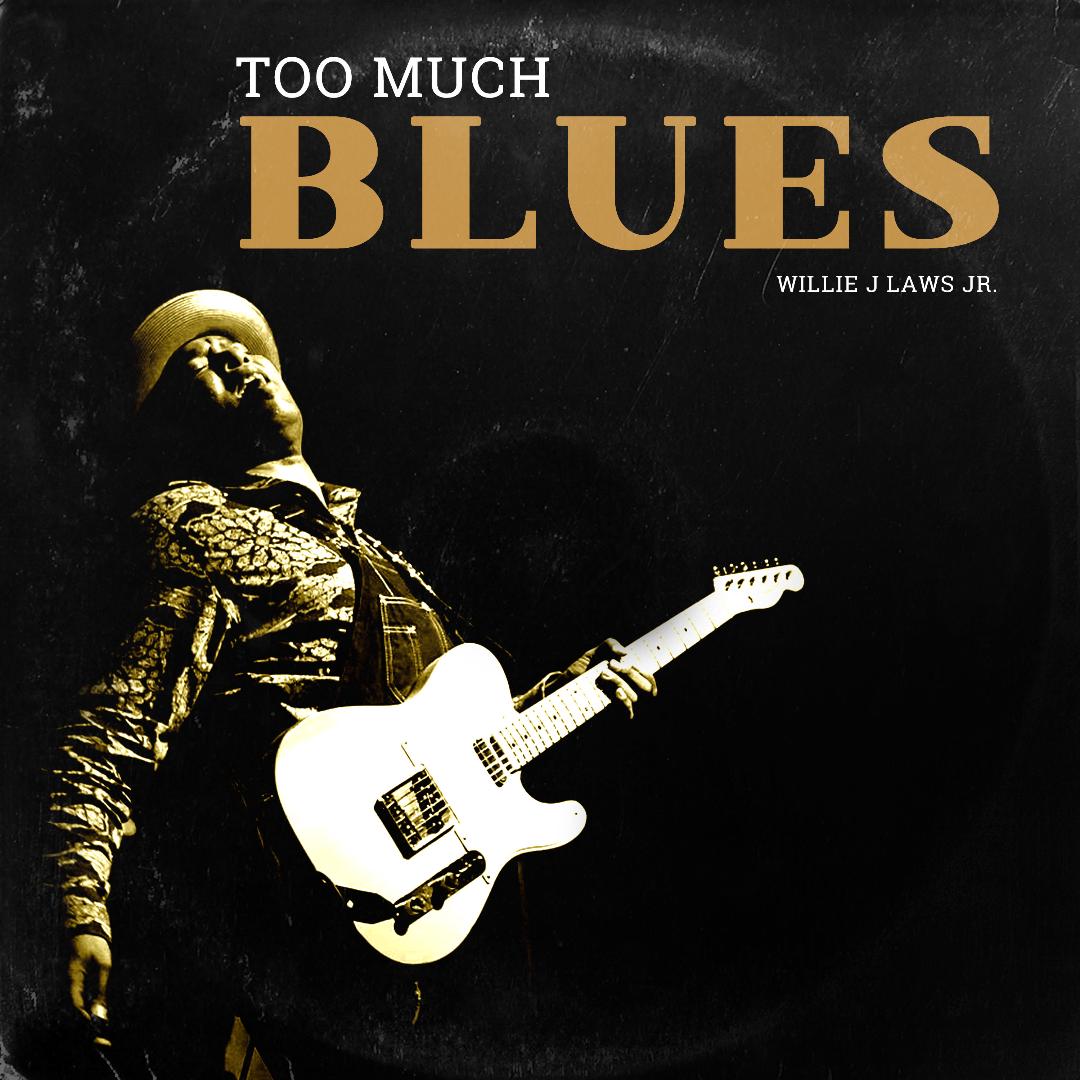
Album Review: Willie J Laws Jr. – Too Much Blues

Willie J Laws Jr. – Too Much Blues

image courtesy of Frank Roszak Promotions

Album Review of Willie J Laws Jr.: Too Much Blues (Pilot Light Records)

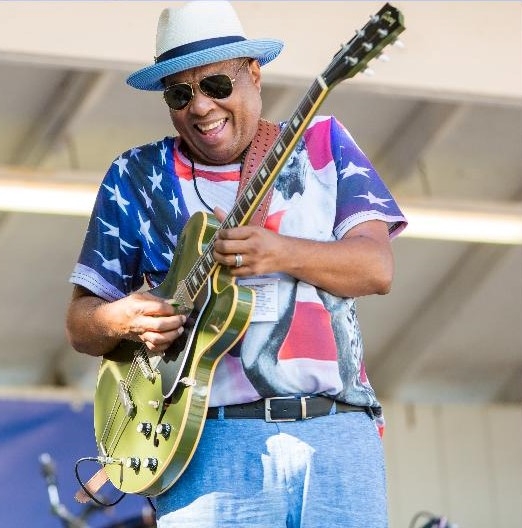
I’m fortunate to live in a region where one of the country’s top bluesmen, Willie J Laws Jr., performs regularly; he is almost certainly New England’s favorite transplanted Texan. And yet I haven’t taken much advantage of my proximity. In fact, I haven’t seen Willie perform since he played some guitar at a Cheryl Arena concert I attended several years ago. And I still haven’t seen him perform with his own band. However, thanks to this release, Too Much Blues, I’ve been listening to a lot of Willie’s music lately.

I’ve seen Willie referred to as “the last prophet of the funky Texas blues,” and I wouldn’t argue with that assessment. This disc showcases the breadth and depth of Willie’s talent. His vocals can range from mourning to defiant to joyful, from smooth to gritty. His guitar can weep, can soar, and can jam with the best of them. Willie J Laws Jr. is the consummate blues performer, and Too Much Blues does justice to his diverse talents. Plus, it’s simply a great listen, so grab (or stream) a copy and immerse yourself.

Willie J Laws Jr.

photo courtesy of Frank Roszak Promotions

Too Much Blues opens with “Regl’Ol’ Blues.” Stylistically, the song is a slow-moving, rhythmic blues dirge, with both Willie’s voice and his guitar emitting woeful, blue pain. This song also sneaks in one of my favorite lyrics on the disc – “I think you need to Google you some Bobby ‘Blue’ Bland” – possibly because it’s the first time I’ve heard “Google” mentioned in a blues lyric.

Willie showcases some cool vibes and varied approaches on different songs. “Better Off Blue” features adds a groovy ’70s vibe. Later in the collection, “Love Before You Die” and Willie’s cover of the Willie Dixon-penned “I Want to Be Loved” position Willie as a blues beat poet, with sparse instrumentation and interesting spoken-sung cadences.

“Stuck in Traffic” is a relatable favorite, at least for those of us who drive cars, and it includes a few lyrical gems like “I’m goin’ slow, nowhere fast. Yo nephew, get up off my ass.” Despite the 5-plus minute long string of traffic jam complaints, this song has a smooth enough vibe, bouncing along pleasantly, with some jazz key noodling providing an almost Schroeder-esque feel (yes, that’s a Peanuts/Vince Guaraldi reference), that it might actually calm me down if I listened to this song while stuck in traffic. Not that I want to find out.

Willie gets timely and political convincingly on a trio of tracks. First “Getcha’ Knee Off My Neck,” deploying some attention-grabbing horns to amplify the attention-worthy main point, and then later in the disc during “Ain’t Going Back to Texas,” a song with an almost country-blues dancehall flavor (or maybe an old midday in a blues joint feeling) that opens with an introduction noting that “Willie J Laws [is a] sixth-generation Texan with a message.” Yes, Willie is a proud son of Texas and purveyor of the funky Texas blues, noting “I’d love to come back home, but sometimes I don’t think I belong down in Texas,” but man, what a good song documenting damn solid reasons for discontent. And Willie, we’ve got your back in New England, and we’re glad you’re here. Finally, not letting America in general off the hook, Willie tackles America’s “original sin” (my words, not his) groovily on “The Right.” Protest songs are a fine American tradition, and Willie’s are quite strong.

Backing things up a bit, “Sorry Charlie” is a twangy country-blues number with a knee-bouncing/toe-tapping energy and a tempo powered by a jamming harmonica line.

The title track, “Too Much Blues,” is a convincing, close-your-eyes-and-bounce-along, blues groove, with organ for emphasis, mixed with meandering guitar and plucking-filled solos, and starring vocals that build to the occasional anguished blues wail. It’s followed by “You Don’t Love Me,” a funky blues number that makes the point “You don’t love me, baby; You just love what I do,” and then it elaborates upon that point. The result is a cool number that includes a few opportunities for guitar solos during which the guitar itself seems to be speaking, corroborating the points made in the vocals.

Willie closes the album with his cover of The Isley Brothers’ “Who’s That Lady.” The guitar groove and backup vocals here both harken back to the sixties or seventies, exploring the intersection between smoky blues joints and shag carpeting, bringing to mind being a young child, sitting in bean bag chairs in a room with the ’70s color palette of orange, yellow and brown, watching Soul Train. Or maybe that’s just me. But it’s cool – I mean, it’s groovy – to end the disc with a well-performed nod to nostalgia.

If I haven’t, by now, successfully painted a picture of one of the best blues albums of 2023, well, then that’s a failure on my part. Willie J Laws, Jr.’s Too Much Blues is an essential addition to any blues collection. Give it a listen.

More Recently

Willie was nominated for a New England Music Award in the Blues Act of the Year category. Voting has concluded, and NEMA winners will announced during a ceremony at the Six String Bar & Grille in Foxborough, MA on November 12th.

Looking Ahead

According to the “Tour” page of Willie’s website, you’ll have several chance to catch a live performance around New England before the end of the year. Willie’s next scheduled performances are November 9th in Wakefield, RI; November 16th in Sharon, MA; November 18th in Springfield, MA; November 20th in Rockland, ME; November 24th in Lowell, MA; December 1st in Putnam, CT; and December 29th in Cambridge, MA. Check Willie’s website for additional details about those performances and for news of additional shows, as they’re added. Willie’s Facebook page also mentions a Sunday, November 12th brunch performance in Boston; obviously, see the appropriate website for details about that, too.

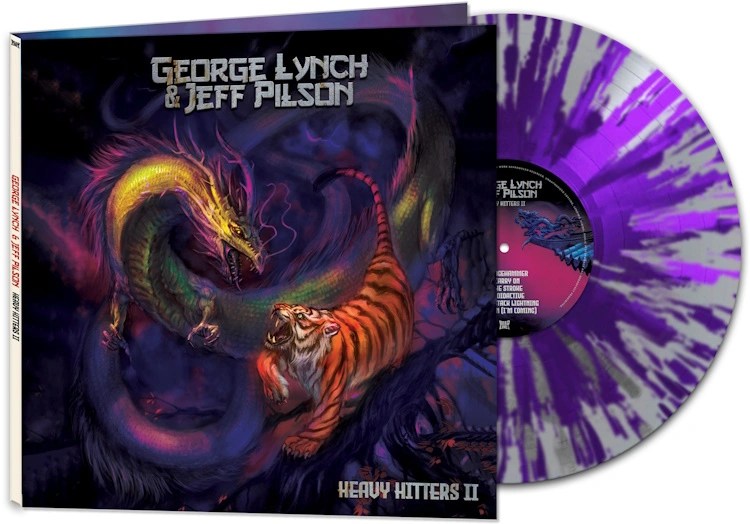
Album Review: George Lynch & Jeff Pilson – Heavy Hitters II

George Lynch & Jeff Pilson – Heavy Hitters II

image courtesy of Glass Onyon PR

Album Review of George Lynch & Jeff Pilson: Heavy Hitters II (Deadline Music)

The long-awaited follow up to Heavy Hitters has finally arrived. On Heavy Hitters II, George Lynch and Jeff Pilson add their inimitable melodic metal personalities and zeal to a whole new set of already well-known songs. The original versions of these songs spanned several genres, but in the hands of Lynch and Pilson, they have been transformed into power rockers.

For this latest endeavor, the reprise, George and Jeff are again joined by Brian Tichy on drums, while Bernard Fowler provides lead vocals for the entire album, with guest vocals from Corey Glover on one track (“Smokestack Lightning”).

As I noted in my review of the first Heavy Hitters album, I really dig it when popular songs are transformed to new genres; well, when they’re done well, of course. And George and Jeff pick up where they left off, delivering a new batch of reimagined classics. The arrangements, the performances, the production – and, of course, the talent – are all top-shelf.

Peter Gabriel is the first to get the Lynch/Pilson treatment this time, as this band cranks up the volume and the crunch with its rendition of “Sledgehammer.” George’s axework is so at-home here, I can barely remember the pop version of the song. A funky, hard rockin’ update of Crosby, Stills, Nash & Young’s “Carry On” follows, featuring plenty of Lynch’s guitar noodling and some ’70s-ish rock harmonies atop a noisy rhythm sound bed.

George Lynch & Jeff Pilson – Heavy Hitters II

image courtesy of Glass Onyon PR

I can always get behind a redux of “The Stroke.” The ever-underestimated Billy Squier’s always-unique rhythm is maintained from the original, but the heavy rock quotient is amped up a couple levels. “The Stroke” was already a banger even before getting the Heavy Hitters treatment, but this rendition really kicks ass.

Next up is “Radioactive,” which was the album’s first single. Again, the Imagine Dragons original was pretty rockin’, but Lynch and Pilson have accelerated the tempo and added a lot more guitars, and Fowler’s vocals add a rough-hewn hard rock edge to the song, almost turning it into an all-new, unique creation.

The band puts a heavy rock rhythmic steamroller behind Howlin’ Wolf’s “Smokestack Lightning,” and if you like a wall-of-noise backdrop framing your heavy rock, it’ll be one of your favorite songs.

However, it’s the next song that really stands out for me as quite probably my favorite song on Heavy Hitters II. It’s a funky melodic metal rendition of Sam & Dave’s R&B classic “Hold On (I’m Coming).” The song doesn’t flow in a straight line, despite the overwhelming recurring rhythmic hook. The chorus (essentially, the song title) is unfailingly sing/screamalong-worthy. There are some nifty little guitar flourishes to add color. And Fowler’s vocals simultaneously fan the flames and rein in the energy of the frenetic tempo. I know I always preach listening to an album beginning to end, especially when a lot of thought seems to have been given to song order, but sometimes I repeat this song a couple times before continuing.

The next song is no slouch, either. It’s a hard rock version of Sam Smith’s “Stay With Me,” one of those songs you just knew, when hearing the original, would sound good with crunchy guitar and hard rock vocal delivery. It’s followed by “Shout”; the ’80s Tears for Fears hit is sped up a bit, causing the drums to be more obviously prominent. Of course, Lynch’s guitar is omnipresent, but even at the faster tempo, the song is left surprisingly, refreshingly airy, with plenty of open space. And Fowler’s anguished vocals on lyrics such as “jump for joy” and “tell the tale” are an edgily effective treat.

For the next offering, Lynch & Pilson stay in the ’80s, rearranging another of that decade’s big pop-rock hits, amping up INXS’s “New Sensation.” They don’t touch the song’s classic, identifiable hook, but a faster tempo and a slightly revamped, prominent, funky-thumping bass line give the song a whole new feel.

An energetic cover of the Rolling Stones’ “Jumpin’ Jack Flash” is next, followed by a powerful reimagination of Sly and the Family Stone’s “Thank You (Falettinme Be Mice Elf Agin).”

The album closes with “It’s a Wonderful Life,” a crunchy yet light-and-soaring hard rockin’ Christmas song that I’m pretty sure every Lynch/Pilson fan is gonna really like.

If I had to choose my favorite songs from the dozen, I’d select “Hold On (I’m Coming)” and “Stay With Me,” though “The Stroke” and “Radioactive” would be close behind. And maybe the disc-ending Xmas track. But there’s something in every hard rock fan’s lane here, so you’ll have your own favorites. And the whole collection makes a great beginning-to-end album listen.

You know, I was psyched when I heard Lynch and Pilson would be releasing a second Heavy Hitters disc, and Heavy Hitters II didn’t disappoint… so much so, that I’m hoping they’ll make a habit of these collections. Two or three years from know, it’ll be cool if there’s a Heavy Hitters III.

Looking Ahead

George Lynch has some upcoming tour dates – solo, with his band Lynch Mob, and a November 17th guest appearance with Dokken – per the “tour” section of his website. You can currently catch Jeff Pilson on the road as Foreigner’s bass player. Brian Tichy is also currently on the road, drumming for The Dead Daisies. And you can keep up with Bernard Fowler via his Facebook and Instagram accounts.

Album Review: Ricki Erik – GenReality

Ricki Erik

photo courtesy of Realm Music Group

Album Review of Ricki Erik: GenReality

Ricki Erik paints with a diverse musical palate, spanning dance, pop, R&B, Latin, blues, hip-hop, and more. Ricki’s new album GenReality is a very cool collection of songs that showcase his broad and varied vocal talents while providing an engaging album-listening experience.

Ricki Erik – GenReality

image courtesy of Realm Music Group

Ricki kicks the album off with a couple of energetic dance tracks. First up, “Party Tonight,” on which he teams with Deja Vu Boston, is a good-time funky pop dance number, stylistically somewhat recalling Kool & the Gang but, of course, with Ricki’s identifiable voice cutting sharply and emphatically through the fun musical romp. “Love Hurts (Freestyle Remix)” follows, exploring a very different groove, with a full wall of sound backing a rhythmic beat in support of Ricki’s entreaty “baby, love hur-hur-hurts.”

Ricki pivots to Latin-style music on “Como Te Llamas,” a catchy song that’s all beat and rhythm and will be one of your quick favorites after just a listen or two. This song is well-structured, bouncing just enough to keep things peppy while allowing Ricki to showcase the sincere, earnest side of his smooth vocal delivery.

Ricki Erik

photo courtesy of Realm Music Group

Ricki slips comfortably into the blues on “Here I Come Baby.” His voice doesn’t get particularly deep on this track, but he shows off a growl with a hint of gravel that hadn’t even been hinted at on previous tracks. I mean, it’s clearly still Ricki Erik on this song, but man, this dude’s got range, and we’re only four songs in! As the disc continues, he wields even more of the weapons in his vocal arsenal, and they make for an enjoyable album stacked with variety.

Next up is “Bad Girl,” featuring Zambo Buchanan. This song is Ricki’s hip-hop reimagining of Hall & Oates’ “Maneater.” It’s an exceptionally fun listen.

“Can’t Get Enough” is promoted as a wedding song, and it’s a really heartfelt love song, with Ricki’s voice cracking and quavering to maximize emotional impact.

“Wait a Minute” is a tempo-changing, head-bobbing dance-pop number. The beat is disjointed enough it might not be particularly easy to dance to, but it’s a very cool listen.

“Friend” recalls Rockwell’s “Somebody’s Watching Me” with its semi-haunting electronic musical sound, yet Ricki’s smooth voice somehow still showcases itself and portrays emotional pain despite the electronification of the vocals.

Ricki Erik

photo courtesy of Realm Music Group

“Flower”… well, lyrically and topically, you have to wonder if Friends character Monica Geller, as her younger self in the show’s flashback scenes, had a hand in the songwriting. Musically, there’s some neat keyboard melody that helps navigate the otherwise electronic, rhythmic beat serving as a music bed. Ricki’s vocals dash in and out, adding the finishing flourishes to this funky pop number.

“Beautiful Liar” is an engaging song, residing in an expressive, rhythmically somewhat disjointed lane of R&B. The song doesn’t flow smoothly at all; rather, the phrase “you’re such a beautiful liar” is sung disruptively, continually drawing attention from the rhythm, then suggesting a return to smoothness with “you are, you are, you are.” Don’t believe the suggestion. Instead, Ricki’s vocals don’t release the listener or the song; it’s a very cool approach.

Now, “Whisper,” on the other hand, is smooth. Well, mostly. It’s the album’s strongest ballad, deftly utilizing Sherl Burke‘s supporting background vocals throughout, with strings helping Ricki’s voice soar in spots before returning to the song’s rhythmically disruptive chorus, creating a bit of tension each time before releasing into Ricki’s smooth delivery of “that’s how they whisper.” It’s the little nuances in “Whisper” that make this a memorable song, so much so that I’ve caught myself singing days after my last listen.

Ricki Erik

photo courtesy of Realm Music Group

“Feelings,” on which Ricki is again joined by Zambo Buchanan, closes the collection with warmth and humanity; it has an engaging rhythm and an ending fade-out that wrap this album up neatly.

Beginning to end, GenReality is a cool journey, a record I enjoyed listening to beginning-to-end each time I reached it in my to-be-reviewed queue for the last several months. If you give it a listen, you’ll discover that, even when it doesn’t get you completely up out of your seat, Ricki’s songs will have your toe tapping, your head bobbing, or your body swaying side to side. And, though I’d advise a full listen of this disc, if you want to sample individual songs, Ricki’s Soundcloud page includes each of these songs, with most noting a genre in the song title (“R&B,” “Hip Hop,” “Pop,” “Blues,” etc. ), so you can more easily choose where to start your journey of discovery based on your musical taste.

This release was Ricki Erik’s first album in 15 years; let’s hope the next one comes around much sooner.

More Recently

Ricki Erik was nominated for a New England Music Award in the Soul/R&B Act of the Year category. Voting has concluded, and NEMA winners will announced during a ceremony at the Six String Bar & Grille in Foxborough, MA on November 12th.

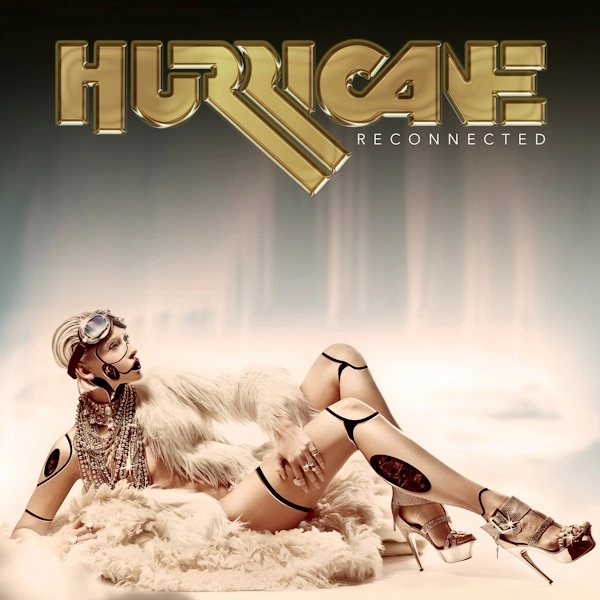
Album Review: Hurricane – Reconnected

Hurricane – Reconnected

image courtesy of Glass Onyon PR

Album Review of Hurricane: Reconnected (Deko Entertainment)

“Na na-na na na na, I’m on to you!” Back in the late ’80s, if you heard that lyric, you were rockin’ to Hurricane! Reconnected is the band’s first new album since 2001, just its second since 1990. Hard rock fans, especially fans of ’80s-influenced, guitar-heavy melodic hard rock, are in for a treat! But this is hardly a throwback album. Despite a couple of nods to the past on the disc (the band’s own past and Queen’s, but I’m getting ahead of myself), the music is fresh, modern… and kicks ass!

Original Hurricane guitarist Robert Sarzo and bassist Tony Cavazo are joined on Reconnected by drummer Mike Hansen, who joined Hurricane in 2010, and new vocalist Dan Schumann, who joined the band in 2021. None of these four played on Hurricane’s 2001 release Liqifury; in fact, this is the first time in more than 30 years that either Sarzo or Cavazzo recorded as Hurricane. So this album was a long time coming and, as you might have surmised from the opening paragraph, does not disappoint.

The album kicks off with frenetic energy, fast-paced drums, shredding, distorted guitars, and an insistent high-pitched ’80s-era melodic hard rock vocal. And the initial song, “Rock Star Cheater,” isn’t just a hard-driving level-setter for Reconnected. No, indeed, it’s one of the best songs on the album, with guitar hooks, a nicely-placed guitar solo, and a neat little tempo/tone-changing lead-in to the chorus.

Hurricane

photo courtesy of Glass Onyon PR

Not to be outdone, “You and I” follows with a more open, engagingly repetitive rhythm. It’s a hard rocker with a somewhat less heart-pounding pace than the opening track. There’s a bit more nuance, but the tune is no less catchy, containing perhaps an even hookier guitar hook. (Yes, a hookier hook. I said it.) By now, it’s clear that Hurricane’s new release contains a bit of variety, just as the band’s fans would have expected. And beyond simply foreshadowing the disc’s variety, these are great songs – two of my favorite new Hurricane originals – that get things off to an excellent start.

Track three really showcases the variety on Reconnected, serving up the greatest departure from among the albums eleven tracks… or, at least, the from first ten. Indeed, it’s a rockin’ version of Queen’s “Under Pressure.” The song is significantly less heavy than its album-mates, but a nice interlude. I mean, you can never go wrong with a Queen song, if you’re up to the task. Hurricane is, and it’s a fantastic showcase for Schumann’s vocal range; he adeptly provides the crisp, precise vocals the song requires. (Why did I not already know Schumann’s name? The voice on this guy! Wow!)

Next, Hurricane seems to almost be channeling Y&T in “Behind Your Shadow,” with heavy power guitar fronting a foreboding, almost theatrical blanket of song, supporting a Meniketti-like, elongated, slow-paced power vocal.

“Innocent Girl” is a classic, rockin’ ’80s fourth or fifth single release, pleasant to listen to, with the hook a little less obvious and, therefore, requiring a listenership willing to devote a few listens before really getting to know the song. It has great vocal variance and a hard-rockin’ tempo; it’ll be a fanbase favorite.

“Don’t Change Your Love” is another of my personal favorites on this disc, with a sidewinding guitar hook and memorable vocal phrasing, particularly in the chorus.

Song seven is one everyone will recognize. The new Hurricane lineup takes the opportunity to record a slightly harder-rocking version of the band’s biggest hit, “I’m on to You.” You know, I had forgotten about the kickass 40-second guitar lead-in before the first lyric. And there’s a cool axe bridge mid-song, plus I think they’ve cleaned up a little muddiness in the vocals when compared to the original. In any case, I bet you’ll dig the updated version of “I’m on to You.”

“Hand of Souls” mixes some laid-back ’70s rock elements with some very ’80s vocal and guitar gymnastics to produce an excellent slower-tempo jam track.

“Disconnected” is a twisted, somewhat haunted slow number that suggests a Pink Floyd influence but one that’s run through an ’80s rock music filter, with some twangy guitarwork bubbling just under the surface to provide the song with an interesting and slightly uneasy essence.

Next up, “Blind Love” is straight-ahead hard rock but with breaks and bridges that detour the song and give it character. There’s a passage with the phrase “blind love will always hurt you” that recalls Journey’s “Separate Ways” just briefly, but I’m not sure if it’s really reminiscent of Journey’s hit or if it just reminds me of Journey’s “if he ever hurts you” lyric.

Hurricane closes the disc by reveling in its soft side with the soft, floating, almost dream-like electric-acoustic “Wishing Well.” Like any old-school melodic hard rock band, these guys can shift gears to the soft and mellow when they want to. And ending the album with a song like this is a great way to ease the listener back to the less pumped-up world of not-hard-rock. An exit ramp back to daily life, if you want it. Or you can set the album on repeat and just start all over again.

You know, I dug Hurricane back in the ’80s/’90s, but I wasn’t a big fan. Well, I’m a huge fan of this album, Reconnected. If you’re into guitars, power-rock, and melody, packaged in a varied song mix to keep things interesting, you’ve gotta check out this album.