EP Review: Huddy – Love Bites

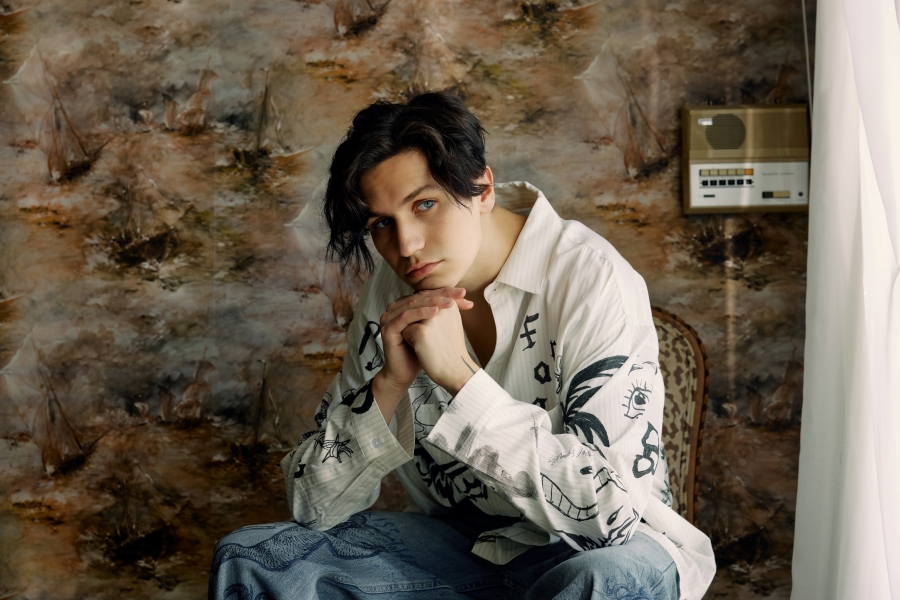
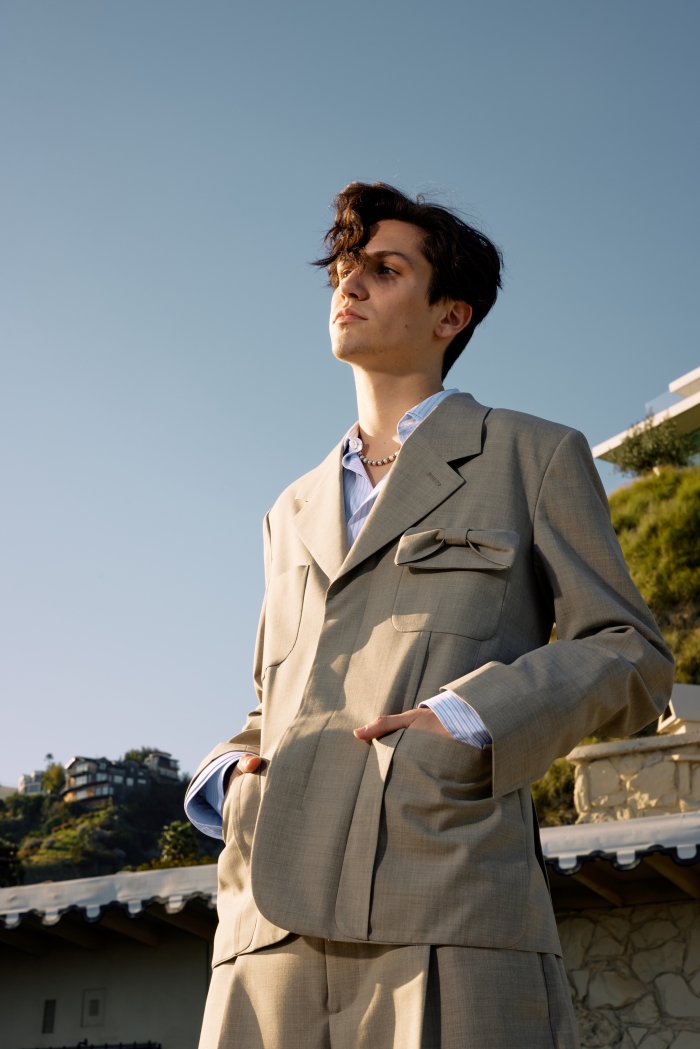
photo by Ben Prince; photo courtesy of The Orchard

EP Review: Huddy – Love Bites

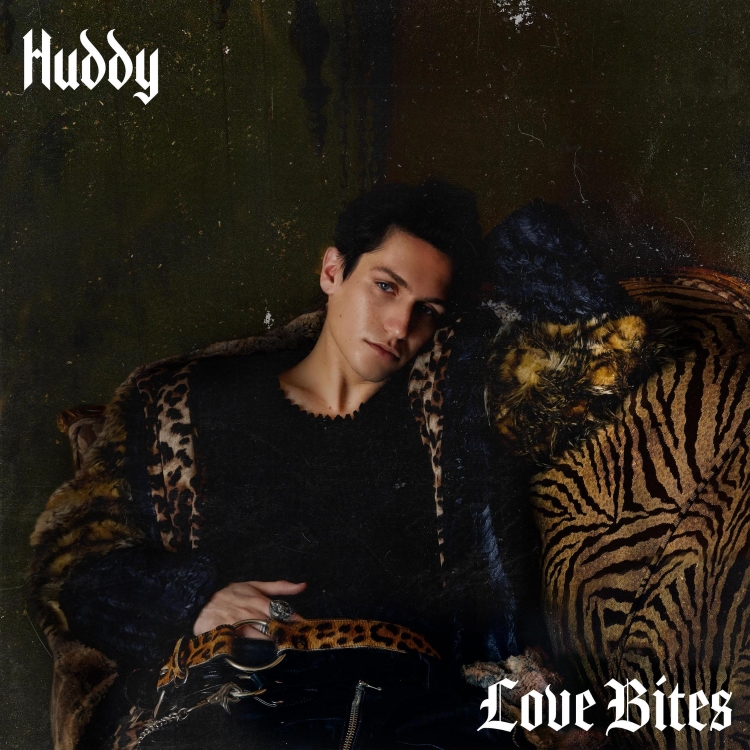
As I was digging through some of the music I was sent last year during my 9-month hiatus from writing, I uncovered a few gems. Huddy‘s EP Love Bites was one of them. It’s 4 songs of guitar-based power pop, radio-friendly and a little rockin’. Catchy, with crunchy hooks and full of attitude. So upon giving this EP a quick listen, I added it to my review queue, undeterred by the fact that this record dropped a full year ago. This is an EP you need to know about, regardless of your usual favorite genre, especially if you have any mainstream-leaning tendencies.

image courtesy of The Orchard

As I prepped for this review, I dug into the background of Huddy (Chase Hudson) and discovered the dude’s already a pretty big deal. Yeah, the songs from this EP didn’t chart – they definitely should have! – but he already has quite a resumé. Before I get to the music, I’ll rattle off some accolades: 2021 iHeart Radio Music Awards nominee in the Social Star category, listed in Billboard‘s 21 under 21 list in 2021, one of Forbes‘ 30 under 30 in 2022. I don’t usually mention social media numbers, but Huddy has 30.4 million TikTok followers. He costarred with Sydney Sweeney in Downfalls High in 2021. And he was in the cast of Netflix’s Hype House in 2022. I know I usually get straight to the music in my reviews, but this is an impressive background, and I’ve gotta say, based on the songs on this EP, Huddy has the singing chops to back up the hype.

The first song on this EP, “Mugshot,” is an energetic, build-to-power pop rock song with a monster hook. There’s a cool little raw vocal effect during the lead-in to the chorus you might note. Moreso, though, there’s a fast-beat rhythm through the verses that carry the song forward much like some ’90s pop-punk faves might have, but “Mugshot” has some crunchier guitar licks. As for rockers young and remember-when-you-were-young, you’ll relate to the girls-like-the-bad-boy opening line of the chorus, “She’s in love with the boy in the mugshot.” Oh, and if you tend to listen for axework in your favorite tunes, don’t sleep on the brief, wailing solo about two-thirds of the way through.

photo by Phil Chester & Sara Byrne; photo courtesy of The Orchard

“Worst Way” leans more into the power-pop subgenre of rock ‘n roll, leaning more into its drumbeat and rhythm with a more pop-rock vocal delivery, not significantly unlike some of the more rockin’ Jonas Brothers songs (which, to be fair, is a lot more of their songs than rock ‘n roll purists may want to admit – personally, I love me some good pop-rock). I know the opening reminds me of another hit song (who else hears it? which chart-topper is that?) before it drops into the rhythm. Huddy’s vocals lead the listener on a slightly hypnotic journey in the verses leading up to the chorus, which absolutely pops. The song uses a slight near-pause, with most of the instrumentation briefly dropping out, heading in and out of the chorus in a very effective attention grab and re-grab. This might be the most likely to grab the attention of the pop radio audience, though this whole EP is radio-friendly, so not by much.

In fact, if I’m wrong about that, it’ll probably be because the next song, “Love Bites,” has a bigger, more in-your-face pop rhythm, and Huddy’s voice is smoothly dreamier in the verses but more aggressive in the “l-l-love bites” chorus. It’s the sort of song you’d be jumping around to on a party dance floor. Or around your living room floor, if it’s a house party. Regardless, the song gives off serious dance club vibes, replete with a few NSFW lyrics, though it’s the sort of club song you’d also blast from your stereo.

photo by Phil Chester & Sara Byrne; photo courtesy of The Orchard

The fourth song, “21,” returns to a full-on rock vibe, with distorted alt-rock guitar kicking things off. The chorus sports a crisper, clearer sound, though with still a lot of a wall-of-sound backdrop. As the song opens up when the chorus kicks in, a crisp rock drumbeat takes over from the distorted axework to drive the song’s enthusiastic, almost anthemic tempo. The song’s creative breakdown about two-thirds of the way through helps break things up – a brief, thumping, danceclub breakout that seems to try to make the song feel like a party, and quite successfully, actually – before the song power-pop-rocks its way to its close.

Though just four tracks, Huddy’s Love Bites EP provides a power pop-rock persona and shows a bit of the singer’s musical versatility. That’s important if an artist wants longevity, since it shows his talent isn’t wedded to a specific “sound.” It’s an exceptional collection, especially as an initial introduction to Huddy.

With apologies to the talented Mr. Hudson for being a little late to the party, I’m sure this music will be new to a lot of my regular readers who may not pursue the latest “hot” acts but are into good, old-school rock ‘n roll, including when it’s bright, shiny, and filled with pop-ready hooks like the songs on Love Bites. Give Huddy a listen. This is a talented artist you really need to hear.

More Recently

Huddy played Lollapalooza in 2024, and in this Instagram post commemorating his performance, he plugged an upcoming album in 2025. I hope that’s coming because, after hearing this EP, I can’t wait for a full album of new tunes from this guy!

Musically, since Love Bites, Huddy has released a pair of additional singles, “Addicted to You” and “Cyanide.”

You can catch Huddy on the road this summer as part of the Summer School Tour with Charlotte Sands, Taylor Acorn, Rain City Drive, Arrows in Action, If Not For Me, and Beauty School Dropout.

Album Review: Simon Scardanelli – Underneath the Singing Tree

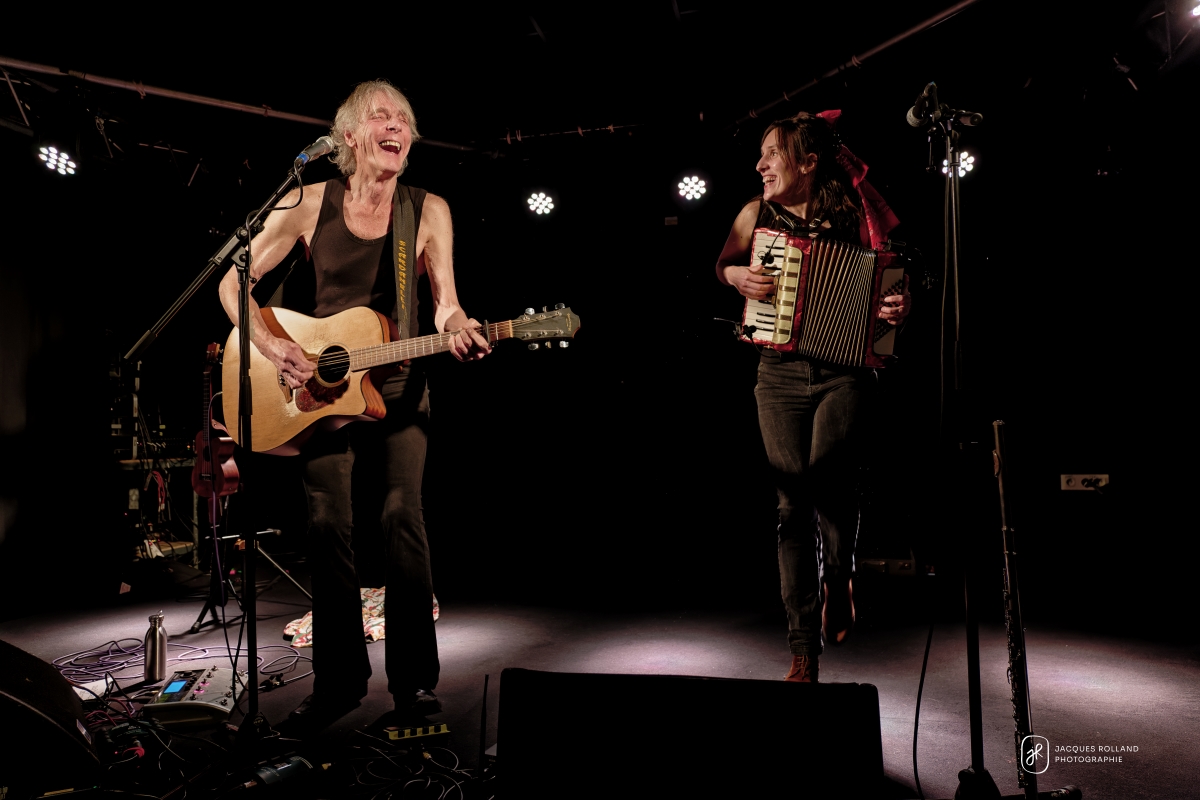
live performance photo of Simon Scardanelli with guitar and Sophie Caudin with accordion

photo by Jacque Rolland; photo courtesy of Simon Scardanelli

by James Morris, Contributing Blogger

Album Review of Simon Scardanelli: Underneath The Singing Tree

CD and Streaming Release Date: 16th June 2025

We have had to wait along time for a new album from Simon Scardanelli. It’s been six long years since 2019’s The Rock, The Sea, The Rising Tide. The world was a different place back then, pre-COVID and all that. Since 2019, he has released several singles and most probably spent those lockdown years finding old projects to release and things to work on, like many of us did, to pass the time.

I know for a fact Simon has been working hard on a number of musical creations alongside this new album release. A folk opera is somewhere in the mix, another album maybe, this time with his live performing collaborator Sophie and who knows what else, all bubbling away on his musical hard drives. All that, whilst ramping up the number of his live shows around France as well. Busy busy!

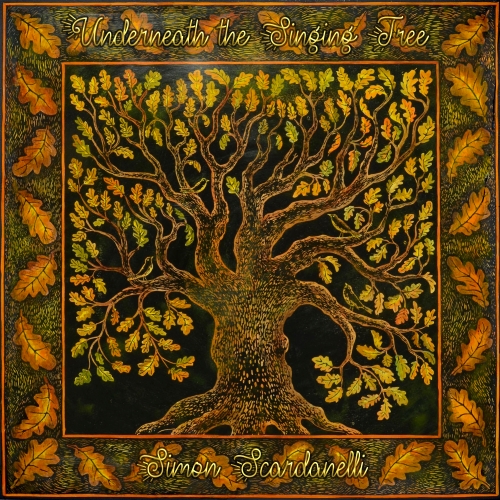
Simon Scardanelli – Underneath the Singing Tree album cover

image courtesy of Simon Scardanelli

So what about the new album? That’s why we’re here right?

OK, let’s get to it, I mean, after six years you must be keen to find out what he has in store for us this time. You have nothing to fear, just open your ears and prepare for a truly wonderful musical experience.

It may seem a bit simplistic, but firstly the running order of the songs is perfect. The tracks guide you through the audio journey very nicely indeed. In a world of streaming and shuffle mode, the art of sequencing songs on an album may seem a bit forgotten, but it is refreshing to listen to a well-ordered album the way the artist intended you to.

So it is an effortless listening experience made so by the crafting of the composer. Everything in the right place with variety and consideration designed to entertain.

Sonically, the whole album sparkles beautifully and is easily up to Simon’s usual excellent production standards. Crafted, lovingly and painstakingly put together. Every note, every space, every word, all must have a meaning and a reason to be there. Simon always excels at his production values, and I absolutely love the way that everything here has its own space and air to breathe and shine.

Simon Scardanelli

photo by Alain Marie; photo courtesy of Simon Scardanelli

So the mix and instrumentation is perfect for each of the songs but also his voice is so strong and ageless. I have listened to all his albums through the years, going back to Big Bam Boo in the late 1980s and even his pre-pop incarnations from the late ’70s and early ’80s. Simon’s voice is stronger now than those early outings and equal to anything else he has released in the last 30 years. It is with timeless ease that he reaches each note in every song and creates unusual and thoughtful harmonies. No room for clichés with Simon.

That follows through in both the music he composes and in the lyrics that he writes. His words, as always, defy cliché and weave an imagery and a storytelling of such interest that it leaves you wondering what sort of strange events could have inspired these songs. Love is certainly one large element on show here, or maybe a doomed love, possibly a stronger emotion that an artist can draw inspiration from.

You must discover these songs yourself. Let each one unfold and delight you. I was lucky enough to hear some of these songs at a small live show. They were new to me amongst Simon’s classic back catalogue. Songs, such as the playfully sombre “Five Seconds Ago Last Year,” reached out and grabbed me. I am so glad to have it on the new album, alongside the other new and enchanting songs. There is the resigned, “Here We Go Again” and the uplifting, “Let’s Go Dancing.” Listen to “Heart Upon My Fretboard” and revel in the simile of a songwriter’s vulnerability brought to bear on the neck of his guitar on which he bares his soul. Then there is the mysterious title track, “Underneath The Singing Tree,” which paints a picture of that aforementioned doomed affair in the magical forests of Huelgoat in Brittany, France.

Simon Scardanelli

photo courtesy of Simon Scardanelli

The song “Battle Ships,” destined for Simon’s other ongoing musical project, the folk opera La Mer, has been included in advance on this album. A firm new live show favourite, it has muscled its way onto the album on the back of its audience popularity and its overwhelming majesty. Driven by a forceful ukulele, this song shows Simon’s versatility in switching between instruments to create a broad and exciting musical landscape.

One song which may be familiar to fans of his work is “Glittering Prize.” Originally recorded during the Make Us Happy sessions in 2015, it then found itself a release as a single in 2021 (one of those lockdown projects, no doubt). Its inclusion on the new album finds it seamlessly slotting in with the other tracks. A reworking of the song, with new vocals and an enhanced mix, has elevated it beyond the original single version and will impress any who have heard it before and equally delight new listeners.

I haven’t discussed each and every one of the songs on the album, that is for you to discover, as I said earlier. However I hope that I have given you a flavour of the excellence that runs through the whole release.

This is Simon’s best album since the eternal Make Us Happy and is a great job, very well done. So many outstanding tracks make this album a resounding success and worth every minute of the wait. (3,038,400 of them, but who’s counting!) Now how long till the next album, Simon?

Album Review: Dekel – Starlings

image courtesy of Dog Ranch Music PR

Album Review of Dekel: Starlings

Israeli singer-songwriter Dekel has delivered, in Starlings, an album with catchy, pop-accessible singer-songwriter fare with rich musical backdrops, with a lot of the flowing sounds often – though not always – owing their flowing nature to string arrangements and, it seems, accordion. Stylistically, it might remind you of Tori Amos with more folk leanings. Dekel’s press materials’ “for fans of” suggestions also mention Beirut, Joni Mitchell, Regina Spektor, and Keren Ann, and as much as I prefer to come up with my own comparisons, that’s a much better triangulation than I was ending up with on my own. I will add that, vocally, Dekel’s singing reminds me, in places, of Sophie Ellis-Bextor’s on her Familia album, which I reviewed several years ago. Specifically, the shape and roundness of some of the vocals, particularly on certain vowels.

Dekel’s music is catchy and fun to listen to, but as I don’t typically dig deeply into the indie folk-pop genre. Even moreso, the unique sounds on this record, which – and thankfully I have press material to lean on here – include “an abundance of Eastern European sounds with Jewish Ashkenazi melodies” mixes in with the pop-folk and layered production I’m more familiar with. What really stands out about this album for me are how catchy the songs are – as in, crossover to popular music fans kinda catchy. Starlings is, at its core, a song-driven pop music album whose rich sound is unique because of the musical palate in which Dekel works.

photo by Shahar Hilla; photo courtesy of Dog Ranch Music PR

The opening song “Starlings” starts things off cheerily, with Dekel’s vocal cadence adding a quirkiness that gains your attention atop a rich music bed. “Season to Season” is similar but with a different tempo and strumming pattern, plus some uneasiness guided both by the music and an edgy tone in Dekel’s vocals, though toward the end the mood lightens as if the new “season” includes rebirth.

Next up, “Black Cat” is one of my favorites on this record. It’s light with a playful tempo and accordion-playing that bring to mind gypsy music, at least based on the old black and white movies that serve as my entire understanding of what gypsy music sounds like. But yeah, it’s playful and fun.

The playfulness continues on the next song, “So Much Logic,” a song you’ll find yourself swaying to pretty quickly. It’s such a fun song that I constantly have the urge to sing along with the chorus, though I can’t keep from getting tonguetied on the lyrics: “So much logic has left me, no answer. I said, so much logic has left me, no answer. So I walk in the fields. Dip me in the sea. Burn in the sun.”

Dekel continues with “The Frog Prince,” a mostly-soaring song (with some cool, brief instrumental mood changes placed as necessary to drive the song and its story forward) that verbally and musically creates brilliant imagery, centering around idea that “every prince I kiss turns [turned] into a frog.”

“Sing With Me Sisters” is musically playful and vocally soulful with dramatic strings entering abruptly each time the chorus begins, providing lively, deep support until the next verse.

“I Know I Will” has a kind of frantic feeling, especially following a smooth song like “Sing With Me Sisters.” “I Know I Will” has a nervous energy about it. The thought  central to the song’s tension is “I know I will ’cause I finally understand who I am.” The anxiousness isn’t fear; rather, it’s an uneasy but confident rebirth. Oh, and there’s some cool fiddlework to close the song that those of us with mainstream musical experiences will most easily be able to compare with the violin playing in Fiddler on the Roof. I’m sure I’m using a horrifyingly simplistic comparison, but that’s what I have. “Meet Me Halfway” follows, also with an uneasy tempo but with a pleasant overall tone. And man, I wish I had some album credits for this to figure out precisely which instrument is playfully meandering through the arrangement, but it is very cool.

“My Song” is a very personal song for Dekel. The opening accordion sounds like music you might expect from the opening scene-setting scenes of a sixties movie, maybe starting Audrey Hepburn, set in southern Europe. Somewhere with cobblestone streets and hills. Probably Italy, right? Maybe Monaco. Possibly Greece. Somewhere along the Mediterranean coast, that’s for sure. Given Dekel’s background, I know I’m several countries away from the actual instrumental influences, but you know, that’s where the movies the music brings to mind would have been set. The theme of this inward-facing song for Dekel is the lyric “It’s not enough. It’s not enough. But my strong is all I had to keep me strong.” It is, indeed, her song.

Finally, the record closes with “Borrowed From the Soul,” is a jazzy, soulful, slightly folky pop song straight out of the ’60s or ’70s, in more stylish circles, something you might hear in the soundtrack of a James Bond movie or any movie scene where people are gathered at a party, not dancing but standing around holding martinis. I included the adjective “folky” because there’s a hint of a Judy Collins or Joni Mitchell vibe in there, too, especially in the verses, but the chorus is echoingly sophisticated, stylish, and cool.

I didn’t know quite what to expect from this album when I first listened to it, as indie world folk music isn’t anywhere near an area of strength for me. But even if I had known what to expect, this wouldn’t have been it. Sure, there a variety of influences that’ll be unfamiliar to American pop music ears. (I’m raising my hand here.) But the songs are personal and on universal topics, delivered with a very pop sensibility, regardless of the regional or historical origins of some of the instrumentation and melodies. Several of the songs on this record are simply pop songs with a potential for mainstream appeal. My recommendation is to give this album a listen and choose a few favorite songs, then work out from there. The favorite songs will be easy to find.

EP Review: Kier Byrnes & the Kettle Burners – Before the Fall

photo by Monica Sager; photo courtesy of Knyvet

EP Review of Kier Byrnes & the Kettle Burners: Before the Fall

If Kier Byrnes & the Kettle Burners were a movie, their program guide listing would be: “Really good, powerful, jangly Americana with accordion.” That’s it. Heck, that’s my review. Not enough? Yeah, you’re probably right. This is a terrific EP, so if you’re willing to stick with me and not check out the music until after you’ve read a few more paragraphs, I’ll keep going.

OK, maybe just click through and start playing “White Russian,” then come back and read while you listen. Who am I kidding? You can’t pay attention to anything else while you’re listening to “White Russian”! The EP-opening track is a raucous, accordion-fueled, rhythmic audio circus that’ll have you singing “la da da da da white Russian!” by the end of the first time you hear the phrase. It’s infectious. It took me several days to realize there was more than one song on this EP because I just kept replaying “White Russian.” It’s a fun, exhausting, energetic romp.

image courtesy of Knyvet

It’s followed by “Quarter-Life Crisis,” which I’d love to tell you about, but I don’t have any adjectives left. Actually, I do, mostly because this song requires an entirely different set of descriptors than its predecessor. It’s slower Americana. Mostly. It’s an introspective number, as you’d probably guess a song called “Quarter-Life Crisis” might be. The song sways gently for the most part early on, but the vocals reach a pain-releasing wail in sections of the chorus, and then the song builds in power and noise-level as it progresses. This is what Americana music would sound like if it came out of ’90s Athens, Georgia. But without the twang, of course, ’cause Kier & company are Yankees. Probably Red Sox, actually, since they’re New Englanders, but in Athens, we’d all be carpetbaggers.

“When the Money’s All Gone” has an almost Gypsy-esque accordion part (even more Gypsy-esque than accordion music ordinarily is), and it shares some good folky advice, with the chorus delivering these wise words: “You say that you love me, I tell you you’re wrong. I’ll know that you love me when money is all gone.” This track has a bit of an Irish drinking song feel, particularly as it begins to drift more into singalong territory with words that are easy to remember after several drinks – “la da da da da da” – and seems to carry an undercurrent of the idea that things are not going to end well, but hey, let’s all keep drinking and singing.

image courtesy of Knyvet

“Train’s Off the Rails,” next, starts slow and picks up speed. Like a runaway train, you might say. The kind of sidewinding, janky rhythms and carnival barker-ish vocal delivery recall a couple of my favorite Los Goutos songs. As you get past the midpoint, the vocals and accordion seem to compete to see which can pick up the tempo the fastest, but it’s really the guitar solo that ups the ante because nothing’s as fast as a shredding guitar part. Oh, the vocals return and try, but just as things are about to spiral off the rails – to extend the train metaphor – the brakeman apparently steps in, and you can hear the song and the vocals crawl before stopping.

“Hurting or Helping” is another raucous, fast-tempoed Americana number that looks internally, thinking about the relative merits of pursuing money versus more selfless or creative endeavors. However, relatively early on, the lyrics say, “so I asked my dear ol’ pal, ChatGPT, to finish writing this here verse of the song for me.” That gave me an idea, so I asked ChatGPT to “Write a 50-word review of the Kier Byrnes & The Kettle Burners’ song ‘Hurting or Helping,'” and it came up a not-so-accurate description that you wouldn’t realize was inaccurate unless you actually listened to the song. It also used a helluva lot more than 50 words. And it threw in a couple em-dashes without a space before or after, so I guess what I’d heard about the em-dashes is true. Personally, I tend to use a lot of en-dashes, and I like to place spaces before and after them, so I guess that’s two data points that suggest I am not a robot, just in case you were wondering, something that might be up for debate if you’ve ever seen me try to select all the squares with streetlights in them. As for “Hurting or Helping,” it’s a fun, bar-rattling number not extremely unlike “Train’s Off the Rails” but not nearly as out-0f-control-seeming.

“Dark Eyes” is a lively, guitar-pickin’-driven number the likes of which you might expect the Three Amigos to dance to while the bad guys are shooting at their feet. And that accordion kind of oompas like it’s working a polka, particularly mid-song. Sometimes, also, it sounds a little like a sped-up version of that song from Dr. Zhivago; you know, in a really cool way.

After listening to this six-song EP… well, first after the almost-frantic tempos of some of the songs, you’ll want to thank the band for stopping after six songs so you can catch your breath. Then you’ll probably start from song one again. And you’ll look to see when you can catch a live show because if it’s anything like this EP, it’ll blow the doors off. The band plays all over New England. Just look for the venues that have lost their doors, and you’ll know Kier Byrnes & the Kettle Burners are there. Either that, or check the “calendar” page on the band’s website. Of interest to readers in Belgium and the Netherlands – and I’ve reviewed Belgian and Dutch blues artists already this year, so hopefully you’re still reading the blog – 2024 New England Music Awards Americana Act of the Year Kier Byrnes & the Kettle Burners will be touring your fair countries from July 3rd to July 13th, so check out their concert calendar to see when they’ll be near you, and have a rollicking time!

Album Review: Shannon Curtis – 80s Kids

photo by Nancy Schoeggl; photo courtesy of Saint Cloud Records

Album Review of Shannon Curtis: 80s Kids

I first encountered Shannon Curtis‘ music more than a decade ago. I have on my computer a 2014 Sampler EP, which I assume I received when I signed up for her mailing list way back then. A song from that sampler, “Paris Can’t Have You,” remains one of my favorites, a song you’ll see pop up on my “#PhoneOnShuffle playlist” from time to time on X or Threads. Of course, the sampler was dated 2014; the song itself was the title track of Shannon’s 2008 EP. So this was one of the artists I had started listening to in the run-up to returning to music journalism by launching this blog in 2015, specifically to share all of the great artists I had started listening to in the preceding couple of years. Well, it has taken some time, but I’m finally letting you know what kind of cool music you’re missing out on if you haven’t yet discovered Shannon Curtis.

Another thing about Shannon is that she puts together massive house concert tours. So did I get out and cover one of her house concerts? No. Did I get out to catch an 80s Kids tour concert in a non-house venue? No. Did I review any of her original albums, EPs, or singles? No, I’m reviewing an album of covers. Mostly, it’s just because this is her current album, and I was paying enough attention to get ahold of it and review it. However, this is also a very special album. Ten of the 1980s hits – songs we all know if we grew up in the ’80s – meticulously recreated by someone who clearly loves these songs and that decade as much as we do – or, and I love this turn-of-phrase – carefully recomposed by “synthpop spouses Shannon Curtis and Jamie Hill.” “Synthpop spouses”? Is it just me, or is that clever af? Yeah, that’s a phrase used in the liner notes at the 80s Kids Bandcamp page. Regardless, the biggest difference between these versions and the originals is simply that it’s clearly Shannon Curtis’ voice. And the vocals are so good because she’s singing in an octave appropriate to her voice (and/or she selected songs with that in mind). Also, the synth-driven performances are missing any small guitar parts. But the attention to musical detail means you wouldn’t even notice most of the differences unless you were playing the originals side-by-side. And the pacing, the vocal intonations and phrasing… they’re impeccable.

Shannon kicks off 80s Kids with “Wouldn’t It Be Good,” the Nik Kershaw classic. Shannon dispenses with the song’s extended intro – DJs would’ve been talking over that anyway back in the day; she starts right about where I remember the music kicking in anyway. For this song, I actually watched the original on YouTube, and if anything, Shannon’s version sounds more like the way I remember the song in the first place, so that’s an obvious win.

Next up are detailed covers of The Cars’ “Drive” and A-ha’s “Take On Me” – because “Take On Me” is an absolute necessity for an ’80s synthpop cover album, and Shannon and Jamie do a fantastic job with it! Also, I’m sure she sings some of the lyrics more clearly than the Norwegian A-ha; it’s fun to realize “oh, that’s what that lyric was!”

If there’s one thing about the ’80s, it’s that we all had a lot of crossover music knowledge thanks to both top 40 radio and MTV. For example, that’s why an old rocker like me knows so much pop, R&B, country, and other genres’ music from that time period. So it’s not surprising to find a rock singer’s song on this disc, especially since even rock singers like Don Henley deployed synth sounds in the ’80s. Yes, Don Henley’s synth-heavy dance-rock number “The Boys of Summer” is the first of two rockers’ tunes on this disc. Eagles fans should skip the next sentence. I think I might like this version as much as the original.

After a really cool version of Pet Shop Boys’ “West End Girls” with meticulous attention to musical detail, Alphaville’s “Forever Young” is the next song to get the Shannon Curtis treatment, the song with the lyric “are you gonna drop the bomb or not?” Looking at the album cover, it looks like it may have been dropped on Vegas. Which 80s Kids version is most likely to replace the original on my ’80s playlist? Probably this one, in part because Shannon vocals are simply more powerful in the booming late-song build-up than the original’s.

I didn’t realize Erasure’s “A Little Respect” came so late in the ’80s. In retrospect, it does have a richer synth sound than some of the earlier ’80s songs in that genre. Anyway, it’s here in all its bouncy danceableness.

Song number eight, next, is the most rockin’est song in the collection, as Shannon tackles Bruce Springsteen. Probably his most danceclub-ready song, “Dancing in the Dark.” The song that brought us Courteney Cox, who we ’80s kids reconnected with in our young adulthood in the ’90s when she became one of our F•R•I•E•N•D•S. As far as the song goes, Shannon’s voice isn’t as gruff as the Boss’s, but she does a helluva job carrying the song’s energy.

Next up, she forges through “A Question of Lust,” the emotionally powerful Depeche Mode song that’s the one song on here I think only heard years later. It’s a killer, heavy, strong song, but hey, it never charted here in the States. Then, finally, Shannon leaves us with Orchestral Manoeuvres in the Dark’s “If You Leave.” Or OMD, for those of us who knew we weren’t supposed to spell it “maneuvers” but didn’t know what the extra vowels were or where they went. It’s still one of the words I have trouble spelling in British English. The song, however, was ubiquitous in the ’80s, full of synth and sax. Because is it really the ’80s without a saxophone in a dance song? Anyway, Shannon and Jamie layer on the musical layers, closing 80s Kids in all of the 1980s plush musical fullness.

The question you’re asking yourself now is whether or not you need a cover album of ’80s hits. You may not need an album of them, but this album of them is something special. I know some of this is the ’80s nostalgia talking, but not all of it is.

Oh, and while you’re on Shannon’s Bandcamp page, check out some of her originals, too. After all, that’s why I signed up for her e-mail list in the first place! I already told you my favorite of Shannon’s originals, so I’d suggest you start there, but absolutely explore more!

Geeky footnote: Shannon Curtis is on Mastodon. She’s the first musician I’ve spotted on there, thanks to noticing the link on her Bandcamp page. (If you’re looking for me, my Mastodon link is https://techhub.social/@geoffwilbur, but I rarely post. If you follow me over there, you can be my – checks notes – 7th follower!)

Album Review: Thundermother – Dirty & Divine

Thundermother

photo courtesy of BJF Media

Album Review of Thundermother: Dirty & Divine (AFM Records)

Swedish hard rock band Thundermother delivers a 10-song melodic hard rock romp that’s a high-energy adrenaline ride from start to finish. It’s not even that the pace is super-fast as much as it’s relentless, without a break. The tempos vary a bit, too, so even though they’re all pretty hard-rocking, they avoid the trap of some fast-paced records, which can become monotonous after a few songs. In fact, every song, beginning to end, has something to like about it, though a few of them in particular snag me with their massive hooks.

The band opens with a sidewinding guitar and a steady rhythm on first track “So Close,” with vocals that are equal parts Janet Gardner (Vixen) and Doro – melodic but heavy. The recurring yin-yang of the “so close yet so far” lyrics combine with the guitar hook to carry this song into memorable territory.

Thundermother – Dirty & Divine album cover

image courtesy of BJF Media

After “Can’t Put Out the Fire,” a fun track with a party-song atmosphere, Thundermother follows with a big, memorable likely concert crowd favorite, “Speaking of the Devil.” No, it’s not at all Ozzy-esque, and it’s not a new twist on a Motley Crue classic. But the chorus, beginning with “Here we come, speaking of the devil,” has a catchy delivery, and the song features some impressive shredding, well-conceived tempo changes, and a change-of-pace “woah-oh-oh” segment. Probably a little too much packed in to be a radio hit, but they have those elsewhere on this disc. “Speaking of the Devil” is sure to be a live performance favorite!

“Feeling Alright” is a softer-touch, harmonious number that’s aligned with some mid-tempo ’80s guitar rock hits, maybe something you’d have heard from Starship. And, of course, there is one line that’ll get stuck in listeners’ heads, even though it’s not part of the chorus. Yes, about one-third of the way into the song, the band sneaks in the lyric “I want to be naked together.” You know, just in case you weren’t paying attention.

“Take the Power,” next opens with an almost “Wango Tango”-ish guitar riff, then cotninues an energetic power rock number.

Thundermother

photo courtesy of BJF Media

Next up is another of the potential big hits on Dirty & Divine, “I Left My License in the Future.” It starts off with a nifty guitar riff, holds a steady rhythm through the first verse, a Great White-ish seeming placeholder with barely noticeable, tiny flourishes that suggest patience, that something big is coming soon. Indeed it is, as the song then explodes into the super-catchy chorus, beginning “I left my license in the future, oh oh oh oh!” and ending with a guitar noodle, with the song carrying the elevated energy the rest of the way. Geez, this song’s got hops!

“Dead or Alive” is a straightforward rock number with a soft vocal bridge that leads to little echoey southwestern guitar noodling a little past the two-minute mark. “Can You Feel It” has a flirty dancing guitar line atop a steady rhythm and a straight-up anthemic-ish heavy rock approach.

Then the disc closes with a couple of additional hit-worthy numbers. The first, “Bright Eyes” has a neat bluesy hard rock guitar hook and singalongable chorus. Album closer, “American Adrenaline” is downright explosive. It’s a fast-paced, well… adrenaline ride. It’s a fun, full-throttle rollick with guitar, drums, and vocals all moving full-tilt but all with a bit of character. And it’ll leave you catching your breath after it’s over.

Beginning to end, Dirty & Divine is a fun listen. I was a little impressed with Thundermother’s previous album, Black & Gold, and it just barely missed my review list – if it hadn’t been a sparse year for my writing, it might have made the cut. Well, I know I’m writing a lot more this year, but there would have been no ignoring Dirty & Divine. Thundermother kicked it up a notch in the intervening couple of years. There’s simply no denying them now; they’re one of hard rock’s best!

My picks for oughta-be hits as standalone singles are “So Close,” “I Left My License in the Future,” “Bright Eyes,” and “American Adrenaline.” Probably also “Feeling Alright.” Yes, I know that’s half the album. And “Speaking of the Devil” is my pick for a big concert favorite. But the whole disc is great, with each song – even those I didn’t mention in this paragraph – adding something to the complete package. It’s a solid beginning-to-end listen, just like any kickass classic hard rock album.

Album Review: D.C. Anderson – Believe, Breathe and Sing

D.C. Anderson – Believe, Breathe and Sing album cover

cover art by Alan M. Richards; image courtesy of D.C. Anderson

Album Review of D.C. Anderson: Believe, Breathe and Sing

I’ve reviewed D.C. Anderson a few times already here at the blog. In 2023, I reviewed his intimate-sounding album House Concert. About a year ago, I discussed Sharing the Night with Darkness, his collection that included a lot of heavy and/or personal life-issue oriented songs, often touching upon difficult subject matter. And just a couple months ago, I covered D.C.’s protest song, “No Kings Live Here,” one of a small series of protest singles he issued this spring. Now it’s time to take a look at D.C.’s October 2024 release, Believe, Breathe and Sing.

The songs on D.C.’s most recent full-length release, Believe, Breathe and Sing, cover a lot of ground, from melancholic and insightful to dark and heavy. Indeed, a whole lot of thoughtful and heavy. And, in a couple of instances, it’s joyful and silly. As I always note, D.C.’s presentation style on almost all of his songs is very stage-like, though not necessarily big-stage theatrical. Sometimes it’s small and intimate, as in a cozy theater where every breath can be heard. The amount of deep songs on this record make it a rewarding listen, but if you’re not at full emotional strength when you begin, it can be a bit overwhelming as D.C.’s voice is so effectively able to delve deeply into every strong emotion of every song, so many of which are weighty and introspective. Beyond that, it’s hard to sum up a 19-song record like this into an abbreviated yet thoughtful review, so I hope you don’t mind that I’ve decided share my thoughts as I go through it song by song.

The album opener – title song “Believe, Breathe and Sing,” is a perfect example of an intimate, soft-spoken (but clearly enunciated and dramatically phrased) song. In this case, the singing turns nearly spoken-word for emphasis. Quite effectively, I might add.

The Alan Schmuckler-penned “Sparrow,” next, is a melancholy number that D.C.’s voice emphasizes with well-placed cracks in the vocals, while the music is smooth. It’s one of the more memorable tracks on the record, exceptionally well-suited for D.C.’s delivery of this sort of soft, heartfelt song.

“Whiskey Blues” is a song from Jahn Sood’s folk opera The Disappearing Man, one of four tracks on this record from that musical. D.C.’s delivery of “Whiskey Blues” puts a solid, unique stamp on the original, taking a rougher-edged tack that, in this case, is very Simon Scardanelli-esque in many ways. Simon has long been a blog favorite, but I can’t recall ever before hearing another artist’s song that captures a similar tone, let alone also with a well-worn, bemused yet sincere delivery. For me, this is a standout track, though in part for that very specific reason.

“A Kiss” follows with some pleasant pianowork supporting D.C.’s subtly soft vocals. “Twenty Twenty Five,” next, is a nice – and, unfortunately, quite prescient – follow-up, as it supports similarly soft-touch vox with an acoustic guitar’s strum. Like the “Twenty Twenty Four” single I reviewed last year at the end of my the Sharing the Night with Darkness album review, “Twenty Twenty Five” is a D.C. Anderson co-write with Luke Wygodny.

Next, in the midst of such serious and/or heavy material, it’s nice when D.C. drops in a silly, playful number like “Fish Fry and Guava Pie,” with songwriter Ritt Henn’s consistent ukelele strum adding to the fun.

D.C. returns to weighty music with the softly-voiced, emotionally-wrought “Ethan and Emily,” then a song, “Love Song to a Friend,” that’s just as heavy but full of humanity and warmth, if still sadly so. And “The Worst Thing We Ever Did” follows with depth that revolves around religious contemplation, kind of tugging upon a thread that was buried in the previous number.

“Oh, My Diana” is a full-voiced, warmly-delivered rendition of the song penned by Matt Vinson and Matte O’Brien for a musical adaptation of Anne of Green Gables. There’s some important, supportive string work on this song. Digging through the credits, I assume this is the contribution of cellist Audrey Q. Snyder.

“Other Mother” is perhaps one of my favorites of the deeper songs on this record. It has a warm, pleasant humanity… and a more clear happy progression and ending than many of the other weighty songs on this album.

“Don’t Put My Baby Down” is slow and soft. It allows D.C.’s voice to soar briefly – but not too loudly – from time to time, as even its pleasantness feels a little ominous.

D.C. returns to The Disappearing Man the next track, this one “Old No. 22,” finally raising his voice to rich power for the first time in several songs. Then he pivots an energetic performance of Bryce Kulak‘s absurd – and absurdly fun – “Pelican,” with vocals, pianowork, and lyrics that are thoroughly entertaining, before returning to two more songs from The Disappearing Man. The first of those, “Sara,” is a rich, broadly-voiced number supported by a pleasant finger-picked guitar, which saddens toward the end. Then “Arms” is much more delicate, ending with “I will follow you as far as life is long,” a lyric D.C. sets down gently at the song ends.

“Funeral Blues” is, lyrically, the poem by W.H. Auden, with music written by Bryce Kulak. That’s some serious stylistic range for Bryce, too, when compared with “Pelican”! Kulak’s musical arrangement takes a much richer, darker tone on “Funeral Blues,” as does D.C.’s voice. David Robison‘s pianowork is a powerful backdrop, with the vocals employing the necessary power to equal the keys on the performance of this number.

“When the Angels Come to Call” features guitar, I believe, that’s picked almost as one would a harp, befitting this number that’s lighter, though no less serious, than much of the rest of the collection.

D.C. ends the record with an even lighter, quite pleasantly instrumented song, “For My Luck, I Suppose.” A song about the good people in D.C.’s life. As the lyricist, I suppose it’s his life, anyway: “Have I told you I love you? If I haven’t, it’s so. The best part of my luck is the people I know. My friends and my neighbors, the truest of hearts. Gentle, thoughtful and kind, equal parts.” And it’s the reason the memory of this album doesn’t seem so dark, when looking back, after completing each listen. In fact, I was a little surprised by its seriousness when I actually sat down to write the review in part because the closing number leaves the listener with a pleasant final thought, a warmth and reminiscence of all the good people in one’s life.

Of course, I love the light songs “Fish Fry and Guava Pie” and “Pelican.” These almost felt like Shakespearean comic relief, silliness to lighten the mood during a drama that’s otherwise full of tragedy. In this case, a lightness to serve as a pause from the album’s seriousness. My other personal favorites on this record include “Sparrow,” “Whiskey Blues,” “Other Mother,” and “Funeral Blues,” all very serious songs – that describes most of this record, after all.

A D.C. Anderson album is always a worthwhile listen. It’s often a journey, both within each song and throughout the record. And you always leave with a few new favorite songs. If you’re even remotely interested in folk music, theater music, or simply exceptionally well-performed songs with thoughtful lyrics, you’ll be glad you gave this album a listen.

More Recently

While I was writing and proofreading this review, D.C.’s new album, Song Stay Sung, was released – just a couple days ago, in fact, on June 6, 2025. I look forward to hearing D.C.’s new release.

Album Review: Bees Deluxe – Smash Hits

image courtesy of Bees Deluxe

by Eric Harabadian, Contributing Blogger

Album Review of Bees Deluxe: Smash Hits

The term “acid blues” gets bandied about in the description of this fine Boston-based east coast act. However, I don’t know if that tells the whole story. While they do possess a quirky psychedelic playfulness in their approach to lyrics and some sonic experimentation, they can be pretty no-nonsense, straight-ahead players as well.

This somewhat faceless British-American amalgam lays down some classic slow and pensive blues on the opening Fenton Robinson standard “Somebody Loan Me a Dime.” This tune spotlights smoking guitar and a plaintive, heartfelt vocal that will tug at your soul. And they keep that vibe going a little longer on the lyrically cryptic “When is Yesterday.” Cool electric piano and screaming guitar is only trumped by a smooth harmonica fadeout. “King of Bad Luck” is a recommended radio track for its authentic blues demeanor and subtle use of space. Everyone enjoys a novelty song from time to time, and these guys are not ones to shy away from a little humor. Beer drinkers of the world unite and enjoy the lyrical sentiments of “Beer.” You’ve gotta love a line like “I want you, but I need a beer!” It’s a weird juxtaposition of lighthearted revelry and Robben Ford-like guitar prowess.

photo courtesy of Bees Deluxe

They slip some instrumentals in here, too, like “Blues for the Decline of Western Civilization.” There’s this jazzy Wes Montgomery-flavored octave thing happening that blends with a mid-section acoustic guitar lead. It’s a really tasteful and well-orchestrated musical departure from your standard blues fare. “Nitro” follows and is a cute little song, with the line, “You filled me up with nitroglycerin… You lit my fuse and blew me up!” It’s an odd and quirky premise supported by a reggae-like rhythm and lively horns in the chorus.

Another curiously titled piece is the piano-driven instrumental “How to Play 96 Tears.” It really has nothing remotely related to the Question Mark and the Mysterians classic, but it’s an intriguing roadside attraction to further throw convention out the window. “Bad Influence” boasts the line “you got ways to make me do what you want.” The Mark Knopfler/Dire Straits like finger-picking of the guitar fuels the coercive sentiment of this curious jam, requiring further scrutiny. A blues song that was popularized in the rock world back in the day was one done by the J. Geils Band called “Homework.” This Otis Rush classic is unearthed here, with open, inviting grooves and tight drum fills. It just feels really good, and the teen love angst expressed in the song comes off very well.

“Kidnap” is another weird and wonderful track that sounds like an outtake from Steely Dan’s Gaucho album. Its laid back syncopation and cool rubato drum fills are a startling surprise. “Crank Part Two” is some cool, somewhat experimental, funk, as “I Wouldn’t Treat a Dog” and “Gee Whiz” wind things down with equally pseudo-funky backbeats and loose open jams.

Bees Deluxe have been wowing crowds, as they say, from “Maine to Miami.” And critics have noted their Zappa-like wit, Steve Ray Vaughn-flavored passion and penchant for jazzy textures and engaging interplay. You can’t really put your finger on what they actually are, other than an unorthodox blues band that likes to have fun and slyly break the rules.

Album Review: Mama Said – Change in the Weather

photo courtesy of Mama Said

by Eric Harabadian, Contributing Blogger

Album Review of Mama Said: Change in the Weather

Mama Said is a female fronted rock outfit from the San Francisco Bay/Napa Valley, California area. The core members are Jennifer Knight and Latifa Reeves on vocals and Derek Bromley on lead guitar. The studio musicians who assisted the band on the album were Steve Fekete (America), Marc Slutsky (Adam Ant), and Jim McGorman. For their burgeoning live schedule, their touring players include Darren Schauer (drums), Ben Guerard (rhythm guitar), and Nik Blankenship (bass).

image courtesy of Mama Said

They formed in 2019 and barely had their musical wheels in motion when 2020 and the pandemic shutdown brought everything to a screeching halt. However, you can’t keep a good band down, and that’s when they decided to dig their heels in and really hone in on their songwriting, playing, and production skills.

Change in the Weather brings a lot of influences and sonic textures to the table, with a late ‘70s/early ‘80s approach that is informed by ‘90s sensibilities, as well. Co-written and produced by multi-faceted singer-songwriter/collaborator Jim McGorman (The Goo Goo Dolls, Paul Stanley, Cher, David Lee Roth, Weezer, Avril Lavigne, etc.), Mama Said’s debut album is a collection of original songs packed with positive energy, uplifting lyrics, and a unified melodic focus.

photo courtesy of Mama Said

Every tune here connects as a single. They all work together as an album, but each song has a slightly different flavor and will appeal to various sensibilities of the audience in different ways. For instance, opening tracks like the title track and “The Needle” grab you from the outset, with crunchy guitars and heavily syncopated rhythms. “Diamonds & Cigarettes” really highlights the front-line harmonies and recalls the craftsmanship and oeuvre of The Motels or Pat Benatar. “My Kind of Crazy” features great pop hooks and a catchy feel.

There is also a tasteful use of dynamics and ambience in the execution of the guitar textures. “Gimme” is another sound once again, with a subtle funk-like feel underpinning the groove. “Itch” brings back a little more rock ‘n roll, as does the big pocket vibe of “Feel Good Revolution.”

photo by Mitchell Glotzer; photo courtesy of Mama Said

“Everybody” closes out the album with a rousing chorus of “Hang on until we get there!” It appears to be a song about inclusion and bringing folks together in some form of harmony. There is a cool breakdown here with percussion and vocals that further ignites the passion behind the song’s positive and inspirational intent.

Mama Said is a really strong act and has an impressive roster of live credits, including opening for – and performing at events featuring – The War & Treaty, Mike Campbell (Tom Petty, Fleetwood Mac), Lizzo, Duran Duran, Red Hot Chili Peppers, and Sheryl Crow. The band braintrust of Bromley, Reeves and Knight are a thrilling combo that is proudly carrying the torch of “real” rock ‘n roll into the modern age. While they draw from sonics of the past, they come by it honestly and embrace these songs with a vengeance and respect that can’t be denied.

Album Review: Juliet’s Not Dead – This World is Ours

photo courtesy of BJF Media

Album Review: Juliet’s Not Dead – This World is Ours (TMR Records/Earache Digital Distribution)

My most recent full-on album recommendation for melodic hard rock fans is Juliet’s Not Dead‘s This World is Ours. Powerfully soaring vocals, aggressive guitar shredding, and heavy beats support a collection of well-written, hook-laden hard rock songs. The songs are classic hard rock-inspired but with a modern sound, mixing plenty of the soaringness found in new melodic power metal and the buzzy wall of sound typical of newer alt-metal, but steeped in a more timeless delivery style that is likely to appeal to both new metal and old metal/hard rock fans alike.

One of the modern touches in the band’s music is the aggressive drumming and bass thumping. In fact, the band uses this technique significantly on its first two tracks, “Sinner or Saint” and “Thrillseekers.” Drummer Jack Corbett and bass player Niall Whittaker deliver the supportive power that steeps the heavier songs, as well as the lighter ones, in metal street cred. Vocalist Stevie Stoker has voice that can cut through the loud music bed, all while it carries a variety of emotion in the verses and delivers the power in the choruses. Mix in the axework of Dan King, understated in places but capable of impressive shredding when solos are called for, and you have the complete hard rock/melodic metal package.

image courtesy of BJF Media

My first personal favorite on the album is the third song, “Open Fire,” in which both the guitar and drum dance around during the verses, then the power amps up leading to the chorus, and the main line, “take your aim and open fire,” actually pulls back a little from the rest of the chorus’ power. It has a really cool, impactful effect. The main hook here, though, I think is the relative brief musical pause right before the build up to the chorus, though it’s on as effective as it is because of the attention-grabbing softer-vocal effect in the chorus and the instrumental “dancing.” Regardless, it’s a lethal combo. You’ll remember this song!

Next up, “Battle Scarred” is a heavy rocker that starts off mellow, with the softer opening revealing a lyrical and musical vulnerability during the verses before the song builds up to greater power in the chorus. This is the record’s only song that seems to have an almost alt-rock soul and vibe, though it’s mainstreamed a bit by the “woa-oa-oah” harmonies. The lyric has depth that’ll connect with a lot of people: “I get lost sometimes. I’m still broke from that look in your eyes. Always stay true to my heart ’cause you left me battle scarred.” The song is accompanied by a cool music video, featuring actor Darren Morfitt (on a therapist’s couch, natch, given the lyrics), that mixes story scenes with live performance.

“Notorious” attracts me from the very beginning in part because the early-song twisting and turning, interest-maintaining guitar line strikes me as something one of my favorite pop-punk bands, Next Stop Atlanta (a band I reviewed in my blog-opening “Road Back to Music Journalism” series nearly ten years ago) might deploy in some of my favorite tracks of theirs. But, of course, that’s where the comparison ends, as the drums and vocals are much more metal-aggressive, driven as much by the heavy bass and drums as by the twisting and turning guitar line.

photo courtesy of BJF Media

Juliet’s Not Dead takes a bit of a departure on its sixth song, “Passing Ships.” On it, the guitar line is softer and the vocal style changes, reminding me a lot of the perennially underestimated David Cook (a mainstream rock favorite of mine). In fact, after hearing it on “Passing Ships,” I also notice that Cook-like tone to Stoker’s voice a bit elsewhere, at least when I listen for it. Interestingly, I never notice it if I’ve not played this album for a while until after playing this song. Some of the band’s harsher edges are absent in this song, so, while it’s still a power-rock song, it’s also probably the most likely to appeal to more mainstream pop-rock fans. In other words, if you’re trying to get a non-metal friend or family member into Juliet’s Not Dead, this is the “gateway drug.”

“Double Life,” next, is another power rock song. It has a little more edge than “Passing Ships” but is also mainstream-accessible. In a weird coincidence, this song reminds me a lot of a different singer from David Cook’s American Idol season. Particularly the way the title phrase is delivered, it always makes me think of the way Daughtry sings “it’s not over” in his hit song “It’s Not Over.” No, it doesn’t sound like “It’s Not Over,” but the song carries much of that energy, combined with healthy doses of modern heavy power-rock, of course.

“Last One Standing” is another Juliet’s Not Dead song that’ll grab you right from the beginning. It begins with a bit of energy, but as the music bed builds, the tempo begins to pick up. Still, if you pay close attention, the tempo actually seems a lot faster than it really is, an effect that might occur because the drumming isn’t as fast and frenetic as the rest of the instrumentation and vocals. In addition, the density and energy level of the music picks up during the chorus. It’s a cool total package.

“King and Queen,” the penultimate track, really is a faster-paced song, with a new-rock vocal edge and heavily-thumping, edgy instrumentation in the chorus before the instruments all join together to power through the chorus as a single unit. And guitar fans will dig the late song solo. Topically, the lyrics “we could be king and queen of the murder scene, what’s the fuss?” suggest a darker side to this song. The video suggests a Bonnie and Clyde-like couple behind the song’s story. I wonder if that’s what inspired this song, or if it’s something else; it seems like the sort of song that’d be inspired by “true crime,” new or old.

The album’s last song is an excellently-delivered power ballad, “Capsize.” This would’ve been a slow-dance favorite back when these sorts of slow songs ruled, back when we used to ignore power ballads’ uptempo guitar solo-driven bridges – which, on this particular song, is almost the song’s entire second half – and just dance right through it. And as much as the song is mostly dark, the final lyrics end gently: “You watched my capsize. I won’t watch you capsize.”

If I were to choose my three personal favorites on this disc, they’d be “Open Fire,” “Passing Ships,” and “Last One Standing.” But, like any favorite album, I dig the entire album experience, and on some days, one of the “other” songs is my favorite, depending on my mood. Anyway, if you’re an old-school rock or a modern hard rock/metal fan, if you’ve not yet heard Juliet’s Not Dead, give ’em a listen; they’ll likely become one of your new favorite bands.