Album Review: The Gravel Project – Find What You Need

photo courtesy of The Gravel Project

Album Review of The Gravel Project: Find What You Need

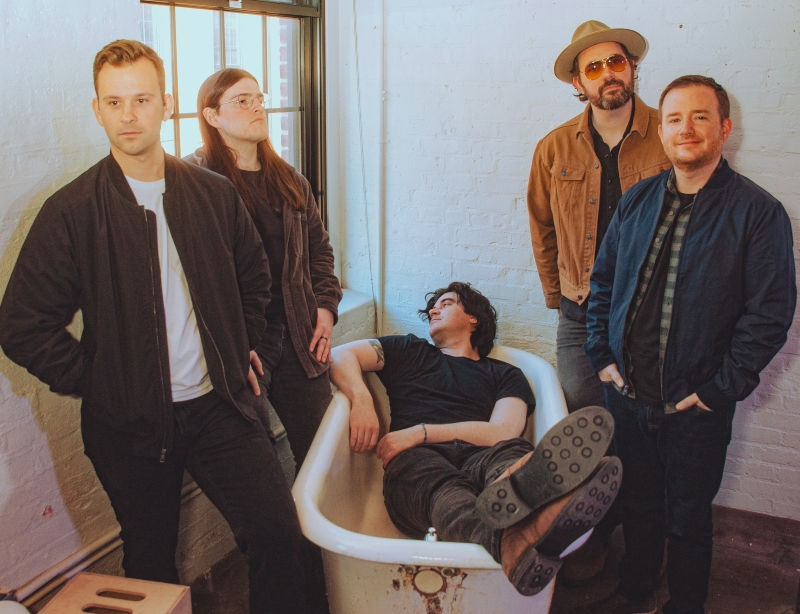
The Gravel Project are Andrew Gravel (vocals, guitar, songwriter), Jordan Gravel (keyboards), Dave Fox (drums), Eguie Castrillo (percussion), Brad Barrett (bass), and Jen Kearney (vocals), while Jesse Williams earned the bass credit on Find What You Need. The artists, who each have their own highly regarded projects outside of the band, come together in The Gravel Project to form a sort of psychedelic-infused, blues-based, classic rock supergroup. And the region has noticed. The Gravel Project was named Blues Act of the Year at the 2025 New England Music Awards.

image courtesy of The Gravel Project

The record opens with the rhythmic thumping and organwork that leads into “Love the Life,” a classic psychedelic rock number that’s a great example of the power of Gravel-Kearney vocal harmonies during the chorus. Now, I’m not saying it sounds like Jefferson Airplane, but it reminds of that and similar ’60s/’70s rock bands; it wouldn’t take much to fit it into their or similar bands’ repertoires. But The Gravel Project’s sound is richer, fuller – more modernly produced – giving “Love the Life” an electric energy that makes it a quick favorite; music fans who prefer vocals, guitars, keys, or percussion would each be able to find a reason to jam to this cool number.

The band slows the tempo a bit on the next song, “Stay with Me,” its rich organ-filled opening and song-long soundbed supporting the song’s smooth pleading. Though the tempo never picks up, it’s a slow song with hooks, memorable vocal delivery, and broad appeal, as it would fit in set lists ranging from pure blues to blues-based classic rock. And, with maybe a slightly different arrangement, pop-rock, although I really think The Gravel Project’s engaging performance of this song, as is, would be a hit with those audiences, too.

photo by Ian Urquhart; photo courtesy of The Gravel Project

“Worse for Wear,” next, is a thumping, jangly, theater-stage type of rockin’ blues number. It’s all about the bass line and the vocal wails as differentiators, even as the drums drive the tempo changes and the keyboards provide the song’s baseline sound. It’s followed by more of a blues dirge, “How Long,” though to be honest, I kind of hear shades of Thunder’s Danny Bowes (a much bluesier rocker than the band’s two U.S. hits in ’90/’91 might suggest, though if you listen, the evidence is there) in this vocal delivery, too; not surprising, I guess, since I mostly favor Thunder’s more blues-influenced rock songs. “So Sad” follows, stylistically fitting between the two previous tracks, with a funky blues rhythm as its backbone.

The album takes a slight turn on the next number, “Who Did You Think You Were,” with its Steve Winwood-esque, ’70s/’80s-esque (his solo era) soft, radio-ready, cool rock vibe; it also serves as a great fit for the easygoing, soft-tempo, enjoyable guitar noodling in the extraordinarily long solo starting just past the song’s midpoint. Like I said, though, there’s a sweet, soft sound to this song, something that would have had pop crossover appeal during the time period I’m referencing. (Since rediscovering great old music is an increasingly popular thing for the newest generations of music listeners, that pop-friendliness may actually be important once again.)

photo by Ian Urquhart; photo courtesy of The Gravel Project

The Gravel Project turns to a funk rhythm again on “Shadows into Shame,” blended with a return to a more psychedelic feel. Next, “Find What You Need” is a bit more classic rock-styled, its slow-paced, steady, relentless rhythmic advancement akin to favorite album tracks from classic rock’s heyday and, particularly, reminiscent of some of my favorite newer work from some old ’80s rockers. And, oh, man, that blues-rock axework is perfect for just closing your eyes and soaking it in. Be sure to listen for some cool percussion runs during the extended guitar solo in the back half of this one, too.

The mood changes completely for the next number, “In the Moonlight,” a hold-up-your-lighter-and-sway ballad that’s ideal for an arena concert. And if you want an extra-long slow dance at an event with a dance-floor, make sure the DJ has this song ready to roll. Not only is it a cool, swaying number with character, but it clocks in at more than seven minutes, so make sure you’re dancing with someone you want to spend some time embracing.

photo by Ian Urquhart; photo courtesy of The Gravel Project

The Gravel Project closes Find What You Need near the album’s sonic center, with a jangly, thumping, blues-rock number “Blues for LA” providing a fitting sendoff.

There isn’t a weak leak on Find What You Need, an enjoyable listen from beginning to end, befitting the talented musicians assembled, with plenty of variance throughout what I’d probably classify as a blues-based classic rock album, though I wouldn’t begrudge blues fans from calling it a blues record, either, and if the final song title is any indication, as well as the band winning NEMA’s Blues Act of the Year award, I may be in the minority in my opinion. In the end, though, it doesn’t really matter. The most important point is that this is an exceptional record you’ve absolutely gotta hear.

Looking Ahead

This is obviously a band that’ll rock the house live, so I’d suggest keeping an eye on the “tour” section of The Gravel Project’s website. At the moment, it only lists a single show, December 19th at the Lizard Lounge in Cambridge, MA. If you’re in the area, I’m know it’ll be an exceptional way to spend a Friday night.

Also, keep an eye out in the coming months for our review of Jen Kearney’s new album Gas Station Poet. You may recall we reviewed Jen’s single “Long Division” earlier this year; we look forward to sharing our thoughts with you about Jen’s cool new full-length release when it reaches the top of our review queue.

Album Review: Dan Lawson Band – Relevant Chaos

photo courtesy of Dan Lawson

Album Review of Dan Lawson Band: Relevant Chaos

A Dan Lawson Band record is always a rockin’ blues treat. Back in 2021, I reviewed the band’s Abyssal Plain record. This record, Relevant Chaos, is the band’s follow-up release. As with its predecessor, this album is a collection of excellently-delivered, raucous, gritty blues and blues rock, sounding much like it would at a dimly-lit, seedy bar, one whose well-worn condition belies the quality of the music within. You know, the kind where all the best bands play, but only the regulars are in on the secret.

“Wear It Well” kicks things off with a steady blues rhythm section, shouted-sung complaint-styled vocals belted atop, and some old-school blues rock riffs. A song like this? Well, it fits like a well-worn favorite shoe.

image courtesy of Dan Lawson

Just when you think you might have the album’s sound pegged, though, “Outway Street” follows, launching itself into some much funkier blues, particularly in the dancing axework, and most certainly during the aggressively funky solo. Still, the vocals attack, just as in the opening number. “Yeah, right!”

Versatility shows up in spades on the next track, as the band goes balladic with “Just Ain’t Easy.” It’s a damn fine classic rock ballad – a 5-minute slow song with a couple of big guitar solos, ideal for canoodling on the dance floor – with a bluesy edge. As repeated throughout the song, for emphasis, “Well, well.”

The band returns to the blues with an old-school rhythm and some nifty fretwork on “Let’s Ride.” Not a fast tempo, per se, but man, it’s persistent. This is one of those tracks that’ll get you bouncing out of your seat while you listen.

The band returns to a slower tempo on “Because” a meandering blues ballad with a commercial smoothness that’s actually the antithesis of some of the Dan Lawson Band’s rawer uptempo numbers. Of course, I love musical variety and am pleased when a talented band shows breadth of capabilities on a single record. Plus, this is a heck of a song.

Speaking of variety, “Yo Mama” is a swinging blues number, well-suited to a dancehall, a great tune to get the dancefloor hopping again following a slow dance number like “Because.”

The album ends with a 45-second guitar-noodling “Prelude” before the massive, musically-swirling, attention-absorbing “Story of the Blues,” a song that’ll have you swaying, hoping it’ll never end, as the guitarwork swirls and the agony-drenching deep blues vocals are delivered with strength and power. Early in the song, you’ll find yourself with your eyes closed, swaying along, and finally wondering after more than 6 minutes why the song ended so soon. If there’s anything that’ll get a listener to think “I’ve gotta hear that album again,” it’s a booming closing number like this one.

Throughout, Relevant Chaos does a great job of portraying how much fun a Dan Lawson Band live show would be, packaged into a recording that’s an equally fun listen. Or, at least, almost so. Nothing’s as good as a great live band in a live setting. But Relevant Chaos captures most of thay cool live energy. For rockin’ blues fans, it’s a must-listen 8-song collection.

Looking Ahead

The Dan Lawson Band is a 2025 New England Music Awards nominee in the “Blues Act of the Year” category; they’ll find out on Sunday if they’ve won, but with all the amazing blues in New England, every band nominated is pretty dang good. (In other words, it really is an honor to be nominated, even if they don’t win on Sunday.)

Album Review: Tyler Nail – Family

photo courtesy of Tyler Nail

Album Review: Tyler Nail – Family

Tyler Nail‘s trademark, identifiable, tuneful warble may be the most obviously original component of his heartfelt, soul-touching, country-tinged Americana, but the choices he makes in song structure, instrumentation, and arrangement are what nudge his 8-song album Family into instant classic territory. Just as importantly, Nail kicks things off with perhaps the album’s most memorable song, “9 Pound Hammer.” It’s certainly the fastest of the collection to grab hold, but within a few listens, it’s definitely not alone.

Tyler Nail moved to Rhode Island in 2024, leaving behind his native North Carolina, where, based on the multiple awards and award nominations he received, his talent was clearly acknowledged. In just a short time, he is already embraced by his new locale, receiving accolades here in New England, too. Tyler was nominated for Motif Magazine’s 2025 Rhode Island Music Awards in the Favorite Americana Artist and Favorite Singer/Songwriter categories. He is also a 2025 New England Music Awards nominee in the Songwriter of the Year, Performer of the Year, Americana Act of the Year, and Video of the Year categories. (The Video of the Year nom is for Tyler’s “Away from Home” video; the video and song predate the release of Family.)

image courtesy of Tyler Nail

Family, as I mentioned, opens with “9 Pound Hammer.” The song paints a picture both lyrically and musically, its lively energy delivering a matter-of-fact, slice-of-life-ness as Nail’s vocals, including that trademark vocal tone, paint a picture of life, pride, and the inevitable technological advancement that can leave even the most hard-working among us behind. I mean, it’s also just a really cool song that’ll get stuck in your brain, something you’ll simply enjoy listening to, too.

“Cussing at a Neon Sign” follows, its pleasant picking pattern well-suited to the song’s nostalgic delivery, one that elicits warmth while envisioning the pictures painted by the song’s lyrics.

The rest of the album continues with mellow, often melancholy, well-written, picture-painting musings, showcasing Nail’s very identifiable, compelling vocal style atop varying strumming patterns, tempos, and arrangements, varied enough for an eight-song, similarly-soft-tempoed collection to remain interesting from beginning to end. It’s a rewarding complete listen, thanks to Nail’s songwriting and performance skills.

The album’s third song, “I Don’t Mind the Rain” is a soulfully Americana-styled storyteller that’s probably the record’s most likely entrant to get the listener swaying pleasantly side-to-side. Like so many of the songs on this album, this one, too, is a lyrical masterwork.

photo courtesy of Tyler Nail

The picking pattern at the beginning of “Jose Pozo” and a uniquely wide-open sound bed, with an almost western twang in some of the acoustic guitarwork, lend it a cool, unique sound that’s slightly unlike anything else on the disc; of course, it still showcases Nail’s unique vocal delivery and sticks to the record’s relatively slow pace.

The back half of the record begins with “Let’s Go Home,” an ultra-slow-paced, melancholy number. “Someday (acoustic)” follows, an almost ominous-toned tune with a slight mystical edge in the picking and strumming.

“Way to Live” continues the record’s quiet, thoughtful mood, though a bit more nostalgic in this case. For traditional country music fans looking for a guitar-picking soft Americana number as a playlist change of pace, “Way to Live” might be just what you seek in this collection.

Family closes with the wistful “Japanese Cherry Tree.” The rich, warm opening vocals are a nifty touch. The song’s gentle but firm strumming, Nail’s trademark warbly crooning style, and the lyrics’ earnest delivery, all wrapped in a package that’s pleasant to listen to, are a fine representation of Nail’s sonic specialties. Though my personal favorite songs on the album, when I look back after listening, are usually “9 Pound Hammer,” “I Don’t Ming the Rain,” and “Way to Live,” while I’m listening to it, “Japanese Cherry Tree” is my favorite for the six-plus minutes of its duration, making it a solid way to conclude the eight-song listening experience.

Family is a terrific collection of well-written songs from a troubadour New Englanders can consider themselves lucky to call a new neighbor, a resident country-folk-Americana artist with exceptional songwriting talent.

More Recently

On Halloween, Tyler Nail released a new single, “Haunted Houses.” You can find it here on his Bandcamp page.

EP Review: Nikki and the Barn Boys – Where Do We Go From Here

photo courtesy of Nikki and the Barn Boys

EP Review of Nikki and the Barn Boys: Where Do We Go From Here

The vocals are a key driver of Nikki and the Barn Boys‘ sound, kind of a wail, sometimes a howl, but with power and edge and an almost crooning nature to them, if that’s possible. Regardless, it’s a unique amalgam packaged in a familiar, comfortably noisy guitar driven alt-rock jangle. Sure, the band is a New England Music Awards nominee in the New Act of the Year, Song of the Year, and Album of the Year categories. We’ll find out whether or not they take home any hardware on November 16th. Indeed, the band fully earns its inclusion among New England’s finest with this four-song, NEMA-nominated EP, Where Do We Go From Here.

photo courtesy of Nikki and the Barn Boys

Album-opener “Sacramento” is a catchy strummer. The scratchy, attention-grabbing opening, the captivatingly distant “oo-oo” background, and the pace that feels more uptempo than it really is. This is an opening track that’s instantly engaging. It’s energetic yet sports a too-cool-for-you-all, tunefully flippant vocal delivery.

“Fall In” follows, a noisy, energetic, emotionally wrought wailer. It has a bit of a modern vibe, but for those who remember the times, it brings back all those jangly old ’90s college rock feels.

NEMA Song of the Year nominee “Strawberry Hill,” track three, has a motoring beat that’s a little reminiscent, for me, of Bridget Davis & the Viking Kings, but Nikki and the Barn Boys are a fair bit more energetic, distorted, and enthusiastic. The tempo isn’t particularly fast, but the amount of energy the song generates makes it seems deceptively lively.

image courtesy of Nikki and the Barn Boys

Finally, “Drowning” concludes the collection. It’s a bigger, broader, more empty-spaced crooner, with the music building and pausing to emphasize the more heartfelt, wail-meets-howl chorus.

Where Do We Go From Here is a great four-song introduction to a modern alt-rock band with a timeless style. If you’re looking for music that’s a fun mid-tempo romp with beguiling hooks that seems as if it may be a little cooler than anything else you’re into, you’ve gotta check out Nikki and the Barn Boys.

Album Review: Jennifer Lyn & the Groove Revival – Retrograde

photo by Wyatt Ell; photo courtesy of Blind Raccoon

Album Review of Jennifer Lyn & the Groove Revival: Retrograde

I’ve been following Jennifer Lyn & the Groove Revival for several years – heck, I have Jennifer Lyn’s 2016 single “I’m All Wrong for You Baby” and a couple songs from the band’s 2018 Badlands album on my #PhoneOnShuffle playlist – and am glad to finally have an opportunity to share this top-shelf blues-rock (or rockin’ blues) band’s music with you here at the blog. Indeed, the band’s style is so densely packed in the style of psychedelic ’70s blues-rock bands, it’ll appeal to classic rock fans, yet there are some pure blues elements that’ll also appeal to blues fans. Double whammy, if you will. Two fan-bases for the price of one. And dayum, this is some tasty tuneage.

image courtesy of Blind Raccoon

The album opens with the sidewinding, psychedelic classic rock vibe of “Light the Fire.” The song features plenty of classic guitar crunch but with lots of white space between the riffs, making room for Lyn’s powerful voice to soar as the song builds to power, relents, then builds again. Next, “Searching for Solid Ground” is organ-heavy and, while a natural progression from the disc-opener, is lighter and a bit more musically playful.

There’s almost a “Got No Shame” vibe in the opening of “Sucker for the Pain,” one of my favorite tracks on Retrograde. It’s followed by “Refuge,” a powerful, soulful, meaty, slow-tempoed song that’ll stick with you; it features kind of a church-organ vibe to the keys and has a nifty, noodly, bluesy classic guitar rock solo just past the halfway mark that’ll make your hair stand on end in spots.

“Do Bad Things to You” follows. It’s a raucously fun song with a Thorogood-esque, thumpin’ tempo supporting vocals that reach hard-rock-wail every time the song climaxes.

photo courtesy of Blind Raccoon

Then the album returns to smooth soulfulness with “Soul Saver,” a song with a bit of a pop-rock vibe, though more likely an album track on a ’70s/’80s guitar-driven, mid-tempo pop-rock disc, as it’s more of a nifty album-listening, organ-driven, jangly tune with kind of a travelin’ feel to it. It’s not exactly hooky pop-rock radio fare, which is OK because it’s not trying to be, but it’d be a favorite of many fans who bought the album.

“’59 Cadillac” is another fun romp, a mid-tempo funky blues rock number that proclaims “I don’t care if he’s coming back. I got his ’59 Cadillac.” Gotta respect that energy!

The bluesy guitar riff opening “Breaking Chains” has kind of a wide-open-spaces, old west vibe to it. The song’s energy is powerful yet light and uplifting, and there’s a neat little repeating guitar riff threaded throughout the song that helps hold it all together.

photo courtesy of Blind Raccoon

The album’s penultimate number, “Baggage,” is a lot rougher around the edges. It howls, wails, and squeals its message – blues-rockingly, of course – with an insistence that can’t be denied. I think we can all relate to this number, unfortunately, with lyrics like, “As much as I’ll miss your lovely face, your baggage won’t fit in my suitcase.” In the end, this is an energetic, commiserating number, one that rejoices in kicking the baggage to the curb.

The album closes with “Do It All Again,” a psychedelic, moderately-paced guitar rock number that’d fit in perfectly on a psychedelic ’70s rock LP. I half-expect the song to rattle and pop a bit like overplayed vinyl. But no, this is classic-influenced guitar rock in all its modern digital awesomeness.

If you like classic rock, blues rock, psychedelic rock, or guitar rock, this is likely to fall into your musical wheelhouse. Jennifer Lyn & the Groove Revival are a band you should be following, if you don’t already. Retrograde is a great beginning-to-end listen. My personal favorites on this album are “Sucker for the Pain,” “Do Bad Things to You,” “’59 Cadillac,” and “Baggage,” but there’s not a bad song in this collection, so your favorites are likely to differ.

Album Review: Tony Moore – Awake

photo courtesy of Tony Moore

Album Review of Tony Moore: Awake

Tony Moore‘s Awake is an old-school, timeless, progressive-influenced classic rock album. Remember how great those records are beginning to end? If you’re a fan of that kind of guitar rock music, this is a new collection to add to your best-of list. Something about the vibe of album-opener “Awake” instantly reminded me of Pink Floyd upon first listen, and the whole Awake record has a concept-album vibe very much reminiscent of that era, though Tony’s underlying style is crisper, cleaner, and a bit more modern.

image courtesy of Tony Moore

The album was inspired by the events of the first year of the pandemic – the lockdowns, the uncertainty, the surreal reality. I won’t go into detail because Tony explains it well on his website, including the idea’s germination out of the song “Awake,” at this link. Metal Talk digs even deeper in its interview with Tony at this link. In my review, I’ll just focus on the music itself – an epic guitar-rock masterpiece – and you can return to these links to read more afterwards, perhaps while you listen to the album on Spotify, Bandcamp, or elsewhere.

Album opener and title track “Awake” is stylistically cool and fun to listen to as it unleashes a rhythmic guitar riff-filled, instrumental-only opening only gives way to lyrics at the 4:51 mark. This song sets the tone for the entire album, which is fantastic as a beginning-to-end listen but also features several songs that are standalone treats. And I wouldn’t often say such things about a nine-and-a-half minute song (to be fair, 9:26), but this is one of those treats. The axework throughout is inspired, recalling for me a recent quote I read in this Louder interview/article from Iron Maiden’s Steve Harris about Tony’s guitar playing on Awake: “The music is kind of proggy, which I love, and if Tony could play guitar back then the way he does now he’d probably still be in the band.” High praise, indeed.

photo courtesy of Tony Moore

Another of those kickass standalone tracks is the record’s third song, “Love We Need You Here,” which is partially reprised in the penultimate song slot, as “Love We Need You Here Pt. II,” helping to thematically and sonically tie the album together. This is a softer song, mellow and swaying, with a strumming guitar style that features some western music style flourishes while primarily being a straightforward slow, strumming rocker supported by a curtain of background synth that almost sounds orchestral. The vocals, meanwhile, are just slightly gravelly, emphasizing their heartfelt nature, ideally suited to the song’s payoff lyric, occurring both early and at the end of the song, “Love, we need you here. We need your guiding hand to help us understand. Love, remove the fear and bring us all back home. Don’t leave us lost and alone.” If you’re listening closely, it’ll give you chills.

And it’s followed by a kickass, straight-ahead rocker, “Just One Night.” There’s a little Pink Floyd feeling to this track, but it also sports a lot of the pure pop-rock styled pop music sensibility Tony has featured in some of the catchy, less guitar-driven Tony Moore singles I’ve enjoyed over the last decade or so, since I first became aware of his music. If there’s a potential fast-paced breakout hit on this record, this is my best-bet. Roll the windows down, and crank this one up when you’re zooming down the highway; it’s well-suited for that. I bet it really amps up the audience when played live, too.

photo courtesy of Tony Moore

The next track, “Hopium,” is another especially long number. There’s probably not a lot of hope for this one as a single, but it’s one of the album’s more memorable songs and a personal favorite. It’s followed by stylistically-similar “Dear Life,” almost flowing together in such a way that a full-album listener barely notices the transition a new song. However, it’s a more radio-friendly length, and it’s topically more broadly-applicable, making it a likelier option for external commercial use. I’m thinking movie soundtracks, though perhaps sans the really nifty guitar solo two-thirds of the way through. Soundtracks, during the movie itself, are likely to exclude the slight stylistic and tempo variance that make it a more interesting standalone song; hopefully the soundtrack album will still include the full track as recorded, though.

“Not Normal” is a very proggy song that thematically moves the album forward both lyrically and with its heavy rhythmic beat. Morseo even than the rest of the disc, which leans by varying degrees this way, you could almost drop “Not Normal” right into The Wall and it wouldn’t seem at all out of place.

The keyboardwork of “Remember Me” is another element that helps tie the record together, providing a mid-album vibe similar to the early and late appearances of “Love We Need You Here.” The moods you’ll get from this track are introspectiveness and melancholy. It’s followed by a song that thrives on subtly frenetic energy, “Crazy in the Shed.”

photo courtesy of Tony Moore

I’m not personally a big fan of speaking-over-music tracks, but “Dark Winter,” next, does move the mood and concept forward ominously, as does the next track, a more traditional prog rocker, though a heavy-beat-driven, booming, plodding, soft-power-driven one, “What’s the Point.”

“The One Percent Solution” is a cool song that can effectively drive somewhat different messages, whether a rather specific thrust when viewed through the lens of this concept album versus a potentially broader theme as a standalone number. The song itself progresses very coolly, softly building up to power, though maintaining a very modest tempo throughout.

photo courtesy of Tony Moore

“We Are One” follows, with its rhythmic bounce and marching tempo, combined with tempo changes and stop-starts, guitar flourishes, and emotive vocals, whether soaring or rhythmically emphasizing the beat. This is a track that’ll have you bouncing in your seat.

“Asleep” pleads for action, soaringly, proggily, as one would expect near the end of a concept collection like this one. And just about every guitar-rock fan will enjoy the very cool, rising and falling, soaring guitar solo that drives the last two-plus minutes of this song.

After the short reprise of “Love We Need You Here” – specifically, “Part II” – the crunchy, guitar-driven “It’s Not Over” serves as a rather hopeful album closer. One reason it’s important to listen to the very end of Awake is because, regardless of how you feel after the rollercoaster musical journey that brought you to this point, “It’s Not Over” will restore your hope and determination. And there’s some pretty kickass guitar in the song, too, particularly in the back half.

Awake is a masterwork of the concept album format. It’s a beginning-to-end listen that ebbs and flows. It’s clear why the related concert performances have proven so popular, and I’m hopeful that Tony will continue to tour Awake as an event concert, at least from time to time, throughout the rest of his career, in and around any other work he produces. It’s an experience, a music journey, a conceptually tight collection worthy of prog-rock, straight-up rock, and arts-in-general music fans.

Watch for upcoming tour dates on the “Tour” page of Tony Moore’s website. And be sure to keep up with his goings-on via social media, like his Instagram page or his Facebook page.

Album Review: Will Hawkins – Cartas No Enviadas

photo courtesy of Will Hawkins

by Eric Harabadian, Contributing Blogger

Album Review of Will Hawkins: Cartas No Enviadas (Fastback Records)

Will Hawkins is a Los Angeles-based singer-songwriter who is best known as the frontman for the band Nine Mile Station. That band’s debut 2023 album BAZAR received many accolades from the music cognoscenti for its lyrical songs, vivid storytelling, and dynamic production.

With this new solo release Cartas No Enviadas (Unsent Letters), there is that same creative spark and territory mined in his previous, lauded band context. Actually, the album title suggests each song as a note or message, yet to be delivered to the subject or receiver in question. Hence, the album, in total, almost plays like variations on a theme or concept.

image courtesy of Will Hawkins

“What Your Words Say” opens the album loud and proud, with a declarative and plaintive urging to a significant other, stating it’s time to get out of each other’s way and lay it on the line. There’s an honesty and passion in Hawkins’ delivery that really seals the deal here in terms of pure emotional connection. “As Good As it Gets” follows and features great hooks and a memorable chorus. The song is a reflection on life and how one places themselves in the world. Dan Nachimson’s brilliant piano playing really illuminates the sentiments here.

“C’Mon Now” is sort of an open-hearted song. Hawkins’ dynamic and unvarnished words cry out for someone to be transparent. Musically, there is a smooth mid-section shift from odd rhythms to an uptempo break. The song really builds to a stunning crescendo that’s very effective. “Messy” is a cover of British pop star Lola Young, and Hawkins takes the angst and swagger of the original to another level. Session man, indie artist and producer extraordinaire Fernando Perdomo provides the surrounding ambience of the track via minimal keys, drums, and spacey guitar.

photo courtesy of Will Hawkins

“New Friends” is a cover of David Poe and brings out some of Hawkins’ east coast Springsteen-type roots. It’s upbeat, with a great hook. And Lainey White’s swirling violin even suggests a Dylan-meets-Mellencamp vibe. The Colin Hay nugget “Waiting For My Real Life to Begin” gets a thoughtful and pensive reading here. Phil Parlapiano is the pianist on this track, and his decorative and prominent accompaniment adds gorgeous luster to this treatise on living in the moment and appreciating what’s happening in the now.

“California” talks about the wanderlust and desires of a young man seeking the bright lights and fame of Hollywood. Gerald Menke’s pedal steel guitar gives the song an early Jackson Browne and the Eagles kind of feel. “Anything” is a tune from Hawkins’ formative years in NYC. Recorded live at The Baggot Inn, it’s a nice original ballad that drifts into jamming in sections. It’s a nice stretch out for the band. The album concludes with a dedication to Hawkins’ father entitled “May the Road Rise to Meet You.” It’s a traditional Scottish proverb that is lovingly detailed, including the artist’s own bagpipe playing in the fade-out.

Will Hawkins is a talented and multi-faceted musician and producer who presents a contemporary Americana and West Coast sound that is timeless. His songwriting is reflective of CSN&Y and all the greats to arise from the classic Laurel Canyon period of the ’60s and early ’70s. But he is also on the cutting edge with modern troubadours like Dawes, Jason Isbell and others. Hawkins is an artist to keep on your radar.

Album Review: The Far Out – Greetings from The Far Out

photo by Jackie Vlahos; photo courtesy of Knyvet

by Eric Harabadian, Contributing Blogger

Album Review of The Far Out: Greetings from The Far Out

Boston’s award-winning funk/pop trailblazers The Far Out essentially developed their act during the downturn years of the global pandemic. But this vibrant and vivacious sextet has been friends for several years before that. Ellie Dolan (trumpet, vocals), Ryan Fremont-Smith (bass, vocals, saxophone), Olivia Lowe (guitar, flute, vocals), Drew Phillips (drums), Colin Senechal (saxophone, guitar) and Henry Zagarella (keyboards, vocals) comprise the crew that oozes with clever arrangements and unbridled talent.

artwork by Olivia and Ezra Lowe; image courtesy of Knyvet

On the path of some well-received singles, this eclectic and danceable outfit caught the attention of the New England Music Awards. In 2024 The Far Out were honored as the “New Act of the Year” and, assuredly, a band with a bright future and a lot of promise.

“Infectious” is a word that, perhaps, gets overused a lot when one talks about musical acts and performers that exude a ton of energy and attitude. But that is exactly what you get when you take on this album in its entirety. From track to track, The Far Out creates an aural experience that works on a number of levels: emotionally, physically, spiritually and, even, intellectually. Their songs will get you on the dance floor, but you’ll also be engaged by the clever wordplay and snappy arrangements.

photo by Jackie Vlahos; photo courtesy of Knyvet

Eight songs in total; they explode in a colorful array of personality and charm. “Need a Win” opens the album and answers that call, with a bouncy and uplifting beat. Fremont-Smith’s intrepid bass lines grab you from the get-go. “Funkadelic Gas” is not only a great title but locks in a killer groove framed by some of the tastiest horn charts this side of Average White Band. “Lazy Lover” is a bit of a departure that features a punchy feel and some great gnarly crunch on the guitar. “Laurel” follows and is one of the catchy singles that first caught this reviewer’s attention prior to the release of this album. The lead vocals are bright and clear, with smart nuanced breaks and classic-sounding horn accents. “Putt Strut” is a somewhat humorous tune, with some overt golf references and cheeky lyrics a la British prog rockers Caravan. “Long Weekend” is a great sentiment that offers more of a laid back pace. But that sets the stage for the Motown-like “Packed To Go.” This one is straight up R&B, with a grooving breakdown from Phillips. For the finale, they display their jazzy side on the provocatively titled “See Red (You’re Dead).”

photo by Jackie Vlahos; photo courtesy of Knyvet

Perhaps keyboardist and vocalist Zagarella typifies The Far Out’s goals and state of mind: “I hope that you can hear our camaraderie through the music. These songs are built on the foundation of strong friendships. And while that’s easy to see when we play live, I would love for people to hear it at home too!”

RIYL: Parliament Funkadelic, Average White Band, Earth Wind & Fire, Swing Out Sister, Squeeze, and Brand New Heavies.

Looking Ahead

Per the “Shows” page on The Far Out’s website, you can catch them in Massachusetts, Vermont, Rhode Island, New Jersey, and Connecticut between now and mid-September. Be sure to check the band’s website to see when and where they’ll be performing near you.
EP Review: Billy Dodge Moody – Ephemera

photo courtesy of Billy Dodge Moody via Knyvet

EP Review of Billy Dodge Moody: Ephemera

The first musical comparison that comes to mind when listening to Billy Dodge Moody‘s Ephemera is the Moody Blues. The full, rich sound and pleasant, pop-friendly rock melodies on Ephemera recall that classic radio-(soft)-rocking sound.

The first single from this EP, “Meaning to Disaster,” is a soft-touch tune with a full sound that builds in both power and lushness over the course of its three-and-a-half minutes, supporting thoughtful lyrics with a sneaky-catchy chorus that turns this ballad into an unexpected earworm.

image courtesy of Billy Dodge Moody via Knyvet

“Nobody,” which was the second single released in advance of the EP, is a more uptempo strummer, a song that hides its melancholy lyrics behind a relaxed yet uptempo, on-vacation-ish, hooky soft-pop energy.

Track three, “Made to Decide,” takes a more introspective tone musically, adding harmonious backing vocals from Hannah Foxman to the mix, supporting more obviously sad lyrics and a thoughtful pick-and-strum, all combining to bring a lump to the listener’s throat. Yes, even when you’re not paying particularly close attention to the lyrics, which were inspired by the agonizing decisions brought about by Billy’s ailing cat. (Knowing the inspiration, I can relate even more.)

Album-ender “Suddenly” ties things together nicely, helping provide a consistent style for the EP but also adding a few new elements to the mix, as the introspective number adds a harmonica and a moderately folky guitar picking style while maintaining the record’s rich, full production style.

Unless your heart is stone-cold, you’ll be touched by this record. Subtle differences between the songs ensure that, while you’re likely to enjoy the entire collection, you’ll probably also have a favorite track. Maybe two. Or possibly a different one each day, depending on your mood. Regardless, with this EP’s timeless broad appeal, anyone who enjoys song-driven music needs to at least give it a test-drive.

Album Review: Jason Miles – Cosmopolitan

photo courtesy of That Jazz Girl

Album Review of Jason Miles: Cosmopolitan

Jason Miles (keyboards, synth) recorded Cosmopolitan back in 1979 with Michael Brecker (tenor sax), Gerry Niewood (saxophone), Marcus Miller (bass), Ricardo Silveira (guitar), and Jeff Williams (drums), with Badal Roy on tabla, percussionists Armen Halburian and Henry Castelanos, and vocalist Clarice Taylor. However, that record was shelved for… 46 years before its 2025 release.

image courtesy of That Jazz Girl

The jazz fusion album that resulted from those 1979 sessions, Cosmopolitan, is simply remarkable. The title track is so engaging that its 7:15 runtime simply flies by. The entire album is that way, in fact. Album-opener “Cosmopolitan,” though, in addition to incorporating some actual city sounds in the opening, delivers a lively very city-like tempo, with energetic, sometimes abrupt horns, an occasional funky beat… it’s a jazz fusion representation of the sound of a lively city, of the City. Very cosmopolitan.

And yeah, that’s my favorite track among the six on this 37-38 minute-long album. But not by much. The next song, “Powder,” meanders a lot more, slowing the pace down a bit, before “Gale Warnings” splits the difference a bit more. While the first two tracks leaned heavily into wind instruments (Spotify lists featured performers for each song, and saxophonist Gerry Niewood was featured on the first two cuts), “Gale Warnings” gets things rolling with some noticeable synth-work before the song notably begins to delve into other instrumentation, as Michael Brecker (tenor sax) is mentioned as the featured collaborator on this track.

“The Man Who Pushes the Buttons,” also featuring Brecker, is a bit more angular and frenetic than the record’s preceding songs. “Kashmirian Twist,” meanwhile, lists as featured artists both Niewood and Badal Roy, who plays tabla, which I was completely unfamiliar with. (Google found me this “What is Tabla?” article.) And indeed, the tabla (pair of drums) did add a unique sound as a co-featured instrument, probably bringing forth the suggestion – for me, at least – of a subway car rattling a bit as part of yet another cityscape-evoking number.

“Poetry” closes the record with a smoky barroom-scented piano opening that belies the forthcoming liveliness, as this number, with Niewood again listed as the featured artist, recovers some of the liveliness of the album-opening title track, providing nice bookends to this broad-appeal jazz fusion collection.

As I hope you know by now, I love sharing music that’s brilliantly-assembled and fun to listen to, and that is most definitely true of Cosmopolitan. With its lively rhythms and cool cityscape-recalling sounds, this record is likely appeal well beyond its particular subgenre’s core audience. So give it a listen. And yes, start with the opening number because it’s the most likely to get you hooked. But then play the record in order to appreciate Miles and his collaborators’ collective vision.