Album Review: Matt North – Above Ground Fools

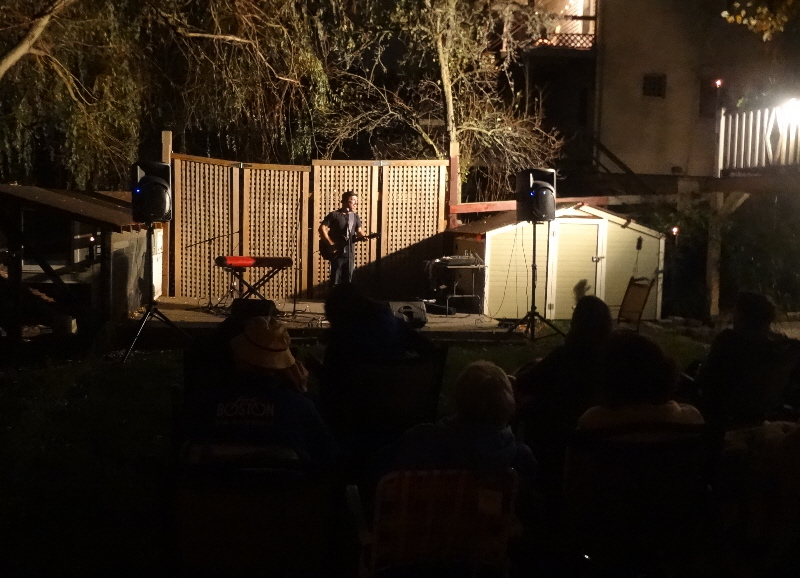
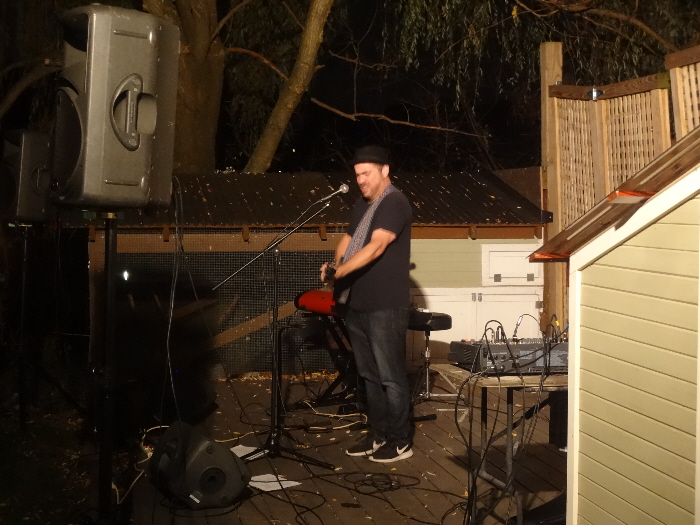
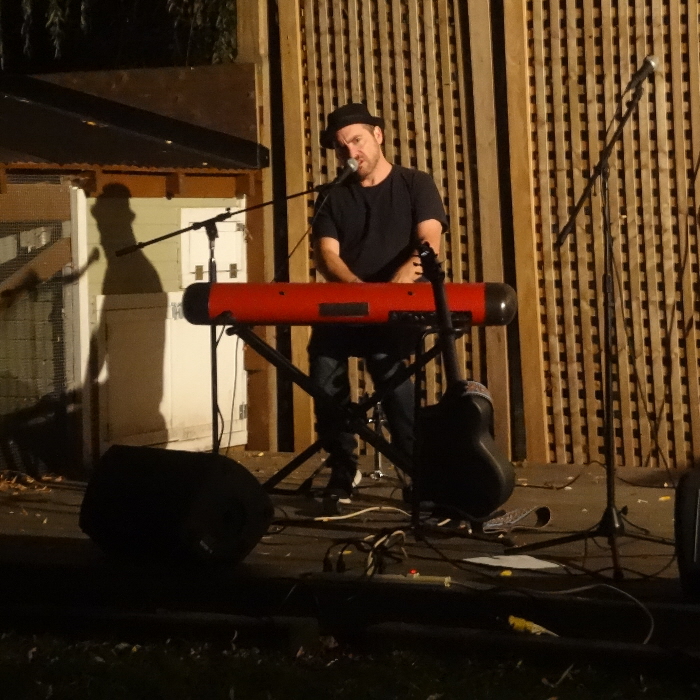
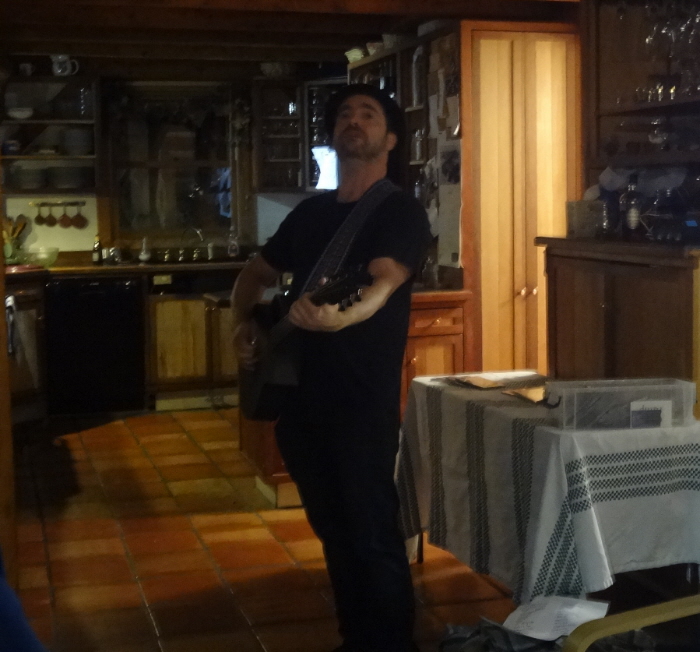
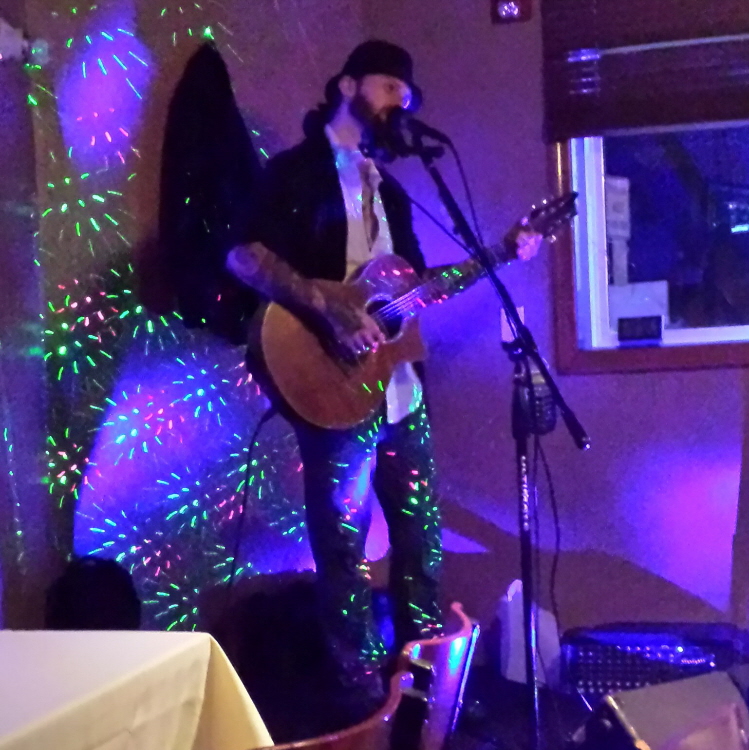
Matt North

photo by Angelina Castillo; photo courtesy of Howlin’ Wuelf Media

Album Review of Matt North: Above Ground Fools (Round Badge Records)

Old-school. Or timeless. Probably more of the latter, as Matt North‘s music has a modern alt-rock attitude rooted in folky, songwriting-focused music styles of the past. Above Ground Fools won’t be mistaken for a “new country” album or a “cutting-edge rock” album. Rather, there is simply plenty of catchy, memorable, fun music on this disc that should appeal to anyone who enjoys a good song that’s well-delivered.

Indeed, Matt knows his way around song, drawing in the listener by telling bits of stories, filling them musically with rich, lush sound and, of course, a driving, engaging rhythm – he is a drummer, after all – and topping them off with a rough-edged voice equal parts outlaw country and gritty rock ‘n roll with a quirky streak. On honky-tonk-ish, rollicking “Seventeen Days,” that quirk sounds a bit David Byrne-esque, while it can add earnestness to a swaying, more serious-feeling, introspective, nostalgic crooner like “Cronkite and Cosell.”

Matt North - Above Ground Fools

image courtesy of Howlin’ Wuelf Media

But the catchiness – the sense that you, as a listener, have stumbled across something you’re really going to enjoy – starts at the very beginning with the musically unique intro to “A Good Day in Nashville.” The song itself is an up-tempo mover-and-shaker that chronicles the adjusted vision of what passes for ordinary in Nashville. A fun romp, musically and lyrically, from a man who’s familiar with the topic, simply telling it like it is.

Truth be told, I sing along to most of the songs on this album now; there’s nary a weak spot. I howl along to “No Hard Feelings.” I shimmy along with the frenetic energy and clever lyrical rhymes of “Miss Communication.” And I feign a little rock ‘n roll strut as I sign along with the slight staccato and harsh vocal edges in “I Sold It All.” The album is one cohesive country-tinged rock ‘n roll styled canvas but is painted with broad-stroked songwriting variety. That’s how Matt has crafted Above Ground Fools to be an album with staying power.

The record closes with a couple of my favorite tunes, the eminently playful “Badgering the Witness” and the ’90s loud-yet-jangly pop-rock styled “Come Here Go Away.”

After a couple dozen listens to Above Ground Fools, it’s clear Matt North is your surprisingly cool neighbor who’s mostly normal but sports a hidden quirky streak. You’re not quite sure if it’s snark or sarcasm, but you’re pretty sure he’s not serious. You think. And he makes a damn good record.

Live Review: Mark Wilkinson house concert

Mark Wilkinson

photo by Geoff Wilbur

Mark Wilkinson

House concert in Hudson, MA

May 13, 2017

The Backstory

Mark Wilkinson

photo by Geoff Wilbur

For weeks, I had planned to head to Boston for the Springtime Spectacular at the Lawn on D on May 13th to see Analog Heart, whose last album I reviewed last spring but who I haven’t seen perform live since before I launched the Blog. Mother Nature, however, had different plans, as rain was forecast to begin around the time of the band’s set, and even if it wasn’t heavy during the set, I was virtually guaranteed to be driving home in a torrential downpour, with an inch or more of rainfall in the forecast. So I turned to “plan B.” Lori Diamond and Fred Abatelli were performing in Arlington, MA. I plan to try to get out to see them perform sometime this year; I really enjoyed the show I reviewed last year. I figured I plan to get out to at least one of their sets this year, anyway, so this would be as good a time as any. But I’d still have to drive home in a heavy rainstorm, so I checked more local listings, looking for shows closer to home and listening to clips of the artists to help me decide if I should abandon “plan B,” as well.

The choice was quickly made when I came across the listing for Mark Wilkinson’s gig out here in the far western suburbs of Boston, much closer to home. And upon finding one of his YouTube clips, within the song’s first few seconds, I knew this dude with the special voice was someone I wanted to see perform, and since he’s on tour (and based in Australia), there would not soon be other opportunities to see him. To cap it off, my wife had the same initial reaction to Mark’s songs, so we caught his house concert together (a nice change from my usual solo live-gig adventures).

Mark Wilkinson

photo by Geoff Wilbur

The Concert

Located in an apartment in Hudson, tonight’s venue was ideal, its great room serving as a large, open concert space with high ceilings and terrific acoustics, sufficiently large yet intimate for a house concert. And well-suited to Mark’s incredible voice, soaring and full of emotion.

Mark’s voice has been compared to James Blunt’s (“You’re Beautiful”). I also hear some Alex Band (The Calling) in there. And his tempo and style have also earned him comparisons to Tracy Chapman. I’d add Lisa Loeb and Sixpence None the Richer to that list. I’d probably even throw some Jim Croce and Gordon Lightfoot into the mix, too, for their warm, emotional vocal styles capable of connecting emotionally with listeners. I suppose what I’m trying to say is that Mark Wilkinson’s voice and performance style is timeless, powerful and emotional, and seems capable of touching that nerve that reaches directly to your heart and soul, connecting personally and profoundly with his audience; on this evening, an intimate collection of about 25 people. What I had sensed from Mark’s recordings came through in spades at his live show: This guy is special.

Mark Wilkinson

photo by Geoff Wilbur

The set consisted of 13 songs, and he was encouraged to follow it with a 3-song encore. He opened the set with such a powerful song I forgot to jot down its title, as his voice and strumming boomed warmly and envelopingly through the room, enhanced by its great acoustics. He followed that with “Chasing Rainbows,” a sad, sensitive, but still full-voiced and insistent tune whose tone was simultaneously melancholy and defiant.

Mark went a bit poppier with his next song, “Everything to Me,” with a more hit-friendly tempo and strum and a songwriting rhythm with just a hint of a slightly more celebratory flavor. There’s a nice, catchy mix of musical style and lyrics that, of course, still feature his voice, a voice a listener could get lost in and lose all track of time and place.

Mark Wilkinson

photo by Geoff Wilbur

Other songs stood out during the evening, as well. Of note, “Middle Ground” showcased sensitivity and strength, as the lyrics meandered through the story. This, Mark noted (for those of us unaware here in the States), ended up in a coffee commercial in Australia, so it’s his most well-known song back home as a result.

“Hey Baby” stood out, as well, as it served as the well-chosen singalong/audience participation song of the evening. It was followed by “Benny’s On the Rooftop,” a song that sports a nice, faster tempo and proves memorable – perhaps a favorite even – though the lyrical content isn’t so happy, to put it lightly.

The one cover in his set was of Bruce Springsteen’s “I’m On Fire.” As with any great cover, of course, Mark makes it own, adding his personal vocal flair to The Boss’ brooding classic. But he didn’t leave the room’s energy down, following it with the playful “Please Don’t Tempt Me,” in which he employs a relatively edgy rock vocal. Great song to mix things up with.

Mark Wilkinson

photo by Geoff Wilbur

The song “Don’t Say It” displayed such emotion, sensitive with an interesting guitar-picking pattern adding additional character and movement to the song. It was followed by “All I Ever Wanted,” a faster-tempoed song with an uplifting feeling, which served as a great set-ending number.

Oh, but he was greeted by a standing ovation and obliged with a 3-song encore, kicking it off with a suggestion from the audience, an older song of his entitled “Baptism By Fire.” And, true to the lyrics, there was some fire in Mark’s always-rich vocals accompanied by emphatic strumming. He followed that with “When the Armies Arrive,” driven by his echoing, booming voice full of emotion.

And he closed the evening with “Still Got My Baby,” whose interesting, peppy energy and playful tempo, driven by a little funky syncopation, provided a pleasant, cheerful ending to the evening. Excellent selection to send people home with a smile on their faces.

Mark Wilkinson

photo by Geoff Wilbur

But, of course, as with many house concerts, not everyone goes home, as the evening concluded with additional conversation, many of us enjoying nice chats with the artist and the others in attendance. Nights like this are an occasional fortunate happenstance, stumbling across a great talent who isn’t nearly as well-known in the U.S. as he should be… yet (we hope).

Looking Ahead

There are still several more stops on Mark’s house concert tour. (And I’d recommend going if you can; this is a special tour during which he’s eschewing traditional venues.) His dates in Sea Girt, NJ, Dublin, OH, and two of his three gigs in Ontario are already sold out, as is one of his UK stops. However, you can still gets seats at his performances in Montclair, NJ (May 18th), Charleston, SC (May 23rd), Potosi, MO (May 27th), Nashville, TN (May 28th), McGregor, MN (June 2nd), Milwaukee, WI (June 3rd), Elmwood Park, IL (June 4th), and Ottawa, ON (June 10th), plus six of his seven shows in the UK from June 28th through July 6th. Check the tour page of Mark’s website for more details and to reserve your tickets.

Album Review: Alissa Musto – What We Saw From the Piano Bar

Alissa Musto

photo courtesy of Alissa Musto

Album Review of Alissa Musto: What We Saw From the Piano Bar

Alissa Musto is an impressive singer, songwriter, and pianist, a rising star whose music appeals to those with tastes ranging from jazz to pop to singer-songwriter fare. I first encountered Alissa back in January, and I reviewed one of her gigs here. But that performance was tailored specifically to the space in which she was performing. An album provides an artist the opportunity to paint with a broader brush than in a venue-targeted set list, to cover more ground. While still a cohesive whole, it’s able shine a light on a performer’s talent from many angles. And, indeed, that’s what Alissa’s What We Saw From the Piano Bar does. It spotlights her singing talent – the many shades of her gravel-driven, emotional vocals. It showcases her songwriting talent – her ability to choose precisely appropriate lyrics to paint images. It highlights Alissa’s sophisticated, thoughtful approach to the album’s youthful subject matter appropriate to the college-age period during which the songs were written and recorded. And it highlights her musicianship – the ivory-tickling skills that allow her to infuse a jazz foundation into an original popular music album that should appeal to music fans while impressing musicians.

Alissa Musto - What We Saw from the Piano Bar

image courtesy of Alissa Musto

Right from the start, Alissa hits you with a tuneful melody and full, gravelly vocal passion on the attention-grabbing “Black Flak.” The emotional intensity of this song draws you in, relaxes a bit to let you breathe, and then reels you back in. And, of course, the lyrics and song title require, for those of us unaware but with a bit of intellectual curiosity, a Google search that yields the poem that inspired the lyrics. It’s the ideal album-starter, since it’s a serious, powerful song that immediately establishes Alissa’s musical street-cred, affording her the latitude to easily mix in a little more fun in some of the subsequent songs. And it’s a catchy song that’s single material, too, likely to become some listeners’ favorite.

My personal favorites rotate among at least a half of this collection, as I’ve given this disc dozens of listens, and they vary by my mood. Seemingly autobiographical, Alissa’s tunes clearly draw upon personal experiences, and like any good singer-songwriter, she delivers them with such emotion it’s hard to tell where real-life experience gives way to creative license.

Alissa Musto

photo courtesy of Alissa Musto

Besides “Black Flak,” my other immediate favorite was “Brovada,” a swingy, swanky, attitude-filled, energetic piano bar-styled ditty that stylistically recalls for me just a hint of Piano Man-era Billy Joel. Just a hint, though. This song is all Alissa Musto. A modern combination of swagger, sophistication, and humility.

“Palace,” meanwhile, rises and falls, soaring with power and crashing like an ocean. It’s a terrific example of Alissa’s utilization of gravelly vocals to emotional effect. The subtly song-driving piano line, smooth strings (those are strings, right?), and Alissa’s engaging vocals on songs like “Palace,” though, can cause you to forget to listen to the lyrics. But, at least sometimes, try to remember to listen to the words because, whether reminiscent, thought-provoking, or something in-between, the lyrics are always worth listening to.

Though it seems like the entire album is softer paced, as the disc has a pleasant, warm feel, appropriate for an evening of contemplation in front of a roaring fire, there are ample tempo and energy changes. Following “Palace” with “Kids at the Bar” is one such energy spike. “Kids” is a fun, energetic tale of being young, ambitious… and out for a night at the bar. Though specifically written to Alissa’s own circumstance (or a creatively-adjusted version thereof), the theme should ring true across ambition, gender, and (unless you’ve given up on life altogether) age.

Alissa Musto

photo by Geoff Wilbur

Other songs draw upon different influences or offer new spins on some of the same. “Pictures” has a rich vocal jazz flavor and a lyric line that engages beginning-to-end, while “Freedom” showcases some more drawn-out, richer vocals mixed in with Alissa’s immediately-identifiable gravelly voice, and it’s highlighted by such a soaring power that you’d have to be detached if you don’t simultaneously feel life’s struggles and a surge of patriotism as Alissa explores co-existing forms of “freedom” in her lyrics.

Finally, of note, the album closes with “Temporary Dreams,” another of my favorites. It’s a bit mellow in spite of its interesting keywork and emotional vocals, guiding the album down musically for a pleasant, soft landing.

In the end, it’s clear after a few (dozen) listens to What We Saw From the Piano Bar that Alissa Musto is a young performer you absolutely owe it to yourself to get to know. She has a unique mix of talent and persona, a certain je ne sais quoi that makes her stand out in a musical crowd, and I’d love to one day see her command the audience while headlining a concert hall or arena tour.

Alissa Musto

photo courtesy of Alissa Musto

For now, though, take this opportunity discover her music, check out her latest album, and relish the ability to see her perform in the smaller, more intimate settings she’s currently playing. So yes, check her out initially because you’re curious about what the current, reigning Miss Massachusetts sounds like, if that’s what it takes to get your attention. Or because you wonder what became of New England’s homegrown America’s Most Talented Kids pianist this many years later if you caught Alissa’s age-nine TV performance “back in the day.” Really, regardless of why you give her that first listen, you’ll keep listening to this exceptional singer-songwriter-pianist.

At just the beginning of her career, I can only imagine how her sound will evolve. I am confident her songwriting and performing will evolve, as all talented, ambitious artists do throughout their careers. In any case, I look forward to enjoying hearing that evolution. And getting out to another live gig sometime soon.

If you’re in New England, be sure to find your way to one of Alissa’s performances. As noted on her website, she performs Thursdays 6:00-8:00 PM at the Renaissance Hotel Patriot Place in Foxboro, MA, Fridays 6:30-10:00 PM at Tavolo in Providence, RI, and Saturdays 8:00 PM-midnight at Jacob Wirth in Boston.

Postscript

I’d also urge you to learn about Alissa’s charity, Changing Keys, which helps provide pianos to schools and community centers.

Album Review: The Sweetest Condition – We Defy Oblivion

The Sweetest Condition

photo courtesy of The Sweetest Condition

Album Review of The Sweetest Condition: We Defy Oblivion

I don’t have a lot of industrial synth-pop in my collection, but I’m not oblivious to originality and talent. Last spring, I reviewed The Sweetest Condition’s Edge of the World, gushing over its tight songwriting, tunefulness, power, and crossover appeal. Well, with We Defy Oblivion, Leslie Irene Benson and Jason Reed Milner have done it again.

The Sweetest Condition - We Defy Oblivion

image courtesy of The Sweetest Condition

There’s an interesting progression between albums. We Defy Oblivion, definitely dwells in a heavier neighborhood, with fewer forays toward the pop edge of The Sweetest Condition’s range. Again, though, the duo finds the monster hook in otherwise industrial pop. Leslie’s voice remains expressive and booming, when necessary, while tightly adhering to the songs’ requirements, resulting in genre-adhering music that can easily reach ears beyond its usual core audience.

Leslie Irene Benson

Jason Reed Milner; photo courtesy of The Sweetest Condition

In “Knock Us Down,” for example, the vocals are exceptionally staccato but their warmth keeps them from sounding inhuman, as can be the risk in this sort of musical cocktail. That particular song also sports a hypnotic synth rhythm and well-placed, not-too-simple drumbeat. The attention to detail includes thicker-and-thinner variations to the wall-of-synth theme buoyed by well-patterned song progressions. “Knock Us Down” is a microcosm of what The Sweetest Condition does best, which is why I mention it first, and it’s a catchy track, but it’s not necessarily even one of my favorites.

Leslie Irene Benson

Leslie Irene Benson; photo courtesy of The Sweetest Condition

For pure industrial synth, the album opens strong with “Deconstructing,” with a recurring pop rhythm (which usefully moves between different positions on the keys) before the song bursts forth into its chorus. This song, in its chorus, is one of the few locations on We Defy Oblivion in which I can draw the Madonna comparison to Leslie’s vocals; it was more common on the previous album. Again, not necessarily a typical vocal capability among industrial synth-pop singers, but it speaks to the breadth of The Sweetest Condition’s musical toolbox.

The Sweetest Condition

photo courtesy of The Sweetest Condition

Ah, but I promised you favorites. And the two cuts that reach farthest into my crossover-enjoying brain are “Faithless” and “Vices.” “Faithless” supports a hypnotically straightforward yet occasionally emotional vocal – and it’s the emotional infrequency that allows it to stand out so much – with a steady, catchy synth sequence.

“Vices,” meanwhile, utilizes another ear-catching, yet different, primary key sequence during the verses that explodes into the chorus. The music seems a bit edgy at times, building tension in the verses that releases powerfully during the chorus. It’s tied together with more emotional vocals, following the same pattern of tension and release. In this well-written, hooky song, the music itself is more suggestive than the lyrics.

The Sweetest Condition

photo courtesy of The Sweetest Condition

The most all-out energy on this album likely comes in “Keep Turning Me On,” a full-on, fast-tempo, potential dance club-pleaser that will leave the listener breathless after a single listen. I can only imagine the dance-floor carnage. The song before it, “Knock Us Down,” for which TSC has a video, is just as relentless, but insists at a more manageable medium-fast tempo.

Perhaps the poppiest, most mainstream track on We Defy Oblivion is “Depths Of Hell,” not that the lyrics would suggest a softening.

The Sweetest Condition

photo courtesy of The Sweetest Condition

A bit rougher but also memorable is the song “Nein Nein Nein.” The English-language verses suggest a rather rough evening to begin with, while the chorus implores “Ich will mehr, aber du sagst nein.” It’s supported by a stripped-down, rough-edged music bed befitting the lyrics.

Disc-ender “Unforgiven,” meanwhile, attempts to return the listener to a stable state. It’s a solid number, steadier than its immediate predecessor, and more traditionally, purely emotionally dark.

Once again, The Sweetest Condition delivers a solid collection of songs, a disc that will undoubtedly contain a few new favorites, if this is your genre. And an album that might surprise you if this isn’t. Personally, after how impressed I had been by Edge of the World, the bar for its follow-up was set exceptionally high, but with We Defy Oblivion Jason and Leslie have delivered an album that meets my unreasonably high expectations. It’s a helluva disc. I feel almost greedy for wondering what comes next.

Live Review: Ali Handal and Billy Crockett at Fox Run Concerts

Ali Handal and Billy Crockett

Fox Run Concerts, Sudbury, MA

April 29, 2017

The Backstory

I was introduced to Ali Handal’s music more than two years ago by some mutual musician friends in Los Angeles. Since then, I’ve tried catch her Boston area live performances but have heretofore failed in that endeavor. Last night, however, she opened a double-bill that fit my preferred time and location – an early time slot in an outer western Boston suburb – so I was finally able to make it happen. Better yet, it was a house concert; these more intimate performances in front of smaller audiences are one of the great new(ish) trends in independent music that I’ve really enjoyed since returning to music journalism.

Last night, she opened for Billy Crockett, who, after reading his bio, seems like someone I should have already known about. He is a respected artist who has been around the music industry for years, but our paths had not yet previously crossed. With a quick listen to some of Billy’s YouTube clips in preparation for the event, I knew I could expect a stellar evening.

Ali Handal

Ali Handal; photo by Geoff Wilbur

The Opening Act: Ali Handal

Ali Handal opened her six-song set with strength. Granted, that’s no surprise, but her initial song of the evening, “You Get What You Settle For,” showcases the element of her voice I can best describe as an expressive roar. There’s perhaps a bit of a bluesy edge to the song, as well, with some cool funky guitar effects.

What’s so intriguing about Ali, though, is her range. In addition to an arena rock-worthy roar, strong and smooth enough yet artfully restrained befitting an acoustic singer-songwriter event like last night’s, she has a crisp, sweet, high end to her vocals as well, which she’s able to weave seamlessly into her songs, allowing them to showcase both power and sensitivity.

Halfway through her set, in fact, she displayed that sensitivity particularly well on “Distance,” with the sweeter vocal augmented by an interesting guitar-picking style. It’s that mix of power and sensitivity that make Ali a unique talent – well, that and the fact that her guitar skills are capable of providing varying soundbeds beneath her strong voice.

And there’s also her engaging stage presence, intimate but with a sense of humor, that draws her audience in. She closed her set, in fact, showcasing that sense of humor with “Thank God for Birth Control,” the prototypical anti-parenthood song, if there ever was one. And I’m not sure there ever was.

In all, it was a fun set by an exceptional talent. I’m glad I finally found a chance to see Ali Handal live, and I look forward to seeing her perform as a headliner, perhaps, sometime down the road. (Also in a club or arena setting where she can better unleash her rock chops, perhaps allowing me to hear her perform my current favorite Ali Handal tune, the more raucous, rawkin’ “But I Do,” live.)

Billy Crockett

Billy Crockett; photo by Geoff Wilbur

The Headliner: Billy Crockett

Billy Crockett’s music has been labeled folk/Americana, and I suppose it is, but there’s more to it than that. Rather than pigeonholing it, I hear music with the potential for significant crossover appeal beyond a single genre, one well-placed hit away from making Billy a household name. I hear a sort of timeless singer-songwriter vibe in Billy’s songs. It’s the sort of music you’d hear at festivals and occasionally on pop radio in the ’60s/’70s. Rich, storytelling songs driven by Billy’s powerful, emotionally expressive vocals.

In a house concert setting, Billy’s personability and storytelling ability carries over into his between-song banter, and, as a result, this evening at Fox Run Concerts had that sort of intimate, gathering-of-friends feeling. Of course, the on-stage “friend” on this evening was an exceptionally talented troubadour. And during his songs, the intensity with which Billy feels his music is written on his face, carried in his voice, and driven home by his full immersion in his performance.

Billy followed Ali’s set with his own short set before intermission, then returned for a longer set to close the evening. He kicked things off with “Feel It,” an emotion-driven acoustic singer-songwriter number. He followed it with the engaging “That’s Something,” displaying the richness and versatility of his strong voice, supporting the vocals with a ’60s/’70s folk-influenced strumming.

Over the course of the evening, my mind kept circling back, comparing Billy’s music to that you might find on a soundtrack. More precisely, a Broadway soundtrack. I’m not talking about those big production numbers. Rather, the emotion in his voice and progression of each song’s music and content are more akin to songs (and portions thereof) that share important plot points, in which an individual character tells backstory, explains his emotions about something, or moves the story forward. This past winter, I (finally) caught a production of Cabaret in Boston, and I think Billy’s songs, particularly the more haunting, introspective ones, remind me of some segments of that evening’s performance. Not exactly, though. The pace and tempo of Billy’s songs and distinct enunciation remind me a bit of Randy Newman, best known by the general public for his movie soundtrack work, though I wouldn’t compare Billy’s rich, distinctly original voice to Randy’s beyond that. More appropriately, I’d call them musical neighbors.

Billy continued with songs like “Record Player,” which appealed to the audience’s nostalgia, and “On Your Way,” a storytelling song with a bit of a dark tension to it, before intermission.

After the break, Billy returned for a full set. Highlights of the second set included “Ghosts,” a song whose warm, rich guitar song adds gravitas to the vocal; “Meant That,” with all its soulfulness; and the engaging, somewhat twisted tale of “Rabbit Hole.”

Billy closed his set with “Mavis,” his tribute to Mavis Staples, augmenting his trademark vocals with some dancing guitar strumming, and an archetypal storytelling singer-songwriter song, “Already Perfect,” recalling for me hints of Joshua Kadison or Bob Halligan, though with a Billy Crockett spin.

For his encore, Billy led a singalong of James Taylor’s “Sweet Baby James,” followed by his cover of “Native Boy,” dropping the curtain on an evening of warmth, camaraderie and song, wrapping up a double-bill perfectly suited to a house concert.

Billy Crockett and Ali Handal, of course, are clearly artists whose power and skill can (and often do) engage thousands as easily as dozens. Singers of that caliber in an intimate house concert can deliver a special evening, and, indeed, they did.

Looking Ahead

Though Ali doesn’t have any more gigs left on her latest East Coast swing, she does have a Saturday, May 20th house concert (with limited seating) scheduled in Reseda, California. For more information about this show and for future concert information as it is announced, see this link to her website.

Billy does have a few shows left on his East Coast tour. Per his website, you can see him at Club Passim in Cambridge, MA on Wednesday, May 3rd and at Rockwood Music Hall in New York on Monday, May 8th. Then he’ll be back in Texas, performing on the main stage at the Kerrville Folk Festival on Thursday, May 25th. Check this page for more information about those gigs and upcoming performances, as they’re added.

As for more detailed reviews of Ali and Billy – since live reviews tend to be more hastily written than album reviews, based on my notes from a single evening rather than dozens of listens – watch for my review of Billy’s current album Rabbit Hole in the coming months. Likewise, Ali will soon be releasing a new record soon; when that’s available, rest assured I’ll reach out to “her people” for a review copy.

Album Review: Odds Lane – Last Night on Cherokee

Odds Lane

photo courtesy of Bongo Boy Records

Album Review of Odds Lane: Last Night on Cherokee (Bongo Boy Records)

Odds Lane delivers blues rock that leans heavily on the blues while mixing it with a raucous, rocking rawness. What keeps the songs interesting, though, is the infusion of other influences into the music, suggesting the musical palette of Doug Byrkit and Brian Zielie reaches well beyond the St. Louis-based duo’s stylistic base.

Whether it’s the slapping boogie rhythm of incessantly catchy “Falling Down” or the chunky beat driving “Take It Slow,” Odds Lane’s style feels old and familiar, like you’ve heard it before. For a reason. Because this is what the good stuff sounds like. Last Night on Cherokee is an album full of textbook oozing-the-blues blues-rock numbers. And it’s clearly the result of a pair of talented musicians/songwriters.

Odds Lane - Last Night on Cherokee

image courtesy of Bongo Boy Records

Last Night on Cherokee starts strong with the thumping, pulsing blues rocker “This is What It’s Like.” A perfect introduction. An ideal first single. Straight-ahead blues rock. Part George Thorogood, party Fabulous Thunderbirds. And maybe an alt-rock tinged jangle for additional character. Great way to kick off the disc.

There are catchy numbers throughout the album, but three have made it onto my oft-sampled (and shared via Twitter) phone-on-shuffle playlist. In addition to “This is What It’s Like” and “Take It Slow,” my other favorite from this disc is the traveling-song tempoed “Red & Yellow Clowns.” It’s catchy…  until you listen to the lyrics. Then it’s catchy and kind of creepy. Just don’t listen to it for the first time while walking somewhere dark and deserted. Trust me. But with the creative lyrics and song-long transition from Americana flavored laid-back number to jangly rhythmic tune to, finally, almost-frenetic blues rocker with crunchy guitar, it’s quite possibly my favorite song in this collection.

That’s not to suggest the rest of the disc isn’t solid. It’s a great listen beginning-to-end, touching all the blues-rock bases with style and substance. There’s a booming, thumping rhythm on “Dust to Dust” that’ll rattle the windows, the strong reggae influence behind “100 Miles,” a fair bit of psychedelic influence in “Too Close to the Sun” and “End of the Line,” the jangly rock core of “Bottom of the Sea,” and amazing, classic blues guitar riffs propelling solos that, while relatively brief, are the driving forces in the progression of songs like “Strange Love” and “The Lonely.” This is a blues rock – or, perhaps more appropriately, a rockin’ blues – album you’ll be glad to have in your collection for years to come, a disc that continues to get better across multiple listens as you discover its nuances. Often, they’re in-your-face nuances, but they’re nuances nonetheless.

I’m fully aboard Odds Lane’s rough-edged, broadly-influenced blues bandwagon. Don’t let it ramble too far down the road before you join me for a ride.

Looking Ahead

Check out the “shows” page of Odds Lane’s website to see where you can catch them live. They’ll be performing twice on Tuesday, April 18th at Firecracker in St. Louis – first at 11:00 AM, then again at 8:30 PM. They have May dates listed in St. Louis (May 4th and 10th), Clayton (May 5th), and New Offenberg (May 6th), Missouri and in Springfield, Illinois (May 18th). Again, check out the band’s website for more details on those and other upcoming gigs.

EP Review: Alchemilla – The Divide

Alchemilla

photo by Joshua Pickering; photo courtesy of Alchemilla

Alchemilla – The Divide

The Backstory

Alchemilla is one of my favorite local bands, and I still haven’t made it out to a live gig yet. Their time slots are just too plum, I suppose. They play late sets in close to Boston, while I tend to prefer early sets in the outer western suburbs. One of these days I’ll make the trek, but the stars have not yet aligned, so I’ve just been enjoying the band’s recorded music.

EP Review of Alchemilla: The Divide

Wall-of-sound hard rock with melodic undertones. That’s Alchemilla. Heavy music that screams hard rock credibility, so you start listening to the music for its “sound,” but with songs whose earworm qualities slowly reveal themselves so you eventually rave about the band’s tunefulness. And, indeed, the group’s newest release, its The Divide EP, is a solid continuation of its previous release, the Hearts EP I reviewed in the Blog more than a year ago.

Alchemilla - The Divide

image courtesy of Alchemilla

By comparison to the overwhelming heaviness of Hearts, The Divide is perhaps a smidgen lighter, though you’d never guess if this was your first exposure. The music will still melt your face, but there’s possibly a bit more open space in the sound wall, a slight sound evolution that gives the new music a little freshness. It’s a great record-to-record progression, similar enough to leave longtime Alchemilla fans thrilled, but just different enough to provide a fresh, unique collection of songs that occupy their own space in the band’s timeline; it’s the sort of progression one would hope for from a favorite heavy rock band.

“Fatal” kicks things off with crunchy hard rock guitar and enough space for Kat Bondi’s tuneful vocal roar to be noticed between the instruments, announcing (with authority) the greater presence of classic rock spices in the band’s trademark wall-of-sound stew this go-round.

Alchemilla

photo by Alchemilla; photo courtesy of Alchemilla

Not that Alchemilla’s forceful drumming can be ignored, as it steps up to drive the tempo even harder on the next track “Big Star,” combining with a crunchier guitar sound to crank up the volume a bit.

Energetic tunefulness comes next, as “Pass Blind” introduces itself as Alchemilla’s crank-it-while-driving-on-the-open-road number. Just when it seems the song won’t leave time to breathe, though, it unveils an almost ’70s black-lit-room softly heavy, well-placed guitar bridge that carries the tune most of the way to its conclusion before briefly regaining its faster tempo. It goes together well but still surprises me a little with each listen; though it makes sense as it’s happening, in my memory it almost feels like two songs.

Alchemilla

photo by Joshua Pickering; photo courtesy of Alchemilla

Then, ah, here comes the tempo respite. Title track “The Divide” plods along, its pace a bit more reminiscent of many songs on Hearts, providing continuity to Alchemilla’s musical journey. Tunefully plodding, with its vocal roar and psychedelic classic rock-flavored bridge. In the end, it’s one of my favorite songs on this disc, though depending on my mood, my top choice can be any of the six. Back to “The Divide,” though, there’s enough space and a relaxed enough tempo (finally) to allow the listener the think and appreciate… not just this song, but the EP so far.

The softer side of Alchemilla continues to rule the record a bit longer, with the almost psychedelically heavily mellow “Flooded Lands,” offering a vegetative respite enveloped by sound, perhaps lounging on a bean bag chair in front of a lava lamp and black light Zeppelin and Rush posters, before the collection closes again with another energetic rocker, “Got to Choose.” The album-ender slyly tricks the listener with a mellow enough opening, almost flowing from the previous track, before cranking up the tempo a little more than a minute in. By the end of the song, “Got to Choose” is almost frenetic. Fully awake and alert, it leaves the listener ready to start the journey over again.

In the end, hard-rockin’ or mellow, Alchemilla’s music is listenable, tuneful, heavy rock that only improves with multiple listens. And, indeed, encourages multiple listens. Compared to Hearts, The Divide is another helping of the same delicious rock ‘n roll steak, perhaps with a few different spices.

Looking Ahead

I don’t see anything on Alchemilla’s concert calendar right now, but you can bet I’ll be watching for a show I can get to. (And you’ll know when I do… because you’ll see the review.)

Album Review: Brett Newski – Land Air Sea Garage

Brett Newski

photo by Emma McEvoy; photo courtesy of Reybee, Inc.

Album Review of Brett Newski: Land Air Sea Garage

Brett Newski‘s music combines ’90s/’00s pop-rock singing and songwriting, a punk attitude, and a coffeehouse delivery style to form a catchy, engaging, understated-yet-rich sound that would comfortably fill an auditorium. He’s simultaneously unique and familiar. Think Matchbox 20’s songwriting with Green Day’s attitude and a hint of a nod to Wally Pleasant’s offbeat delivery, perhaps a little more oddly unique than Barenaked Ladies. And damn, the songs on Land Air Sea Garage are catchy.

There is a great deal of detail in Brett’s songwriting, and if you pay attention to lyrics on this disc you’ll learn the following three things, and probably more, from his songs: 1) There must be at least two Mollies; 2) Girls with purple hair are the arbiters of who is and isn’t cool; and 3) “Post-normal” is a fun self-descriptor, and we should really all consider using that phrase more often.

Brett Newski - Land Air Sea Garage

image courtesy of Reybee, Inc.

The most surprising thing about the song production on Land Sea Air Garage may be how Brett’s able to maintain the purity-of-rawness of his stripped-down music while recording it with such lush, rich, room-filling sound.

The album opens with a raw-alt-folky-rock explosion via the energetic mid-tempo “Garage.” That’s followed by a jog to the mildly hauntingly eerie “Stranger,” suggesting a little Americana influence, mostly by way of a surf guitar-esque edge in spots, at least to the degree someone like Chris Isaak might mix that with alt-pop-rock.

Indeed, Brett maintains his central musical persona throughout the album, with various external influences making cameos, resulting in a cohesive, complete disc with more than enough variance from song-to-song to keep it interesting across dozens of listens.

The most noticeable song on the disc, of course, is “D.I.Y.” It’s the song that most reminds me of Wally Pleasant, with its lyrical cleverness drawing a vivid picture in each verse. The song also leaves the listener to wonder why Brett uses the f-word freely repeatedly in the chorus but swallows it in one verse. This traack simultaneously embraces and critiques D.I.Y./punk/alt-music culture throughout, including an amusing nugget referencing Modest Mouse. And wow, it’s a monster earworm! I guarantee, within a listen or two, you’ll be singing along to this one.

Brett Newski

photo by Emma McEvoy; photo courtesy of Reybee, Inc.

Also interesting is “Molly,” a love-gone-wrong warning tale in which Brett creeps along wistfully throughout the verses before belting out its faster-tempo, jangly “damaged goods” chorus and building in power through the end. It’s a great song-tempo format when done this well, one I’d expect to conclude with an out-of-breath exhale at a live performance.

“Bending Spoons & Skipping Prayers,” a mild-manneredly rambunctious number, is also worth noting because it utilizes a recurring Neil Diamond/”Sweet Caroline”-ish sing-along segment that jumped out at me as something special during my very first listen.

But my enduring personal favorite seems to be “Barcelona.” The song itself is simply a mid-tempo, strumming, alt-pop-rocker with some well-placed orchestration. But it’s well-written and just hooky enough to grow on the listener. It wasn’t an early favorite, but now, after several dozen listens, it’s the tune I most often sing along to. I’d rate it “most likely to still be a favorite in ten years.”

Seriously, though, the whole disc is strong, including the songs I didn’t mention by name. One of those may well end up being your personal favorite.

Land Air Sea Garage was my introduction to Brett Newski’s music. The album showcases his meticulous attention to detail when crafting his songs (in such a way that it’s supposed to seem he didn’t try very hard), his awareness of the importance of a subtely great hook if a song is to withstand multiple listens, and his comfortably mainstream-yet-quirky delivery. It leaves me hoping to catch him on tour and anxiously awaiting his next release. I suspect his longtime fans are just as satisfied by this disc.

Looking Ahead

From clicking the “Tour” tab on Brett’s website, it looks like he has a few shows lined up this month (March 8th in Youngstown, OH; March 11th in Pittsburgh, PA; March 12th in Fort Wayne, IN; and March 15th in Madison, WI) before heading to SXSW in Austin March 15th-18th. That’s followed by a March 24th through April 12th tour of South Africa. And on April 28th, he’s releasing his next album. So spin Land Air Sea Garage with impunity because there’s a new album coming to replace it soon. (“Join it.” Not “replace it”; “join it.” You’ll be allowed to keep this one, too.)

Album Review: Ava Wolfe – Casablanca

Album Review of Ava Wolfe: Casablanca

blank CD

Blank CD; photo by Geoff Wilbur

Ava Wolfe describes this as a “pop noir” album on her SoundCloud page, and no matter how hard I try, I can’t come up with a better description. Ava’s voice is soft, sensual, sexy, and powerful, and the songs upon which she drips her dangerously delivered lyrics are those you’d expect to hear in a way-too-cool lounge that would be a modern-day descendant of Rick’s. Add the occasionally old movie audio clip, and I really can’t improve upon the term “pop noir.” The hook-laden album in all its black-and-whiteness is deliciously enticing.

It doesn’t hurt that Ava kicks Casablanca: The Album off with “xkss,” an alluring, terribly original-sounding attention-grabber. Why is this song unforgettable? It could be the slowly building, subtly dominant rhythm. It might be the oh-so-cleverly-utilized audio clips, from Casablanca to a judiciously positioned segment from Le Mans, an exceptional clip I couldn’t quite place at first. There are a lot of well-placed elements in this song, but it wouldn’t come together this spectacularly without Ava’s sultry, precise delivery. The first early release from Ava’s Casablanca album last year, “xkss” is the song that hooked me and the reason I began following Ava’s music.

Beginning to end, as you listen to this CD – especially the first few times through as you grow accustomed to the music – you realize you’re listening to something special, though you can’t quite put your finger on why. There’s something coolly seductive about Ava’s music. Much of it resides in her sensually powerful vocals, but the music and arrangements are attention-grabbingly unique, a modern sound drenched in nostalgia for something that never quite existed as it’s being presented. In the end, you’re drawn to the Ava’s songs even though you can’t help feeling as if they’re perhaps just a little too cool for you to comprehend. In any case, it’s an exceptional performance from an true pop music artist… a star who isn’t famous yet.

Indeed, it’s hard to decide which songs to highlight, as the album Casablanca itself is a work of art. The brash coldness of “cool” is a powerful, moving number that’s almost ambient at times. “m.a.f.i.a. land” adds just a dash of hip-hop to its stripped-down vibe, the song’s music sporting the bare-bones frame of a dance number, employing rhythm but at a mellower tempo. And “sapphires” is a glamorous number, with orchestration supporting a piano-esque keyboard line behind Ava’s richly breathless vocals; the delivery suggests it could only be sung by a “jewel-covered pop goddess.” And those are just the first four tracks from this 10-song collection.

I have other favorites on Casablanca, too. “jazz baby,” for example. It’s perhaps the most pop-accessible song on the disc. Ava’s vocals are sweet and rich; along with an almost folky guitar, they’re stretched across a warm string bed. The song builds and soars. The tempo changes a bit. And then the song ends abruptly; because on Casablanca, every song must be coolly different in at least one way.

“bordeaux” is a richly-sung number that gives the feeling of a jet-setting drive through the French countryside in a convertible. An Aston Martin perhaps. Or an MG. With a gorgeous, educated, seductively (that word again!) playful woman in the passenger seat. Scarf flapping in the wind. Something straight out of an old James Bond movie. Or more likely a less obvious film, one whose semi-obscurity would require a true film buff to recognize. It’s not the only song on the album that hints at that imagery, but it’s strongest with “bordeaux.”

Other favorites include “come on,” “my man (mon homme),” and the album-closer, “wheels up,” a softly brooding number, again almost ambient at times but with soaringly half-whispered, pop star-caliber vocals from Ava. And, remaining true to the style and ambiance of the entire album to the final note, “wheels up” ends by fading to black.

Ava Wolfe is a pop artist. A unique talent with a vision. And her vision, Casablanca, is a truly special collection of music.

Album Review: Lori Diamond & Fred Abatelli – Lifted

Lori Diamond & Fred Abatelli

photo by Shannon Power; photo courtesy of Lori Diamond

Lofi Diamond & Fred Abatelli – Lifted

Album Review of Lori Diamond & Fred Abatelli: Lifted

Lori Diamond & Fred Abatelli - Lifted

image courtesy of Lori Diamond

There aren’t a lot of artists performing an easy listening folk style the way Lori Diamond & Fred Abatelli do. Lori’s full, rich, soaring voice combines with Fred’s adept, softly energetic and colorful guitarwork to put an original, engaging spin on a style that’s not lately been a significant destination for such talented artists. As a result, Lori and Fred are a dominant local force in this lane of the musical highway, and their well-crafted albums – Lifted the latest – are necessities for a well-rounded music collection. After numerous near misses, I finally caught the duo live this past fall, and now I’m pleased to review their most recent (2015) release.

This album begins with “Always There,” a soft, soaring, keyboard-powered number that features a blend of Lori and Fred’s vocals in support of Lori’s vocal lead.

Lori Diamond

photo by Nikilette Walker; photo courtesy of Lori Diamond

Influences are all pretty straightforward throughout the album – folk, soft rock, easy listening – but other influences pop up from time to time. There’s a little soul in Lori’s voice in second track “Way Back Home,” which otherwise comes across as a ’70s-style vocal soft pop tune. Indeed, many of the songs might have connected with more mainstream audiences in the ’70s, as that’s when vocal soft pop was at its pinnacle within pop culture. As is the case with all musical styles, though, there’s always room for the best in any genre, especially when they keep things modern and interesting. Great music is timeless.

Back to the album, though, the next track “Dreaming” picks up the tempo a bit, adding playful and jazzy elements.

Fred’s vocals take the lead on the title track, “Lifted,” a heartwarming love song that sums up the heart of this album, its warmth almost suspending time as it washes over the listener. This comfortable, uplifting warmth, in fact, is a hallmark of Fred & Lori’s music, fitting well with the duo’s personalities in a live setting.

Fred Abatelli

photo by Nikilette Walker; photo courtesy of Lori Diamond

“The Outside” follows with a bit more energy again, its path guided by Fred’s subtly adept guitarwork, easy to miss behind Lori’s softly dynamic vocals and the song’s message of inner vs. outer beauty.

“Good Harbor” is another soft song, with the richness of Lori’s voice in lead, supported by Fred’s, driving a song that’s clearly about a very special place. It’s followed by “Castle,” perhaps my favorite song on this disc, whose piano lead-in and late-song ivory-tickling combine with soaring vocals, ranging from rich power to softness, to weave an interesting, softly dynamic path.

“Wayfaring Stranger” is the only cover on the disc. It’s a full-on ’70s cocktail lounge-shaking number, showcasing Lori’s only serious vocal wails within this collection and featuring fancy Western-flavored, smooth axework from Fred. This original, inspired rendition is an adult contemporary musical masterwork.

Lori Diamond & Fred Abatelli

photo by Nikilette Walker; photo courtesy of Lori Diamond

The album closes softly again with “OM,” a peace and love-inspiring, warm, rich number. It’s the perfect choice to end a Lori Diamond & Fred Abatelli CD, as if the album rides off into the sunset leaving the listener surrounded by warmth. And there’s that word again. Warmth. That’s at the essence of Lori & Fred’s music on Lifted, warmth… delivered with care by a duo of exceptionally talented musicians.

Looking Ahead

Keep an eye on the tour page of Lori and Fred’s website to see when they’ll be performing near you. There are currently several dates listed around Massachusetts in the next few months.