
EP Review: Derek Smith & The Cosmic Vultures – Temporary Circus: Act I

photo by Gia Smith; photo courtesy of Knyvet

by Eric Harabadian, Contributing Blogger

EP Review of Derek Smith and The Cosmic Vultures: Temporary Circus: Act 1

Derek Smith is a prolific and award-winning singer-songwriter and guitarist from Boston that has recorded a startling number of album releases and singles as a solo artist as well as a member of The Cosmic Vultures. He is joined on this current EP release by Justin Lopes (piano/organ), Michael Strakus (guitars), Steve Constantino (bass), Dalton DeLima (drums) and Jonathan Chesko (orchestration/production).

This EP is a follow-up to the highly successful album Opus. This latest project is meant to be the first in a series, with proposed subsequent acts dealing with modern society, its challenges, and hopes for the future. In Smith’s estimation, life is a “temporary circus” and, despite all its hardships, this too will pass.

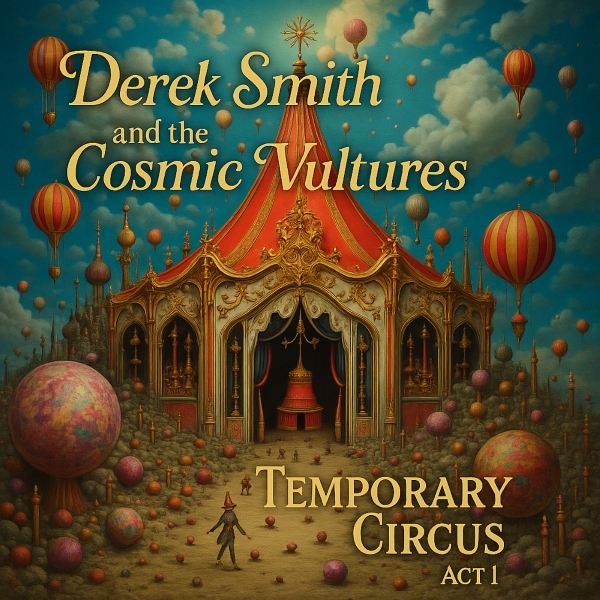
cover design by Derek Smith; image courtesy of Knyvet

The five songs contained here have a central acoustic-based focus that draws on a number of key influences – everything from jazz-pop and folk to world beat and psych elements. “Temporary Circus” has a distinctive, relaxed approach built on a bed of Latin rhythms. The acoustic flamenco-type leads lend themselves to classic pop like latter day Tommy James, The Rascals, and even Tommy Bolin’s solo work. “Strange Life” creates this aural imagery that is spacey and envelops the listener. The combination of acoustic guitar, percussion, and orchestral textures hints at a Moody Blues-like aesthetic. There is a slight shift in genre with the country feel of “The Puppets of Hypocrisy.” But it keeps up with the conceptual theme of the overall project. There are very clear notes of folk and pop here, as well. “Some Girls” speaks to the power of women in our society, which is driven home via exquisite harmonies and choral vocals. It’s also kind of new age-sounding, further exemplified by Lopes’ jazzy George Winston-like piano. “Indie Darling” could be almost auto-biographical and sounds like an amalgam of New Radicals, Todd Rundgren, America, Duncan Sheik, and even early Daryl Hall & John Oates.

For music fans who like their rock and pop with a tad more sophistication and depth, Derek Smith and The Cosmic Vultures are sure to satisfy and resonate with you for some time to come.

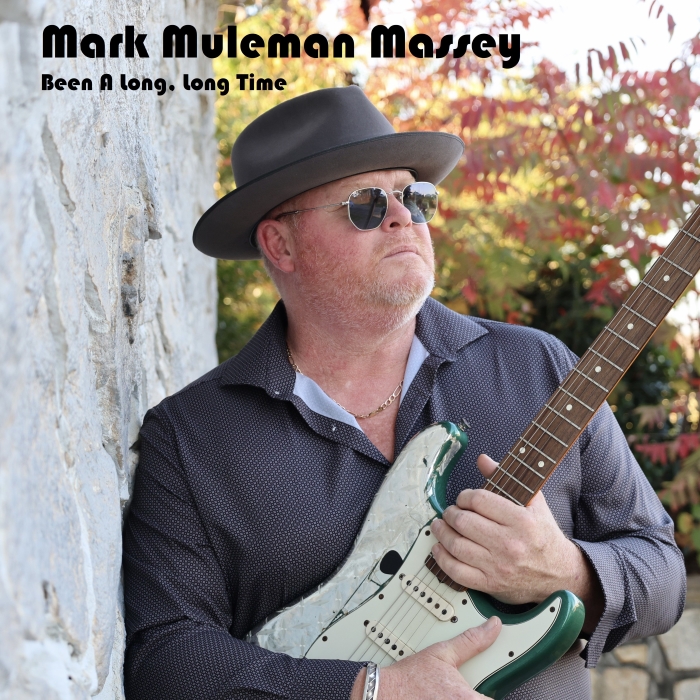
Album Review: Mark Muleman Massey – Been a Long, Long Time

image courtesy of Frank Roszak Promotions

Album Review of Mark Muleman Massey: Been a Long, Long Time

Mark “Muleman” Massey has a soulful blues voice that’s broad enough to hit all the notes and is relatively smooth for the most part, but Massey adds a grainy, gravelly texture to the vox whenever the songs get emotionally charged. In other words, the ideal voice for a bluesman. Pair that with song selection that suits his strengths, and the result is a top-shelf blues record like Been a Long, Long Time. To top it off, the album was recorded and produced by Billy Lawson at the historic Wishbone Recording Studio in Muscle Shoals, Alabama.

Eight of the record’s eleven tracks are Massey-written originals, while the other three are well-chosen covers.

One of those originals is the title track, “Been a Long, Long Time,” the first song on the album. On my first listen, the opening harmonica part was encouraging; then when Massey’s gruff, perfectly-suited blues vocals came in, I knew I was going to like this record so much I’d review it. Now, I’ve been fooled on occasion, but this was definitely not one of those occasions. Mark Muleman Massey is an elite bluesman. I mean, this opening track is a wordsmithy ode to gettin’ some. After a long layoff, sure – I suppose that’s the “blues” part – but there’s nothing more blues than burying this topic in at least a tiny bit of nuance.

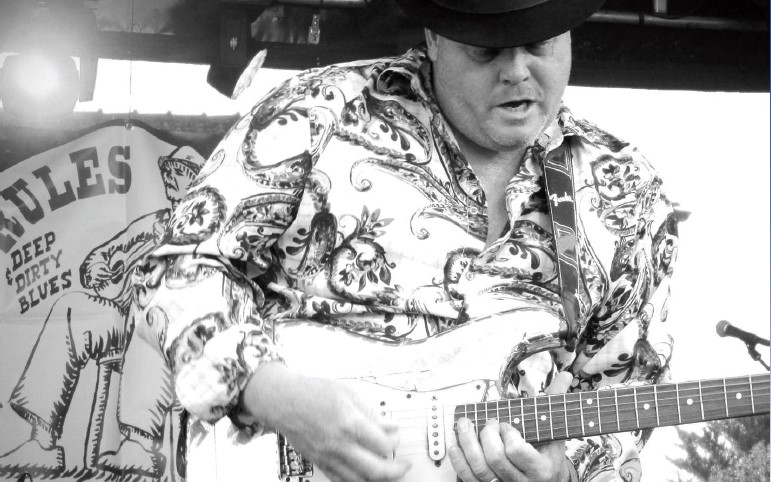
photo courtesy of Frank Roszak Promotions

Track two is a heartbroken ballad, “Baby’s Gone,” in which Massey’s voice displays the pain and gravitas to carry the raw emotion. Another ballad, “Give Me Your Love,” shows Massey’s skills tackling a more of a tender balladeering style.

The other Massey co-penned tracks cover a lot of ground. For example, there’s the the kind of seedy-sounding (matching the lyrics), blues-noirish “She’s Married to the Streets.” Also, “My Used to Be,” a mid-tempo number that’s neither smooth nor particularly energetic, rather sporting a more strolling and strutting rhythm. “Can’t Tell Me Nothing About the Blues” has a smooth rhythm, comparatively harsh vocal delivery, and nifty keys and guitar noodling, telling a true blues backstory.

The last couple tracks are also Massey’s own co-writes. “Going Back to Memphis” is a lively number extolling the virtue of being a bluesman on Beale Street, including the recurring lyric “I’m going back to Memphis, where the women know how to rock and roll.” That’s convincing enough for me. And the disc closes with “Your Good Stuff,” a song that’s not shy about kicking a complaining women to the curb with “Go on and leave, take your good stuff with you,” noting there’s a lot more where that came from, with lots of clever, fun NSFW turns of phrase.

In among all these originals are the three well-selected covers. The first is an energetically funky-blues update of Hank Williams’ “Hey Good Looking.” Next is an almost blues-gospel styled, powerful rendition of Tom T. Hall’s “That’s How I Got to Memphis,” with a big, open sound, well-deployed horns, and Massey’s emotive, insistent vocals pulling it all together. The third cover, of Bobby Womack/Wilson Pickett’s “I’m Sorry About That,” is one of the smoothest tracks on this record, a song that’ll have you swaying side to side, possibly with your eyes closed, as you feel every word.

Beginning to end, Been a Long, Long Time is a well-crafted collection that showcases the world-class bluesmanship of Mark “Muleman” Massey.

EP Review: Adam Sherman – Nowhere But Here

photo by Carissa Johnson; photo courtesy of Knyvet

EP Review of Adam Sherman: Nowhere But Here

Adam Sherman‘s EP Nowhere But Here sounds like a modern collection from a pop singer-songwriter icon. Indeed, that kind of is Sherman, a veteran of the Boston music scene who led A&M recording artists Private Lightning and The Souls.

First song “Gratitude” has kind of an ’80s pop sound, a catchy guitar hook, and a Beatles-reminiscent style, in that it draws structurally and somewhat sonically from the Fab Four while updating it with a lusher, newer pop sound. The harmonies are cool, too, as Sherman is joined by Robin Lane for vocal harmonies not just on this song but throughout Nowhere But Here.

Adam Sherman – Nowhere But Here EP cover

photo by Adam Signore; cover design by Adam Sherman; image courtesy of Knyvet

That Beatles-esque vibe continues into the melancholy “How Hard I Tried.” Vocally, though, Sherman’s voice reaches a little higher, comparable (to me) to Five for Fighting or Savage Garden, drawing a bit on the sound you’d expect from a slow, sad, pleading song from the ’90s or ’00s.

Next, “Torn and Tattered” is a good old-fashioned country/Americana dancehall crooner, backed with the very-country twangs and cries of a lap steel guitar. Unique among this collection, I’m picturing someone in a cowboy hat and boots singing at the front of a classic country music stage. Is there anything sadder – or more old-school country – than “You think that I am strong; I don’t know what you heard; because once a heart is broken, love is just another word”?

“Pure As Yours” mixes Americana and that high ’90s/’00s pop vocal sound, delivering a memorable song that’s soft and sweet throughout, with a sound that feels rich while still being sparse, leaving the focus on the vocals, bringing this strong EP to a pleasant conclusion.

Looking Ahead

If you act quickly, there’s an opportunity to catch a cool upcoming show, as listed on the “Shows” page of Adam’s website. Tomorrow, May 31st, at The Burren in Somerville, MA, you can catch Robin Lane in concert with Adam Sherman opening.

Album Review: Guy Verlinde & Tom Eylenbosch – Promised Land Blues

Guy Verlinde & Tom Eylenbosch – Promised Land Blues album cover

image courtesy of BANDR Music

Album Review of Guy Verlinde & Tom Eylenbosch: Promised Land Blues

Guy Verlinde (vocals, guitars, percussion, and broom) and Tom Eylenbosch (backing vocals, piano, banjo, and washboard) were the 2024 Belgian Blues Award winners for Best Duo in 2024. That’s no surprise, as Promised Land Blues is attention-grabbing from the very start. It’s clear that these two are a couple of Belgium’s best blues artists, with a varied, full sound, delivery that pops, and Verlinde’s deep, strong blues voice. The piano playing of Eylenbosch, meanwhile, can range from soulful to energetic to impressively frenetic ivory-tickling.

The album opens with “Heaven Inside My Head,” a song that sounds as if it’s straight from a N’awlins blues joint. It’s a steady-paced blues dirge whose straightforward progression is augmented by a gritty, almost growling vocal from Verlinde and nifty flourishes on the piano from Eylenbosch. Beginning to end, Promised Land Blues songs run the gamut from almost Gospel (“You Gotta Move”) to energetic (“Do That Boogie”) to soulful (album-ender “World Goin’ Wrong”) to haunting (“Gotta Let Go”).

Verlinde and Eylenbosch are joined by other top European blues artists on several songs. For example, “A Worried Man Blues” is one of the three songs on this disc where the headline duo is joined by Steven Troch on harmonica, providing harmonica-work that appears prominently, changing the musical mix.

Finally, one more song worth noting is “Reckonin’ Blues,” a song that chugs along like a freight train, addressing environmental concerns, with a neat little lyric about climate change that includes “a whole more thunderstrucks, now,” after which Verlinde riffs on the relevant AC/DC guitar hook a bit right before the song’s close.

So, if you’re not familiar with Guy Verlinde and Tom Eylenbosch, Promised Land Blues is a solid introduction to a pair of top bluesmen.

Album Review: Jesse Terry – Arcadia

Jesse Terry stands holding a guitar on a boardwalk in the woods

photo courtesy of Michael J. Media Group

Album Review of Jesse Terry: Arcadia

Jesse Terry is a versatile singer-songwriter with a powerful, smooth, recognizable voice and a musical style that lands somewhere between soft rock and country rock-tinged Americana, though it doesn’t really land in one spot. More correctly, it moves around. It wanders. A lot. But let’s go back to that voice. Oh, man, what a voice!

I reviewed Jesse’s When We Wander a few years ago – that’s what Jesse’s music does, it wanders! – so my expectations for Arcadia were high. This record does not disappoint! It kicks things off with a bang, with a song that’s still my favorite (but just barely), the title track “Arcadia.” It opens with twangy guitar and a John Mellencamp attitude, with a rich sound bed and Jesse’s rich, full, emotive voice. The song is full of energy, the lyrics paint a picture, and the song lifts you up in a bed of music then just carries you along to the end. Simply put, a helluva song. Top 40 airplay fodder.

Jesse Terry – Arcadia album cover

image courtesy of Michael J. Media Group

Interestingly, Jesse follows it with “Burn the Boats,” moving from the rocking of “Arcadia” to a softer, sweeter, folky sound. It still has more of a motor than classic folk, but it’s definitely a lyric-driven, vocal-driven song. It’s a great song, but if you know anything about me, you’ll know that after rockin’ the house with “Arcadia,” I spent the first half of this song screaming “more guitar! more guitar!” OK, no I wasn’t. But in concert, I might’ve. That being said, if I’m not in a “more guitar” mood, this is one sweet, smooth song.

“Gunpowder Days” has a bit of a noisy, funky rhythm throughout, with vocals that vary from gritty to almost folk-influenced ’70s-guitar-rock high notes. It’s a song with grit and gravitas, one with some directional shifts you won’t see coming but that work quite well. Just plain cool.

“Poison Arrow,” next is a chunky rock number with psychedelic ’70s rock-style… organ? I mean, Jesse marches forward in this song, as is his style, much like any other singer-songwriter, but these arrangement are interesting, setting the album apart. And, really, how long has it been since I mentioned his rich, versatile, identifiable trademark voice?!

Jesse Terry stands holding a guitar in a field

photo courtesy of Michael J. Media Group

“Someone in Repair” is another candidate for favorite song. This one is mellow – but with the same awesomely rich soundbed found on the rest of the album – and Jesse’s voice fittingly has some rough edges. But it’s the cool lyrics that seal this one for me. Lyrics like “Be gentle to a stranger for they are someone in repair” are the payoff from much more detailed mini-stories in the verses. Even better, the song closes with the following lyrics: “I hope someday you will see yourself and recognize you are rare. Please be gentle to a stranger; you are someone in repair. Oh, be gentle to a stranger; we’re all someone in repair.” OK, talk amongst yourselves. I’m getting a little verklempt. (Yes, Mike Myers does it better than I do; I have a video link for that.) But I digress. Jesse co-wrote “Someone in Repair” with Craig Bickhardt, Jesse notes in this Instagram video. Well, I just praised Craig’s songwriting skills a few days ago. In fact, checking the liner notes, it looks like Jesse and Craig collaborated on nearly half of Arcadia‘s song. These two in cahoots? They’re playing with a stacked deck!

Jesse Terry stands in a field

photo courtesy of Michael J. Media Group

“Native Child,” next, has kind of a Tom Petty vibe, though its tempo and message are a little more heartland rock-like. In fact, “Waiting Out the Hurricane” opens with a Hard Promises-era Tom Petty and the Heartbreakers-esque twangy guitar. Steadily thumping drums drive the song, with jangly guitars overlaying it, while a a very deep, desert west-flavored bass reverb appears from time to time. All together, “Waiting Out the Hurricane” is very early ’80s Petty-like noisy guitar pop-rock.

“Strong” is a strummer that tugs heartstrings as it builds in power, stirring up an emotional response. It’s followed by “River Town,” which is a my-hometown type rhythmic rocker you might expect from the likes of Mellencamp. Or, if you “country it up,” it could be a hit small-town country pride kind of song. Especially with the lyric, “Folks told me Tennessee and some southern accents would fix me right up.” Well, maybe not. In the story, Jesse moved back north again. You don’t hear that in a country hit.

Jesse Terry stands in a field, with a guitar hanging in front of him from a guitar strap over his shoulder

photo courtesy of Michael J. Media Group

Penultimate song “Headlines” is a weighty song with foreboding music and sweetly cool background vocal harmonies – obviously, that’s what you always combine with foreboding music, right? – atop a noisy music bed. And I like the mid-late thick guitar wail. Musically, this song is so interesting, you won’t pay attention to the depth of the lyrics. Listen again and make yourself because “the devil’s in the headlines.” You’re welcome.

Finally, Jesse closes with “Where You Came From,” a sweet, fatherly song that’ll certainly be a family favorite for years.

All told, Arcadia is a song-driven, soft-to-mid-tempo disc that’ll appeal to heartland rock fans, featuring songs that’ll reach mainstream rock, radio rock, Americana, and probably even a lot of folk music fans. By the way, have I mentioned Jesse’s voice? (chef’s kiss emoji!)

Album Review: Circuline – C.O.R.E.

Circuline band photo

photo courtesy of Glass Onyon PR

Album Review of Circuline: C.O.R.E.

Circuline is an acclaimed progressive rock band, and C.O.R.E. is the sort of soaring album that you’d expect from one of the genre’s best. On C.O.R.E., Circuline harkens back to classic progressive rock musical styles, throws in some elements from music with broader commercial appeal, and pushes the envelope on new, original styles and sounds. It all makes for a fun repeated listen, even for those of us who aren’t hardcore prog rockers. If you’ve been reading this blog for a long time, you may recall Eric Harabadian’s review of Circuline’s Counterpoint in 2017. Well, this time it’s my turn.

You’ll hear a lot of different styles on C.O.R.E., but if there’s one classic progressive rock band Circuline reminds me of on this disc, it’s Yes. Yes, Yes drew a lot of classic rock fans’ attention, as well. And that’s the point. Among today’s prog-rockers, Circuline is one of the more likely bands to perform a broad-appeal rock progressive rock song. There are several on C.O.R.E.

Circuline

cover art: painting by Henrietta-Mantooth-Bagley; image courtesy of Glass Onyon PR

Album-opener “Tempus Horribilis” isn’t one of those songs, but it is incredibly interesting and one of the more experimental songs on the record, with disconnected, almost jazz-rock-like guitar bursts, artsy spoken-word sections, and one of those mid-song restarts that tricks you into thinking maybe a new song is beginning. Nope. Of course, “Tempus Horribilis” clocks in at more than 6 minutes, so for a non-prog band it probably would be two songs. So yeah, it’s a very cool song if you’re a music fan, but it’s not bordering on mainstream in the least. From a song structure perspective, I could almost hear Pink Floyd perform a song like this, though Circuline’s central sound differs significantly from Floyd’s.

“Third Rail,” the next song, is probably the most likely crossover song. A couple others have a similarly classic rock-based feeling, but “Third Rail” clocks in at just 4:11, more than a minute shorter than the next-shortest song on C.O.R.E. That’s not the only reason, though. Keys, drums, and guitars provide swirling tension-builds supporting Natalie Brown’s powerfully emotive, soaring vocals.

“Say Their Name,” next, is a nifty near-ballad, as the music bed is mostly soft. Sure, when all the instruments enter simultaneously, it can get a little noisy, but that’s just the change of pace on this number. And some of the musical breakdowns in the middle of the song would make it difficult to slow-dance to, not that that should stop you from trying. But it’s a cool, groovy listen, that’s for sure. Sort of jazz, I suppose, if performed by a progressive rock band.

Circuline band photo

photo courtesy of Glass Onyon PR

Just as “Say Their Name” isn’t jazz, despite the structural similarity, “All” isn’t a Broadway showtune, despite having some segments where the group-sing could be straight out, let’s say, Les Misérables. There’s a mid-song instrumental exchange, too, where I can picture a stage character uneasily looking about, perhaps holding his hand above his eyes and leaning forward, as if searching for something. Sure, there’s too much instrumental jamming to find a home as something other than a shapeshifting progressive album track, so don’t listen for it on Broadway, but the sonic journey is enjoyably long and winding.

“Temporal Thing” is one of Circuline’s broad-appeal, mid-tempo Yes-reminiscent numbers. It’s followed by “You,” on which the band goes a bit dark and quite foreboding, something you’ll find nowhere else on this record, but the haunting sound befits lyrics like “You bore a hole in my soul. Now I’m screaming.” It’s a very powerful and emotional number. Then, for a change of pace, the sweetly mellow “Blindside” follows. It’s the third song in such an interesting song trio, showcasing Circuline’s depth and breadth back-to-back-to-back. As noted in the text next to the “Blindside” music video shared on Facebook, the song is “inspired by power ballads from David Foster and Dianne Warren, moving into anthemic rock choruses, with stacked vocals inspired by Journey.” So why didn’t I suggest “Blindside” as Circuline’s most likely crossover song? Well, you’re not likely to hear a 6-minute song on the radio unless you take your time machine back to the ’70s or early ’80s and find yourself a long-form AOR station. But it’s really cool on your stereo and would be equally so in concert. (Or back to that slow dance I mentioned earlier? Well, this is your song.)

Circuline closes this record with “Transmission Error.” And I seem to be mentioning song lengths a lot in this review, don’t I? Well, this is the album’s longest track, at more than nine minutes. But that’s not really the point. The point is that none of these songs seems too long. They’re so interesting, with unexpected sonic twists and turns that deliver the sorts of payoffs that lead you to want to follow the next one down what appears to be another dark alley but, as it turns out, most certainly isn’t.

There’s a reason Circuline is considered a premier progressive rock band. They’ve got the chops, they’re never boring or redundant, and they turn what can sometimes be a standoffish (to outsiders) musical genre into something both progheads and the general rock public can enjoy. If you haven’t heard C.O.R.E. yet, give it a listen. If you’re a mainstream rocker, start with “Third Rail” and “Blindside.” If you’re a little dark, try “You.” If you’re into the more experimental stuff, check out “Tempus Horribilis” and “Transmission Error.” If you’re into Pink Floyd, maybe also “Tempus Horribilis” and “Transmission Error,” though you might dig different sections of those tracks. C.O.R.E. is simply an exceptional progressive rock album that deftly covers a broad swath of the progressive landscape.


Album Review: Craig Bickhardt – Soliloquy: Sixteen Solo Songs

Craig Bickhardt

photo courtesy of Trespass Music

Album Review of Craig Bickhardt: Soliloquy: Sixteen Solo Songs

Craig Bickhardt has a classic folk singer-songwriter voice. It’s rich but a little raspy. Craig’s voice can be powerful in some instances, tender in others. He can be a storyteller, can help you feel the emotions in the lyrics, or see things from a new perspective. Craig’s voice, coupled with his detail-oriented, picture-painting lyric-writing skills, dependably result in an instant-classic collection of folk songs, and Soliloquy is no exception.

This record is just Craig, his guitar and his voice – solo, as the album title indicates. It’s an attempt to capture the intimacy of one of Craig’s acoustic performances, and it certainly does. The production of such an undertaking is extremely important, and Craig’s performance on this record is captured with a rich, full sound that plays well through speakers or headphones. Now, 16 songs is a lot, so I’ll just focus on some favorites or tracks that stand out for different reasons.

Craig opens the record with “Go Round,” with energetic finger-picking that provides an energetic opening to the album, something that’s always wise to do on a record that’ll feature a lot of softer crooning later on. Wake the audience up at the beginning! The song itself is playful, both musically and regarding wordplay, with fun lyrics like “Way back in ancient times, men had the upper hand, ’til Solomon’s seven hundred wives made a wreck of the man.”

“It Opens” is a song about embracing what comes in life, built around the chorus “It don’t look like a door. It don’t look like a door. But it opens, it opens.” Craig rolls out his raspy voice in a couple spots in this song. It seems like more, but upon closer listen, no just in a select few spots, mostly at the beginning of the verses.

Craig Bickhardt – Soliloquy: Sixteen Solo Songs album cover

image courtesy of Trespass Music

“You Take Me Home” is a pleasant love song on which Craig employs a rough-hewn vocal delivery that conveys his emotion, punctuated by guitar-picking that’s almost like a soft rain.

“The Real Game” is an energetic song about preferring baseball played for the love of the game rather than money or fame. About remembering the pure reason for enjoying the game. It has a lively tempo and is extremely catchy, though it espouses an opinion that can come off as kind of pretentious and preachy. However, given the story behind the song, I know that’s not intended, so I try to hear it a super-catchy song about the simple pleasures, unencumbered by real-life, adult complications.

“This Old House” and “Stan” are extremely well-written songs that paint vivid pictures of frequent folk song themes, at least among the better folk songwriters with the talent to pull it off. “This Old House” is an ode to a dependable house, while “Stan” is about a man who saw his livelihood disappear, as the world leaves people behind – in this case, Stan. The first of this pair of songs is pleasant and reminiscent, while the second is matter-of-factly heartbreaking.

“The Restless Kind” stands out as a particularly energetic quick-picker of a song, a song on which Craig varies his vocals more than on many of his others. It’s a peppy song that could inspire those among us who are restless souls to feel much better about their desire to avoid putting down roots or staying in one place too long. Come to think about it, it’d be nice if it inspires a few restless people to throw off their shackles. Again, the energetic delivery could certainly inspire.

I think the connection made on “Men and Rivers” is interesting. Referencing Huck Finn and Tom Sawyer in one verse, Lewis and Clark in another, Craig keeps things moving with rhythmic guitar-picking as he elucidates “the bond between men and rivers.” I suppose, much like “The Restless Kind,” this could inspire some restless souls to break free from societal expectations, as well, but more specifically as it relates to men… and rivers.

“Donald and June” is one of the best life-story storytelling song you’re ever going to hear. The pattern of the strumming and Craig’s vocal cadence do a great job of supporting his precisely-phrased lyrics to paint a vivid picture of a couple’s life together. This song is truly something special.

“Life With the Sound Turned Down” deploys a nifty little recurring guitar bit, while Craig’s delivery is energetic. There are some vocal flourishes on this song that recall, for me, another of my all-time favorite singer-songwriters, Billy Crockett (who I reviewed live here, while I reviewed one of Billy’s albums here). Mostly, though, this song will stand out because of the slightly different vocal delivery style Craig deploys on it.

Craig closes the record with another soft love song, “Where in the World.” He sets it atop the backdrop of a world on the brink, but “Just when the world’s looking painfully blue, I see a light shining through.” The guitarwork pairs the verse lines as couplets; it’s always a pleasure when guitar styles are varied, particularly on an album where that’s the only instrument on the record. You want to keep a folk album interesting over the course of 16 songs? Then you’ve gotta vary the guitar patterns, like Craig does. Have I mentioned how exceptionally talented he is? Well, I’m saying it again. Soliloquy is an inspired 16-song collection. And “Where in the World” is a sweet way to close it, leaving the listener with a warm heart and a soft smile, while acknowledging the world around us isn’t ideal.

If you’re a folk music fan, you need this record – heck, probably several Craig Bickhardt records – in your collection. If you’re not so much of a folkie, then i you only listen to one song on Soliloquy, I’d recommend “Donald and June.” While Craig’s songs are all among the best folk performances you’ll ever hear, that song is simply inspired.

More Recently

Three months ago, in February, Craig released another album, Man of Sorrows, this one a collaboration with Thom Schuyler on which a whole lot of other talented artists make appearances, as well.

Album Review: Travellin’ Blue – Take the Edge Off

Travellin' Blue

photo courtesy of Big D Radio Promotions

Album Review of Travellin’ Blue: Take the Edge Off

Here at the blog, I reviewed a couple singles from the kickass Belgian blues band the Travellin’ Blue Kings, most recently a little more than a year ago. Well, after some line-up changes, the band has released a brand new album of powerful blues and blues rock, Take the Edge Off, now as Travellin’ Blue. The band’s current line-up features JB Biesmans (vocals, saxophone, harp), Luke Alexander (guitar), Patrick Cuyvers (Hammond organ, piano, backing vocals), Winne Penninckx (bass), and Steve Wouters (drums).

I’ve gotta say, line-up changes and name-change notwithstanding, Travellin’ Blue remains one of Europe’s most diversely talented, engaging, enjoyable blues-meets-blues-rock bands. If you’re not yet familiar with the band, Travellin’ Blue’s sound is classic, guitar-driven blues and blues rock, with some cool organ placement adding to the mix.

“Better Left Unsaid” kicks the album off with a sweet guitar riff that builds into an energetic, full, slightly gritty soundbed, perfect for Biesmans’ gravelly, true-blues vocals. The song is driven by a recurrent, persistent rhythm and features music slow-builds and releases that add to the feeling of a good-time, broad-appeal blues-rock song.

Travellin' Blue – Take the Edge Off album cover

image courtesy of Big D Radio Promotions

The band gets deeper into the blues rock weeds with the chunky rhythm of “No Gooder,” a song with a grinding beat that is a little reminiscent of George Thorogood in places while diverting to an almost-dissonant, edgy, coolly uncomfortable musical direction elsewhere, resulting in a cohesive yet extremely original number, all the while leaning into the verbally awkward “you’re no gooder, no,” making it sound cool and oh, so very blue.

“The Closer is King” is deep, slow, and heavy, and features a guitar solo that gives off Clapton/”While My Guitar Gently Weeps”-esque energy.

“Death Smiles At Us All” is another cool number, grabbing your attention quickly with a staccato opening that employs ample harpwork. The back half of the song is similar, with a long instrumental section mid-song meandering through plenty of groovy rockin’ blues real estate before returning. And just to keep you on your toes, the song closes with a smooth outro. Thankfully, I’ve gotta say, as it was a necessary palate cleanse heading into the next number.

That next number is perhaps the best-bet for a hit single on this disc – it’s one of my three best-bets, anyway, for broad appeal. In fact, it was one of the two single releases in advance of the album. I’m talking about “Come Hell or High Water.” It’s a steady, straightforward blues-rock song featuring the singalong lyric “Come hell or high water, lock up your daughter.” OK, so maybe be a little careful where you are when you sing along.

Blues-based classic rock comes calling again with the opening guitar riffs – does that riff sound “Lunatic Fringe”-ish to you, or is it just me? – and organ on the title track, “Take the Edge Off,” pulling the listener into this blues/rock guitar riff-driven number.

“After All” follows, a change of pace, as it’s a laid-back blues number, guided by prominent, well-placed sax and piano, with a cool, smooth delivery that reminds me a lot of Lew Jetton (notably some favorites from his Rain album, which I reviewed several years ago). The sax is again prominent in peppy instrumental “Hellhole Shuffle.” Indeed, this two-song pairing late in the disc offers a nice taste of the band’s versatility in the groovin’, laid-back blues lane.

Finally, the album closes with a guitar-driven, modestly-paced yet energetic number, “Lay Down Knuckle Under,” which plays with pace changes, playful instrumentation, and a gritty recurring blues guitar riff. This song is an ideal closer, as a blues album can only truly be blues if it ends on a complaint song, and this one will have you singing along with the complaint, “just lay down knuckle under, lay down knuckle under.” Biesmans’ vocals, more than anywhere else on this record, are a true blues wail in the latter half of this song. You’re gonna dig it. And it ends in one of my favorite album-ending methods, the fade out. (The hard stop is another fave, but on this record, the band chose a fade out.)

This collection, as Stefon would say, “has everything.” Rockin’ blues, blues rock, laid-back blues, classic rock-infused axework. Big organ sounds. Gritty blues vocals. Nifty sax work. And it’s all on one disc. Travellin’ Blue is one of the top blues bands in Europe at the moment; you really should check out Take the Edge Off.

Circling back, before I wrap, I mentioned that I had three best-bets for broad appeal. Indeed, I do. If you want to start your Travellin’ Blue journey by checking out just three tracks, start with “Better Left Unsaid,” “Come Hell or High Water,” and “Lay Down Knuckle Under.” After that, of course, once you’re convinced you love this band, you can progress to some of my other favorites, like “Death Smiles At Us All,” “No Gooder,” “After All”… Enjoy!

Album Review: Pure Prairie League – Back on Track

Pure Prairie League

photo courtesy of Michael J. Media Group

Album Review: Pure Prairie League – Back on Track

Old-school country pop-rock from a legendary band. Sure, I wasn’t initially as excited as I would have been by a new Garth Brooks disc. Or, going back to a more comparable ’70s star, a new Crystal Gayle record. But then I listened to Back on Track and remembered why we all know Pure Prairie League‘s name. Damn, these guys know how to write – and perform – a pleasant soft country pop-rock song. And when I say “country pop-rock,” I mean like from the ’70s, when that branch of country music leaned more toward the Eagles than toward more explosive rock bands like Poison. And yet, this new record is modern-sounding, not stuck in the past. I don’t know why I’m surprised – sorry, Pure Prairie League, I guess I underestimated you a little. Then again, this is the band’s first studio album in 20 years, and with the longest-tenured band member having joined in 2011, none were band members the last time Pure Prairie League released an album.

Pure Prairie League – Back on Track album cover

image courtesy of Michael J. Media Group

Of modern successful country acts, I’d compare this Pure Prairie League album perhaps to Lonestar, a band whose most recent release, 2016’s Never Enders, is actually one of my favorites of theirs, even if it didn’t chart as highly as any of their preceding studio albums. But I digress. This review is supposed to be about Pure Prairie’s League’s wicked-cool, brand-spanking-new, December 2024 release.

From note number one, “The Beginning” kicks things off nicely with a distinct soft country-rock twang. Second track, “Picture Perfect Life,” is more of a swinging, classic country number. And “I Believe” follows with a deep-voiced, rich, heartfelt ballad. Man, this stuff would have been all over country radio in the late ’70s/early ’80s.

“Skipping Stones” has a big, rich, somewhat modern country sound mixed in with old-school harmonies, leaning toward the rock edge of country-rock, suitable for back-to-back playlist status with Poco. You’ll dig the opening lyric, “I don’t like trouble. Trouble likes me.” Oh, yeah!

“Crazy World” is a peppy, softly tuneful number. This is the one that reminds me the most of the Eagles on this record, though it’s clearly more country with the requisite twang. And it’s a bit more of a striding, bouncing, walking-along song than the Eagles’ smoother California style. But oh, those Eagles-esque harmonies!

Pure Prairie League

photo by Laura Schneier; photo courtesy of Michael J. Media Group

“Modern Problem” sounds almost like a ’70s soft progressive track that would have gained airplay at the time. (Alan Parsons, anyone?) If you’d like a back-to-back playlist pairing, I’d suggest Michael Martin Murphey’s “Wildfire.”

Next up, “A Love Like Yours” offers up an almost-bluesy-pop arrangement of a light pop-country song. With horns. This is a smooth song. And I love the jamming, all-instrumental long-outro.

“I’m the Lucky One” follows, the sort of sweet, mildly energetic crooner no country album would be complete without. Sonically, the country artist I’d think would be best-suited to cover this song would be Blog favorite Houston Bernard. Indeed, this sounds like exactly the sort of song you’d find on one of his records, complete with Houston’s confident vocal delivery.

“Love Song” comes across as one of those harmonizing ’70s folk-influenced soft psychedelic rock numbers. Then “Price of Love” follows, adding a Jimmy Buffett-reminiscent style to this smoothly harmonized, old-school tune.

“Six Feet of Snow” is an old-fashioned, at least partly fiddle-driven country dancehall number. And “Back on Track” kicks off with a funky beat, closing the album as a fast-paced number that sounds like a runaway train during the chorus but dabbles in a variety of other influences in-between.

As a whole, this is an impressive album. And I didn’t realize how varied the influences were until I starting writing about each song individually. During dozens of pre-review listens, I could have sworn was a collection of songs that would be described similarly. Indeed, though, almost every song has a very distinct, different influence, yet the album is an impressive, cohesive whole.

To be honest, I wasn’t sure I’d be interested a Pure Prairie League album until I listened to it and realized this is a great record. If you loved the sound that earned Pure Prairie League its hits in the late ’70s/early ’80s, you’ll really like this album. And if you don’t know what that sounds like, give this record a listen and find out.

Album Review: Mark Barron – Redefinition

Mark Barron – Redefinition album cover

image courtesy of Mark Barron

Album Review of Mark Barron: Redefinition

Rocker Mark Barron covers a lot of territory with axework that ranges from blistering to floating on Redefinition, and all that real estate is in the progressive rock township. Can I place it Barron’s music into a subcategory of progressive rock? Well, if progressive, soaring, guitar-wizardry-driven space rock is a progressive rock subgenre, then this would be the dictionary definition of it.

Barron is a jack of all trades, a multi-instrumentalist, not just a guitar wizard. The liner notes of Redefinition read: “Mark Barron: Vocals, guitar, keyboards, bass, drums, production and mixing. Music and lyrics by Mark Barron. Mastered by Doug Northcott at Amplitude Audio.” So we know he doesn’t master his own record. He can’t do everything, I guess, but Barron comes close.

First song “Praeludium” kicks off with heavy, soaring hard rock guitar, suggesting perhaps a heavier record than Redefinition turns out to be, the sort of anthemic, soaring heavy metal that might have instrumentally backed one of Dio’s more melodic productions. At the very least, it suggests images of knights and dragons and castles – very medieval and adventury sounding, like the backdrop of a D&D quest.

Then the title track, “Redefinition,” begins with a sort of synthy-sounding, ’80s electronic-style intro, which leads into some higher, more technical, prog rock instrumental shredding. Yet, a garbled, wizardly background vocal resumes the fantasy before the lead vocals themselves bring about an almost Styx-influenced mainstream-meets-progressive sound. By this point, it’s clear any and all expectations should be thrown out the window, and you should just sit back and enjoy the album’s journey.

Throughout the journey, you get energetic progressive rock with a soaring musical backdrop and plenty of axe-wizardly shredding.

“Closer to Me” soars softly, with a calm, outdoorsy vibe, with the music suggesting water imagery just before the lyric “as the wings crash down on me,” as if so-designed. The energetic kick into the song’s chorus is almost Survivor-like, though the rest of the song is pure floating, soaring, kinda mellow progressive rock. Of all the songs on this record, “Closer to Me” is the one that most often pops into my head, so do give it a listen.

A fun, lighthearted instrumental romp, “Burnout,” follows, and it’s my favorite instrumental number on the record, perhaps my favorite song overall. It’s followed by “Afterglow,” which features guitar noodling through the song’s first half before the first vocals, which soar angelically, turning the song into almost a hymn.

The rest of the album continues along similar themes while still unleashing new facets of Barron’s skill-set. “Leap of Faith” feels very Styx-ish. “Into the Wild” is a fun, 5-plus minute journey powered frequently by relatively fast-paced guitar and a persistent, driving drumbeat. And “Rift” features a bit more keywork than many of Redefinition‘s other numbers – in addition to plentiful guitar, natch – as the song leans toward the more mainstream end of progressive rock. The guitar in the instrumental “Divinity” is the crunchiest, thickest on the record, seeming to lean a little bluesy at times, too.

The album’s penultimate track, “Ivory,” is motored by pianowork, slow and very balladic, with Barron adding softer-edged though still insistent vocals; it also might be well-suited to musical theater, specifically something along the lines of Phantom of the Opera. Indeed, Barron seems to channel Andrew Lloyd Webber throughout much of this song.

The 11-song journey through Redefinition ends with “Weightless,” a 7-minute closing number that showcases many sides of Mark’s music, from the song’s soft opening to its varied guitar styles to an almost march-style rhythm and beat, particularly through its middle, before beginning its big, soaring-into-wide-open-spaces final minute-plus dramatic climax then fading out. It’s a fitting ending to an impressive progressive rock song collection!

So, if you’re a progressive rock fan, you should definition check out this record. It’s a good one. And if you’re not already familiar with Mark Barron, then you have a new name to remember. And if you’re not a prog rocker, well, maybe start by checking out “Closer to Me,” “Ivory,” and “Burnout” – there’s probably something in this collection you’ll like, too.