
photo by Gia Smith; cover design by Derek Smith; image courtesy of Knyvet
EP Review of Derek Smith and the Cosmic Vultures: Songs from the Plastic Ballroom
I always feel like Derek Smith and the Cosmic Vultures are throwing me back to the ’70s, to the golden age of radio-friendly, soft album oriented rock. The four songs on this latest all-new collection live in that same universe – throwback, moderately progressive, exceptionally accessible rock from a time gone by, though not exactly, as there are elements in the music that flag it as more modern, whether rhythms more likely to be found in modern music or simply a modern angle in the production. Regardless, this is yet another collection of well-written songs steeped in an earlier rock era. As for that well-written bit, indeed, Derek Smith‘s songwriting talent has garnered notice, most recently with a Songwriter of the Year nomination from the New England Music Awards.
First track “Rolling Over” is a song whose straightforward rock approach is mostly unwavering, while its steady, uncomplicated beats and regimented vocal pattern are augmented by full-on background harmonies and something about the vocal delivery that makes me, personally at least, picture a character who sings out of one side of his mouth. You know, like in the cartoons.
“I Don’t Wanna See You Cry” leans even harder into that ’70s sound, so much so that the high vocals and psychedelic musical elements will have you exclaiming, “Man, that’s groovy!” Yes, it is. The song features soft-touch phrasing and just enough instrumentation to fill in the gaps yet make it feel like the soundbed is full-on and rich. What a cool arrangement! And an era-appropriate quick fade.
“Astral Days” is the “put-your-hands-up and dance” song on this EP. It meanders a little, like any progressive classic rock number. Yeah, I know, “progressive” at under 3 minutes? That really is cutting edge! But Smith packs a lot into this short track. Again, like a period piece from album rock’s heyday, it’ll transport you back in time. To a carnival, perhaps, given the circus-esque musical style that periodically invades this tune. It’s really cool, never really settles into a groove, and as a listener, you won’t mind one bit. You’ll almost certainly sing along each time Smith sings “and all the people say” with “ohh, ohh, ohh, ohh.” Oh, yeah, such fun!
“Surreal World” opens with a reference to “the sarcasm store”? [snort-laugh] Love it! Truly a surreal world. This song actually reminds me of something the Beatles might have attempted in their more experimental, adventurous numbers. The chorus sways nicely, serving as a central focal point upon which Smith can riff musically, as he does occasionally, but it returns to center often enough for the song to sound cohesive, and the fade out at the end is a nice way to bring this 4-song collection to a close.
For those who haven’t heard Smith’s music before, this is a nice sampler-caliber introduction to a songwriter whose creativity you’ll come to value, whose future releases you’ll look forward to. And, of course, whose music you’ll enjoy listening to, preferably long-form, with headphones on, in a single sitting. For a suitably long sitting, you’d need to pair Songs from the Plastic Ballroom with other Smith releases or play it on repeat, unless you consider not quite a dozen minutes to be a suitably long way to enjoy classic, ’70s-inspired album-oriented rock. But you get the point.
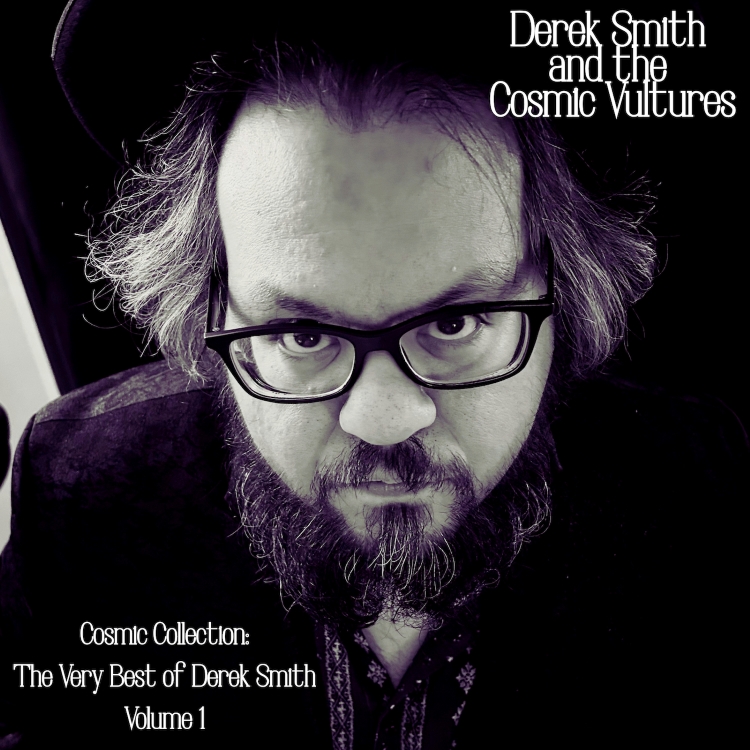
photo by Gia Smith; cover design by Derek Smith; image courtesy of Knyvet
More Recently
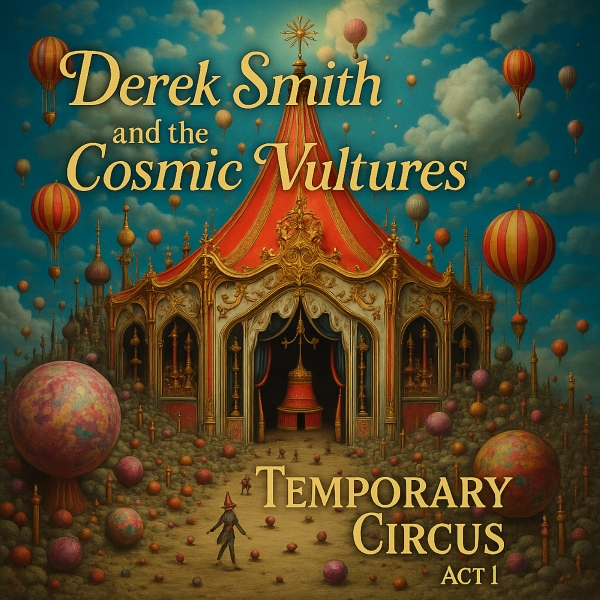
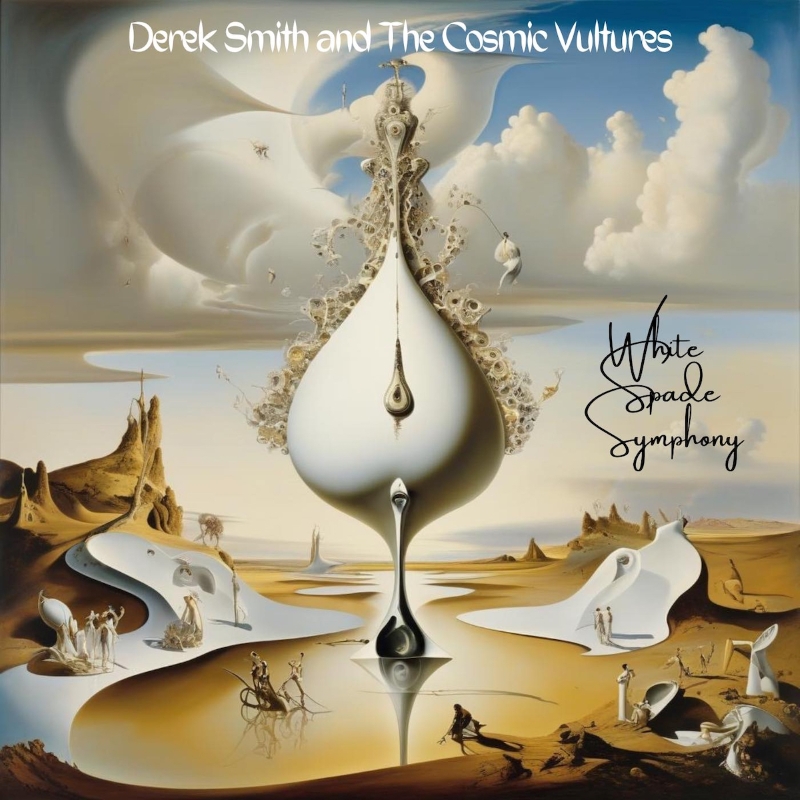
I said Songs from the Plastic Ballroom was Derek’s latest all-new collection? Yes, but it’s not his most release release. That honor goes to Cosmic Collection: The Very Best of Derek Smith Volume 1, a 33-minute record (hey, that solves the problem of what to play back-to-back with …Plastic Ballroom!) that contains 10 songs from Smith’s prior work. The Very Best album includes “White Spade Symphony,” a truly inspired, incredible song I reviewed nearly two years ago, “The Puppets of Hypocrisy,” from Temporary Circus: Act 1, which Eric Harabadian reviewed here at the blog nearly a year and a half ago, and eight more songs from Smith’s past releases, starting with the very cool, atmospherically emotional Southern blues-rock-influenced “Black Angel,” which… well, I’m not going to write a whole other album review right here under the “More Recently” subheader. Cosmic Collection is a record you’ll just have to discover on your own. (And you should!)