
Album Review: Samo Salamon – Dolphyology: Complete Eric Dolphy for Solo Guitar

Samo Salamon

photo by Janin Vezonik via Samo Salamon (press kit)

by Eric Harabadian, Contributing Blogger

Album Review of Samo Salamon: Dolphyology: Complete Eric Dolphy for Solo Guitar

Eric Dolphy was a jazz saxophonist, bass clarinetist and flautist who emerged in the ‘50s and ‘60s and recorded for prominent jazz labels like Prestige and Blue Note. Although he left us way too young at 36 years old, he crafted a legacy of genre-defining work that changed the face of modern bebop. Dolphy stealthily walked that line between melodic convention and out-of-bounds freedom like few others. Charles Mingus, John Coltrane, John Lewis, Chico Hamilton and Ornette Coleman were just some of the bandleaders who were graced by Dolphy’s harmonic genius.
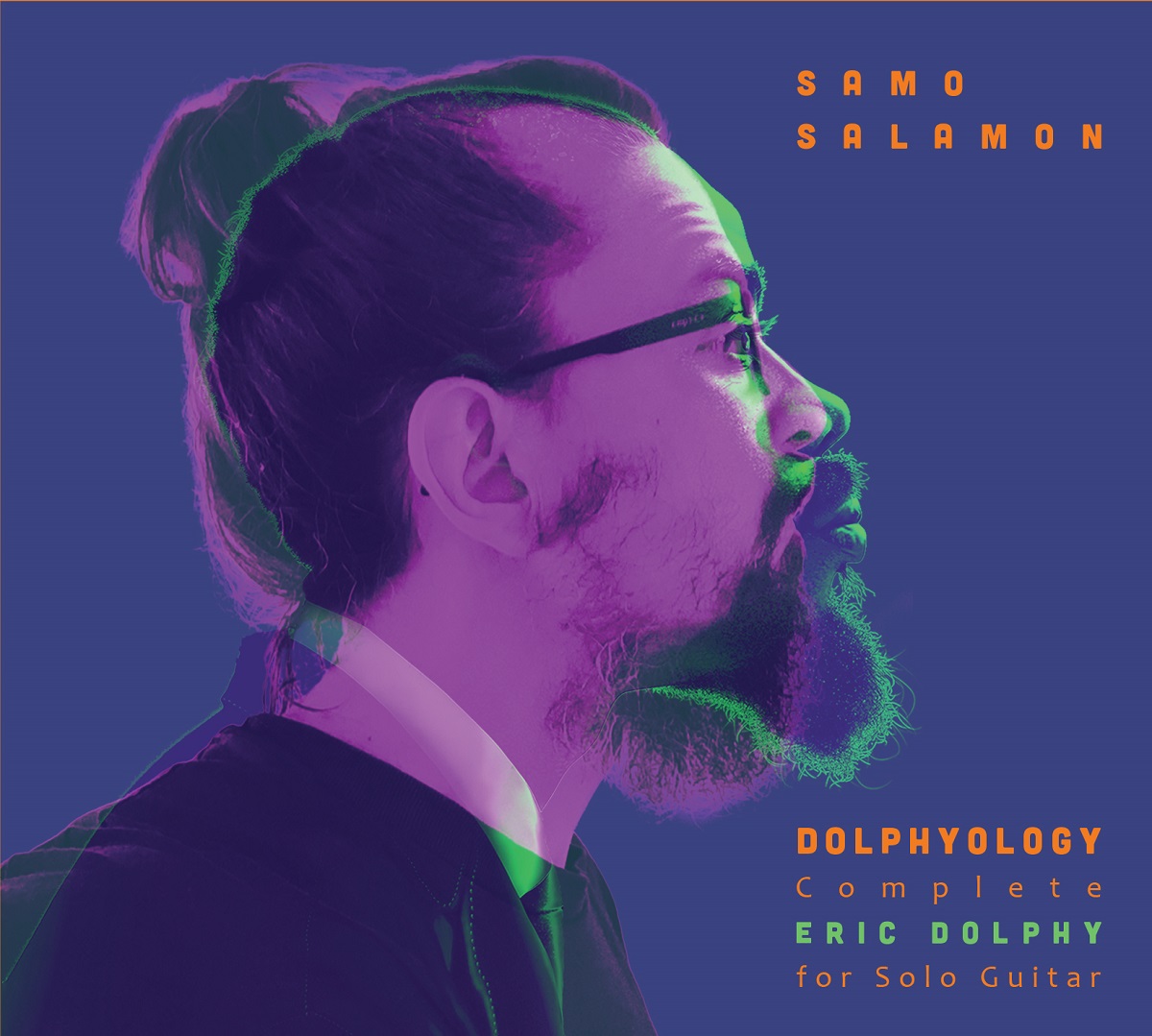
Samo Salamon – Dolphyology

image courtesy of Samo Salamon

Samo Salamon is a world renowned musician who was selected by Guitar Player magazine as “one of the hottest 10 new guitarists in the world.” And Salamon is, indeed, globally recognized for his collaborations with everyone from Howard Levy, Paul McCandless, and Donny McCaslin, to Fareed Haque, Tim Berne, and countless others. The intrepid guitarist came to this current project out of the experience of pandemic lockdown. With a lot of time on his hands, he put it to good use revisiting and exploring the intricate music of Eric Dolphy. This music had never really ever been interpreted for guitar before. As Salamon puts it: “I tried to approach Dolphy, but in my own way. First, I transcribed all the compositions by Dolphy and arranged them for solo guitar. I improvised on tunes—sometimes in free improvisation, and in other cases, following the harmonic structure. I have played Dolphy’s tunes throughout my career, improvising on them, but rarely in a solo setting; probably because of fear or respect.” Well, now Salamon takes on the songs of a master head on and bravely documents them in posterity for all to hear.

Samo Salamon

photo by Ksenija Mikor via Samo Salamon (press kit)

This is a full-length two-disc set of Dolphy deep cuts and classics recorded by Salamon in his living room with one microphone and the natural acoustics of his home. According to the liner notes, all tracks were recorded in one take and often include sonic “enhancements” like the meows of his cat in the background. On this release you get nearly 30 tracks total, with 14 cuts per side. First off, many of the tunes were originally performed in an ensemble setting and on some type of woodwind, no less. Salamon’s innate ability to re-arrange these compositions for guitar give them a unique character right out of the gate. His use of string bends and ringing harmonics really stand out and are a nice touch. Some of Dolphy’s more well known compositions like “Out to Lunch” and “Iron Man” really stay true to the heart of the music’s original intent, shining the spotlight on avant garde passages and angular intervallic runs. “245,” “G.W.” and “Straight Up and Down” run the gamut from fearlessly technical and unorthodox to jaunty and seemingly disjointed.

Many of the tunes are performed on six-string acoustic guitar, but Salamon also integrates 12-string guitar and mandolin into the mix as well. Cuts like “The Baron” and “Burning Spear” benefit from the thicker depth of the 12-string. He also employs some really slick quick note phrasing and flamenco-like flourishes as well. “Lady E” and “17 West” seem to stand out for their more traditional blend of balladry, modern bop and blues.

Perhaps it is human for a musician to be in awe of one’s heroes, feeling they may not be up for the challenge. But, suffice to say, that is not the case here. Salamon is a consummate artist that seems to have embodied the heart and soul of Dolphy. And considering the oft non-linear nature of these tunes, that is no mean feat.
Single Review: Anissa Lea – “Be My Baby”

Anissa Leaby Eric Harabadian, Contributing Blogger

Single Review of Anissa Lea: “Be My Baby” (E & A Music Productions)

Anissa Lea is a talented and versatile young vocalist from Detroit, Michigan. As the world knows, the city of Detroit has an esteemed reputation for producing some of the greatest rock, jazz, pop and soul music of all time. And Anissa Lea embodies all of that and then some. She possesses vocal skills and a sense of music history that extends way beyond her years. With a love for everyone from Ella Fitzgerald and Dinah Washington to Peggy Lee and Billie Holiday, she has an uncanny knack for stylistically borrowing from these musical legends while simultaneously evoking an approach that is all her own.

One artist, in particular, that really made an enormous impression on Lea early on has been the recently dear and departed Veronica “Ronnie” Spector. Spector, of course, was one of the progenitors of the “girl group” concept as frontwoman for The Ronettes. The Ronettes had a string of early ‘60s hits, including “Baby I Love You,” “(The Best Part of) Breakin’ Up,” “Walking in the Rain” and, unquestionably, one of Spector and The Ronettes’ biggest smashes “Be My Baby.” And that is the song in question here.

Anissa Lea puts her own spin on “Be My Baby” that blends a contemporary jazz-pop sensibility, with a funky spirit and groove. She’s joined on the song by some of the best side men and session artists in the biz, including Kurt Krahnke (bass), Rob Emanuel (drums), Adam Allen (guitar), Stefan Kukurugya (piano), Keith Kaminski (saxophone) and Justin Garrett Walter (trumpet).

The track sizzles with sincerity and respect to Spector’s original version. But, then, the song elevates to a surprising smooth and jazzy feel, as Lea’s dulcet Billie Holiday-meets-Peggy Lee-type phrasing thoughtfully delivers the song’s urgent message, Kaminski and Walter’s rich wall of sound envelopes your senses. The addition of Allen’s mid-song acoustic guitar solo is icing on the cake. Lea cleverly sings just a tad behind the beat, thereby not only giving the song a thoroughly fresh perspective, but adding to the danceable syncopation of the rhythm section. It’s a sweet and reverent tribute that deftly walks the line between contemporary and nostalgia.

Anissa Lea’s version of Ronnie Spector’s “Be My Baby” is now available on all streaming platforms. For more information just go to www.anissalea.com.


Single Review: Le Sonic feat. Robert Lee – “Any Moment”

by Eric Harabadian, Contributing Blogger

Single Review of Le Sonic feat. Robert Lee: “Any Moment” (Generic Records/The Orchard)

Guitarist Robert Lee Balderrama hails from Saginaw/Bay City in the “thumb area” of Michigan. It was there that he was instrumental in the launch of the seminal proto-punk/garage band Question Mark and The Mysterians in the early ‘60s. The teenage Mexican-American quintet scored a #1 hit with the organ-driven classic “96 Tears.” The song has been a staple in popular culture and on oldies radio and Sirius XM in perpetuity. And Rolling Stone magazine deemed it one of the “500 Greatest Songs of All Time”!

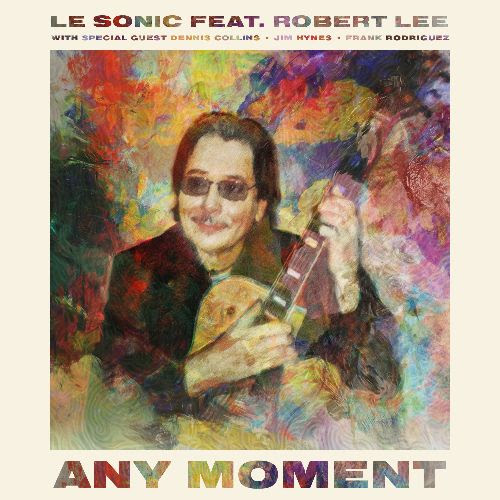
Le Sonic Feat. Robert Lee – Any MomentOver the years, Balderrama went on to play with Tex-Mex rocker Joe “King” Carassco and also fronted his own blues band and smooth jazz ensemble. Over the last decade or so Balderrama has partnered with Mysterians’ keyboardist Frank Rodriguez and has concentrated on the jazzy side of things. Under the moniker “Robert Lee Revue” he’s released two albums: For the Love of Smooth Jazz and City of Smooth Jazz. One of his compositions “Happy and Go Lucky” reached Top 30 on the Billboard Smooth Jazz Chart.

Currently, Balderrama has formed an alliance with multi-faceted songwriters/producers Mike Rogers and Gary Lefkowith. The duo call themselves Le Sonic and have created a legitimate modern jazz hit with the video and audio single “Any Moment.” The tune is based on a fairly simple two chord vamp that is hypnotic and seductive. Balderrama is a student of Wes Montgomery, George Benson, and Carlos Santana, and he weaves the essential melodic elements of said mentors into his silky smooth guitar lines. Rodriguez lays down a billowy bed of velvety piano tones that are the foundation of the tune. Topping things off are vocalist Dennis Collins and trumpeter Jim Hynes. Collins, who sings the ethereal song title’s refrain, has worked with Roberta Flack, David Bowie, Billy Joel, Al Green, George Benson and Bob Dylan. And Hynes can be heard on themes for Masterpiece Theater, CBS This Morning, NBC Sunday Night Football, and CBS Evening News.

“Any Moment” is vying for #1 spot on the various music industry charts, including Billboard, Media Base Smooth Jazz and Smooth Jazz Network.com . For more information on Robert Lee Balderrama just go to www.facebook.com/robertleerevue.

Album Review: Galactic Cowboy Orchestra – Flirting with Chaos

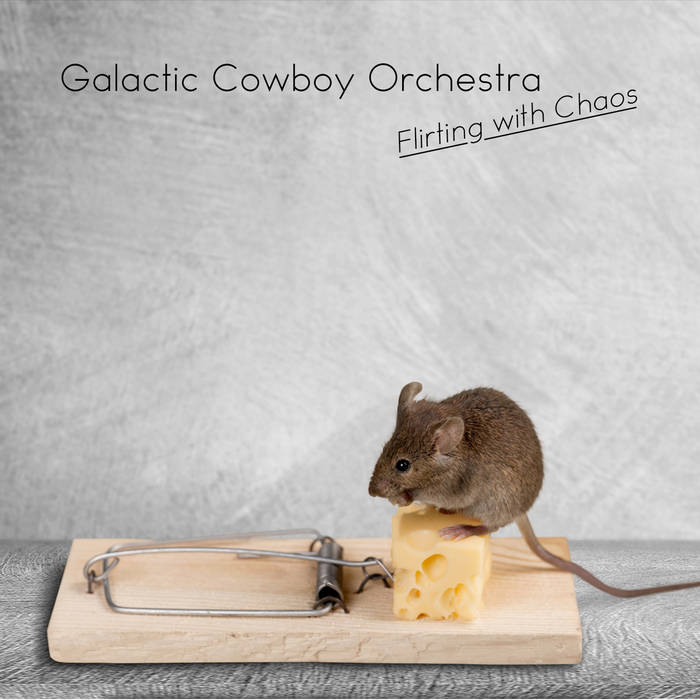
Galactic Cowboy Orchestra

photo courtesy of Media Stew Public Relations

Album Review of Galactic Cowboy Orchestra: Flirting with Chaos

Galactic Cowboy Orchestra‘s Flirting with Chaos is an experimental progressive rock album that pushes around the edges of prog rock, producing a collection that stimulates the mind as the music takes you in unexpected directions.

The opening song, the title track, kicks off with a dissonant wall of noise that quickly descends – ascends? – into a blend of riffs and a repetitive almost-hook amid what’s still primarily cacophony to those of us without a significant progressive bent. Having reviewed a broad variety of music over the decades, though, I totally get what they’re doing, and I know it means there’s some pretty cool music on its way – and, indeed, that’s the case here. Meanwhile, I also realize edge-pushing, knowledgeable musicians will absolutely dig it, enjoying its residence pretty far on the experimental outskirts of the rock ‘n roll spectrum. Beyond the hints at what’s to come, if you take only one other thing from the disc-opening track, it’s that near-hook musical progression that appears continually throughout the album. It’s the glue that holds this collection together, no matter what directions the individual tracks take.

Galactic Cowboy Orchestra – Flirting with Chaos

image courtesy of Media Stew Public Relations

Next, indeed, as expected, “All for the Taking” settles into a stride more appealing to a broader listenership. That near-hook from “Flirting with Chaos” actually reappears here as if it were foreshadowed, but it’s mixed into an almost prog-Blondie vibe, with some shredding guitar during the bridges, and the line “It’s all for the asking, for the knowing, for the taking” playing a prominent role.

The fiddling on “Triple S” add an Irish folk song vibe to the heavily percussive soundbed, whose steadfast progress gives way to flights of fancy during a two minute long early-to-mid-song bridge, giving way to a more frantic musical section, only really returning to the heavy nature occasionally, as other musical structures weave in and out. I’m not really sure exactly what the three Ss are in “Triple S” – low S, high S, and middle S? – but there are three distinct elements in the track.

The meandering nature and the exploring adjacent riffs, related runs, and different structural patterns continue throughout the album, though individual songs feature different musical densities and heavier or lighter song structures. For example, “Unresolved Discrepancies” exhibits a lighter, airier feel than the preceding tracks, marking a bit of a change. “21st Century Schizoid Man,” meanwhile, incorporates classic rock riffs and a punk rock attitude.

You’ll continue to recognize the cohesive style throughout the rest of the album, with subtle differences. “Jazz Crimes” bips and bops (that’s jazz terminology, right?) sparsely throughout, except for its occasional exploration of richer, fuller tones. “Woodshread” leans heavily into the violin’s most violent high end but mellowing into a more classic rock-influenced bass and guitar rhythm.

Vocals return on the second-to-last track, “No Stranger to the Fall,” which adds Bowie-like musical and vocal elements to the vocals portions, with crunchy guitar distortion and bumble bee-like dream sequences rounding out the mix before is circularly spins to its conclusion.

And “Flirting with Oblivion” closes things with a sound that’s akin to classic guitar rock noodling atop a chirping wall of sound that seems like it could be from an orchestra or recorders, though I’m sure it’s not.

In all, Flirting with Chaos is an interesting mix of influences melded into a cohesive whole throughout the album by some exceptional musicians. So, if you dig some musical, almost jazzy experimentation in your prog rock, these cats produce some really interesting soundscapes on Flirting with Chaos that’ll definitely be to your liking. And regardless of your musical tastes, as long as you like rock ‘n roll in some form, while you’ll need to be in a “proggy mood” to fully appreciate the album, I get the feeling a Galactic Cowboy Orchestra concert will be an awesome, enjoyably exhausting musical feast for the senses.

Looking Ahead

Though there’s nothing currently listed, but you’ll find upcoming gigs on the “Tour” page of the Galactic Cowboy Orchestra’s website or on the “Events” tab of the band’s Facebook page.

Single Review: Bridget Davis and the Viking Kings – “Highways”

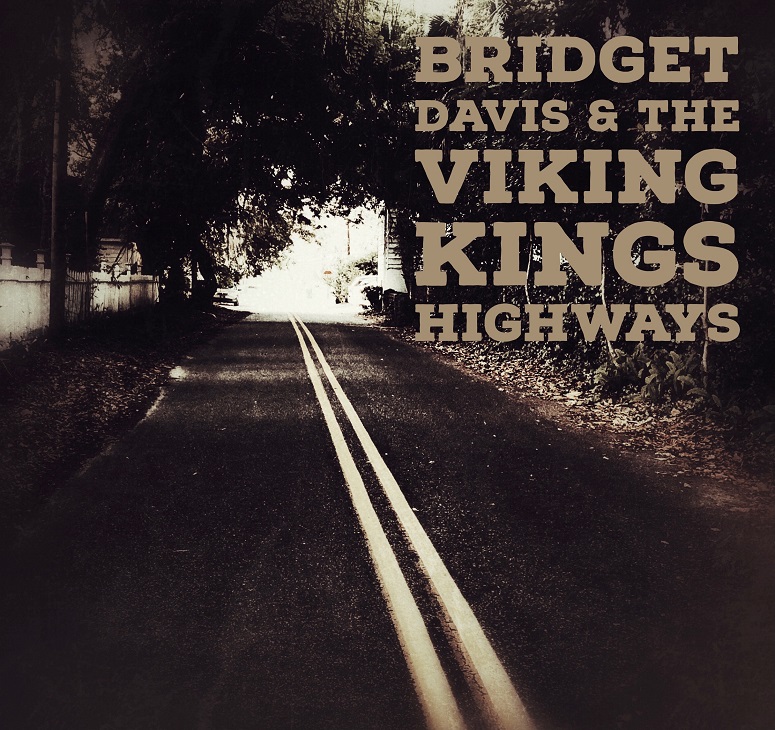
Bridget Davis & the Viking Kings – "Highways"

image courtesy of Bridget Davis

Single Review of Bridget Davis and the Viking Kings: “Highways”

We at the Blog are big fans of the unique, original, memorable style of Bridget Davis and the Viking Kings. They have an easily identifiable, pleasant, rolling, laid-back Americana style but with a constantly-present, persistent rhythm that varies from song to song yet makes even the most mellow song seem energized. Bridget Davis and the Viking Kings are the perpetual motion machine of Americana. And their songwriting and delivery style is such that, if you heard them on the radio, you’d say to yourself, “Self, it’s Bridget Davis and the Viking Kings.”

Well, it has been a while since BD and the VKs graced our headphones with something new, nearly five and a half years between I Wasn’t Planning on the End and the new single “Highways,” released earlier this year. In all that time, the band hasn’t missed a beat.

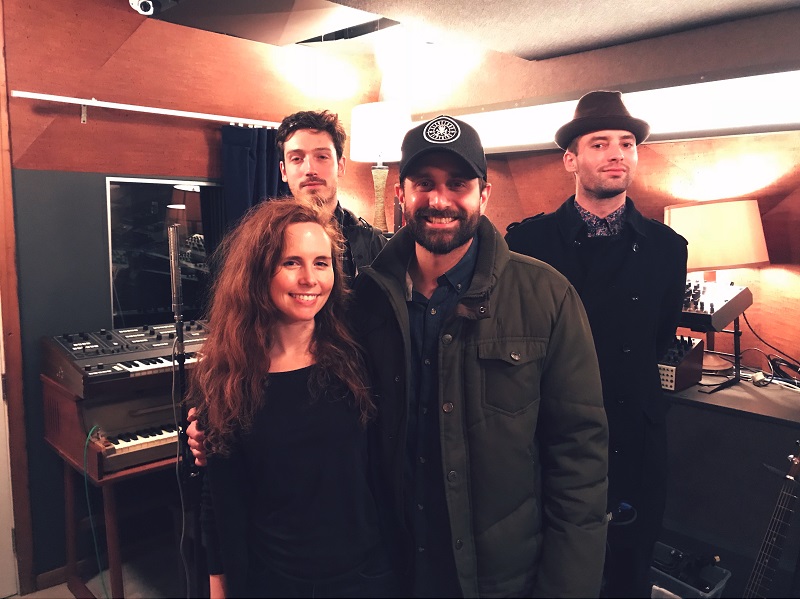
Bridget Davis & the Viking Kings

photo courtesy of Bridget Davis

Opening with a warm texture and bass-guitar interplay (cool to listen to on headphones, since they reside in different ears), “Highways” utilizes many of the ingenuities in the band’s familiar, favorite bag of tricks to support Bridget’s soft, sweet, yet surprisingly dynamic vocal style. Those familiar with the band’s previous work will find the tempo most similar to that of “Transient,” as “Highways” differs from much of the band’s song catalog in that it’s actually as slow-tempoed as its music makes it seem, though it’s sonically more kindred to the faster-paced “Elizabeth” or the slower-paced “I Wasn’t Planning on the End.”

In the end, “Highways” is a welcome reintroduction to Bridget Davis and the Vikings Kings’ easily recognizable, original, trademark sound. If you’re unfamiliar with the band, let this be your introduction. There’s a hint of folk styling and country-leaning Americana energy in Bridget Davis and the Viking Kings’ music, an energy built on and originality, tempo, detailed songwriting, and deliberate performance structure that will appeal to a broad swath of musical tastes. To the band: Welcome back to our playlists. We’ve missed you.

Looking Back

Those who have been with us here at the Blog from the beginning will remember our other two Bridget Davis and the Viking Kings reviews. First, I reviewed one of their live Rockwood Music Hall shows as item #8 in my 9-part “Road Back to Music Journalism” series, in which I chronicled events that led me back to writing – and starting this blog – after a dozen years away. A few weeks later, I reviewed their album I Wasn’t Planning on the End. So if my review of this song interests you, be sure to check out the other words I’ve written about this talented ensemble.

Looking Ahead

Bridget Davis and the Viking Kings hinted in this Facebook post this spring and confirmed with me just recently via e-mail that there is more music coming; “Highways” was just one of several songs recorded live at the Figure 8 Recording studio in Brooklyn. They’ll likely be released one at a time in advance of an eventual EP release. Whether the songs are released individually or all at once, we can’t wait to hear them!

Single Review: Kristian Montgomery & The Winterkill Band – “Secret Watering Hole”

by Eric Harabadian, Contributing Blogger

Single Review of Kristian Montgomery & The Winterkill Band: “Secret Watering Hole”

Boston-area singer-songwriter Kristian Montgomery is not one to let grass grow under his feet. When the pandemic hit in full swing last year he dove into his inner psyche and soul, coming up with enough fresh material for an album’s worthy triumvirate of creative output. The result of that labor resulted in 2020’s The Gravel Church, 2021’s Prince of Poverty, and the soon-to-be-released A Heaven for Heretics in January 2022.

Kristian Montgomery & the Winterkill Band – "Secret Watering Hole"

photo courtesy of Kristian Montgomery

Surely, Montgomery’s blend of reflective blues and country rock songs combined with his rich, slightly worn and emotive voice is starting to catch fire with fans and critics alike. Montgomery was recently nominated by the prestigious New England Music Awards on the strength of his Prince of Poverty release. “Secret Watering Hole” is a brand new single from the aforementioned upcoming A Heaven for Heretics and continues his blend of an Americana aesthetic, mixed with vivid imagery and detailed storytelling. The song is draped in southern gothic charm and Cajun-laced magic. References to New Orleans and Mardi Gras are supported by a soothing bed of layered guitars and a relaxed, swampy back beat. It’s kind of a meeting of classic styles that match the melodic poetry of The Band, with the groovy laid back sounds of The Allman Brothers Band.

“Another crawling out of the American gutter record” is a quote, found on Montgomery’s own bandcamp page, in response to his last full-length release. Other references to his current single and his previous catalog suggest the slightly outsider world view of like-minded compadres such as The Highwaymen, Sturgill Simpson, Steve Earle, Townes Van Zandt, and Chris Stapleton.

The current single “Secret Watering Hole” was produced by Joe Clapp at Ultrasound Studios and captures a sound and mood that is contemporary, yet intimate and timeless.

Looking Ahead

Of course, the album A Heaven for Heretics, which contains “Secret Watering Hole,” is scheduled for a January release. [I’ll be writing that review on or after the album’s release date. -GW] Also keep an eye on the “Events” page of the band’s website for future performances and on the band’s Facebook page for the latest news about Kristian Montgomery & the Winterkill Band.

Single Review: Eliza Neals – “Sugar Daddy”

Eliza Neals w King Solomon Hicks

photo courtesy of E-H Records LLC

by Eric Harabadian, Contributing Blogger

Single Review of Eliza Neals: “Sugar Daddy” feat. King Solomon Hicks (E-H Records)

They call her the “Detroit Diva.” And, indeed, blues rock singer-songwriter/keyboardist Eliza Neals proudly wears that title as a badge of honor. The opera-trained blonde bombshell has been on the international music scene for more than two decades. She is a true independent artist, with a series of critically-acclaimed R&B-flavored albums to her credit. Neals has shared the stage and collaborated with such luminaries as Buddy Guy, Kenny Olson, Joe Louis Walker, Popa Chubby, Howard Glazer, and a host of blues and rock greats.

No doubt, however, perhaps her biggest influence can be found in frequent co-writer and mentor Barrett Strong. Strong, of course, is a legendary singer-songwriter that made his mark, first at Berry Gordy’s Tamla Records. His iconic “Money (That’s What I Want)” was the company’s first big breakout hit. The prolific tunesmith went on to write a series of songs for Gordy’s subsequent landmark enterprise Motown Records. “ I Heard it Through the Grapevine,” “War,” “Papa Was a Rolling Stone” and “Ball of Confusion (That’s What the World is Today)” are just some of the chart toppers he and fellow composer/producer Norman Whitfield conceived within those hallowed studio walls.

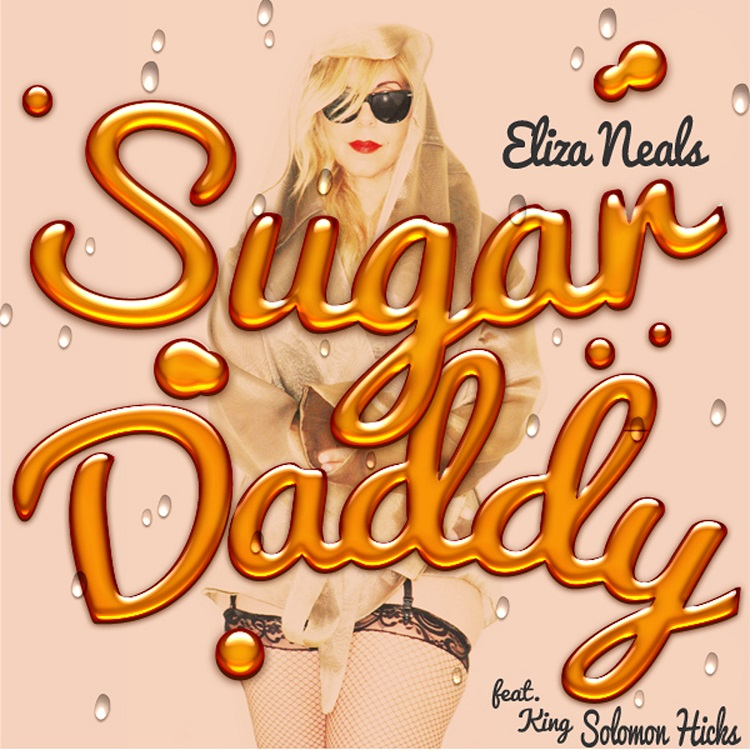
Eliza Neals – "Sugar Daddy" feat. King Solomon Hicks

image courtesy of E-H Records LLC

That little history lesson brings us to today’s single at hand; the feel good summer of 2021 smash entitled “Sugar Daddy.” The tune was originally written by Strong, but re-arranged, with additional lyrics by Neals herself. The song features young NYC jazz/blues guitar sensation King Solomon Hicks on backing vocals. Michael Puwal (tremolo guitar/additional drums), Chris Vega (bass), Michael Galante (drums), and Tyrone Smith (Hammond B3/saxophone) round out this first rate band. It’s a light-hearted kind of tale that focuses on a relationship from an, appropriately, female perspective. In it Neals sings: “Well, I’m just a girl, and you know that I look real fine. But I love that man, he drive me outta my mind. He puts his lips to my ear, said what I love to hear… I’ll be your sugar daddy, you’s my man!” It carries on with that pseudo-romantic track for a minute, but then, when Neals finds her man fooling around with someone else, the tables get turned quickly in the bridge. She exudes gritty comeuppance, with the lines, “I take his money and I go and I play the town, and he knows my love ain’t true. People all say he should put me down. He’s a fool, he’s a fool, he’s a doggone fool!”

“Sugar Daddy” has a lot of bite and bluesy bravado, thanks to Neals’ raw, soulful vocals and Hicks’ stinging Robert Cray-like riffs. He lays the groundwork for the song’s balance of good-natured free-spirited fun and serious house rockin’ street cred. The tune has been a staple on Sirius XM’s BB King’s Bluesville channel since this past July. But that’s nothing new for the “Detroit Diva.” She’s been in consistent rotation on that pivotal blues network since her seminal Breaking and Entering album hit the charts in 2015. “Sugar Daddy” simply continues that groovy path of excellence for the incomparable Eliza Neals!

Looking Ahead

Eliza has a few upcoming shows listed on the “Shows” page of her website. On Saturday, December 18th, she’ll be at the South Orange Performing Arts Center in South Orange, NJ. On Saturday, February 12th, she’ll be performing at the Cincinnati Winter Blues Experience II in Cincinnati, OH. On Tuesday, April 26th, she’s scheduled to perform at the iconic 100 Club in London [where I saw Bob Malone in 2015 – GW]. And on Saturday, April 30th, she’s be at Jamey’s House of Music in Lansdowne, PA. Be sure to check Eliza’s website for more details on those shows and others as they’re scheduled.

Single Review: Lina Cooper – “What I Gave to You”

Lina Cooper

photo by Joe Welkie; photo courtesy of Lina Cooper

Backstory

Lina Cooper initially reached out to me back in the summer of 2020 during a period when I wasn’t writing many reviews (and had a years-long backlog) in advance of the release of her single “This Time,” and I was blown away by her vocals and songwriting. It was a catchy, poppy, memorable song structured much like you’d expect from Taylor Swift, well-suited to Lina’s sweet, high vocals. Of course, I didn’t review that song, but when I was on a bit of a writing spree and was churning through my review backlog this spring, I reached out to inquire about what she was working on now (at the time). The answer was, of course, “What I Gave to You.”

Single Review of Lina Cooper: “What I Gave to You”

Lina Cooper – What I Gave to You

image courtesy of Lina Cooper

Lina’s exceptional talent shines again on “What I Gave to You.” Softer than the song that initially hooked me, “What I Gave to You” leans into Lina’s high, emotionally expressive voice. Storytelling verses serve as a tempo-changing, volume-varying canvas, all leading to “What you gonna do when all you have is what I gave to you.”

Simple guitar-picking and thin vocals open the song, with additional orchestration and a fuller music bed joining as the vocals and lyrics intensify. For the vocal structure, well-placed, emotionally cracking lead vocals are paired with full background harmonies as the music soars. The song is a musical journey with a key, memorable line for listeners to sing along with during the chorus. That’s the formula for a sneaky earworm of a song, one that’ll grow on you more and more with each successive listen.

Lina Cooper

photo by Joe Welkie; photo courtesy of Lina Cooper

Other Singles

“What I Gave to You” was preceded by “Ethereal,” more stylistically similar to “This Time,” and the rather more disturbing, musically aggressive, almost noir-ish “If You Ever Leave Me” (which has an accompanying horror-style music video).

Other 2021 releases have been an acoustic version of Lina’s “Here to Stay” and the latest single, groovy, punkish, garage rockin’ “AFANASY.” You’ll find a long-form “short musical film” featuring/leading into “AFANASY” here on YouTube.

Lina’s a versatile talent. A good singer and songwriter whose range covers a lot of musical ground, tying it well to her very specific, mainstream radio-friendly voice. It’s time to climb aboard the Lina Cooper bandwagon now while there are still a few prime seats available.

Looking Ahead

There are currently no upcoming shows listed on the “Shows” page of Lina’s website, but check back periodically to find out when you can catch a live performance.

Album Review: Richard X. Heyman – Copious Notes

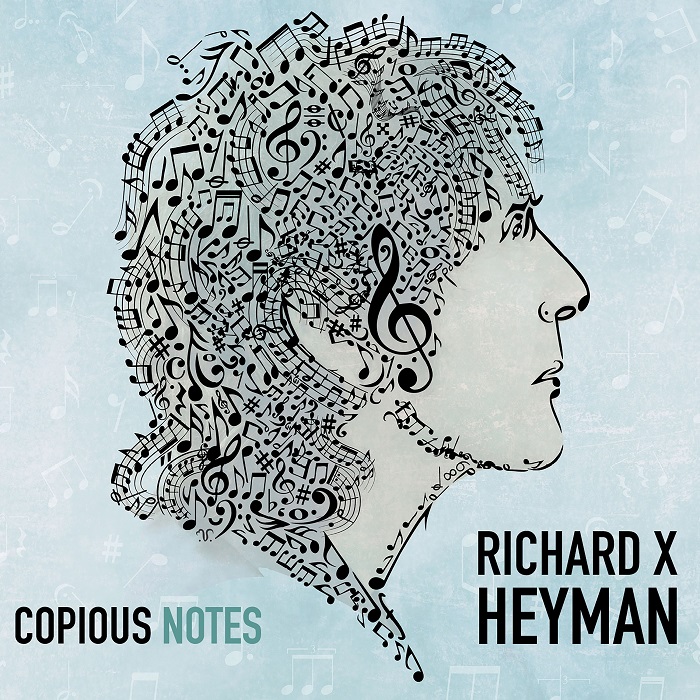
Richard X. Heyman – Copious Notes

image courtesy of Howlin’ Wuelf Media

Album Review of Richard X. Heyman: Copious Notes

Richard X. Heyman is an American pop-rock songwriter. And, of course, a great performer of his own songs. I’ve reviewed Richard’s music a couple of times already here at the blog. I reviewed Incognito, a couple albums removed from his new release, and I reviewed the first single from Copious Notes, “Choices We Make.”

He starts the disc with the echoing angelic church-like harmonies that kick off “Nearly There,” a typically RXH uptempo, cheerful number steeped in timeless pop harmonies and hooks. Drawing from the fifties and sixties for his rock ‘n roll song base, Richard’s songs are melody-driven and fun to listen to.

The second song on Copious Notes is “Choices We Make,” which I previously reviewed, with its big hook in the chorus. It’s a hopeful song, released just ahead of the 2020 U.S. election, with its election theme apparent from the accompanying images in its YouTube video, though the underlying message could easily be applied across broad subject matter.

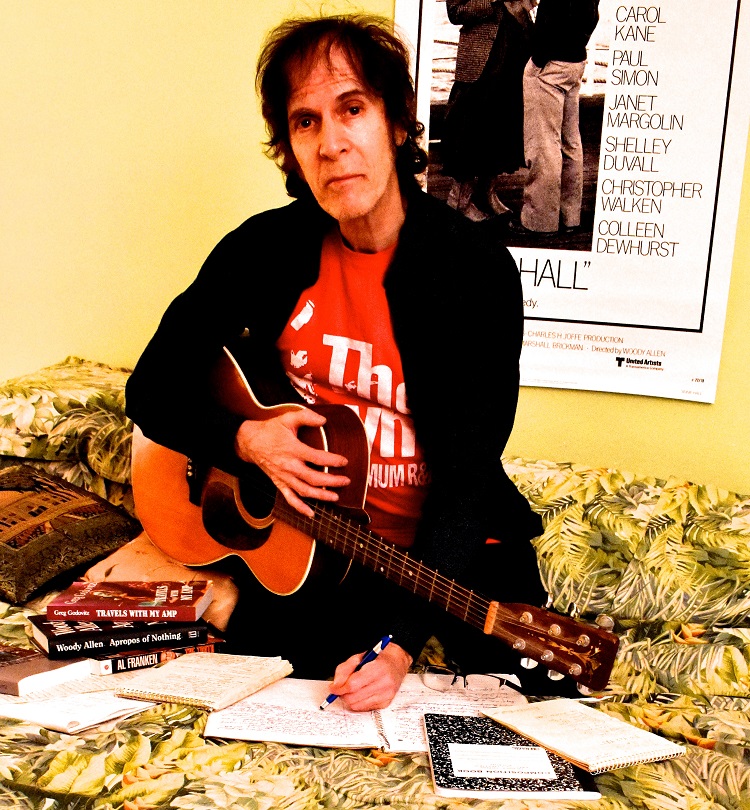
Richard X. Heyman

photo by Nancy Heyman; photo courtesy of Howlin’ Wuelf Media

You can tell a great pop song by the way it grabs you from the very first note, and the next track, “Tell Me When,” does just that. Very sixties-styled almost folk-influenced – or maybe in parts Irish folk song-like – in its stylings, the song is a cheerful, extra-uptempo number that’s fun to bounce along to.

Richard slows things down and mellows at times, too. The next song, “Cedarbrook Park,” for example, flows, floats, and soars, but it all feels a bit intentionally off-kilter, like a melancholically haunted memory.

“Sink or Swim” follows. It’s at least partially horn-powered and energetic, like you’d expect on an old-time dance party TV show, with the dancers doing a swim move during the chorus, at least.

Next up, “Oval” brings back the mellow, before “The Truth,” while still with a softer edge, is a rare Copious Notes song that pushes the tempo and level consistently throughout without catching its breath.

“But Our Love” is a soaring song as if a folk-styled, mellow number pulled straight from the early ’70s airwaves… or a love-in concert in the park from the same era.

“One and All” adds a psychedelic vibe that’s there throughout but most prominent in the bridge, while fun and catchy “Return to You” brings back the old-fashioned rock and roll bounce and harmonies, replete with background “oooohs” and “ahhhhhs.” I also dig the cool organ noodling at the end, leading to the fade-out.

Penultimate track “Ransom” sports that early ’70s rich, plush vibe and songwriting style, while ’50s/’60s-style, swingin’ rock horns open the timeless rock ‘n roll number “Greater Good” with its early ’70s message, melding three decades of rock ‘n roll influences to close the disc.

It’s sometimes hard to review a Richard X. Heyman album because there are only so many ways you can write “this is a catchy, timeless, song-driven pop-rock song,” but that description would fit virtually every song on Copious Notes, though different tempos, influences, and songwriting styles give each song an individual identity among this cohesive whole.

Richard X. Heyman is a consistently good songwriter who delivers dependably enjoyable, timeless pop-rock albums. So give Copious Notes a listen and then dig into some of his prior releases, which you’ll likely dig, as well.


Album Review: Jesse Terry – When We Wander

Jesse Terry

photo by Alex Berger; photo courtesy of Michael J. Media Group

Album Review of Jesse Terry: When We Wander

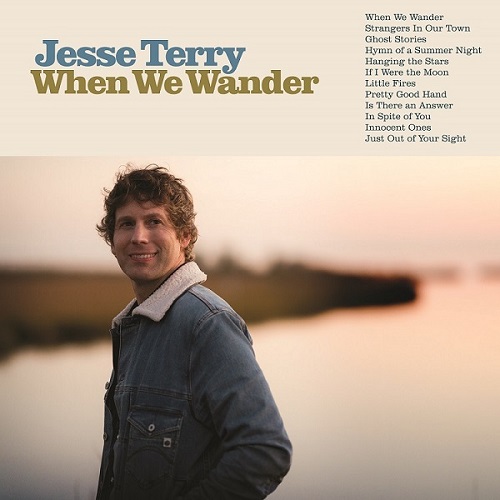
His voice. His delivery. His lyrics. But oh, my god, that voice. With When We Wander, Jesse Terry has delivered a timeless, relatable, emotionally connecting album, varied in style, that’s an instant classic. At least, it’ll be an instant classic if you hear it, so give it a listen.

Jesse Terry – When We Wander

image courtesy of Michael J. Media Group

An appealing mix of folk, country, and rich, warm soft rock, When We Wander sits on the radio-friendly edge of singer-songwriter fare. And there’s something everyman about Jesse’s voice, at times recalling John Mellencamp, Tom Petty, perhaps a hint of Bob Dylan, and just about any other singer with a bit of hoarse gravel in his voice, though Jesse’s songwriting about the experiences of everyday life more often bring forth comparisons to Mellencamp.

The title track, “When We Wander,” kicks things off with a folky strum, but you’ll soon discover that’s just one of many influences, as this, like most of the album, are a meaty folk-rock-country mix, falling my onto the soft rock side of Americana. There’s a rich tone, a hint of scratch – not exactly gravel – and a time-worn knowing lilt to Jesse’s voice. There’s also an attention to detail – on this song and on the album throughout – that distinguish this as a major-league recording. Little guitar flourishes, weepy slides, the extra drum beat. Jesse Terry is big-time, with a voice and delivery expansive enough to fill a concert hall with intimate, reflective, storytelling songs.

Jesse Terry

photo by Alex Berger; photo courtesy of Michael J. Media Group

“Strangers in Our Town” is one of those mid-tempo numbers that brings on a strong Mellencamp comparison. Stylistically, Jesse has his own unique spin, leaning a little more country but still a solid hometown pride number that’ll reach you deep inside, right where you live, and make you feel good.

“Ghost Stories” follows, bringing the melancholy, with a sad tone of remembrance, fittingly haunting to this slow number.

The mood doesn’t stay low long, though, as “Hymn of a Summer Night” has a playfully energetic bounce. Like “Ghost Stories” before it, it’s a look back, but this is a tale wrapped around fondness, affection, and complicatedly warm memories of a hometown. One of the neater verses recalls “All of us met on the banks when we got older, figured it was time to get out. But one by one, we came crawling back. There’s something about this simple river town.” It’s a song that’ll make you remember where you’re from, whether you stayed, left and returned, or exited for good.

Jesse Terry

photo by Jess Terry; photo courtesy of Michael J. Media Group

Jesse weaves in and out of uptempo happiness, slow sadness, and melancholy in-between though tales of recollection and stories of times gone by and yet to come remain a familiar theme.

One of the other standouts on this album is “Little Fires,” a mid-tempo tune full of real-life strength and struggles: “There’s little fires outside my window, little fires out of the corner of my eyes, little fires beneath the surface. I can’t put out these little fires.” Of course that’s mid-song. There’s set-up before, and more noodling and a bit of resolution afterwards. Of course. That’s Jesse’s strength… and, maybe, burden. He’s a storyteller.

Jesse Terry

photo by Neilson Hubbard; photo courtesy of Michael J. Media Group

It’s followed by an uplifting number, one that’ll help the listener – and it seems to help Jess – appreciate life, with lyrics that culminate in the chorus’ key phrase: “I’ve got somebody who understands, and that’s a pretty good hand.” The song has a nice country rhythm, what I sometimes refer to as a “git-along beat,” just bouncing along throughout, keeping the mood up, signaling that the guitar-slide is more reminiscent than melancholy, one of my favorite little tricks in this sort of mid-tempo, country-flavored song.

Jesse gives the album a soft, sweet, warm landing with the thoughtful “Just Out of Your Sight,” a both the album and the listener sway the disc to a close.

The rest of the songs are also worthy of mention, but they’re all within the themes and styles I’ve discussed already, so I’d just be repeating myself. Throughout, though, When We Wander is stylistically cohesive yet varied enough and sequenced well, making for an enjoyable beginning-to-end listen.

Looking Ahead

You can catch Jesse live in the Northeast in December – in Plymouth, MA, Stroudsburg, PA, Cortlandt Manor, NY, and Stonington and Middletown, CT. He’ll be in Mobile, AL on January 6th before spending the next few weeks in Florida. He has dates spanning from coast to coast in 2022, and some European dates in October and November 2022. So be sure to check the “Tour Dates” page of Jesse’s website for dates, times, locations, and ticket links for performances near you.