Single Reviews: Brian Muratori – “Jagged Edge” and “Endless Summer”

Brian Muratori

image courtesy of Brian Muratori

Single Reviews: Brian Muratori – “Jagged Edge” and “Endless Summer”

The Backstory

I’ve known Brian Muratori for decades. When we were both “under 21” we used to hang out at the same all-ages dance clubs in West Michigan. Of course, back then, he wasn’t a professional singer, and I wasn’t a music journalist. His first professionally-recorded album, The Italian Rocker, was released a couple years before I started writing reviews. (The dude’s younger than I am; he just got an early start.) I did eventually get a chance to review one of his recordings, his “Starting Over” cassingle, for Geoff Wilbur’s Renegade Newsletter in the mid-’90s. (I’m pretty sure it’s been decades since I last typed the word “cassingle.”) Well, the cool thing is that Brian and I are both still at it, continuing to ply our respective trades in the music business.

Brian Muratori

image courtesy of Brian Muratori

The Review

Stylistically, Brian’s voice is that of a top-flight lounge crooner, a performer with a firm grasp of all the pop, soft rock, and pop-rock vocal stylings necessary to make an evening of music into a fun, memorable event. Brian has released several singles over the past year. I’ve chosen to review two that are representative of his skills – one from Brian’s At the Hollywood Party collection and the other his most recent, post-Party single. The first, “Jagged Edge,” was released in late 2022 and is included on Brian’s At the Hollywood Party album on Spotify. The other single, “Endless Summer,” is Brian’s most recent release; it dropped – fittingly for a “summer” song – late in the summer, just a few weeks ago.

“Jagged Edge,” kicks off with light, classic soft pop-rock power-synth and a pleasant rhythm, and it’ll soon have you bopping along as well-placed oohs and ohs complement Brian’s groovy delivery, with his insistent vocal build-up leading into smooth choruses.

Brian Muratori

photo courtesy of Brian Muratori

“Endless Summer,” meanwhile, begins with a beach-pop chorus of “oohs,” leading to soft adult contemporary verses and chorus, with occasional dancing guitar riffs adding color and flavor. This cool summer number is an updated, groovy throwback tune that harkens back to soft rock’s heyday.

“Jagged Edge” and “Endless Summer” are fun songs, and Brian’s voice can carry them well, mustering up all the storytelling nuance necessary to deliver a great final product. They’re convincing proof that “an evening with Brian Muratori” would be a fun live event. While I picture an upscale night of dinner an crooning, his style would also play well in an intimate theater or smoky barroom setting, if smoky barrooms were still a thing. These tunes would also be well-placed in Hallmark movies, likely with some crisper, less jagged production to help them blend more easily into the soundtrack.

In the end, these singles – and Brian’s other songs, some of which you’ll find on Spotify – paint a picture of a talented, modern-day crooner, and I’m pleased to hear Brian carrying on that fine musical tradition. Stylistically, Brian’s music is well-timed to take advantage of the existence of the yacht rock genre, into which his music fits easily.

Beyond These Songs

If you dug the two songs I reviewed, other standouts I’d recommend to yacht rock fans include Brian’s 2022 single “You Had to Go and Change on Me” and, from At the Hollywood Party, “Alligator Drive” and “Ooh Baby I Think You’re Driving Me Crazy.”

Looking Ahead

Brian Muratori’s Facebook page would be a good place to start if you want to remain abreast of new single releases and other artist news. You can also find new songs, as they’re released, on Brian’s Spotify and Bandcamp pages.
Album Review: Burnt Out Wreck – Stand and Fight

Burnt Out Wreck

photo courtesy of BJF Media

Album Review of Burnt Out Wreck: Stand and Fight

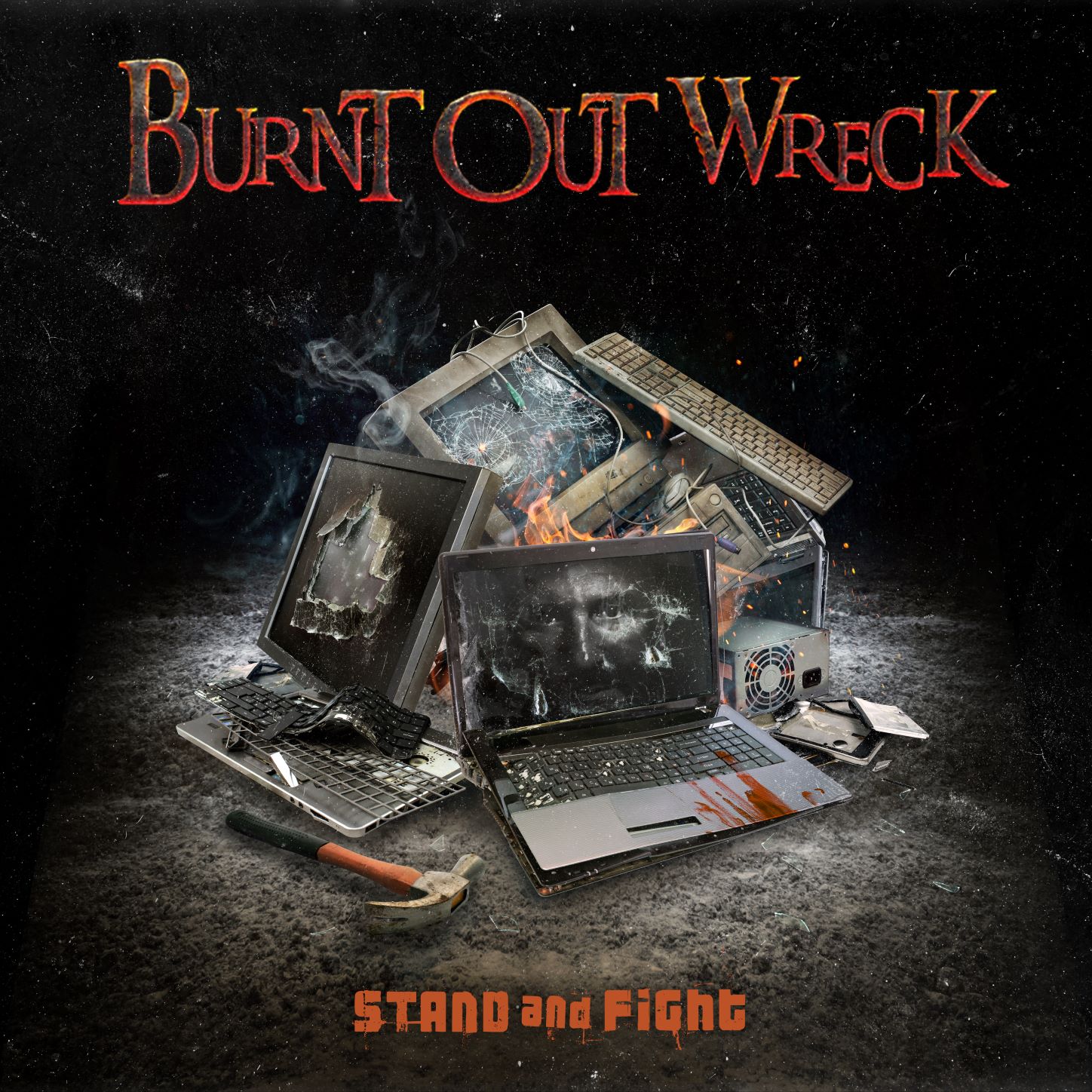
Burnt Out Wreck delivers guitar-driven, powerful melodic hard rock reminiscent of Judas Priest and AC/DC, particularly those bands’ more melodic offerings. Any ’80s-style hard rock fan is gonna love this disc. And the band gets bonus points for its ’80s “pedigree” – frontman Gary Moat was the drummer in ’80s rock band Heavy Pettin. Though not an arena-filling headliner back in the ’80s, at least not in the U.S., Heavy Pettin was a band we were all aware of and respected. Beyond ’80s rockers, others who may enjoy this album (and this band) are those who dig catchy songs and crunchy guitars.

Stand and Fight kicks off with a chunky classic rock guitar riff on repeat, joined soon thereafter by Moat’s gravelly hard rock vocals and a steady, forceful rhythm section, launching into fun album opener “Big Up Yourself,” setting the stage for the rest of this top-shelf “new classic” hard rock disc. The songs have a familiar, comfortable style, performed with the enthusiasm and attention to detail that will make this recording a worthwhile addition to your collection (and your album rotation).

Burnt Out Wreck – Stand and Fight

image courtesy of BJF Media

There are a couple songs that’ll have you singing along rather embarrassingly, and hooky title track “Stand and Fight” is the first of them. Steady verses are laced with persistently insistent guitarwork that ratchets up tension, leading into the song’s chorus with its fun, oft-repeated lyric – one you’ll unconsciously sing before realizing it; then you’ll look around hoping no one heard you sing “Stand and fight, just kick ’em in the balls…” There’s some cool axework in here, too, with solos serving as apt bridges, that’ll make this one of your favorite songs. Just be cautious about when and where you listen to it in public.

From first song to last, the album is all relatively straightforward – and unflinchingly straight-line – melodic hard rock, but various rhythms and guitar hooks keep things fresh. A three-song sequence early in the disc is a good example of the song-to-song variance: “Lion” sports a more sidewinding rhythm and limits backing instrumentation during some of the verses; “Ain’t Done Nothing Wrong” begins with a bit of an echo that suggests open spaces before launching into its distinct rhythm guitar riffs that vary consistently throughout the song; and “More Than Anything” utilizes a slightly faster pace to set itself apart.

You’ll have your own favorites on this disc. Mine are the first two tracks, “Big Up Yourself” and “Stand and Fight,” and disc-ender “I’m a Loser Too,” and not just because it’s embarrassing to be heard singing along to the title lyric, which I guarantee you won’t be able to stop yourself from doing. There’s an almost country twanginess mixed in with more obviously bluesy rock guitarwork than found elsewhere on the album. It stands out in part because of its stylistic difference, but it’ll also draw you in with its fun lyrics (such as, “I’m in a bar drinkin’ whiskey, she’s kind of cute for her age…”) and its end-of-the-night, the-bar-is-closing vibe. Yeah, the album’s over, and you don’t have to go home, but you can’t stay here. Or you can just stay where you are and replay the album from the beginning again. It’s a great new classic rock record and a heckuva fun listen from beginning to end.

Looking Back

This is the third Burnt Out Wreck album I’ve reviewed at the Blog. Be sure to check out my 2017 review of Swallow or my 2020 review of This Is Hell for more Burnt Out Wreck content. In fact, one reason this review is comparatively short is because I’ve already written two previous reviews and am beginning to run out of adjectives to describe the band’s sound; I’ve said it all before. If you’re a classic hard rock fan, particularly of ’80s-style melodic hard rock, and especially of the bands in that category with crunch and bite to their music, then you owe it to yourself to have Burnt Out Wreck’s albums in your collection.

Looking Ahead

The “Events” tab of Burnt Out Wreck’s Facebook page lists a couple of upcoming shows in the UK: Saturday, November 18th at The Yorkshireman Rock Bar in Sheffield and a June 14, 2024 show at Axminster Guild Hall in Axminster. Burnt Out Wreck is also scheduled to appear at the Highway to Hellfest in Glasgow, Scotland in February 2024. And watch Burnt Out Wreck’s social media feeds for more dates as they’re added. For example, the band’s Twitter feed also mentions an early November appearance at Hard Rock Hell.

Album Review: Noise Floor Delirium – Life Street Closed

Noise Floor Delirium – Life Street Closed

image courtesy of Noise Floor Delirium

Album Review of Noise Floor Delirium: Life Street Closed

Noise Floor Delirium is a Chris Gleason side project. Of course, I’ve reviewed Chris’ band Los Goutos at the Blog. I’ve not (yet) reviewed Chris’ other band, the Sado-Domestics. And this, of course, is a Noise Floor Delirium review. On Noise Floor Delirium, Chris is joined by Jimmy Ryan (mandolin) for “Coming Apart” and by Lucy Martinez (vocals) for “Luck Comes Last” but is otherwise responsible for all of the music, lyrics, instruments, vocals, engineering, mixing, and production on Life Street Closed.

Of course, Chris’ bands’ music is never simply straightforward, so why would you expect any differently from this project? I’ll begin the review with a 50,000-foot overview of the album: It’s an engaging, intriguing collection of offbeat, grainy-lensed, slightly funhouse-mirrored Americana. And, though I can’t flesh out all of the details of a storyline – this isn’t helped by the fact that the vocals are so embedded into the soundscape that I forget to pay attention to them while enjoying the music – Life Street Closed seems to be a concept album along the lines of Pink Floyd’s The Wall, but without the accompanying film, which might be more related vignettes than a storyline but would still be worth watching. The album is clearly a well-crafted labor of love for Gleason, a project that earned Noise Floor Delirium a New England Music Awards nomination for Americana Act of the Year.

The album kicks off with an ominously Deliverance-esque “Matilda Stomp (New Chemirocha Blues),” with its banjo-ey twang and heavy stomping beat. It’s also exceedingly memorable, one of the songs on this disc that’ll stay with you.

The creepy-music factor gets amped up even more on the next track, “This House Isn’t Haunted Anymore,” which is another you’ll find stuck in your head for days. Thanks to the foreboding music, I don’t believe the song title. This song is a slower, quieter creep with vocals that are spoken-sung so quietly you’ll find yourself leaning in to hear them.

“Mendacious Alibi,” next, slips into a cool lo-fi blues vibe, with a steady rhythm that, perhaps subconsciously spurred by the “end of the road” lyric, suggests a slow-moving highway traveling song. I picture the road dark and wet, though that visual may simply harken back to the picture on the album cover. As a nifty bonus, I think I hear a little slow-jamming Tom Petty in the song’s guitar and pace, too.

“Marsh Marigolds” seems to rise from the ashes, with the music mimicking the sun coming out following a rainstorm – this despite, or perhaps because of, lyrics like “all of our demons are near” and “hell is empty this year.” My first inclination was that this song had some raw Beatles-ish elements, and it does, but it will mostly give you big-time Pink Floyd vibes.

“Coming Apart” follows, a more light-touch, country-styled Americana number, driven by finger-picking, a slightly hillbilly tempo, and some light blues-rocking distorted guitar in key spots for emphasis.

“Back-Talking” continues the bluesy vibe but returns to the album’s haunting motif. It’s a great transition song for the album, and though its role in this collection is as a progressive album track that deftly moves the record forward and includes some neat musicianship, you’ll absolutely find yourself drawn into the lyric “Not talking smack, just talking back.”

After “Back-Talking” cleanses the musical palate, the subsequent “Bottom of the Sea” reveals an eerie, Americana tumbleweed vibe, again recalling The Wall or some of Bowie’s spacier work. “Nine-Tailed Fox” paints a similar musical color but with a slightly different rhythmic brush atop a more motivated beat.

The disc ends with “Luck Comes Last,” which feels like the conclusion of a story. Or of an album. It’s a slow-paced song, similar to “Marsh Marigolds” or “Bottom of the Sea,” with a musical slow-build that suggests the clouds are opening once again after the storm has passed.

With so much stylistic variance, you’d think this album might lack cohesion, but there’s a familiar sonic landscape underpinning every track, resulting in a sound that provides quick identification of each song as part of this particular Noise Floor Delirium collection.

More Recently

As noted, Noise Floor Delirium was nominated (and is a finalist) for the New England Music Awards in the “Americana Act of the Year” category. Voting for the New England Music Awards runs through tomorrow, October 1st.

Looking Ahead

One of Chris’ bands, Sado-Domestics, has announced plans to release a new album this fall.

Album Review: Dreadnaught – Northern Burner

Dreadnaught – Northern Burner

image courtesy of Dreadnaught

Album Review of Dreadnaught: Northern Burner

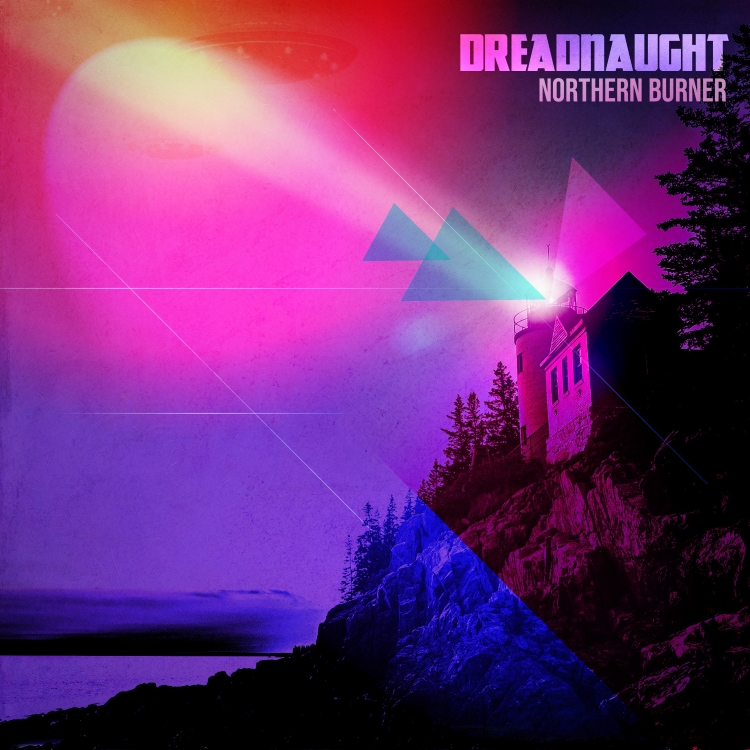
Maine experimental progressive rockers Dreadnaught return with this all-instrumental production, Northern Burner. The disc dropped in December 2021, celebrating the band’s 25th anniversary. For those who like their progressive rock playful and weird (hence the term “experimental”), Dreadnaught is the poster child for that musical subgenre. And, once again, with the release of Northern Burner, the band has unleashed an album that seems interesting at first and then rewards those who will afford it multiple listens with song-to-song familiarity turned on its ear via unexpected twists and turns.

On disc-opener “Pink Light,” there’s a thumping bass setting the baseline (bassline?) for the layered guitarwork with distortion slathered on top. “Pig and Pony” opens things up a little bit early on, though that airiness is filled with an electronic recurring ditty and, again, that thumping bass.

“Rum Cake,” though quite short, is a haunting journey as if down a long hallway, stumbling along… perhaps looking for rum cake? Or maybe after having a bit too much rum cake? Or just too much rum?

It leads into the 8-minute-plus “Monsignor Bananas,” which seems to assemble musical phrases from all of the previous songs, and, while it diverges into a variety of different directions, the song periodically returns to previously introduced musical themes. It’s also worth noting that, as can so often be the case in longer-form Dreadnaught songs, this, the longest track on the disc, sports dramatic tempo and mood swings.

“Fantasy in a Pink Light” is the spaciest song so far, very airy and open, with the sounds of wisps and softly played instruments echoing as if in a big, nearly-empty concert hall, slowing things down so much that the song is either a palate cleanser or a test to see if the listener will drift off to sleep and miss the rest of the album.

It leads into “Sundown at the Barnyard,” which, with the way it starts slowly and picks up energy, seems to almost mimic sunrise at the barnyard (oh, so close!), with the energy picking up and building toward a climax as the song carries on – again, repeating instrumental themes found in previous songs. Less than halfway through the song there’s an almost psychedelic rock guitar solo that stands out, if only because it resembles earthly music on an album that’s almost entirely ethereal and otherworldly. Of course, if you’ve learned to expect anything from Dreadnaught’s music while reading this review, it’s that the psychedelic guitar will return. It does return later in the song. And near the end, “Sundown…” makes another transformation, providing a sequence that channels a square dance. Not just the square dance music, the entire dance.

“Pony and Pig” opens mostly rhythmically before finally recalling the main themes of “Pig and Pony” about halfway through. The song becomes more expansive as it moves along, as if turning a small listening room-type musical theme into an expansive one suitable for an amphitheater. Interestingly, Dreadnaught chooses to close the song with a big Hollywood-style musical close.

Album-ender “Throwing in the Towel” has the sort of expansive, “well that was fun” flavor of a closing credits number from a movie, fading out to signify that the show is over. Get up from your seats and go home. Of course, if you’re already home, maybe go to the fridge and get a snack.

In the end, if you’re open to the more experimental, cutting edge of music, Dreadnaught’s music will grow on you. Or it may just never strike a chord with you. And even if you enjoy it, as I do, you’ve gotta admit it’s odd. But it would also make for a very interesting, certainly very fun live performance. With that in mind, Dreadnaught actually did follow this release with a couple of live performances “of the album in its entirety and other choice cuts” in early 2022.

Dreadnaught’s promotional material promotes the disc with the statement: “25 years, millions and millions of notes, and cases and cases and cases of High Life beer later we bring you Northern Burner, a musical transfiguration spanning the barnyard, outer space, and make believe.” Of course, I get the space reference, and the whole thing’s make-believe. Even upon multiple listens, I’m not sure I hear the barnyard, aside from the sunrise over it, but that’s the beauty of Dreadnaught’s music – it is whatever you think it is, whatever your mind’s eye hears. (And yes, I know eyes don’t usually hear, but when listening to Northern Burner, they do.)

More Recently

Dreadnaught’s bass player and producer Bob Lord has released another solo album, The Six Observables, which was just recently released, in July 2023.

Single Review: Tomás Doncker – “Red Cross Store”

Tomás Doncker – "Red Cross Store"

image courtesy of Frank Roszak Promotions

Single Review of Tomás Doncker: “Red Cross Store” (True Groove)

If you read my review of Wherever You Go, then you all know how much we dig Tomás Doncker here at the Blog. The man does not disappoint. Well, a couple years ago, he released his rendition of Mississippi Fred McDowell’s “Red Cross Store.” Tomás updates the song, delivering it with more electric power, boosting it with both his guitar and his vocals. The song churns along, with the vocals giving voice to the justifiable anger and frustration in the lyrics. Tomás does this old blues classic justice with his powerful interpretation.

I guarantee you’ll dig Tomás updated, modernized version of “Red Cross Store,” but if you haven’t heard it before, I’d also suggest you give Mississippi Fred McDowell’s original recording a listen.

More Recently

Since the release of “Red Cross Store,” Tomás has released the single “All Together Now” (with Amp Fiddler) and the album Born to Be, plus several releases with Tomás Doncker & The True Groove All-Stars.

Looking Ahead

This Facebook post lists a UK tour for Tomás Doncker & the True Groove All-Stars, starting on October 19th in London and ending October 28th in Oakham. Check the aforementioned Facebook post or this Instagram post for details.


Single Review: Walter Sickert & the Army of Broken Toys – “Goth Beach”

Walter Sickert & the Army of Broken Toys

photo courtesy of Walter Sickert & the Army of Broken Toys

Single Review of Walter Sickert & the Army of Broken Toys: “Goth Beach”

I received a copy of this song early last summer, and what a perfect summer song it would have been, if I had been up-to-date with my reviews at the time! But I’m not sure “Goth Beach” even has to be a season – what would be more Goth than a winter beach weekend, after all? – so crank this up and enjoy what may soon be your favorite new beach song.

Walter Sicker & the Army of Broken Toys – "Goth Beach"

cover art by Walter Alice Sickert; image courtesy of Walter Sickert & the Army of Broken Toys

Walter Sickert & the Army of Broken Toys list themselves as rock, goth, and steampunk, among other things. Well, yeah, I’ll second that.

This single, “Goth Beach,” is creatively fun and playful, with an energetic beat that’ll soon have you bouncing along. The raw, raucous rough-edged performance style is meticulously cultivated by the way the rhythm section pops. Even Walter’s vocals are simultaneously jagged and smoothly powerful, hinting at the versatility of this theatrical pop ensemble.

And if you begin to tire from the energy of goth-rocking along to “Goth Beach,” you can sit back, chill, and take notice the lyrical mentions of Robert Smith, Siouxsie Sioux, Elvira, and Vincent Price, among others. In the end, whether you typically like this style of music or not (and I defy you to define this song’s style), you’ll enjoy “Goth Beach”; it’s a fun “beach” song for any season… or any year.

Walter Sickert & the Army of Broken Toys

photo courtesy of Walter Sickert & the Army of Broken Toys

More Recently

In February, Walter Sickert & the Army of Broken Toys released the 10-track (steam?)punk-infused album Ghost Parade. Then, this summer in July, the band released a version the song “Keep My Head” with bigger, fuller, richer production than the version released a few months earlier on Ghost Parade.

Looking Ahead

I don’t see any upcoming shows listed on the events tab of the band’s Facebook page, but there are some recent past shows listed there, so check back for updates. You’ll perhaps have better luck following the band on Instagram, as this recent post notes that Walter Sickert & the Army of Broken Toys will be back at the Museum of Science for its Halloween Happening on October 26th.

You can also support the band on Patreon.

Album Review: Vinnie Moore – Double Exposure

Vinnie Moore

photo by Gretchen Johnson; photo courtesy of Glass Onyon PR

Album Review of Vinnie Moore: Double Exposure

Renowned progressive rock shredder Vinnie Moore recently released Double Exposure, which I learned (thanks to the press material) is his first solo album to include vocals. The 12-track album begins with six songs with vocals followed by six instrumental cuts. The vocalists on the first half of the disc include Ed Terry (Rage And Beyond, American Mafia), Keith Slack (MSG, Mother Road), Mike DiMeo (Riot) and Brian Stephenson (Old James). Of course, Vinnie surrounds himself with top-shelf musicians as well, including Richie Monica (Billy Cox, Popa Chubby, Tantric) on drums, Michael Bean and Pete Griffin (Steve Vai, Dweezil Zappa) on bass, John Cassidy on keyboards, and John Pessoni on drums.

One of the cool things about Vinnie is that he’s not just a progressive fret-jockey. You can catch elements of classic rock, blues, and a little funky rhythm in his axework, which is one reason his music is likely to be a fun listen for guitar rock fans whose tastes extend throughout guitar-driven rock ‘n roll, well beyond the boundaries of prog.

Double Exposure opens with some exceedingly tuneful shredding from Moore, opening the funky-bluesy “Vertical Horizon.” Vinnie works a lot of deftly-maneuvered guitar runs and nifty riffs into this song… and, of course, throughout the rest of the disc.

Vinnie Moore – Double Exposure

image courtesy of Glass Onyon PR

Songs two (“Rise”) and four (“Paid My Dues”) are axe-powered, hard-driving rock ‘n roll numbers that you’ll love for their power and, of course, their ample opportunity to showcase Vinnie’s shredding.

Sandwiched between those two, “Still Waters Run Deep” has very Boston-like harmonies and chorus climaxes, while Vinnie’s guitar parts are a little more understated, and in the bridge I might even refer to the guitarwork as “noodling.” It’s a cool, slight change of pace, though of course the song has its shredding gutiar solo moments, too.

“River Flow” is a hard rock ballad that flows through the verses and the chorus and, of course, has that long guitar solo in a mid/late-song bridge, something that’s a staple of any decent power ballad. It compares closely to a Mr. Big ballad, particularly the vocals, in which Ed Terry seems to be channeling Eric Martin.

Finally, “Hummingbird” is a mainstream, crossover-capable rock song supported by a more modestly-implemented guitar line. Though Keith Slack’s vocals are of the big-time progressive rock soaring variety, in some of the softer spots and with some very specific phrasing, his voice also reminds me of country artist Jay Taylor, who I reviewed in the Blog a few years ago. I can’t decide if the song is structured more like Southern rock or laid-back California rock. And with all of those disparate comparisons in mind, it’s almost certainly the non-pigeonholeableness of “Hummingbird” that attracts me to this, my favorite song on the album. The broad range of surface-level influences could expand this song’s fan base beyond that of the rest of the disc; plus it’s just a way-catchy, fun, kinda laid-back, rockin’ tune.

Following “Hummingbird,” the back side of the disc is all-instrumental.

Kicking off the instrumentals, “Astro Man” and “Breaking Through” are funky, a little bluesy, and lean progressive. “In Too Deep” has a more straight-ahead, classic rock rhythm, though it’s still chock-full of Vinnie’s nimble guitar runs. “Rocket,” which follows, brings back a little of the funk, steering it toward more of a sidewinding hard rock vibe.

Penultimate track “One Day” is my favorite of the instrumental numbers. It seems to play more in the open spaces, sporting a guitar tone and tempo akin to “River Flow.”

“Southern Highway” closes the disc, and while I may be influenced by the song’s title, that’s exactly what it sounds like, a laid-back traveling song along a pleasant highway journey. A journey filled with Vinnie Moore’s dazzlingly tuneful guitarwork, obvs.

If you enjoy guitar-driven rock featuring intricate axework that spans – or, more aptly, dances along – the classic-progressive rock divide, then you probably already know Vinnie Moore. But if you don’t – or if you didn’t know about this release – then you should give this album a listen.

Looking Ahead

Vinnie is currently on a European tour that runs through October 7th. Check out the “tour” page of Vinnie’s website for dates and locations of his upcoming shows.

Single Reviews: Animal Logic – “Can You Tell Me” and “Ordinary”

Animal Logic

photo courtesy of Glass Onyon PR

Single Reviews of Animal Logic: “Can You Tell Me” and “Ordinary”

You may recall Animal Logic from more than 30 years ago. In 1989, the combination of jazz bassist Stanley Clarke, ex-Police drummer Stewart Copeland, and singer-songwriter Deborah Holland released their first album, the self-titled Animal Logic. Animal Logic II followed in 1991 before the trio split. Fast-forward to late 2022 and the group released two new singles, “Can You Tell Me” and “Ordinary,” which were the culmination of collaboration, idea-sharing, and file-sharing that began back in in 2013.

Animal Logic – "Can You Tell Me"

image courtesy of Glass Onyon PR

Not to bias you from the outset, but the first of these two singles, “Can You Tell Me,” is my clear personal favorite. (OK, yes, I did mean to bias you.) “Can You Tell Me” is exactly the sort of song you’d expect to hear in a speakeasy. It’s a song that would fit perfectly on the Gentlemen’s Anti-Temperance League’s album, Masquerade, that I reviewed here six years ago. A smoothly-plucked jazz bassline, stylistically appropriate, groovy accompanying skinswork, and some well-placed wind from guest harmonica player Howard Levy (from Béla Fleck and the Flecktones) supports Deborah Holland’s timeless, well-enunciated crooning to channel the vibes of a cozy, smoky jazz joint.

Animal Logic – "Ordinary"

image courtesy of Glass Onyon PR

From the opening notes of “Ordinary,” you can tell that these two singles, while simultaneously released, share little sonically. “Ordinary” is more of a folky pop number, with a listing of crises that’s uncomfortably reminiscent of “We Didn’t Start the Fire.” Granted, “Ordinary” focuses on current situations, but the phrasing – and seeming need to fit just one too many events into the lyrics, especially early on – comes off as a little too self-congratulatory in the “oh, aren’t we so aware of the issues” sort of way. Songs that contain these sorts of lists need to walk a fine line, and “Ordinary” comes off on the self-indulgent side of that line. Musically, it bops along with nifty flourishes, well-coordinated builds to simultaneous musical and lyrical climaxes, and the neat juxtaposition of a cheerful melody with a depressing topic. Ordinarily, I’d really dig all those details, but man, I’d love a rewrite to make the onslaught of referenced tragedies a little less dense. I’ll give ’em an “A” for effort, and given the A-list talent involved, definitely decide for yourself – my only complaint with this otherwise-exceptional song may be more of a pet peeve than a universal truth.

Of course, if you only listen to one of the songs, I’d recommend “Can You Tell Me.” It’s really cool. And I’m psyched to have some new Animal Logic music to listen to, more than three decades after Animal Logic II. Here’s hoping this trio will be inspired to collaborate even more in the not-too-distant future.


EP Review: Axminster – Tightrope

Axminster

photo courtesy of Axminster

The Backstory

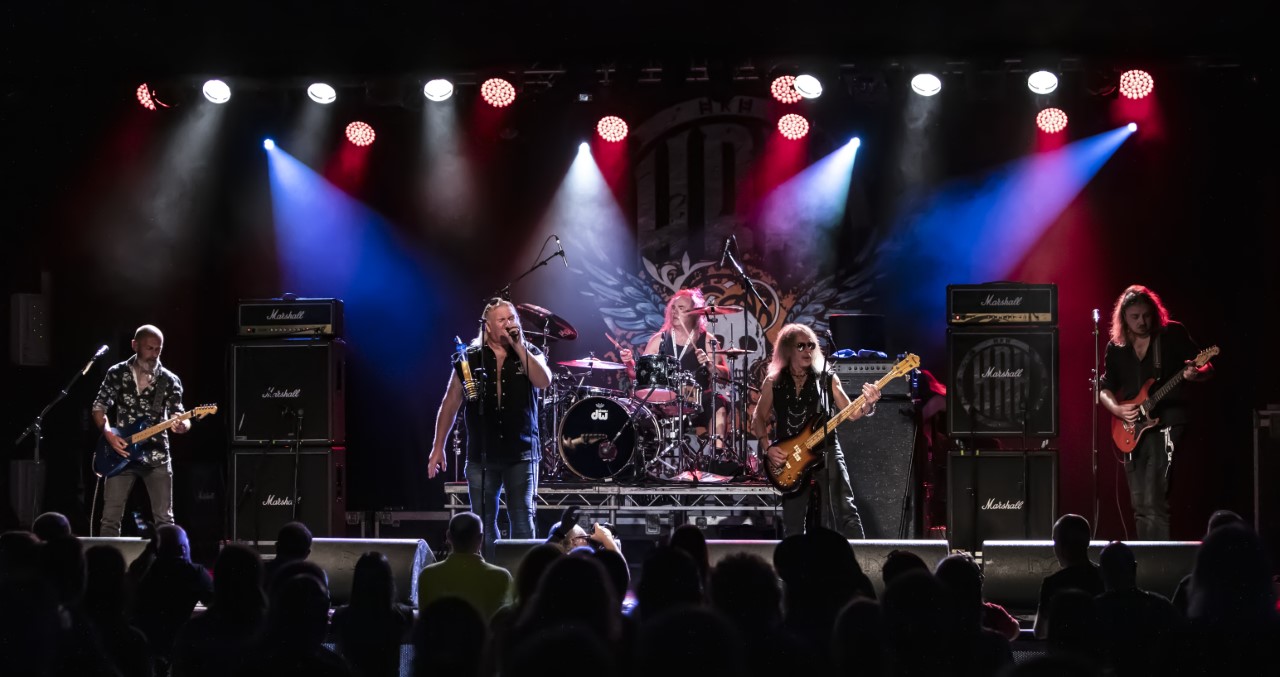
Back in the early ’90s, when I was getting my start as a music journalist in Boston, Steve Sera was the frontman for the band Wildside, one of the best melodic hard rock bands in Boston at the time. I covered a few Wildside shows and reviewed the band’s EP Sheet Music. Before Wildside, Steve was in the band Axminster. Well, in the decades since I write about Wildside, Axminster reformed. Axminster’s lineup consists of Benny Fiorentino (guitar, vocals), Steve Sera (vocals, guitar), Danny Callan (bass, vocals), and Xanon Xicay (drums); the band devotes a page of its website to a tribute to its late drummer Mike “Maddog” Lamm.

EP Review of Axminster: Tightrope

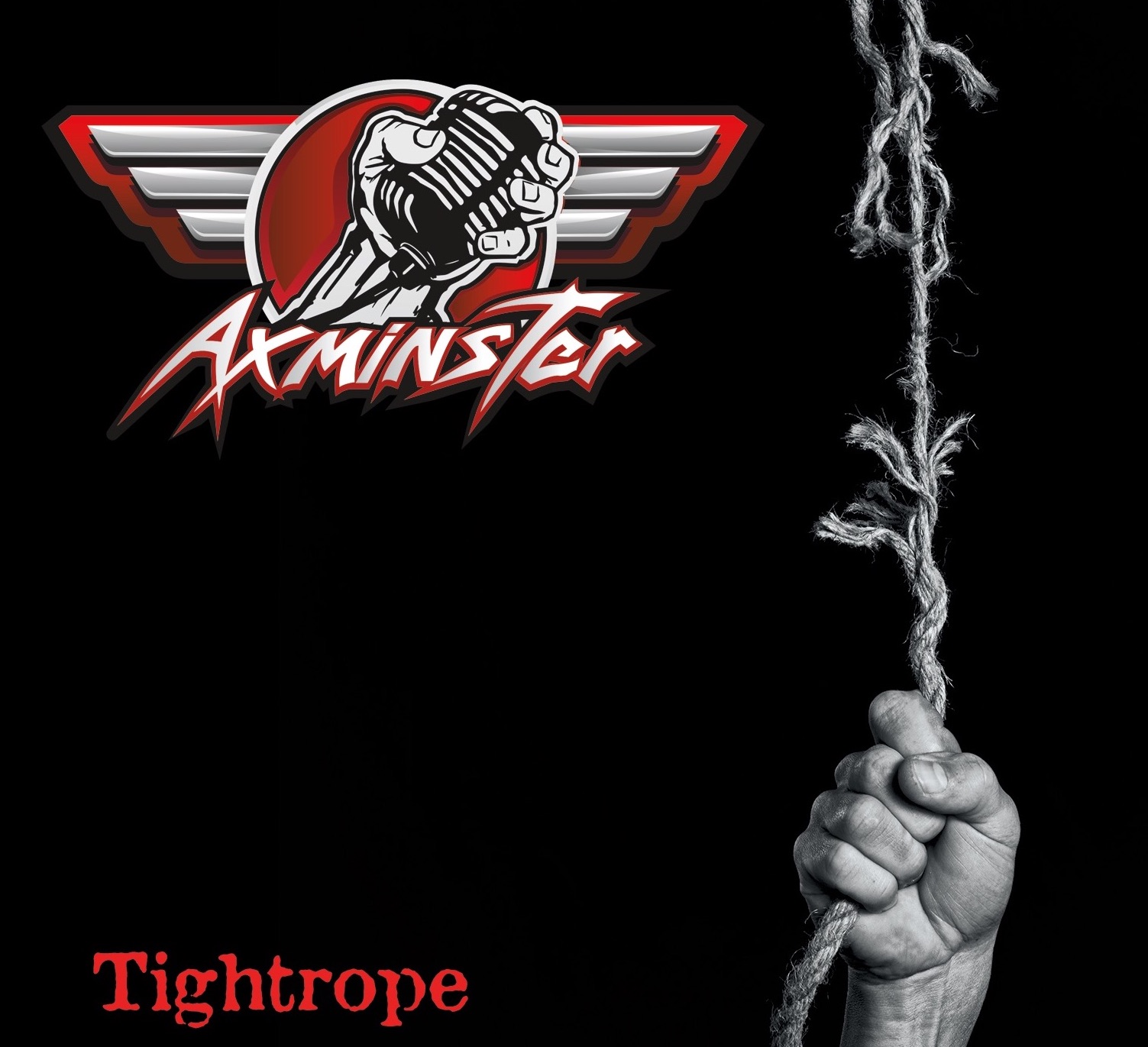
What you’ll hear on Axminster‘s Tightrope EP is classic hard rock, delivered with enthusiasm, fully embracing the playful bluesy rock influence that has underpinned the sounds and styles of many of the best melodic hard rock bands for decades.

Axminster – Tightrope

image courtesy of Axminster

Like so many classic hard rock albums, Tightrope kicks off with a show of power on “Broken Nails.” Going all-in on intensity, Axminster establishes its hard rock street cred with this opening track. The song surges mostly straight-ahead but features a little sidewinding axework, offering a glimpse into the band’s more expansive capabilities, in a way foreshadowing the breadth of influences yet to come on Tightrope.

The second track, “Down to the Bone,” is my personal favorite. It leans into its funky rhythm early on, drives continually toward its catchy, memorable, raucously singalongable chorus, and closes with a repetitive push toward close that’ll have you singing the echo of the “cuts right” lyric. You know, in my early days on the Boston hard rock beat, this city was known for its funky metal – well, one local band, in particular. Axminster may be channeling some of that vibe here on this song but wisely resists going full-on Extreme. The result is a catchy original that’s undeniably stylistically Axminster.

“Kids These Days” follows, driving home Axminster’s musical philosophy that straight-ahead rock doesn’t need to steer itself in a straight line. Better yet, there’s some variance to draw the listener in, a chance to show off vocal skills, and room for some well-placed guitar runs. It’s as if this song is a rock ‘n roll master class from some knowledgeable veterans sharing their tricks with the kids these days.

“Tightrope” is a guitar-driven rock number whose axework could be better described as playful than shredding, with Fiorentino’s guitarwork meshing with Sera’s vocal phrasing to provide a lighter vibe to an otherwise heavy rocking song.

“Put Ya Money” has a vocal line that surges and ebbs with the beat that, like so much of this EP, leaves room for some impressive guitarwork, particularly late in the song.

Finally, “Trippin'” comes out aggressively. And, though I’ve tried to avoid making the comparison, this song forces me to succumb. Indeed, particularly on the back half of this EP and most of all on this song, the songwriting, thumping rhythms, and vocal delivery remind me quite a bit of classic Y&T. Sera seems to channel Dave Meniketti during “Trippin'” more than he does anywhere else on this EP, and it results in a frenetically entertaining EP-ending number – quite clearly my second-favorite song in this collection.

More Recently

Axminster was nominated (and is a finalist) for the New England Music Awards in the “Hard Rock/Heavy Metal Act of the Year” category. Voting for the New England Music Awards runs through October 1st.

Looking Ahead

Per this Facebook post, Axminster is teasing a new EP, Bada Boom!, “coming soon.” I can’t wait!


Album Review: Zach Phillips – Goddaughters

Zach Phillips

photo courtesy of Zach Phillips

Album Review of Zach Phillips: Goddaughters

A couple years ago, I reviewed Zach Phillips’ The Wine of Youth. Well, the soft rock singer-songwriter is back with his latest release, Goddaughters.

I really like Zach Phillips‘ sound. It’s a breath of fresh air. Well-crafted songs with a familiar but entirely original sound, typically with a lot more rock ‘n roll infused into the music than seems apparent ay first glance. It’s always (by “always,” I mean “twice so far”) a pleasure to review one of his albums; it’s fun to peel the onions that are his songs.

On Goddaughters, Zach kicks things off with a wall-of-sound instrumental opener, “Cassiopeia,” quickly establishing his rock ‘n roll street cred, something a song-driven rock artist needs to do from time to time, lest his listeners confuse him with a singer-songwriter of the folkier variety.

The introductory instrumental flows into an energetic, richly instrumented mid-tempo ditty, “Worshipers,” that settles neatly within Zach high-ish vocal range.

Zach Phillips – Goddaughters

image courtesy of Zach Phillips

With Zach’s rockin’ roots clearly established, the third track, “New Star,” is ethereal, though it’s really more soft psychedelic rock than anything else.

“Harmony Grove” follows, opening with distorted axework, leading to a catchy whitebread-funky rhythm and an almost country-rootsy vibe. The result of this really cool amalgam is a catchy seventies rock-styled number.

“Psychics” carries a similar vibe but with more organ and – eventually, after a long lead-in – its very own faster tempo. How do I describe this sound, found in spades on “Psychics,” but also here and there throughout Goddaughters? Acid rock on valium, but not quite that mellow, I suppose.

The song “Goddaughters” rides in on an organ, but the opening vocals are supported just as much by the acoustic guitar-picking. As with the rest of the disc, Zach’s rich vocals, which require the sort of full production treatment they receive, carry the day. Well, that and the songwriting. Lyrically, Zach’s ode to goddaughters is tentpoled by the line “Goddaughters don’t ask for anything but get everything.” Well-selected to serve as the album’s title track, it’s one that’ll stick with you.

Next up, “Curses” is a song with a rhythmic engine that gets things moving again. After swaying your way through it, with its hooky rhythm guitar and the predictably recurring appearance of a heavier background riff carrying you along, you’ll find yourself stopping and saying to yourself, “Wait, that song was called ‘Curses.’ Why did its tempo make me smile?”

The quality of the songs remains high throughout the rest of the disc, though I’m at risk of reusing too many adjectives and descriptive phrases if I review each in depth, so I’ll zip through them: “The Hour When I First Believed” is driven by a steady rhythm and Zach’s soaring vocals; “Courtesy of a True God” is a crunchier number with a steady, plodding tempo, a Tom Petty guitar sound and song structure, and a mid-’80s Talking Heads vibe; “The Big Mountain” blends a soaring, expansive sound with a playful, minimalist guitar riff that’s one of the most memorable on the album; and “Ocean of Song” opens briefly, if you listen closely (and only if you really want to hear it), with an acoustically strummed Judas Priest “Living After Midnight” riff that recurs with the chorus. You may not hear that riff the way I do, but you’ll definitely appreciate the energy of the instruments and the hint of an edge in Zach’s voice in a couple spots during “Ocean of Song.” It’s a powerful penultimate track, building toward the end almost right up to the closing fade.

Zach closes the disc by completing the circle, with the instrumental “Cassiopeia in the Stars” harkening back to the opening track.

As a whole, the album is pleasant, energetic, and joyful. It’s a great mood-lifting disc. It’s not too loud, but it’s a rock ‘n roll record – or roots rock, if you prefer, since that’s where Zach is typically categorized. A great voice. Well-written songs. Terrific arrangements and recordings. And several songs capable of being memorable takeaways, specifically depending on each listener’s personal preference. My two personal favorites are “Harmony Grove” and “Curses,” though others, like “Goddaughters,” “Worshipers,” and “The Big Mountain” leave me with just as big an impact in the moment, particularly in the context of a full album listen. I’d be curious to hear which songs are other listeners’ personal standouts because I’m sure they’ll differ from mine.

Additionally

There’s a little bit (but not a lot) of extra info about Zach at his website. You can also follow Zach on Instagram or Threads.