
EP Review: Leah Belle Faser – Crossing Hermi’s Bridge

Leah Belle Faser

photo by Deborah Celecia Wagoner; photo courtesy of Michael J. Media Group

EP Review of Leah Belle Faser: Crossing Hermi’s Bridge

Leah Belle Faser has one of the biggest, baddest, “how is she not a star already?” sounds of the young country artists I’ve heard lately. Just a few seconds into my first listen, I knew I would review this EP and share her music with you. And now, after several listens, whenever one of her songs starts on my playlist, I rack my brain trying to remember which famous country artist she is. That’s an easy way to tell you’ve found a truly special artist. And the lyrics and music are all Leah Belle Faser originals, too. She’s a complete artist.

Leah Belle Faser - Crossing Hermi's Bridge EP cover

image courtesy of Michael J. Media Group

The (boom!) massive hit of the disc is its third song, “Better Than Mine.” It’s a melancholy, dreamy number, performed more mid-tempo than slowly, but still not usually a breakout song tempo… oh, but the hooks! And the faster-and-slower tempo changes. And the lyrics! It’s a heartbreak, post-split song about the conflicting emotions after a breakup, when, even though it was clearly the right call – something portrayed by this song largely in attitude and briefly by lyric – it’s hard to see an ex moving on faster and, seemingly, better. And the lyrics in the chorus? Check this out (because you’ll be learning them and singing along): “When I said I wish you the best, but I didn’t know that would mean you’d be doing just fine, without me in your life, a new girl every night, I guess your best is better than mine.”

Leah Belle Faser

photo by Deborah Celecia Wagoner; photo courtesy of Michael J. Media Group

EP-opener “The Lift,” however, has hit potential in its own right. Leah’s voice raises strongly, lilts sweetly, and pushes persistently and convincingly through the lyrics of this song about finding love. Big-time country hit lyrics, to be sure: “Kiss me like you met me in the pouring rain, when I wore that Stardust t-shirt and it drove you insane…”

And “Second Hand Store” is an energetic, sassy pop-country number, with a cheerful tempo and small-town charm. On this song, it’s just some of the small turns of phrase that pull me in, from the catchy, unexpected rhyme of “With Burberry and Tiffany, you’ll have your epiphany” to the clever little “You finally realized the juice ain’t worth the squeeze.”

Leah Belle Faser

photo by Deborah Celecia Wagoner; photo courtesy of Michael J. Media Group

The third song on the disc is “Better Than Mine,” which I’ve already gushed about. It’s followed by “What Could Have Been,” that truly thoughtful song of missed opportunities, when you’re young and in love but are just passing driftwood riding divergent currents. No snark in this one. Just plenty of feelings, sweetly detailed vocals runs, and a textured depth of emotion, both when Leah stretches out the notes and when she quickly dashes through a lyrically-clever, fast-paced run.

The softness continues on “Back Home,” a memory-filled song about missing where you came from while pursuing your future far away. A song about sometimes wanting the life and surroundings you grew up with, about your home always being in your heart and missing what you’ve left behind. Leah’s voice roars, then softens, then roars again, taking you on a roller coaster ride that leaves you with watery eyes and a lump in your throat. (I’m not crying; you’re crying.)

Leah Belle Faser

photo by Deborah Celecia Wagoner; photo courtesy of Michael J. Media Group

Rock guitar kicks off “Play On Words,” and Leah’s voice reflects an attitude and edge that’s almost along the lines of Alannah Myles’ “Black Velvet,” but more country and with a little bit of that sassy Opry twang. Every time I hear this song I think it reminds me of a really famous song. And then I realize I’ve now heard “Play On Words” enough that it, in fact, is the song it reminds me of. Sign of a great tune.

Finally, Crossing Hermi’s Bridge concludes with “Ruled” a mid-tempo pop-country-rocker, that defiant number that’s almost a requirement of a young vocalist. Leah has shown a variety of sides of herself on this short, seven-song collection, but this song is the only one that displays this specific tone of very cool yet quite familiar defiance.

And… whew! Even without the well-crafted lyrics, with every word so cleverly and precisely chosen like an established veteran songwriter, Leah Belle Faser’s delivery would deserve a country music fan’s attention. But she’s a songwriter and lyricist of astounding caliber, too! Just wow! I realize I’m more than 700 words into the review, but I’m speechless… figuratively speaking.

Leah Belle Faser

photo by Deborah Celecia Wagoner; photo courtesy of Michael J. Media Group

Looking Ahead

You need to click on the “Tour” tab of Leah’s website to find her upcoming shows, and she has three listed. On February 13th, she’ll be at J. Michael’s Prime in Canton, GA. On March 5th, she’ll be at the Old Vinings Inn in Atlanta. And on March 13th, she’ll be performing at Engelheim Vineyards. If you’re venturing out, go hear her perform live. And if you’re not going out for live music right now, then check back at Leah’s website a couple weeks after you get your second vaccine.
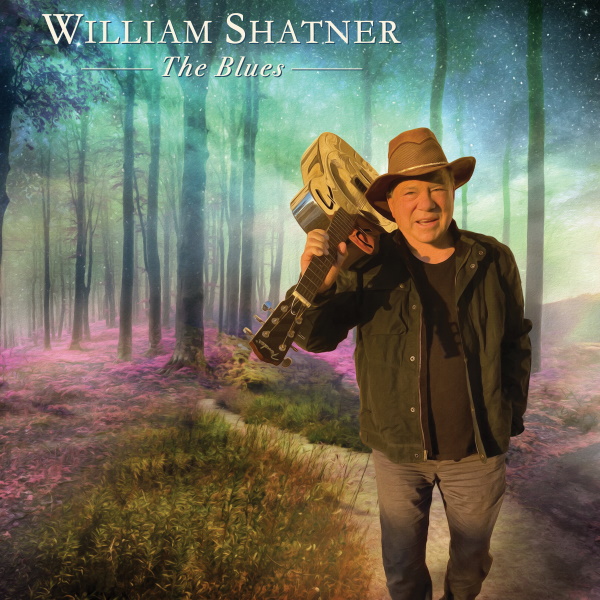

Album Review: William Shatner – The Blues

William Shatner – The Blues

image courtesy of Glass Onyon PR

Album Review of William Shatner: The Blues (Cleopatra Records)

One of a kind. This album. And William Shatner. The Blues grew on me slowly, and I guarantee it’s not for everyone – in fact, you probably really have to love Shatner and “get” his persona to dig this disc – but man, it’s got style. And it leaves me with a singular conclusion: William Shatner is a herky-jerky rock and blues beat poet.

First, make sure you’re in the right mood for this album. It’s never smooth – Shatner’s delivery guarantees that, as his vocals, more spoken than sung, are largely near but outside the pocket, farther off the beat than you’re accustomed and not consistently so, providing dissonance, but they also deliver a very original, hipper-than-perhaps-initially-apparent vibe. Never quite what you expect, the album is a work of art, and it has a style all its own, even if it takes a few listens to really understand its groove.

There’s also some amazing musicianship on this record, and you’ll recognize many of the famous tunes Shatner covers. The Blues contains 14 songs, most of them featuring big-name artists in accompaniment. In fact, here’s the track listing of all 14 songs, with the featured artists who appear with Shatner on the first 13 tracks: “Sweet Home Chicago” featuring Brad Paisley; “I Can’t Quit You Baby” featuring Kirk Fletcher; “Sunshine Of Your Love” featuring Sonny Landreth; “The Thrill Is Gone” featuring Ritchie Blackmore; ‘Mannish Boy” featuring Ronnie Earl; “Born Under A Bad Sign” featuring Tyler Bryant; “I Put A Spell On You” featuring Pat Travers; “Crossroads” featuring James Burton; “Smokestack Lightnin’” featuring Jeff “Skunk” Baxter; “As The Years Go Passing By” featuring Arthur Adams; “Let’s Work Together” featuring Harvey Mandel and Canned Heat; “Route 66” featuring Steve Cropper; “In Hell I’ll Be in Good Company” featuring Albert Lee; and “Secrets Or Sins” (without a “featured” superstar accompanying Shatner). Sure, I’m not the habit of just listing the tracks in a review, but how better to show the renowned musical talent appearing on this particular disc?

Album-opener “Sweet Home Chicago” quickly catches your ear, if largely due to the easy familiarity with this grand old blues standard. “I Can’t Quit You,” an otherwise mellow groove, is sung with a truly pain-felt wail. And on “Sunshine Of Your Love,” Shatner’s loud-whispered vocals, along with the psychedelic music, help create a sixties vibe; you’ll half-expect Austin Powers to pop in mid-song.

Among other favorites: “Mannish Boy” is reminiscent of what you’d expect in an old school, smoky Chicago blues club. There’s an almost carnival barker-esque flavor – there may be a little old-fashioned Batman villain hiding in there – to Shatner’s enthusiastic delivery of “I Put a Spell On You.” And the chugging-along tempo of “Smokestack Lightnin'” is accompanied interestingly with Shatner’s sobbing-style vocals.

Interestingly – and it’s hard to tell if it’s true or if you just become accustomed to Shatner’s delivery style – the album closes with four relatively mainstream songs, much more so than the first ten. So even if you decide to sample but can’t get into the arthouse beatnik-blues mostly resident early on the disc, at least give the last four tracks a listen. These last four songs are the ones I’d suggest are performed the least uniquely, thought that’s a relative term.

The first of those is “Let’s Work Together.” Shatner’s wails coincide with screaming guitars. His “let’s work together” delivery is commanding. And you’ll find yourself singing along each time he sings the lyrics “every boy, girl, woman, and a man.” This one’s fun, with the most minimal need to appreciate an artistic delivery required.

Next up, Shatner’s spoken delivery is so on-the-mark on “In Hell I’ll Be in Good Company” that I can’t imagine it performed any other way. This song and the preceding “Let’s Work Together” are frequently my two favorites on The Blues. Or at least the two into which I can sink and get comfortable.

Shatner then delivers a fun, light-hearted blues-rockin’ rendition of “Route 66,” supported quite well by the smooth, steady guitar-rich music bed. And finally, the album slows to close with a sparsely-instrumented blues number, guided by a softly sobbing guitar and Shatner’s delivery, as if revealing deep, dark life secrets, appropriately, on “Secrets Or Sins.”

This one-of-a-kind album is a great, irreverently reverent tribute to the blues from Shatner. When I’m in the mood, it’s a real treat to listen to. But most of the collection requires active listening, in much the same way modern art demands active viewing. So when I’m not in the mood, I skip it and listen to something else. And that’s the best way to appreciate this album. If you’re into music that’s really “out there” – or if you can appreciate comfortable old favorites that are performed purposefully this far from the mainstream – give William Shatner’s The Blues a listen. Or maybe two or three. I’m really glad I did.

Need more Shatner?

Need more William Shatner in your life? Try his YouTube page, which is really cool. Or his website, which also lists his personal appearances. And, of course, you can find him on Facebook and Twitter.

Album Review: Rob Williams – Weathering the Storm, Vol. 1

Rob Williams

photo by Peter Beliaev; photo courtesy of Skye Media

Album Review of Rob Williams: Weathering the Storm, Vol. 1

Rob Williams is a storyteller. His voice is strong and full, as if it’s dispensing life’s truths. More than that, though, he’s a songwriter. And from beginning to end, Weathering the Storm, Vol. 1 offers up songs that are interesting and memorable. That alone would be reason to enjoy this album.

But this record also kicks off with one of those songs that’ll make you sit up and take notice, the sort of song that could introduce a talented, respected career musician to a huge audience with just a little lucky break. Indeed, “Nameless” is such a song. It’s an uptempo, alt-country, roots rocker with a monster hook and overflowing energy. It’s one of those songs you’ll turn up the radio to hear every single time, even if it’s not your preferred genre. It would be easy to stop talking about Weathering the Storm, Vol. 1 after mentioning the potential monster hit, but that wouldn’t be fair to the rest of this fine compilation of songs, which are well-crafted, enjoyable listens. But yowza, “Nameless” is such a great singalong, dance-along earworm, and it wields a wicked hook! Ironically, this song that’s so capable of making Rob Williams a household name sports the chorus “If you wonder what became of me, I’m nothing but happy. Don’t want to be famous; I’m content being nameless.”

Rob Williams - Weathering the Storm Vol. I

image courtesy of Skye Media

The album ends with its other biggest potential breakout hit. The last song on the disc, “Good with the Changes,” would be a terrific second single. Sporting a nervous vocal tension and big, booming energy in the choruses, it’ll have you singing along “what do we do now?!” (and mumbling along to the words you don’t know) by the end of the first listen. Repeatedly, a touch of vocal melancholy pulls the listener in before the song, about aging gracefully and enthusiastically, breaks out in a rush of feel-good energy. The song structure and delivery are exceptional. On most albums, this would be the clear potential hit single. In this collection, it’s just the second-hookiest.

Find a way to work “Nameless” and “Good with the Changes” into a hit movie or TV series, and the world would remember Rob Williams’ name. Instead, that’s left to those of us lucky to discover his music. And once you’re familiar with his thoughtful, insightful, storytelling vocal style, you’re ready for the rest of this disc, which is a gem beginning-to-end, packed with meaty, well-written, intelligent songwriting.

In between its bookend hits, Rob’s songs get melancholy, defiant, dark, angsty, and a variety of other moods you’d expect to find in top-shelf songwriter material. They’re songs that slowly grow on you, too, so after a few listens you’re no longer sure the first or last song is your favorite anymore. Well-written songs will do that to you.

“Me and You” is a pleasant, hopeful, sway-to-it-with-a-smile-on-your-face tune about life’s pitfalls and the value of avoiding them.

“Falling Sky” is a much harsher song, using its rough edges to complement its lyrics about the dark, divisive worldview that can be subscribed to by those who are ensnared by the way the news is presented.

“A Hard Time” is a chug-along, earnest, energetic tune with jangly guitar buzz supporting the song’s cathartic vocal energy bursts.

Rob Williams

photo by Peter Beliaev; photo courtesy of Skye Media

“Only Heaven Knows” starts as a hillbilly-ish guitar picker that adds instrumental texture before chugging along like you’d expect from, well, a train song.

“Long Distance” is the first of two very memorable songs in this collection about relationships falling apart. In this one, Simon and Sarah clearly don’t have the same expectations of the future of their long distance relationship. Emotional and poignant, it’s a song about the pain an unequal power structure can cause in a relationship.

Two sons later, “Ghostwriter (Rosie and Justin),” is written from the point of view of “Justin” recalling a relationship that faded as the titular couple grew apart, perhaps not making the effort required to maintain their connection (“There were days when our paths didn’t cross and we stopped taking notice. There were nights that I slept on the couch just to let her sleep. There were weeks when we didn’t say three words to one another. Over time even three words became harder to speak”), something that is obvious in retrospect, as lyrically presented via Justin’s recollections. Rob’s emotional vocals and songwriting chops prove he’s an ideal artist for this type of song. You’ll feel tears well up and get a lump in your throat listening to both “Ghostwriter” and “Long Distance”; Rob’s delivery and the musical compositions behind the songs are spot-on.

In between the relationship songs, Rob squeezes “Moon’s Light,” a melancholy, reminiscent ode to times gone by, childhood memories, sung with the emotional pain that accompanies the singer’s realization of a life passing by too fast and of his place in the passage of generations of time. More haunting than memorable, it doesn’t exactly lighten the mood between “Long Distance” and “Ghostwriter.” In fact, after the sequence of “Long Distance,” “Moon’s Light,” and “Ghostwriter,” you’ll be emotionally wrought and really glad Rob closes the disc with the energetic and cheerful “Good With the Changes,” returning your psyche to equilibrium.

Weathering the Storm, Vol. 1 is an emotional disc that’s worth listening to from beginning to end. But if you want to start by sampling, after a quick listen to “Nameless” and “Good With the Changes,” you’ll be a Rob Williams fan before even hearing the rest of his songs.

Looking Ahead

Rob doesn’t have any live gigs booked at the moment, but when he does, you can find them on the “Events” tab of his Facebook page.

Album Review: Ryan and Pony – Moshi Moshi

Ryan and Pony

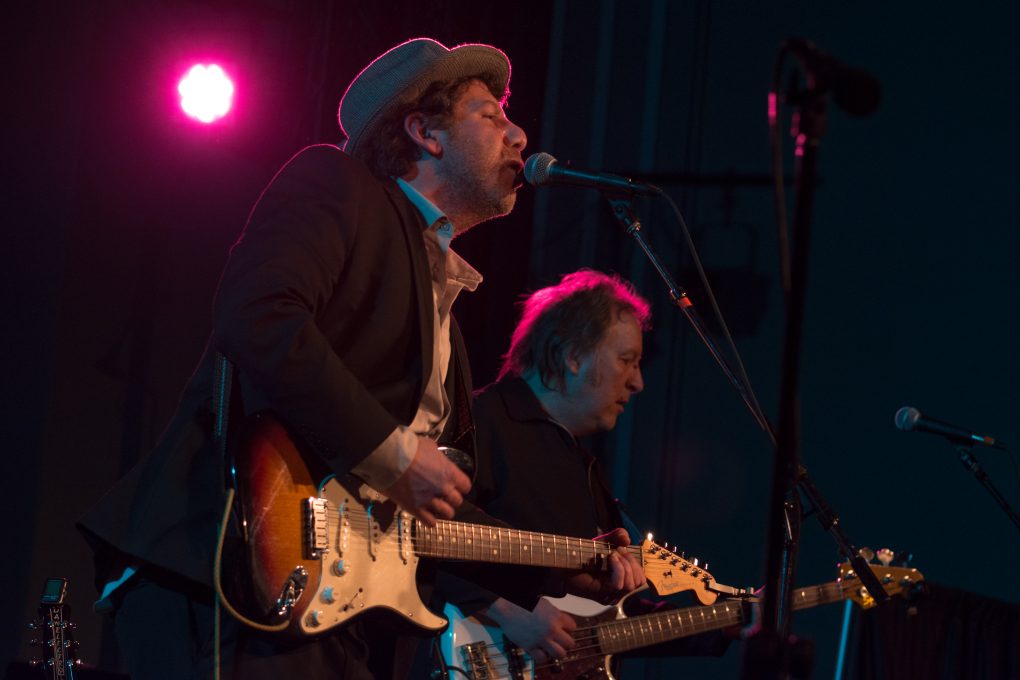
photo by Tony Nelson; photo courtesy of Howlin’ Wuelf Media

Ryan and Pony are the husband-wife team that recorded seven albums as dual lead vocalists of Minneapolis’ The Melismatics. When The Melismatics slowed down their touring schedule in 2013, the two began working on new material, working toward an album as a duo. Then, in 2016, Ryan began performing with Soul Asylum, setting the album project aside. However, after the completion of Soul Asylum’s Hurry Up and Wait album, Ryan and Pony resumed work on Moshi Moshi, which was released on Pravda Records on September 25, 2020.

Album Review of Ryan and Pony: Moshi Moshi (Pravda Records)

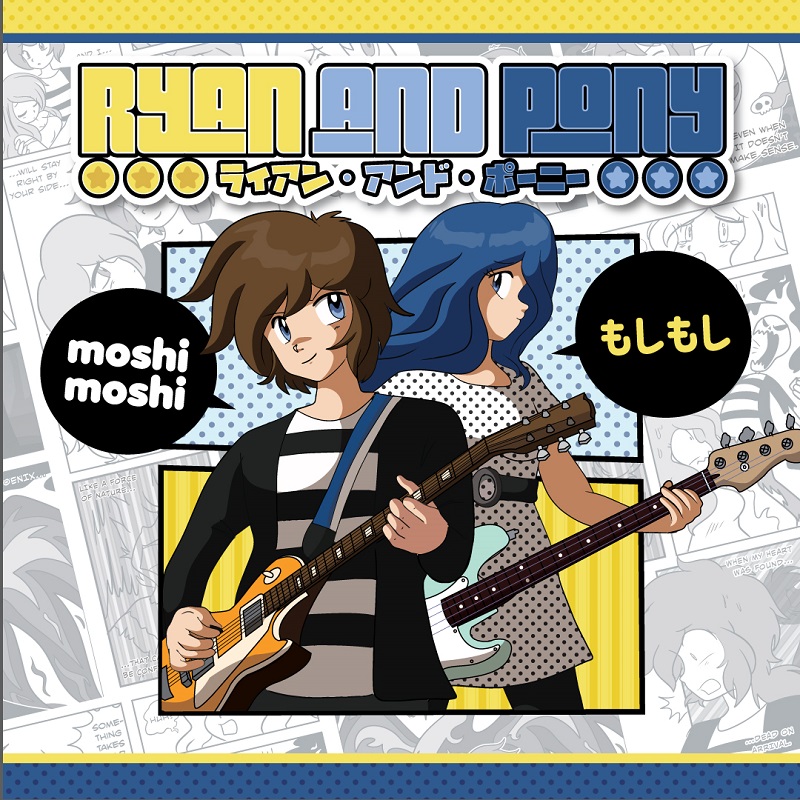
Fun, catchy rock and roll. Moshi Moshi is a collection of raucous, hooky, alt rock-influenced, mainstream, guitar-driven, radio-friendly rock and roll tunes with a big sound that packs an immense punch. From beginning to end, on my very first listen, I was blown away. Slick production, booming power hooks, liberal use of every sonic trick in the alt pop-rock magic kit, songs that don’t develop exactly the way you expect them to and, instead, create their own better, unique entities. This is one of my favorite rock and roll albums of 2020.

Ryan and Pony - Moshi Moshi album cover

image courtesy of Howlin’ Wuelf Media

“Starry Eyes” opens things up with alt-rock melancholy vocals spread on an ’80s-influenced pop-rock-meets-a-twirling-carnival cracker.

“Start Making Sense” is full of crunchy guitar riffs and hooks, a catchy number that churns forward, almost as if an anthem, if not for the chorus and verses, which position it more as a big-feelings song. “Start Making Sense” seems like a thoughtful tune, but it only dodges around its thoughts, leaving a great deal for interpolation. Still, it’s wicked catchy.

“Fast As I Can” sports a pair of jangly guitar bits that combine with the softly aggressive vocal delivery to produce yet another very original piece of rock ‘n roll. Ryan and Pony’s music is all so familiar – like the short bridge in “Fast As I Can” that actually recalls the sax portion of Duran Duran’s “Rio,” though that’s where that particular comparison begins and ends – yet always so very original.

The opening riffs and rhythm of “Thunderlove” suggest The Cars – yet another “I’ve heard that before” moment – but the song as a whole is a pleasant, fun, lightly energetic alt-rock ditty. And there are other bits of music in the song that recall favorite bands of past and present, as if Ryan and Pony have assembled all of our favorite rock music from disparate subgenres into big, fun songs… again and again throughout Moshi Moshi.

Ryan and Pony

photo by Tony Nelson; photo courtesy of Howlin’ Wuelf Media

“Be Still My Baby,” up next, opens as a ’50s rock-style crooner, and that vibe remains throughout, but it’s updated and combined with elements of more modern rock ‘n roll. Of course.

“Cinematic” follows with an abrupt opening and a sparse music bed before going all “what if Madonna wrote an actual rock song?” In other words, the pop music influence is strong on “Cinematic,” though it’s one of those cool pop record “deep cuts,” a pop song a little too slow-tempo to be a radio hit but not slow enough to be a ballad.

“First Night” rocks in a psychedelic classic rock manner in and around its punk-ish alt-rock beat. “Trouble in Mind”, meanwhile, reverts to old-school pop-rock, with lush vocals and a Barenaked Ladies-ish cadence. Very, very cool.

“Low” is a relatively straightforward low-end-cool alt-rocker, while “Take It Or Leave It” follows with a much more herky-jerky rhythm. If there’s one constant to the alt-rock subgenres on Moshi Moshi, it’s change. (And talent, but I chose to review this album, so that goes without saying.)

Ryan and Pony

photo by Tony Nelson; photo courtesy of Howlin’ Wuelf Media

Speaking of constant change, the next track, the penultimate song on the disc, “Come Find Me” is eerily reminiscent of Berlin’s “Take My Breath Away.” Not quite as lush as Berlin’s soundbed, but a sweetly pleasant song well-deserving of major movie credit-roll placement.

Finally, did I mention Ryan and Pony are from Minneapolis? Well, I think it’s a local ordinance that Twin Cities rock bands a required to cover a Prince song. And it’s pretty cool hearing this rendition of “I Would Die 4 U.” Ryan and Pony bring a different vibe to the classic pop-rock hit – a poppier vibe with thinner instrumentation, especially (though not just) in the verses, that shows off their raw, lonesome version of the tune’s guitar line a bit more. And unless I’m crazy there’s something about the rhythm and supporting instrumentation that reminds me of Modern English a little. (Granted, I might be crazy.)

Ryan and Pony sound like every hooky, guitar-based, radio-friendly, alternative pop-rock band you’ve ever loved but not exactly like anyone else. They’re all over the map yet cohesive, with a sound you’ll instantly recognize. And they write fun, catchy songs. All those things together are why Moshi Moshi is must-hear.

Backlog Progress

Publisher’s Note: For those trying to track how far I’ve progressed in emptying my review backlog from the last 3 years – my 2 1/2 year unplanned relative absence from reviewing recorded music (though other Blog contributors did) plus 6 months of making progress on the favorites I set aside during that time – don’t be fooled by this album’s release date. I had a pre-release review copy of this disc, so dial the calendar back a couple additional months. In normal times, this review would have published on the album’s release date. But yeah, I’m making headway. And I am now well into music I’ve received since I was able to start reviewing again, so that’s good news. – GW

Single Review: Amy Kakoura & Simon Scardanelli – “Only With the Heart”

Amy Kakoura & Simon Scardanelli - Only With the Heart

image courtesy of Simon Scardanelli

Single Review of Amy Kakoura & Simon Scardanelli: “Only With the Heart”

Amy Kakoura‘s rich, warm vocals are both powerful and delicate. Hers is the voice around which this duet revolves. She’s joined by Simon Scardanelli, whose classic, unique, quirky pop rock vocal delivery adds character to the tune. Simon’s voice is instantly identifiable, off-kilter but comfortably familiar in pop and rock realms, while Amy’s is more room-filling and theatrical. As a duo, Amy and Simon produce a memorable combination on “Only With the Heart.”

The song’s softness is driven home by the strings, while its power rises and falls like an ocean’s waves. Finally, it employs one of my favorite song tricks, seeming to end then returning for another powerful minute before finally fading away. “Only With the Heart” is an uplifting song well-conceived to play that role on a soft-touch playlist, likely also suited to a self-encouragement song collection.

Looking Ahead (and Back): Simon Scardanelli

You’ve seen us review Simon repeatedly herein – initially my review of his Dr Scardo release Dog Dark Days on Day Two of the Blog‘s existance as item number three of my “Road Back to Music Journalism” series; most recently RST’s review last summer of his single “It Really Is a Pity.” Before RST’s review, back in April 2020, Simon released “God Gave You Such a Winning Smile,” an edgy, jangling, thoughtful rock anthem I had intended to review, time-permitting, though my backlog was long and growing at the time. Definitely worth a listen, too.

You may occasionally find Simon performing live by checking the “Events” tab of his Facebook page. And, proving that lockdown time isn’t always wasted time, when I checked Simon’s page I noticed a link to this trailer for The Little Prince – A Musical, a new musical adaptation by Sam Chittenden and Simon Scardanelli. Simon’s always creating; always worth keeping an eye on.

Looking Ahead: Amy Kakoura

Though the calendar is empty now, check the “Dates” tab of Amy’s website to find out about future performances. You can also keep up with her on Twitter. And you’ll find a short clip of Amy singing on the Little Prince trailer mentioned in the last paragraph above.

Single Review: Natalie Joly – “Will You Ever Stop”

Natalie Joly - Will You Ever Stop

image courtesy of Nina Pickell, LLC

Backstory

It would have been a few years ago – 2018, maybe even 2017 – that I almost reviewed a Natalie Joly live gig, so this write-up is long overdue. I had planned to head up to Chopps American Bar & Grille in Burlington, MA after work, but work ran late that night, so I missed the chance. Natalie has been rising in the Boston area music scene for nearly a decade now, since she was 14, creating buzz and winning awards along the way, so I’ve been looking since nearly day one of the Blog for a chance to share her music on these pages. Scheduling hasn’t yet worked out to catch a live performance, but I am pleased to get a chance to review Natalie’s new single.

Single Review of Natalie Joly: “Will You Ever Stop”

Natalie Joly

photo courtesy of Nina Pickell, LLC

There’s a rich trademark tone to Natalie Joly’s vocals on this “Will You Ever Stop,” reminiscent of old-school edgy pop-rockers like KT Tunstall – and I hear a bit of Paramore’s Hayley Williams in Natalie raucous pop rock vocal ending – but right from the opening guitar riff this song in particular suggests a country-pop/rock vibe that would place Natalie on the radio alongside the Taylor Swifts of the world, borrowing heavily from the guitar-pop styles of the ’80s and ’90s but with updated vocal phrasing and tempo.

Throwing attitude through the verses and rounding it out with an expressive voice that hit some tonally wicked-cool notes, “Will You Ever Stop” confirms that Natalie Joly is radio-ready and poised to level up in her music career.

“Will You Ever Stop” drops today, January 29th, with the accompanying video scheduled for a February 5th release. This song is a follow-up to Natalie’s November 2020 release of catchy, syncopated, mid-tempo pop-rocker “Running Circles.”

Looking Ahead

There’s a full-length album in the works. And when Natalie has live gigs (or other events), you can find them on the “Events” tab of her Facebook page.

Album Review: Dan Israel – Social Distance Anxiety Disorder

Dan Israel

photo by Steven Cohen; photo courtesy of Dan Israel

Album Review of Dan Israel: Social Distance Anxiety Disorder

Minnesota’s favorite son, singer-songwriter Dan Israel, kept busy during spring quarantine by unveiling a new album, Social Distance Anxiety Disorder, released just 8 months after his 2019 release, Social Media Anxiety Disorder, which was reviewed here by Blog contributor James Morris.

Dan Israel - Social Distance Anxiety Disorder album cover

image courtesy of Dan Israel

In the past I’ve noted that Dan is a singer-songwriter with a folk-meets-rock delivery, while his wide variety of influences is evident to varying degrees on different albums. Social Distance Anxiety Disorder showcases many of Dan’s influences, and most of the disc would be best described as a singer-songwriter rock ‘n roll album. The opening track, “Wit’s End,” is markedly more pop than folk, with a peppy, word-thick delivery blending harmony and hooks. “Bewildered,” though, cranks things up a bit, as it’s more of a strumming ’70s rock-era protest song that complains densely in the verses before opening things up more in the choruses. And “Bustin’ Out” has a hint of Beatles influence, with a crunchy guitar opening, a rich music bed, and several opportunities to sing along with the “ahhhhh” in the background.

Dan Israel

photo by Steven Cohen; photo courtesy of Dan Israel

“Don’t Think They’ll Say” comes across as Dylan meets a travelin’ road song. It flows neatly into the smooth “Trying for a Long Time,” a strummer with a calming, mellow vibe.

Some nifty plucking opens “Guess It’s Time/Everyone” before the song’s chunky, steady-paced beat kicks in. Seemingly a simple melody at first, additional instruments and rhythms join, and the song evolves into an attention-grabber.

“Little Bit of Your Love” follows energetically, as thumping drums and a past-midpoint guitar solo drive home a rock ‘n roll vibe to deliver a tune you might hear on some Tom Petty or John Mellencamp records, complete with an off-balance, Petty-esque rock vocal vibe. Dan cranks it up a little more, even, on “Something for the Pain,” a bluesy, gritty, and kind of psychedelic rock number equally befitting a concert stage and a seedy dive bar.

“Vision in My Dreams” settles things down a little, closing the disc with a thoughtful vocal line and a broad, open, expansive sound.

The breadth of this disc causes it to be one of my favorite Dan Israel albums, as I can play it easily on repeat due to the variety of tempos, moods, and influences showcased throughout. Dan is one of the handful of great, regionally-renowned American troubadours – a singer-songwriter whose music is peppered with influences that enable him to appeal to multiple fan bases. It’s always a pleasure to review one of his well-crafted, engaging releases, like Social Distance Anxiety Disorder.

Dan Israel

photo courtesy of Dan Israel

Looking Ahead

Dan isn’t performing live at the moment, but when he does, you’ll find his gigs on the “Shows” page of his website or the “Events” tab of his Facebook page. He does seem to regularly livestream on the “Videos” tab of his Facebook page; you can find some old livestreams on there now.

Album Review: Blurred Vision – Redemption

Blurred Vision

photo by Eric Duvet; photo courtesy of Judy Totton Publicity

Album Review of Blurred Vision: Redemption

How does a band follow up a debut album the caliber of Organized Insanity? In the case of Blurred Vision, quite nicely, thank you. The gents don’t miss a beat on their second studio album, Redemption.

When I reviewed Blurred Vision’s London showcase, I leaned into the band’s obvious Pink Floyd influence. Then, later, when I reviewed Organized Insanity, I noted the broader classic rock influences, in addition to Floyd, that fleshed out the group’s sound. But the songs on Redemption package the band’s progressive and classic rock influences into an increasingly original Blurred Vision rock ‘n roll persona. Oh, sure, you can still pick out Pink Floyd, the Beatles, Electric Light Orchestra, and other influences, but Redemption is mostly just different flavors of Blurred Vision, variations on a theme. Whether it’s the band maturing or simply my increased familiarity coming into play – Sepp Osley‘s voice is unmistakable – it’s easy to identify the trademark Blurred Vision sound after just a few notes.

Blurred Vision

image courtesy of Judy Totton Publicity

The opening distorted electronic rhythmic beat of very first track, “One Day,” kicks things off strong, drawing the listener into the song and disc as the music builds into a somewhat haunting, rhythmic mid-speed soft-rocker.

“What Have I Become” follows, led by more aggressive drumming – not loud, but somewhat war dance-inspired – before the song rounds a corner into a singalong-styled openness. And perhaps the “I’m feeling numb” line is what suggests a “Comfortably Numb” comparison to me, not so much in the music itself as in its tempo and mood.

“Redemption” is similarly flavored, though features like the attention grabbing “I want to know” spoken mid-song and the enticing “waiting for the world to rise” lyric give “Redemption” an enticing uniqueness.

“Clever Dawn” ratchets things up a bit, with crunchy guitar and soaring bridges. The increased energy level serves as a nice transition to prepare the listener for the storm to come.

Blurred Vision

photo courtesy of Judy Totton Publicity

That “storm to come” is the first of the two energetic songs that most frequently get stuck in my head, “Magdalena.” It and “P.O.W.” are the songs I find myself singing to myself for days after playing Redemption. “Magdalena” is very nearly a clap-along number that always inspires involuntary dancing – in or out of your chair – and singalongs with “Whoo-hooo! Whoo-hooo! Whoo-hooo!” and “I wanna hear you sing it!” “P.O.W.” has a moderately tempoed, anthemic, high-energy, protest-song vibe. It’s not a singalong song; it’s a shout-along number! I imagine if it were ever released as a single, the natural short-version ending would be around the five-minute mark, but album rock fans will love the minute-plus creepy music interlude before a repeating siren-like guitar line begins the tune’s slowly building rocket-ride back to rockin’ awesomeness until “P.O.W.” clocks out at 8:36. I know Blurred Vision is a progressive classic rock band, but the three minute long instrumental sequence late in this song is probably the proggiest thing I’ve heard from these guys.

Sandwiched between those two tracks, you can hear the Beatles influence in “Mystic Garden,” though with a bit more ethereal, open, airy quality.

“Companion” and “Inside Out – Collision Course” close things out. Slow but steady tempoed “Companion” significantly reduces the temperature in the room after “P.O.W.” There’s an almost dreamlike sheen to its musicality, and it features some nifty, subtle dance-through guitarwork. “Inside Out – Collision Course” follows along the same sonic lines, then transitions via a drum run to a more energetic vibe – the transition between the “Inside Out” and “Collision Course” segments of this disc-closing number.

Blurred Vision, with its consistently high-quality songs and performances, has become one of my favorite bands over the last few years. And its position in a necessary but sparsely-traveled lane of the rock and roll highway, at least among currently active bands – the “peace, love, and rock ‘n roll,” classic, album-oriented rock lane, if you will – makes this band and album an absolute necessity, not just for fans of classic rock but also for people who appreciate great songwriting.

Looking Ahead

Whenever there are again tour dates in the future, you’ll be able to find them on the “Tour Dates” page of the Blurred Vision website.

The band has also hosted two annual John Lennon tribute concerts on Lennon’s birthday, October 9th, in support of the War Child UK charity, featuring Blurred Vision’s song for Lennon, “Dear John,” which appeared on Organized Insanity.

Album Review: Marina V – In V Minor

Marina V

photo courtesy of Marina V

Album Review of Marina V: In V Minor

Long-time readers know Marina V is a Blog favorite. Her expressive, soaring, sweetly clear yet powerful vocals combine well with her frequently-flowing songwriting. And, while she can and does show versatility and range when she stretches herself to faster-tempo and stylistically different songs seemingly effortlessly, Marina does have a musical sweet spot. It’s a designated lane on the soaring pop ballad musical highway that’s reserved for Marina and no one else, and it’s where her legion of fans expect a majority of her music to reside. In V Minor spends most of its time in this lane, perhaps more than her recent albums do, but it’s really hard to complain, especially as she swerves around within the lane quite a bit. And it’s fun to hear Marina release an album of new material mostly within her “greatest hits” zone sometimes. Plus, there are those aforementioned cool twists she puts on her subgenre, too. With depth and darkness, most of the time, you’re not likely to expect; she always does that. She’s Marina V.

Marina V - In V Minor album cover

image courtesy of Marina V

The first song in the collection is the beautifully, hauntingly drawn-out “Cold Cold Winter.” Marina’s piano skills combine with the guitarwork of special guest Jim “Kimo” West and the most beautiful edge of Marina’s voice to deliver a memorable ballad.

It’s followed by the sole cover on the album, a Marina V-tempoed rendition of “We Belong,” the Pat Benatar hit that was penned by the songwriting team of Lowen and Navarro. Marina blows the lid off of this track, and it features a truly special guest, as she sings it as a duet with the song’s cowriter Dan Navarro.

Marina V

photo courtesy of Marina V

Next up is another treat, a fan favorite, a rare (well, infrequent) Marina-penned full-on love song, “143.” It’s sort of the warm side of “Cold Cold Winter,” suitably placed with “We Belong” serving as a transition between the two tracks that are simultaneously similar and polar opposites. (Polar… winter… get it? Yeah, maybe not.)

“Rain My Love” opens with a semi-haunting piano, vocal, and string arrangement, a broad-sounding, soaringly-building sound that hints a bit at Scorpions’ “Wind of Change,” hinting at that sort of power but reining it in and polishing it with a softer edge. (Marina does a powerful rendition of “Wind of Change,” by the way, but it’s not on this album; it’s on Marina’s extended 2017 release of Inner Superhero.)

The power doesn’t dissipate on “Talk to You Sometimes,” it’s just redirected. Another song about strength and emotion – something Marina excels at writing and performing – this song will undoubtedly put a lump in your throat lyrically, and then it contains the best three-syllable delivery of the word “steel” I can recall, which helps release the tension. It’s all about the details.

Marina V

photo courtesy of Marina V

The third weather-titled song of the first six, “Love is Like Snow,” is a bit lighter, more playful, and hopeful. Still a slow song, but one you could move around a dancefloor to if you’d like, and the occasional twirl wouldn’t be at all out of place.

Next up is one of my favorite songs on the disc, “LKD.” And fortunately, like most of us, I’m not out in public much these days, or you might be concerned when you hear me singing the lyrics under my breath, “Live. Kill. Die.” “LKD” sounds like is was specifically written for a James Bond movie, with a breathy, cold, calculated delivery. Or perhaps it was created as an entry into a competition seeking a new theme song for the KGB. I actually researched the answer to this. After noting the Bond-esque edge to the song, I checked Marina’s song notes to see what inspired this track, and indeed, as an assignment in a songwriting group, “LKD” was written to sound like an end-credit song for a James Bond movie. I’m not sure how I feel, now, knowing that it was contrived bloodlust – not the actual thing – driving this song, but I’m pretty sure the word I’m looking for is “relieved.”

Marina V

photo by Justin Higuchi; photo courtesy of Marina V

Next up is another tune I often find stuck in my head, the encouraging “Back to Sunshine.” In addition to its hooks, the tune has Easter eggs for hardcore Marina V fans, as she slips old album and song titles into the lyrics of this song. It’s an neat trick, accomplishing that while writing a memorable, hopeful tune that’s engaging and catchy even without the insider information.

Marina returns to the dark side next with “Sick Sick Love.” The song cleverly builds tension and suspense musically, vocally, and lyrically, proving interestingly compelling, with just enough enthusiasm to suggest the song’s protagonist may not actually be interested in leaving this sick, sick love behind. Given the subject matter, this song is much more fun than it probably should be; I may be wrong, but I envision a mischievous glint in Marina’s eye while she recorded it.

Marina V

photo by Arsen Memetov; photo courtesy of Marina V

“No Time to Say Goodbye” returns to a semi-haunting tone. It’s actually the theme song for Bill Adler Jr.’s novella of the same name, and its sad desperation rather well matches the emotion you’d expect from the book’s plot summary. (No, I haven’t read the book, but I’m intrigued.)

Finally, the album closes with two lullabies. First, “My Love Lullaby,” a sweetly encouraging song about unconditional love. And then the Russian-language “Лунная Колыбельная (Russian Moonlight Lullaby).” No, I don’t understand the song, but thanks to the translation, it’s also quite sweet, and very much a sing-to-your baby song.

Marina V

photo courtesy of Marina V

That’s it. Over too soon? In V Minor is yet another dependably strong Marina V disc, as she has perfected the ability to release only top-notch material. This one, again, resides mostly within her sweet spot when it comes to tempo and taking advantage of her soaring voice and piano skills. The tone and mood ranges from very, very dark to light – to be fair, its touch is mostly soft and generally hopeful, but the breadth of emotion makes the album complex and enjoyable, like an interesting friend. Definitely a pleasure to have this disc as a listening companion during a pandemic.

Of course, as I mentioned at the beginning of this review, Marina has long been a Blog favorite. For more Blog coverage of Marina V, see my 2018 review of her album Born to the Stars. Before that, in 2015, as article #5 of my Blog-launching “Road Back to Music Journalism” series, I reviewed Marina’s Inner Superhero album and a 2014 house concert.

Marina V

photo by Arsen Memetov; photo courtesy of Marina V

Looking Ahead

Marina does twice-weekly livestreams – “The Marina V Show”on Twitch. Started during her pregnancy, Marina perfected the format well before the pandemic hit, interacting with fans via chat and playing old and new favorites. Husband/guitarist/cowriter Nick and “Baby V” make appearances, as well.

If/when live shows return, you’ll be able to find information on the “Tour” page of Marina’s website. Currently, you’ll find dates and times of the twice-weekly “Marina V Show” livestreams. Generally, Sundays at 12:30 PM PST (3:30 PM EST) and Thursdays at 7:00 PM PST (10:00 PM EST).

Marina has also been on Patreon for several years. Her “2 Songs a Month Club” gives patrons two new songs (one original and one cover) each month for as little as $1 per song ($2 per month). Of course, higher tiers offer additional membership perks.

Album Review: Harmonica Shah and Howard Glazer – Ain’t Gonna Worry About Tomorrow

by Eric Harabadian, Contributing Blogger

Album Review of Harmonica Shah and Howard Glazer: Ain’t Gonna Worry About Tomorrow (Electro-Fi Records)

Buddy Guy and Junior Wells, Smokin’ Joe Kubek and Bnois King, Sonny Terry and Brownie McGhee; these are just some of the famous duos, past and present, that have graced the American blues landscape. Although, perhaps not on that level of notoriety, Detroit heavyweights Harmonica Shah and Howard Glazer are certainly deserving of such stature. As a duo they’ve played their fair share of festivals and club dates throughout the U.S., Europe, Australia, and Canada. They’ve also had successful solo careers and partnered with other legendary blues figures like Emanuel Young, Honeyboy Edwards, Willie “Big Eyes” Smith and Mel Brown. They’ve also recorded together in the past, but it’s been far too long. However, that all changed when Andrew Galloway of Electro-Fi Records signed them to a deal and got them back in a Detroit studio in early 2020.

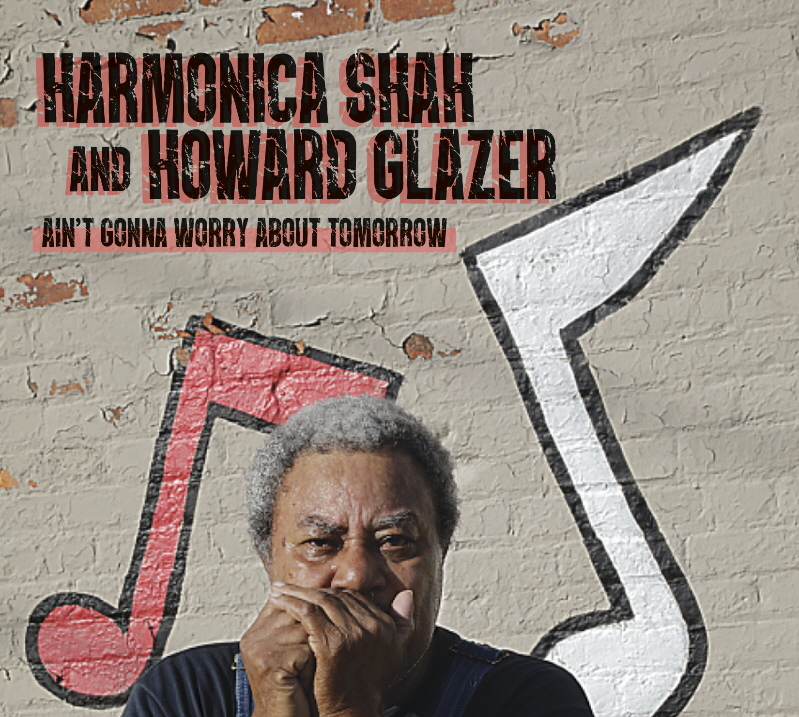
Harmonica Shah and Howard Glazer - Ain't Gonna Worry About Tomorrow album cover

photo by Gary Collver; image courtesy of Electro-Fi Records

Harmonica Shah is a one-of-a-kind character whose stock in trade is spinning off the cuff improvisational lyrics and hot harmonica fills to match. Howard Glazer is a master craftsman when it comes to the guitar. Whether it’s electric, acoustic, slide, Dobro, jazz, folk, rock, or whatever, he deftly works it all into his signature sound. Joining them are Detroit area vets Mike Blaszkiewicz on guitars, Steve Glazer and Ben Moore on bass and Skeeto Valdez on drums.

“Reality Blues (I’m Too Old to Be Your Man)” opens the disc in fine form, with a mid-tempo blues shuffle. Shah humbly sets the record straight with a woman in question that he’s simply too old to be carrying on with a relationship. Perhaps the generation gap is represented here in full effect.

They keep that mid-level groove happening with the next number, “My Bottle is My Bank Account.” This is an all too familiar tale of money changing everything. And fair weather “friends” will only be around as long as that money holds out. Shah has a folksy way of cutting to the chase with these kinds of human nature mini-dramas.

Sans drums, “Pretty Girl, Pretty Girl” almost puts the listener in a trance via Glazer’s oscillating and floating chords. Subtle harmonica shadings and Blaszkiewicz’s acoustic interplay give this a haunting swampy feel. “When My Wife Comes Home” is kind of a lighthearted tale. It’s a straight-up shuffle, with a humorous bent. In it, Shah entices his woman to stay the weekend and watch cable TV. But, ultimately, she’ll have to go Sunday night when his wife returns home. Uh, oh… there’s the rub! This features some tasty call and response soloing from the harmonica man and Glazer.

Harmonica Shah

photo by Gary Collver; photo courtesy of Electro-Fi Records

“Dirty Bastard Blues” has a really loose and live feel. It’s one of those self-effacing tracks where the band hits “record” and lets it fly. Everyone hits their musical marks, but Shah cracks up laughing in between lines of the song. It’s just got that nightclub vibe where you could picture him reacting to crowd response. Glazer really digs in here, with some great single note lines and incendiary leads. Fenton Robinson’s “Somebody Loan Me a Dime” is a classic that gets respectful coverage here. It’s a slow blues that features one of Shah’s better vocals and searing chicken pickin’ by Glazer.

“(I Just Wanna Be) Your Floormat” has a swing and shuffle to it. The rhythm section keeps a nice open pocket that gives room for some exceptional solos between the co-leaders. “Please Respect Me” finds Glazer really working various tonal registers on his axe. From a trebly single-coil attack to a grittier approach, he covers a stunning sonic spectrum. This is also Shah at his most vulnerable, where he pleads with his woman not to cheat on him. “She Penetrates My Mind” is another slice of life narrative where sometimes a certain kind of loving can be too strong. Shah sings “She’s got the kind of lovin’ that’s terrifying. Every time she loves me she penetrates my mind.” It’s a backwoods juke joint kind of song that will stick in your psyche for some time.

Chester Burnett’s classic “Who’s Been Talking?” is a spirited cover that gets a nice New Orleans swing feel. The mean, low down lyrics are offset by an uplifting and vibrant groove. Paul Marshall’s “So Many Roads” features a great Shah vocal along with some very agile harp runs. It’s a slow blues burner where Glazer employs great control and a skilled use of dynamics. “First Train South” is the sole instrumental on the album. It essentially spotlights the duo and really shows the strength of this co-led blues machine.

The title track “Ain’t Gonna Worry About Tomorrow” saves the best for last. It’s a hopeful sentiment that features a jazzy groove from Valdez and stellar interplay from Shah and Glazer. Anyone that follows the Detroit and Southeast Michigan blues scene should be very familiar with Shah and Glazer’s festival and nightclub work. But it has been many years since they laid any tracks down in a formal studio. Kudos to Electro-Fi Records. It was well worth the wait!