Single Reviews: The Brother Stereo – “Time in History” and “The Ballad of the Washed Up (and Seemingly Forgotten)”

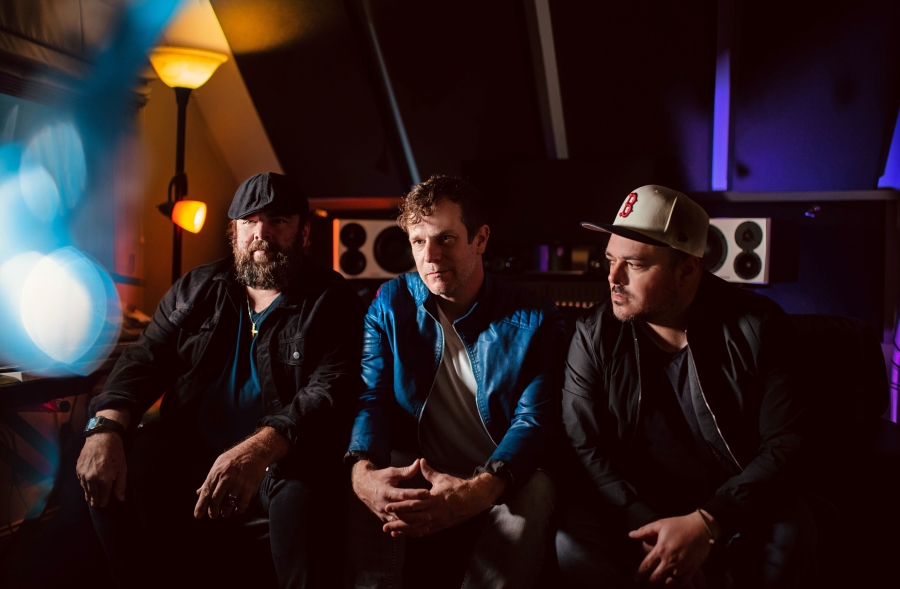
The Brother Stereo band photo

photo by Emily Joy Ashman; photo courtesy of Knyvet

Single Reviews of The Brother Stereo: “Time in History” and “The Ballad of the Washed Up (and Seemingly Forgotten)”

The Brother Stereo is a Massachusetts alt-rock band comprised of Michael Robert Kelly (vocals, guitar, bass), Shawn Pelkey (drums), and Buddy Sullivan (guitar). The band’s music has a very clean, throwback rock veneer but with an alt-rock energy. In other words, the songs would have broad appeal to fans who might not typically like a band “this alternative” while also appealing to alt-rockers whose tastes might not usually include bands with such a clean sound or, it seems, some of the influences that present themselves throughout The Brother Stereo’s songs. You know, if I weren’t trying to describe The Brother Stereo’s sound, I probably wouldn’t even try to pin a subgenre on them beyond simply calling them a rock band. But, alas, something so vague would not be super helpful.

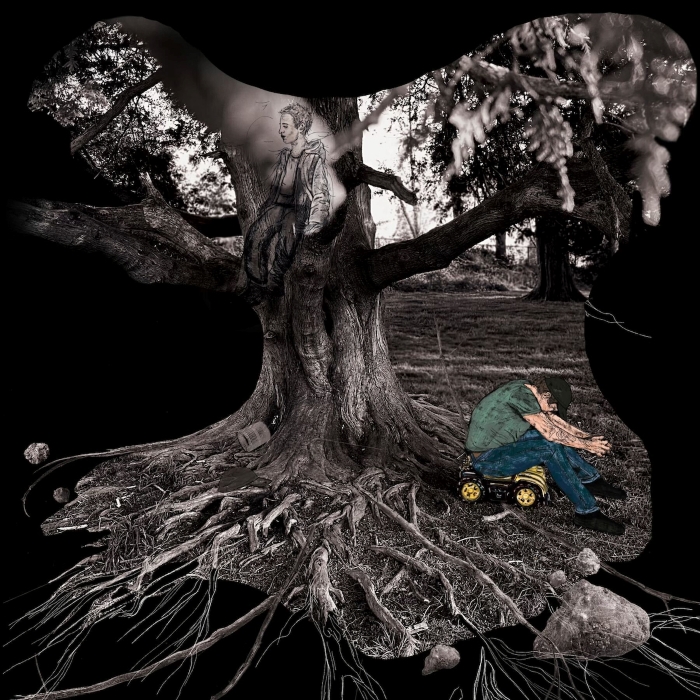
The first of the two singles that found my inbox late last summer and fall, “Time in History,” has a musical intro that will identify it from the very moment you hear it on your playlist. It has a bit of an otherworldly, dispossessed, echoey musical opening, which sets the stage for Kelly’s sharp, melancholy vocals, very well-suited to the song’s subject matter, which walks the line between reminiscence, longing, and regret. This song may very well be the first time I realized those three emotions border each other.

The Brother Stereo – "Time in History" cover art

artwork by Emily Joy Ashman; image courtesy of Knyvet

Interestingly, about halfway through the second half of “Time in History,” there’s an exceptionally well-placed – though you probably wouldn’t guess it would fit in this song until you hear it – classic, not particularly short, blues-rock guitar solo that provides energy, emotion, and a power-build all the way to the song’s end. I can’t recall a comparable alt-rock song that transitions so seamlessly to a blues-rock song. However, though The Brother Stereo’s sound is tough to pin down, it’s easy to dig for fans of each of the individual styles that contribute to these songs’ mutt DNA.

Of the subject matter covered in “Time in History,” Kelly notes, “‘Time in History’ is about the insecurities and complacency of today’s world coupled with the nostalgia of growing up and the longing for yesterday’s world. I think this song will be relatable to our generation very directly.”

The band’s next single, “The Ballad of the Washed Up (and Seemingly Forgotten),” is much more R.E.M.-like; it might pair well with “Losing My Religion.” In particular, in that comparison, Kelly’s vocals have a cutting edge to them much like Stipe’s. Or perhaps this song could be the up-tempo half of a back-to-back with Incubus’ “Drive,” as both tunes have an open but rocking feeling to their driving strums, but that’s probably not quite as good a sonic match as “…Religion” would be. Comparing The Brother Stereo’s two singles, as in “Time in History,” the band leans into a broader rock sound on “The Ballad of the Washed Up.” And delivers a blues-rock guitar solo, though  it’s much shorter and serves just a bridge this time.

The Brother Stereo – "The Ballad of the Washed Up (and Seemingly Forgotten)" cover art

artwork by Emily Joy Ashman; image courtesy of Knyvet

As he did with “Time in History,” Kelly shares the inspiration for “The Ballad of the Washed Up (and Seemingly Forgotten)”: “It’s about being at the top of your game and being a human under a lot of pressure. It’s about the superficiality of the people you meet, keeping up the façade of fame in the eyes of the world and trying to relate to others. I just had Hollywood in mind for some reason and what it must be like for people who are so famous and desirable they can’t walk down the street. Then what it’s like to be the person who used to be that famous and the shit you get for not being as ‘perfect’ or ‘beautiful’ as you used to be. Washed up, if you will.”

The Brother Stereo has a unique sound all its own, but it’s a band whose singles belong alongside other guitar-driven rock songs on your personal playlist. Trust me, they’ll worm their way into your brain. “Time in History” first, likely because of its easily identifiable intro, but “…Washed Up” soon thereafter because of its engaging tempo.

The Brother Stereo band photo

photo by Emily Joy Ashman; photo courtesy of Knyvet

More Recently

In the time since these singles landed in my review queue, The Brother Stereo has released four more singles – “My Focus,” “Drinks on Me,” “Tornado,” and “Feeling Low,” all of which you’ll find on the band’s bandcamp page. To be honest, I haven’t listened to any of them yet. When I take a break from prepping for my next review, I look forward to checking them out.

Single Review: Natalie Joly – “Wayside”

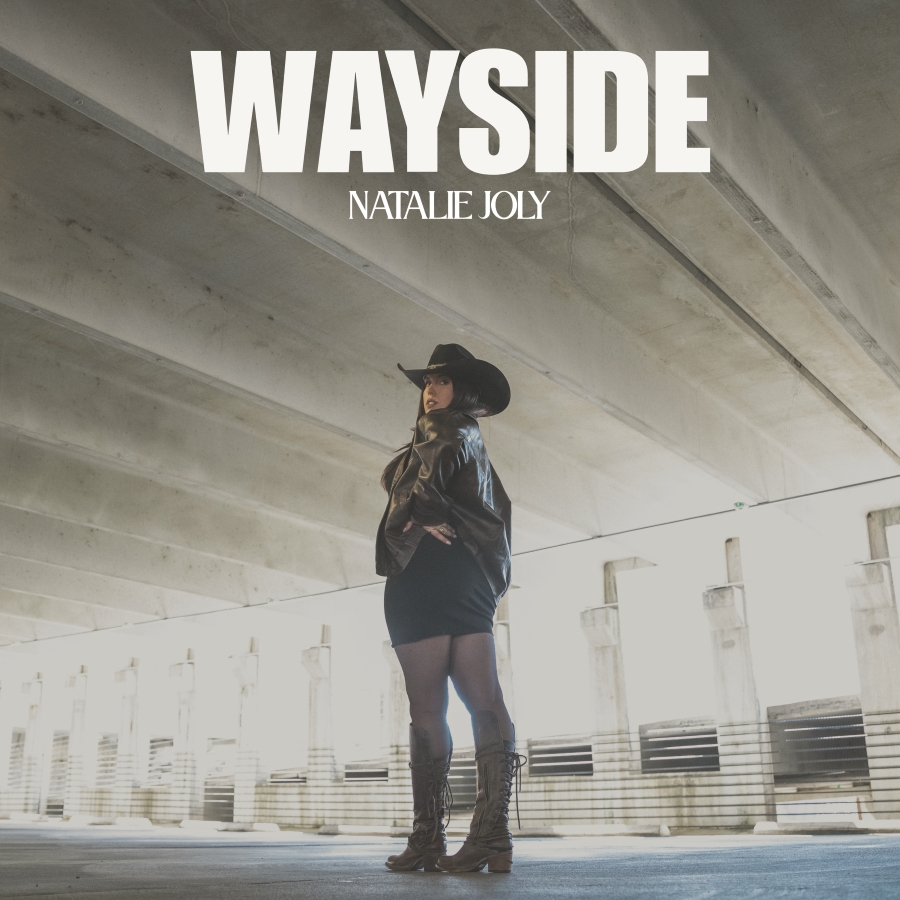
Natalie Joly – "Wayside" cover art

image courtesy of Natalie Joly

Single Review of Natalie Joly: “Wayside”

Natalie Joly is back in the blog, and I’m going to have to issue an earworm alert! I mentioned a couple of Natalie’s 2024 country-rock singles in a pair of “Publisher’s Corner” columns last year, but I haven’t dedicated a full review to one of her singles since a couple of 2021 reviews. That’s too long. Natalie’s new song, “Wayside,” is way too catchy to hide in a column where you might miss it! This is definitely one of her best. Then again, those 2021 releases, “Will You Ever Stop” and “Yours to Stay,” both still appear occasionally on my #PhoneOnShuffle playlists, so perhaps it’s more correct to say that “Wayside” adds to her strong body of work.

On “Wayside,” the drums kick off with a sharply hypnotic rhythm, while Natalie’s trademark country-rock grainy voice – a delivery that seems more gravelly than it actually is, thanks to Natalie’s tone – is better-suited to the verses than most of the other singers who are also able to hit the bigger, more powerful notes in the choruses. Restraint, though, makes the big notes stand out. Indeed, Natalie doesn’t go to the well too often, and those big notes sound effortless when she does. On this song, actually, they’re actually more rich than big, by design, because they’re exactly what’s called for.

The song itself is an introspective number about succumbing to manipulation, with thoughtful lyrics in the verses leading to the chorus payoff of “Don’t think I’m desperate enough to fall in line and grovel for you back just to be pushed to the wayside.” It’s a very cool release from rising, pop-friendly country-rocker Natalie Joly.


Album Review: Guy Verlinde & Tom Eylenbosch – Promised Land Blues

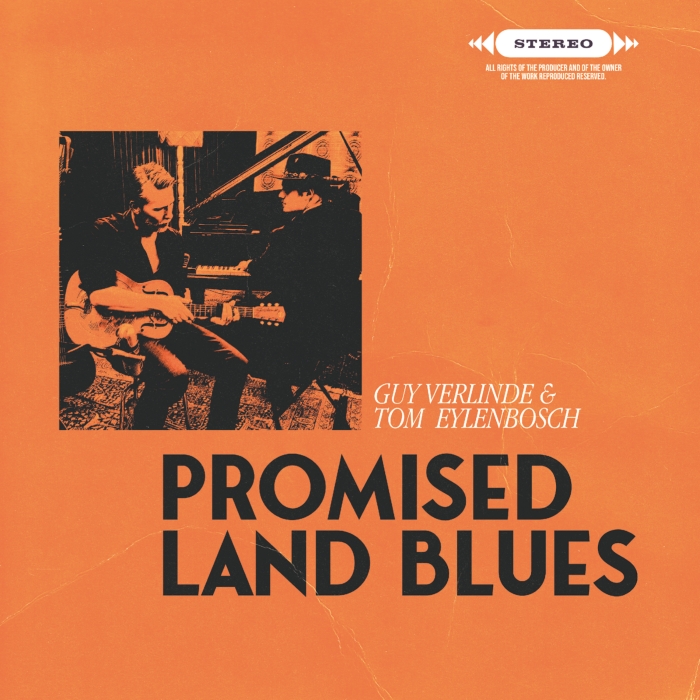
Guy Verlinde & Tom Eylenbosch – Promised Land Blues album cover

image courtesy of BANDR Music

Album Review of Guy Verlinde & Tom Eylenbosch: Promised Land Blues

Guy Verlinde (vocals, guitars, percussion, and broom) and Tom Eylenbosch (backing vocals, piano, banjo, and washboard) were the 2024 Belgian Blues Award winners for Best Duo in 2024. That’s no surprise, as Promised Land Blues is attention-grabbing from the very start. It’s clear that these two are a couple of Belgium’s best blues artists, with a varied, full sound, delivery that pops, and Verlinde’s deep, strong blues voice. The piano playing of Eylenbosch, meanwhile, can range from soulful to energetic to impressively frenetic ivory-tickling.

The album opens with “Heaven Inside My Head,” a song that sounds as if it’s straight from a N’awlins blues joint. It’s a steady-paced blues dirge whose straightforward progression is augmented by a gritty, almost growling vocal from Verlinde and nifty flourishes on the piano from Eylenbosch. Beginning to end, Promised Land Blues songs run the gamut from almost Gospel (“You Gotta Move”) to energetic (“Do That Boogie”) to soulful (album-ender “World Goin’ Wrong”) to haunting (“Gotta Let Go”).

Verlinde and Eylenbosch are joined by other top European blues artists on several songs. For example, “A Worried Man Blues” is one of the three songs on this disc where the headline duo is joined by Steven Troch on harmonica, providing harmonica-work that appears prominently, changing the musical mix.

Finally, one more song worth noting is “Reckonin’ Blues,” a song that chugs along like a freight train, addressing environmental concerns, with a neat little lyric about climate change that includes “a whole more thunderstrucks, now,” after which Verlinde riffs on the relevant AC/DC guitar hook a bit right before the song’s close.

So, if you’re not familiar with Guy Verlinde and Tom Eylenbosch, Promised Land Blues is a solid introduction to a pair of top bluesmen.

Live Review: Watertown Porchfest 2025

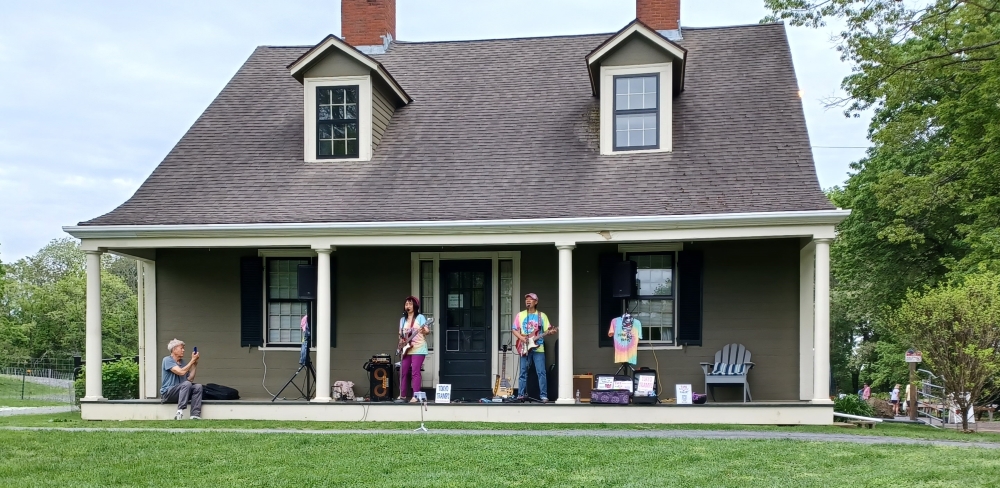
The Tokyo Tramps stand on the porch of the Gore Place farmhouse while performing during the 2025 Watertown Porchfest event

Tokyo Tramps; photo by Geoff Wilbur

Watertown Porchfest

Watertown, MA

May 17, 2025

Every year, many of Boston’s suburbs hold “porchfest” events, where the towns’ porches are filled with musical performances and, armed with a schedule of planned performances, music fans can wander from house to house from 12:00 to 6:00 to hear a variety of area musicians, hosted by the people whose porches serve as performance spaces.

I had only attended one porchfest before yesterday, in part because they tend not to be held in the outer suburbs where I live. In 2017, I attended Arlington’s Porchfest. Yesterday, I drove in to attend Watertown’s. If there was one notable difference, it was that Watertown’s performances were much more often in driveways than on porches, whereas all of the Arlington performances I saw eight years ago were on actual porches. It didn’t matter. Many of the performers yesterday performed under portable tents, in part I suppose due to the rain threat – all week, rain was predicted, but there was just one light 10-minute shower. Still, a good idea for equipment to be covered, something a porch – but not a driveway performance – would provide.
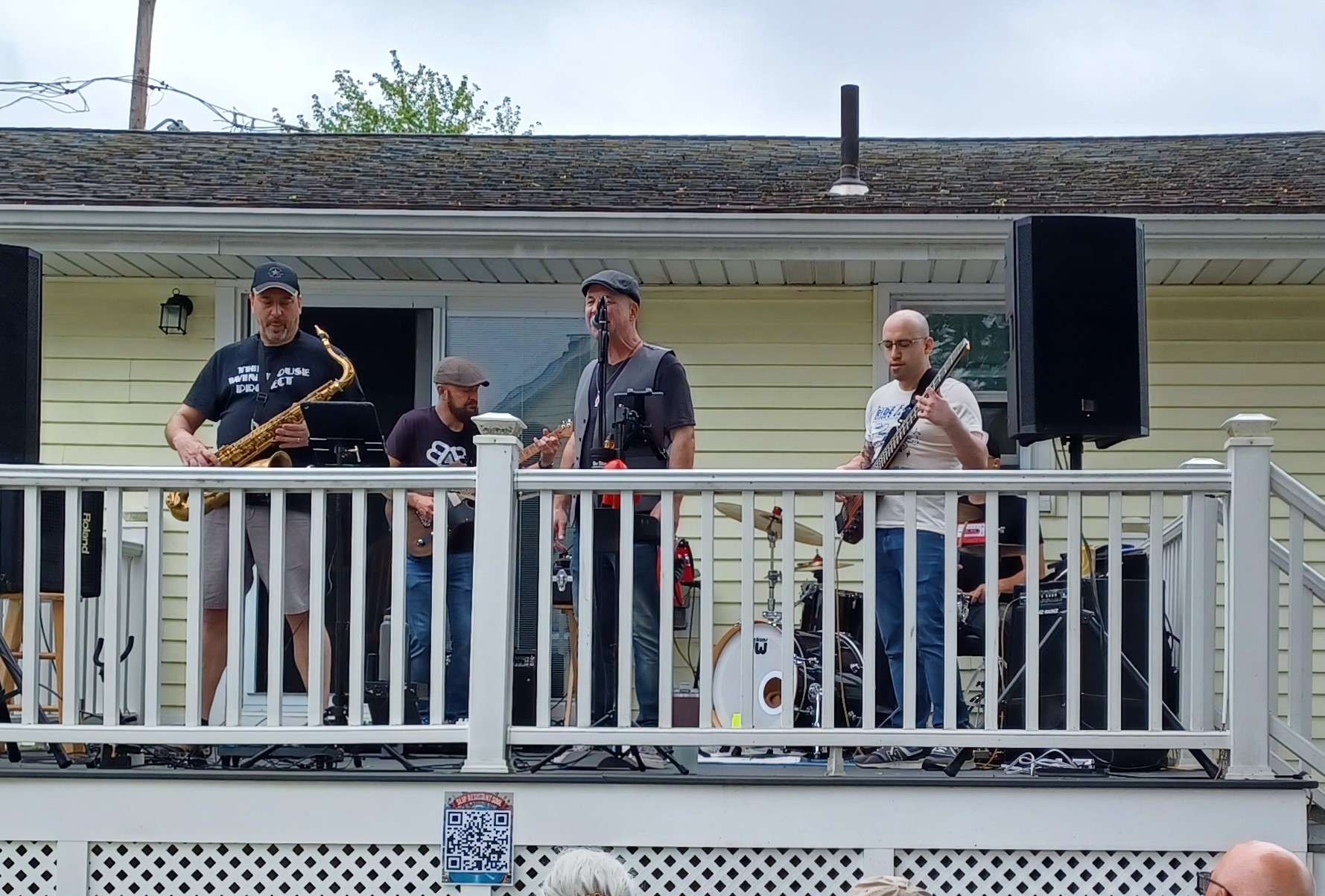
Slip Resistant Soul; photo by Geoff Wilbur

Slip Resistant Soul

My first stop was to hear Slip Resistant Soul. Slip Resistant Soul is self-billed as NOLA-centric soul and blues, that’s an apt description for this old-school, rockin’ blues band. Indeed, led by a thumping bassline, funky sax, and grizzled blues vocals, I could have stayed and listened to these guys all day. Or, at least, to the end of their set, if I hadn’t also wanted to catch a couple more bands during their 2-hour time slot.

A couple of the songs I enjoyed at this backyard-deck venue were “While My Guitar Gently Weeps,” with echoey psychedelic guitar work, nifty axe solo, an almost reggae rhythm creeping in from time to time, and Ray Charles’ “I Don’t Need No Doctor,” which SRS delivered with ideally gruff vox, a groovy, funky rhythm, and excellent riffing off the rhythm section’s steady beat.

It was obvious why the backyard venue was packed with an appreciative audience, as Slip Resistant Soul is clearly a top shelf band!
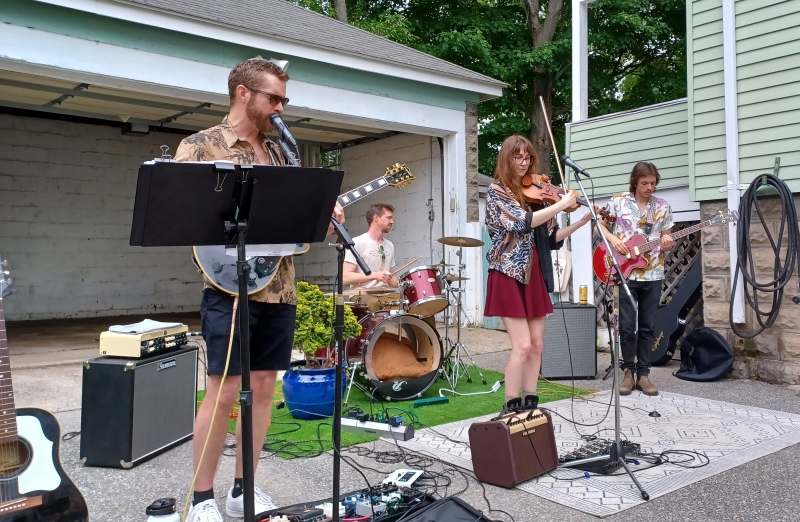
Three Weeks Notice; photo by Geoff Wilbur

Three Weeks Notice

Next up, I headed over to catch Three Weeks Notice. Stylistically, based on my limited sampling of the band’s offerings yesterday, I’d guess the music is centered somewhere around Americana or roots rock, though the styles from song to song were varied enough – though still within the band’s cohesive sound – that “centered” is the key word. Three Weeks Notice delivers a rich, full sound, with violinwork adding a neat flavor. I only stayed for four songs, but during the second song the guitarist delivered some engaging wailing vocals that are unusual among similarly styled bands. The third song was a violin-driven instrumental that took an attention-maintaining journey. And song four was a classic, psychedelic rock influenced instrumental that benefited from some cool violin effects and, eventually, increasingly distorted guitarwork.

In all, my four-song sample was a varied song grouping from a clearly talented, interesting band.
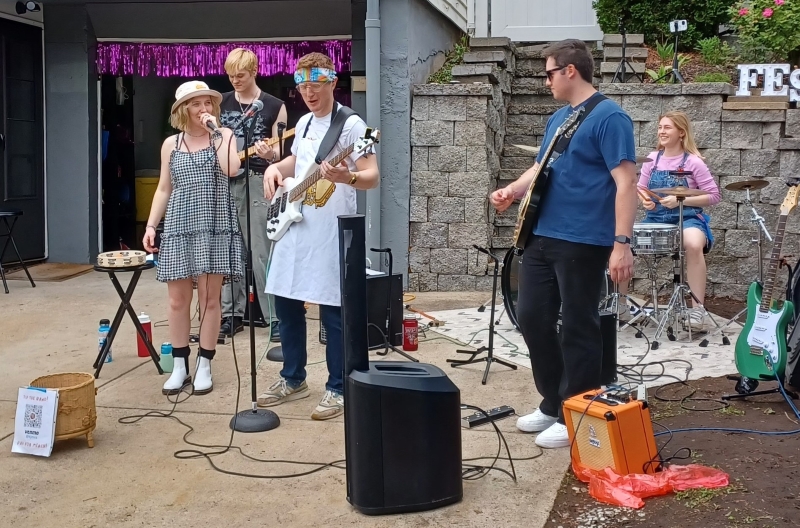
Hot Lunch; photo by Geoff Wilbur

Hot Lunch

It was a pleasure to next hear Hot Lunch, a rockin’ pop-rock cover band. From great between song banter in addition to high quality renditions of favorites, this is a band I’d definitely head out to hear for a night of cover-song fun with friends! The five songs I could covered a bit of pop-rock range – Katy Perry’s “Hot N Cold,” Sheryl Crow’s “Real Gone” (which sported a little well-suited extra edge on the vocals), Franz Ferdinand’s “Take Me Out,” Kelly Clarkson’s “Since U Been Gone,” and the Red Hot Chili Peppers’ “Dani California.” The Chili Peppers’ cover sported some nifty howls and, while being the one of the five songs led vocally primarily by the bass player, did feature some nice dual back-and-forth vocal sharing. There was a deservedly large, engaged crowd for Hot Lunch while I was there, with music fans of all ages thoroughly enjoying themselves.
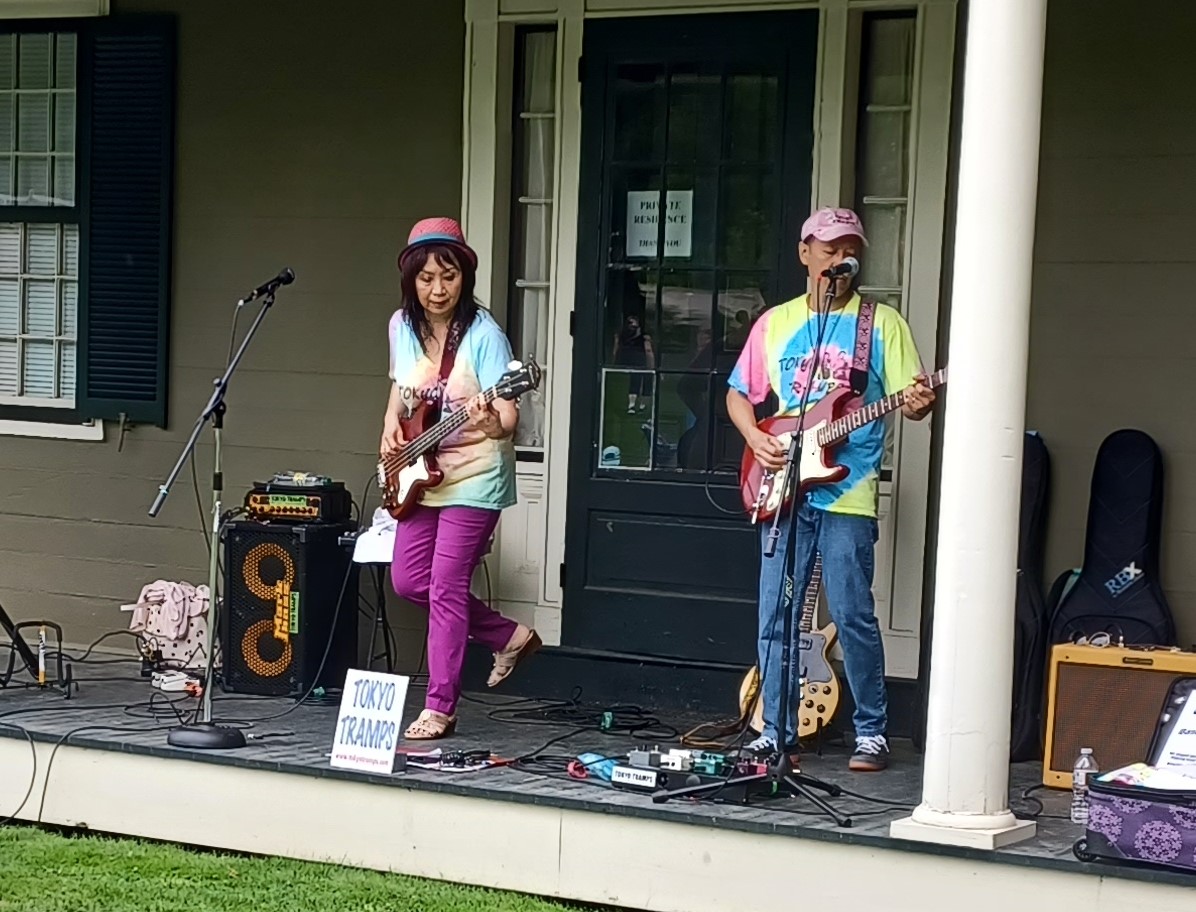
Tokyo Tramps; photo by Geoff Wilbur

Tokyo Tramps

One of the highlights of the event for me was the opportunity to catch Tokyo Tramps, whose last two released I’ve reviewed – their I’m a Tiger EP in 2021 and their Fearless Heart album in 2023. In fact, I grabbed my copy of Fearless Heart to play in my car’s CD player during the drive to Watertown to get into the mood for this set. This was my first chance to catch the Tramps live, and they delivered a fun set. As is often the case, this was a Tokyo Tramps duo performance, featuring core members Satoru Nakagawa (guitar) and Yukiko Fujii (bass), though, of course, on their albums, the Tramps record with a full band.

This performance was at one of the more interesting venues on the porchfest calendar. The bands were set up on the porch of the Gore Place farmhouse. Gore Place is a 50-acre estate showcasing an early 19th century mansion, farmhouse, and farm and sits along the border between Waltham and Watertown. There seem to be a lot of family-friendly events at the site, as well wedding and private events hosting opportunities, so it’s worth checking out the events calendar. There was a plant sale going on alongside the live music yesterday, in fact. But I digress…

I arrived at the venue a couple minutes early; fortunately so, because the Tokyo Tramps must have started a little early – porchfest schedules are a little fluid sometimes. The first song after I get settled in was the fun number “Baby Let’s Clean the House.” (You can find a prior live performance of this song on YouTube, if you’re curious. More than one, in fact.)

Throughout the performance, the duo performs well together, each able to carry a solo, as a good jammin’ blues number often calls for. Guitar fans will be particularly enamored with Nakagawa’s soulful axework, as his classic gritty blues rock/rockin’ blues axeslinging style can carry solo after solo all night long. Or all mid-afternoon long, in the case of a porchfest.

Other standouts of the day’s performance included numbers like “Jeffrey Jive,” with its “who dat? who dat?” singalong, “Empty Pocket,” because every musician is convincing when singing about empty pockets, and decades-old Tokyo Tramps original “Bound for Glory,” a rollickin’ number which appeared on the Tokyo Tramps’ 2003 album of the same name.

The Tokyo Tramps closed their set with “Young Lion,” a personal favorite track from the band’s 2023 album, Fearless Heart. I love the energy of this song, and it translates to a live performance, even as a duo. Its great blues rockin’ energy was an ideal conclusion to a tight set of blues and blues rock music.
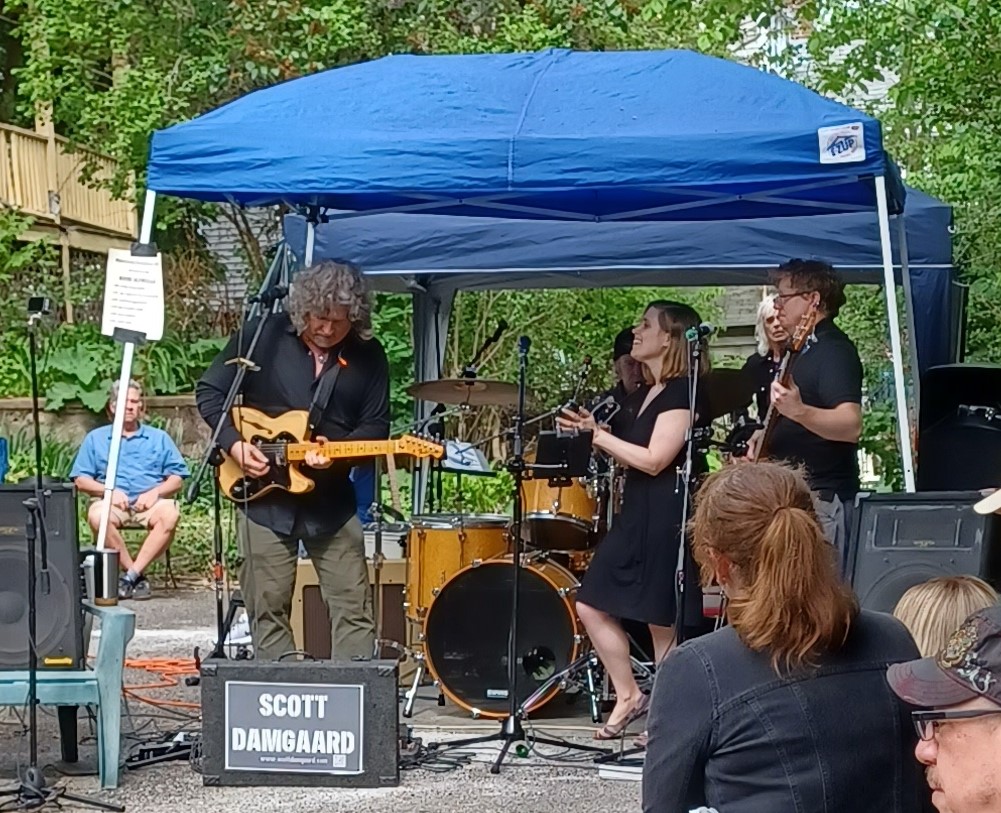
Scott Damgaard; photo by Geoff Wilbur

Scott Damgaard

After checking out a couple less impressive performances – and a 10-minute rain delay – I progressed to my next reviewable spot, where I caught the last two songs of Scott Damgaard’s thumping, rocking set. I was treated to two songs from Damgaard’s 2007 The Bells of San Miguel album. On the first, “For You,” Damgaard growls like a classic rocker, adds a little classic rock guitar, some kickin’ distortion, and a steadily upbeat, forward-moving energy. Then he closed this set with “The Bells of San Miguel,” a song flavored with a little southwestern style, which is mostly Scott’s strumming pattern. Both songs deliver a great barroom or concert stage energy! I admit, two songs ain’t much to go on, but in this case, it was enough for me to know that I’ll be back for more!
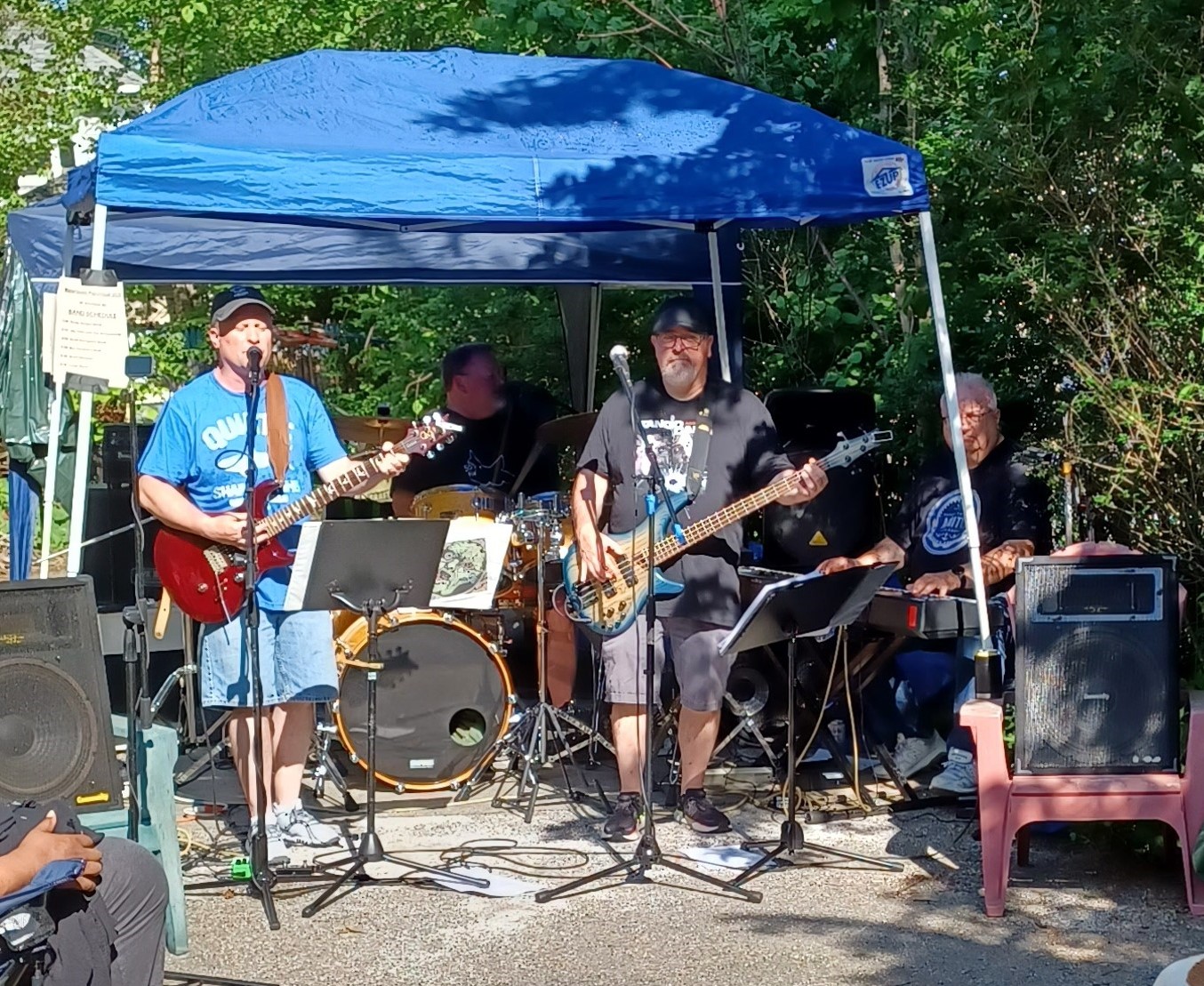
That’s Ben Gardner’s Boat; photo by Geoff Wilbur

That’s Ben Gardner’s Boat

That’s Ben Gardner’s Boat – TBGB, for short – was next, delivering old-school, kickin’, bluesy rock. I had time for four songs before heading off to grab a bite to eat, hoping to make it back in time for a little bit of Scott Matalon‘s set. (I failed, but the last minute of Scott’s set sounded awesome as I drove up and on the walk over from the car.)

Back to TBGB, you’ll recognize all four of the songs I caught. All very classic hard rock, exceptionally performed. First up, “Deep Ellum Blues” rocked the… yard? The driveway? Well, whatever, it rocked it! Next up the band delivered a big sound with a great jangly, classic rock vibe with its rendition of John Stewart’s “Gold.” (Here’s a video of TBGB performing the song, but when I caught them live yesterday, the vocals weren’t buried in the mix like they are in this recording. Still, you get an idea about how tight the band is and how rich their sound is.)

Next up were a couple of multi-media crowdpleasers. First, TBGB delivered a rich-sounding cover of the Hawaii Five-O theme song. It was followed by a rollicking version of “Westbound and Down” (from Smokey and the Bandit). TBGB covered a lot of ground, all of it classic rock-centered. And this four-song snippet is enough to know they’re a reliably fun band to catch live in a live setting, from a bar to an outdoor concert.
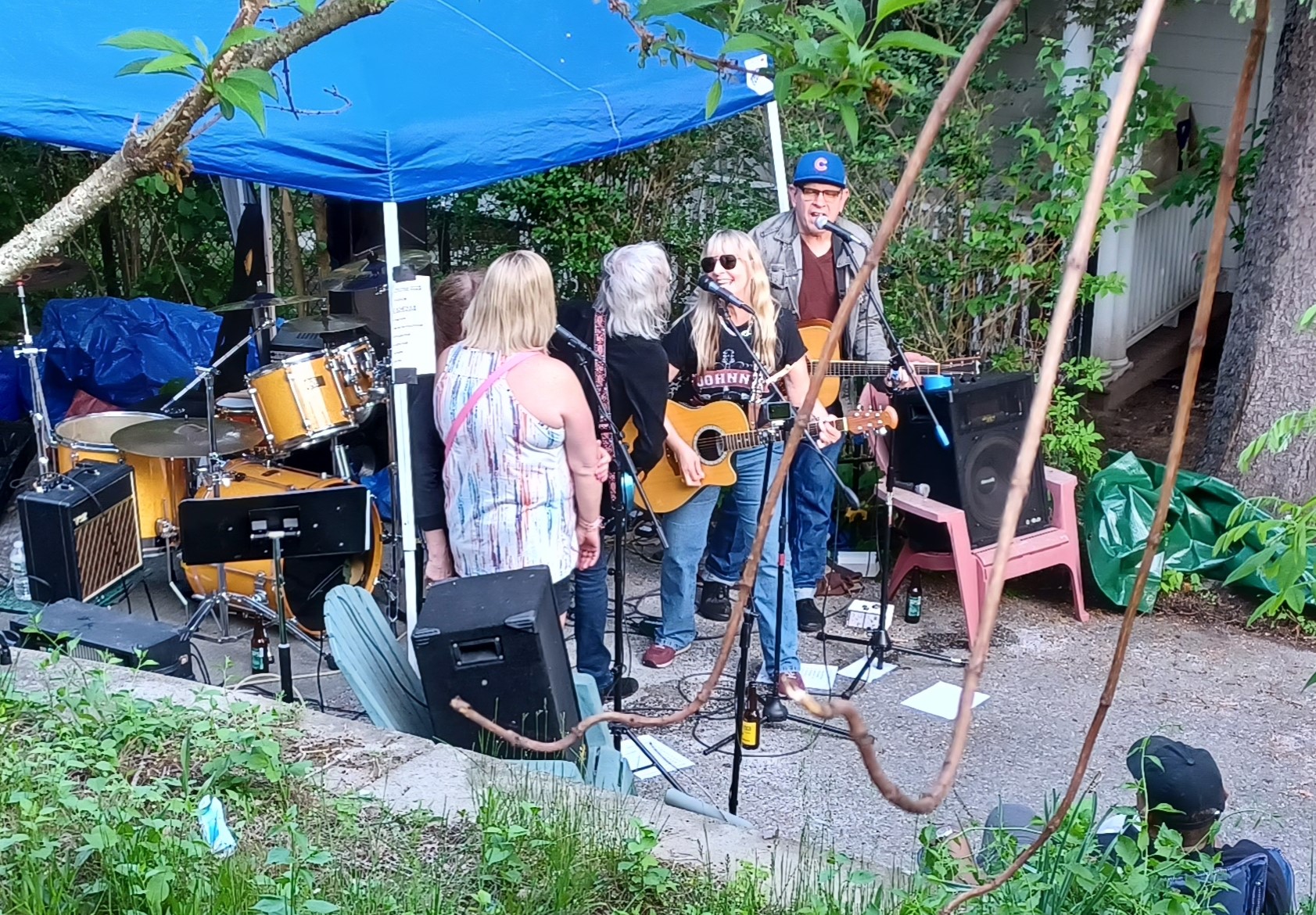
Linda Viens/Girl with a Hawk: photo by Geoff Wilbur

Girl with a Hawk

As noted, I made it back in time to catch the last few seconds of Scott Matalon’s set, which was the lead-in to my last set of the Watertown Porchfest, Girl with a Hawk. Now, I just reviewed a few Girl with a Hawk singles a few days ago, so it was kismet I was able to catch a set so soon thereafter. In fact, when I first checked the porchfest schedule, I didn’t see this location’s lineup listed. Whether it was a last-minute addition to the calendar or just something I missed, I don’t know. (I suppose I could have asked.)

In any case, technically, this spot was listed as Linda Viens spot. Linda’s the lead singer of Girl with a Hawk. (I suppose that makes her the girl with the hawk.) In this case, she was joined by two of GWAH’s four other band members, guitarist Daniel Coughlin and keyboardist Richard Lamphear (who played acoustic guitar in lieu of keys).

Viens’ sports an original vocal style that’s old school rock with a kind of a punk energy but with a little more delicate precision than you’d maybe expect from that description, including an ability to go really soft-touch, which can add an Americana-ish vibe to some songs.

The band played recent release “Share It All” with the 2 acoustics and an electric giving it a soft yet rockin’ vibe. There’s a nifty guitar solo in this one, too. Performed this way, the song has kind of an “I’d like to teach the world to sing” vibe, for those of us old enough to remember those classic Coca-Cola commercials. (Yeah, I know it was a pop hit, too, but we all know it from the Coke commercials.)

Other highlights included a couple of new songs. One (recently recorded, though I missed the song title), is a smooth, swaying number. The other, “Two Souls,” sports a very original sound. It’s the sort of song that sounds broadly familiar, but you know you haven’t heard it before because it has a very quickly identifiable Girl with a Hawk sound.

The band’s set also included a strong performance of the most recent Girl with a Hawk single, “No One Like You.” And a new one, entitled “The Fighter,” I believe. I can already imagine how, with full production,  it’ll end up with multiple listening threads, just based on the lead guitar line’s relationship with the melody in its stripped-down form. I look forward to hearing the full studio workup!

The Girl with a Hawk trio closed out their set – and my Watertown Porchfest day – with an “I’m in Love With My Friends” singalong, a satisfying end to a full day of music, in which I was able to hear live performances from a couple acts whose recordings I already knew, while discovering a slew full of new, talented bands. Indeed, that’s what porchfests are all about.

I’ll be looking forward to next year’s Watertown version. And, of course, I hope I’ll find time to get out to one of the areas many other porchfests that dot the calendar this spring and summer!

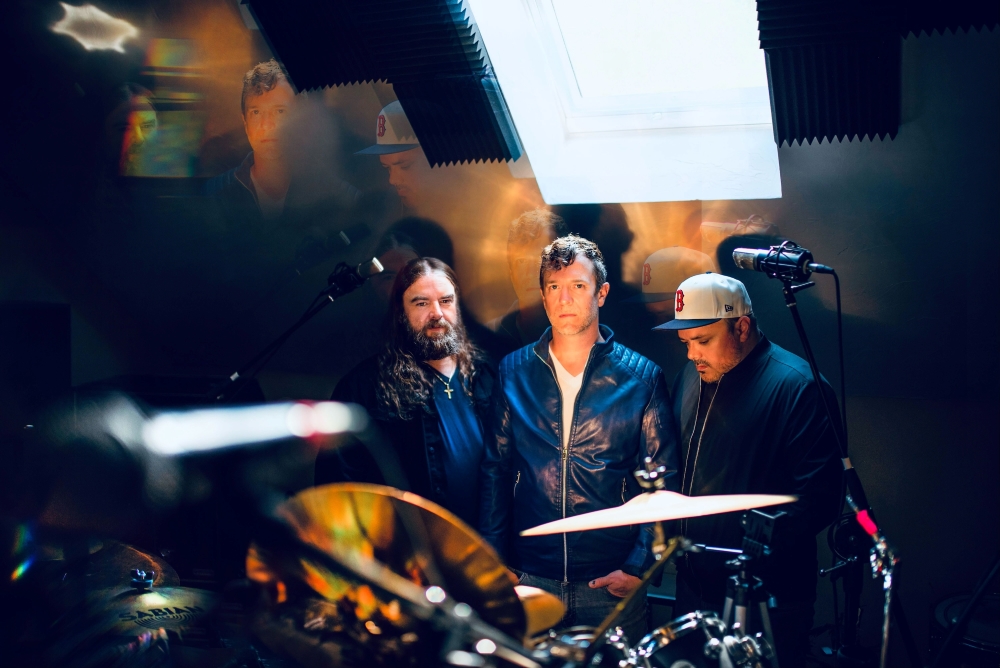
Album Review: Jesse Terry – Arcadia

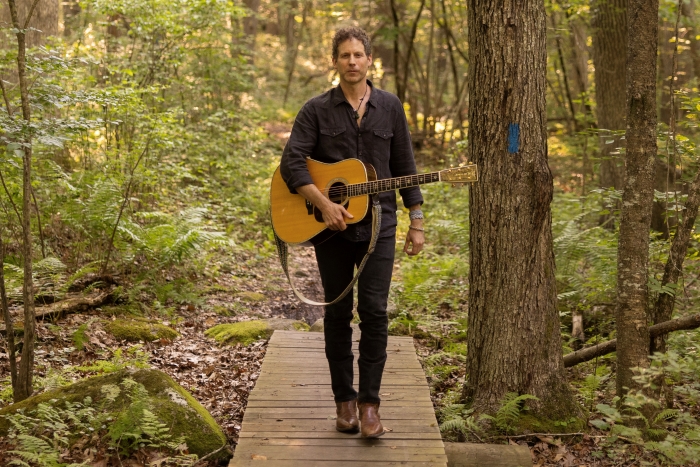
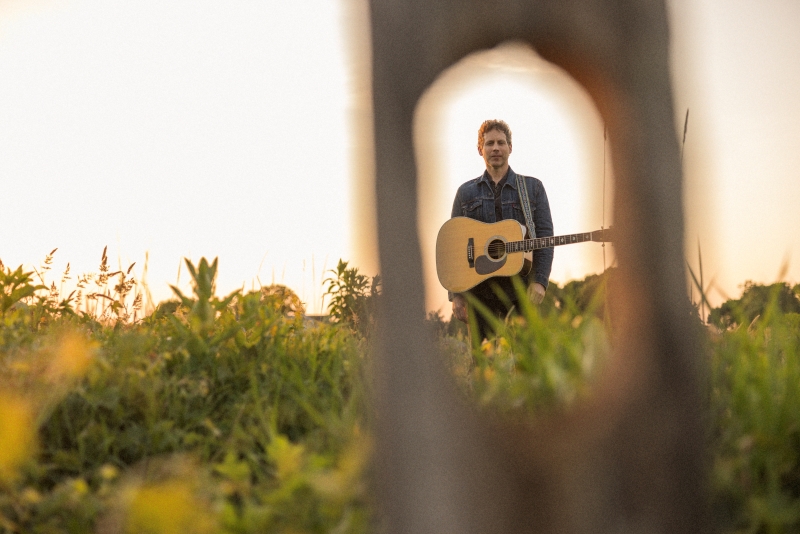
Jesse Terry stands holding a guitar on a boardwalk in the woods

photo courtesy of Michael J. Media Group

Album Review of Jesse Terry: Arcadia

Jesse Terry is a versatile singer-songwriter with a powerful, smooth, recognizable voice and a musical style that lands somewhere between soft rock and country rock-tinged Americana, though it doesn’t really land in one spot. More correctly, it moves around. It wanders. A lot. But let’s go back to that voice. Oh, man, what a voice!

I reviewed Jesse’s When We Wander a few years ago – that’s what Jesse’s music does, it wanders! – so my expectations for Arcadia were high. This record does not disappoint! It kicks things off with a bang, with a song that’s still my favorite (but just barely), the title track “Arcadia.” It opens with twangy guitar and a John Mellencamp attitude, with a rich sound bed and Jesse’s rich, full, emotive voice. The song is full of energy, the lyrics paint a picture, and the song lifts you up in a bed of music then just carries you along to the end. Simply put, a helluva song. Top 40 airplay fodder.

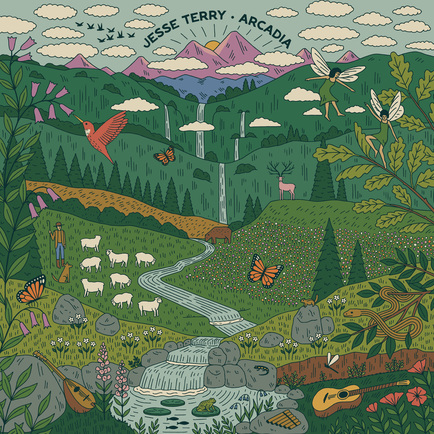
Jesse Terry – Arcadia album cover

image courtesy of Michael J. Media Group

Interestingly, Jesse follows it with “Burn the Boats,” moving from the rocking of “Arcadia” to a softer, sweeter, folky sound. It still has more of a motor than classic folk, but it’s definitely a lyric-driven, vocal-driven song. It’s a great song, but if you know anything about me, you’ll know that after rockin’ the house with “Arcadia,” I spent the first half of this song screaming “more guitar! more guitar!” OK, no I wasn’t. But in concert, I might’ve. That being said, if I’m not in a “more guitar” mood, this is one sweet, smooth song.

“Gunpowder Days” has a bit of a noisy, funky rhythm throughout, with vocals that vary from gritty to almost folk-influenced ’70s-guitar-rock high notes. It’s a song with grit and gravitas, one with some directional shifts you won’t see coming but that work quite well. Just plain cool.

“Poison Arrow,” next is a chunky rock number with psychedelic ’70s rock-style… organ? I mean, Jesse marches forward in this song, as is his style, much like any other singer-songwriter, but these arrangement are interesting, setting the album apart. And, really, how long has it been since I mentioned his rich, versatile, identifiable trademark voice?!

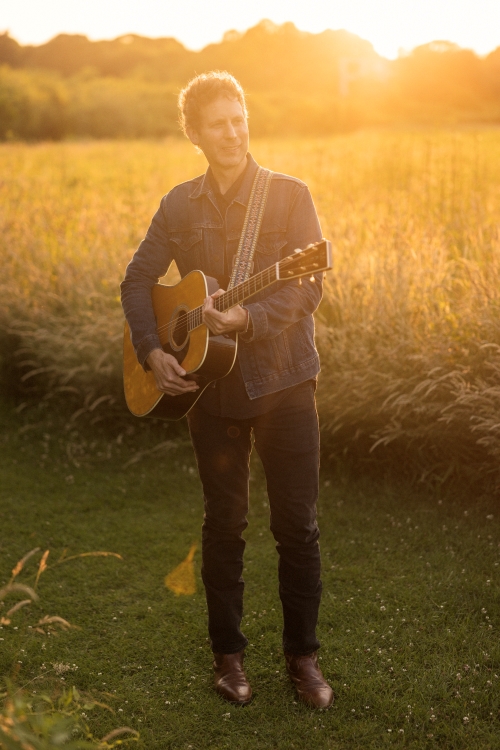
Jesse Terry stands holding a guitar in a field

photo courtesy of Michael J. Media Group

“Someone in Repair” is another candidate for favorite song. This one is mellow – but with the same awesomely rich soundbed found on the rest of the album – and Jesse’s voice fittingly has some rough edges. But it’s the cool lyrics that seal this one for me. Lyrics like “Be gentle to a stranger for they are someone in repair” are the payoff from much more detailed mini-stories in the verses. Even better, the song closes with the following lyrics: “I hope someday you will see yourself and recognize you are rare. Please be gentle to a stranger; you are someone in repair. Oh, be gentle to a stranger; we’re all someone in repair.” OK, talk amongst yourselves. I’m getting a little verklempt. (Yes, Mike Myers does it better than I do; I have a video link for that.) But I digress. Jesse co-wrote “Someone in Repair” with Craig Bickhardt, Jesse notes in this Instagram video. Well, I just praised Craig’s songwriting skills a few days ago. In fact, checking the liner notes, it looks like Jesse and Craig collaborated on nearly half of Arcadia‘s song. These two in cahoots? They’re playing with a stacked deck!

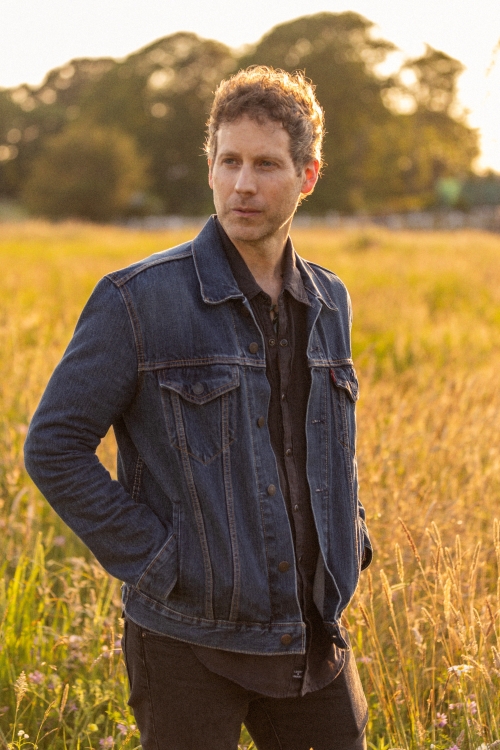
Jesse Terry stands in a field

photo courtesy of Michael J. Media Group

“Native Child,” next, has kind of a Tom Petty vibe, though its tempo and message are a little more heartland rock-like. In fact, “Waiting Out the Hurricane” opens with a Hard Promises-era Tom Petty and the Heartbreakers-esque twangy guitar. Steadily thumping drums drive the song, with jangly guitars overlaying it, while a a very deep, desert west-flavored bass reverb appears from time to time. All together, “Waiting Out the Hurricane” is very early ’80s Petty-like noisy guitar pop-rock.

“Strong” is a strummer that tugs heartstrings as it builds in power, stirring up an emotional response. It’s followed by “River Town,” which is a my-hometown type rhythmic rocker you might expect from the likes of Mellencamp. Or, if you “country it up,” it could be a hit small-town country pride kind of song. Especially with the lyric, “Folks told me Tennessee and some southern accents would fix me right up.” Well, maybe not. In the story, Jesse moved back north again. You don’t hear that in a country hit.

Jesse Terry stands in a field, with a guitar hanging in front of him from a guitar strap over his shoulder

photo courtesy of Michael J. Media Group

Penultimate song “Headlines” is a weighty song with foreboding music and sweetly cool background vocal harmonies – obviously, that’s what you always combine with foreboding music, right? – atop a noisy music bed. And I like the mid-late thick guitar wail. Musically, this song is so interesting, you won’t pay attention to the depth of the lyrics. Listen again and make yourself because “the devil’s in the headlines.” You’re welcome.

Finally, Jesse closes with “Where You Came From,” a sweet, fatherly song that’ll certainly be a family favorite for years.

All told, Arcadia is a song-driven, soft-to-mid-tempo disc that’ll appeal to heartland rock fans, featuring songs that’ll reach mainstream rock, radio rock, Americana, and probably even a lot of folk music fans. By the way, have I mentioned Jesse’s voice? (chef’s kiss emoji!)

Single Review: Jon Muq – “Hear My Voice”

Jon Muq

photo by Morgan Wommack; photo courtesy of Reybee Inc.

Single Review of Jon Muq: “Hear My Voice”

Singer-songwriter Jon Muq recently released his soulful pop single “Hear My Voice.” The song is musically lightly instrumented and pleasant, with the beat swaying softly in the verses, leading to an echoey power surge. Well, relatively speaking, anyway; the “surge” is still pretty soft-pop. But it delivers the song’s climactic moments, each time leading to the initial chorus vocal “Can you hear my voice.” And the song’s heartfelt final few notes are reminiscent of an Ed Sheeran ending.

Vocally, Muq’s vocals are in a very cool pop style. Yes, his vocals are entirely his own, but they contain elements of some other big-time pop and pop-rock singers. In some parts, they’re reminiscent of – here’s that name again – Ed Sheeran’s more syncopated moments. In other parts, like James Arthur, with Muq’s tone particularly comparable to Arthur’s warmth. And this memorably enjoyable voice is wrapped up in an old-fashioned, mainstream pop-styled vocal package, with maybe even a little Phil Collins vocal styling mixed in. If your musical taste includes any of those three artists, you’re likely to enjoy Jon Muq’s singing.

Here’s hoping Jon Muq has a few more well-written songs like this up his sleeve. He certainly has the voice to rival today’s top pop singer-songwriters. Predating “Hear My Voice,” Muq has a full-length album available. I’ve not listened to any of Muq’s prior releases, so after I wrap up this review, I look forward to checking out that record, Flying Away, a 2024 release. Muq will be on the road this spring and summer, with concert dates across the U.S. and Europe, plus a couple dates in Calgary, already scheduled, per the “Tour” page of his website.

Single Reviews: Girl with a Hawk – “#Vote (#Rock the Boat),” “Share It All,” and “No One Like You”

Girl with a Hawk

photo by Kelly Davidson; photo courtesy of Knyvet

Single Reviews of Girl with a Hawk: “#Vote (#Rock the Boat),” “Share It All,” and “No One Like You”

Girl with a Hawk is led by New England Music Hall of Fame inductee Linda Viens (lead vocals, guitar). She’s joined by Daniel Coughlin (guitar), Richard Lamphear (keyboard), Nancy Delaney (drums), and Dan Bernfeld (bass). The band’s sound is rock-centered but veers into folk and Americana, as well. Essentially, Girl with a Hawk is a talented group that’s able to go wherever the song takes them.

Girl with a Hawk – #Vote (#Rock the Boat) cover art

image courtesy of Knyvet

I suppose it’s not surprising a song-driven band would unleash an issue song like “#Vote (#Rock the Boat),” a song released last fall, shortly before the U.S. election, as a non-partisan message encouraging voting, urging voters to make sure their voices were heard. The song is lightly instrumented, with just vocals and guitar, plus guest harmonica from Jim Fitting (Treat Her Right, Session Americana) and backing vocals from the entire band. The song opens with a twang – more precisely, slide guitar – and strums along folkily with a nifty, knee-slapping rhythm.

Girl with a Hawk – "Share It All" cover art

cover art design by Nicole Anguish; image courtesy of Knyvet

“Share It All,” on the other hand, is a richly instrumented pop-Americana number. Viens’ vocals are rough but tuneful, with an almost punk-rock pacing, varying phrasing to draw the listener in, helping turn what could be a too-smooth groove into an engaging, consistently interesting listen. And there’s a twangy guitar way off on the left-hand corner of the mix, giving your left ear a different listening experience from your right ear if you’re wearing headphones – country on the left, rock on the right, if you will.

The third single, “No One Like You,” is the sole 2025 release among this trio; the others dropped in 2024. “No One Like You” is a song about loss and passing, inspired by the tragic passing of Foo Fighters’ Taylor Hawkins in 2022. It begins with vocals steeped in sadness and melancholy but then picks up the tempo and thumps along with a steady beat. Still, the vocal cracks a little more than usual from time to time, echoing the emotion in the song’s lyrics. After the mellow opening, the tone moderates, and the song becomes more about reminiscence than loss, with the addition of a crunchy guitar bringing in some energy by the mid-point. The track’s second half embodies a more upbeat energy, seeming to recall the joy of the past a little, even if slightly strugglingly. In the end, what starts off sadly ends more enthusiastically, emphasizing reminiscence and joy, musically at least, more than loss.

If this is your introduction to Linda Viens and/or to Girl with a Hawk, it’s a great trio of songs to start your journey. For longtime fans, if you’ve missed any of these three releases, it’s time to give them a listen!

Album Review: Circuline – C.O.R.E.

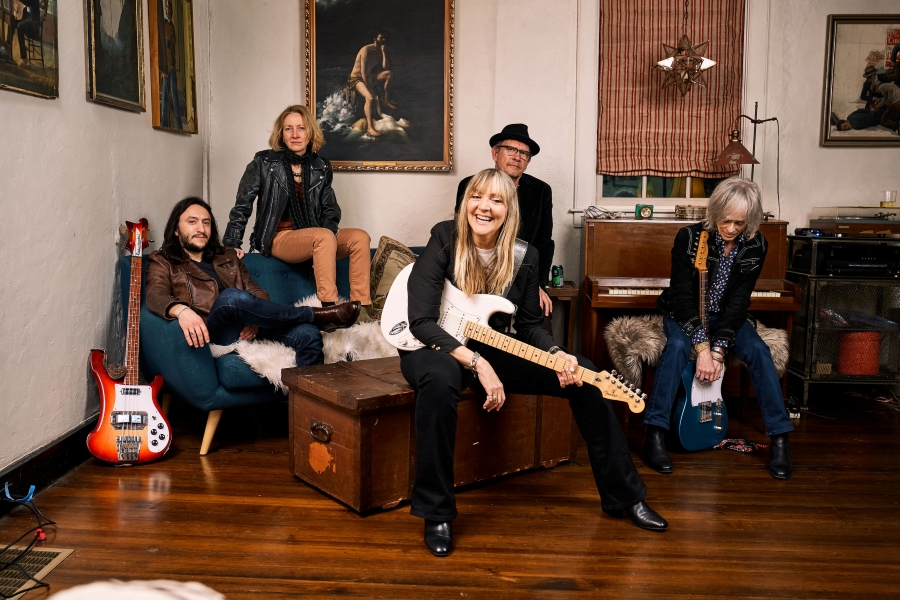
Circuline band photo

photo courtesy of Glass Onyon PR

Album Review of Circuline: C.O.R.E.

Circuline is an acclaimed progressive rock band, and C.O.R.E. is the sort of soaring album that you’d expect from one of the genre’s best. On C.O.R.E., Circuline harkens back to classic progressive rock musical styles, throws in some elements from music with broader commercial appeal, and pushes the envelope on new, original styles and sounds. It all makes for a fun repeated listen, even for those of us who aren’t hardcore prog rockers. If you’ve been reading this blog for a long time, you may recall Eric Harabadian’s review of Circuline’s Counterpoint in 2017. Well, this time it’s my turn.

You’ll hear a lot of different styles on C.O.R.E., but if there’s one classic progressive rock band Circuline reminds me of on this disc, it’s Yes. Yes, Yes drew a lot of classic rock fans’ attention, as well. And that’s the point. Among today’s prog-rockers, Circuline is one of the more likely bands to perform a broad-appeal rock progressive rock song. There are several on C.O.R.E.

Circuline

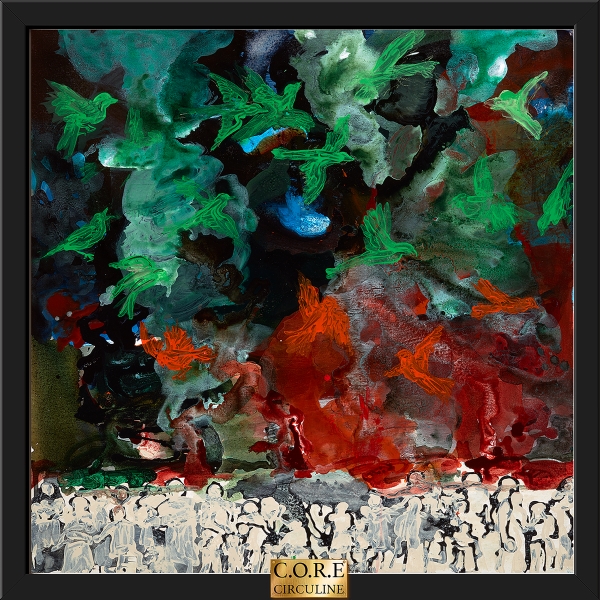
cover art: painting by Henrietta-Mantooth-Bagley; image courtesy of Glass Onyon PR

Album-opener “Tempus Horribilis” isn’t one of those songs, but it is incredibly interesting and one of the more experimental songs on the record, with disconnected, almost jazz-rock-like guitar bursts, artsy spoken-word sections, and one of those mid-song restarts that tricks you into thinking maybe a new song is beginning. Nope. Of course, “Tempus Horribilis” clocks in at more than 6 minutes, so for a non-prog band it probably would be two songs. So yeah, it’s a very cool song if you’re a music fan, but it’s not bordering on mainstream in the least. From a song structure perspective, I could almost hear Pink Floyd perform a song like this, though Circuline’s central sound differs significantly from Floyd’s.

“Third Rail,” the next song, is probably the most likely crossover song. A couple others have a similarly classic rock-based feeling, but “Third Rail” clocks in at just 4:11, more than a minute shorter than the next-shortest song on C.O.R.E. That’s not the only reason, though. Keys, drums, and guitars provide swirling tension-builds supporting Natalie Brown’s powerfully emotive, soaring vocals.

“Say Their Name,” next, is a nifty near-ballad, as the music bed is mostly soft. Sure, when all the instruments enter simultaneously, it can get a little noisy, but that’s just the change of pace on this number. And some of the musical breakdowns in the middle of the song would make it difficult to slow-dance to, not that that should stop you from trying. But it’s a cool, groovy listen, that’s for sure. Sort of jazz, I suppose, if performed by a progressive rock band.

Circuline band photo

photo courtesy of Glass Onyon PR

Just as “Say Their Name” isn’t jazz, despite the structural similarity, “All” isn’t a Broadway showtune, despite having some segments where the group-sing could be straight out, let’s say, Les Misérables. There’s a mid-song instrumental exchange, too, where I can picture a stage character uneasily looking about, perhaps holding his hand above his eyes and leaning forward, as if searching for something. Sure, there’s too much instrumental jamming to find a home as something other than a shapeshifting progressive album track, so don’t listen for it on Broadway, but the sonic journey is enjoyably long and winding.

“Temporal Thing” is one of Circuline’s broad-appeal, mid-tempo Yes-reminiscent numbers. It’s followed by “You,” on which the band goes a bit dark and quite foreboding, something you’ll find nowhere else on this record, but the haunting sound befits lyrics like “You bore a hole in my soul. Now I’m screaming.” It’s a very powerful and emotional number. Then, for a change of pace, the sweetly mellow “Blindside” follows. It’s the third song in such an interesting song trio, showcasing Circuline’s depth and breadth back-to-back-to-back. As noted in the text next to the “Blindside” music video shared on Facebook, the song is “inspired by power ballads from David Foster and Dianne Warren, moving into anthemic rock choruses, with stacked vocals inspired by Journey.” So why didn’t I suggest “Blindside” as Circuline’s most likely crossover song? Well, you’re not likely to hear a 6-minute song on the radio unless you take your time machine back to the ’70s or early ’80s and find yourself a long-form AOR station. But it’s really cool on your stereo and would be equally so in concert. (Or back to that slow dance I mentioned earlier? Well, this is your song.)

Circuline closes this record with “Transmission Error.” And I seem to be mentioning song lengths a lot in this review, don’t I? Well, this is the album’s longest track, at more than nine minutes. But that’s not really the point. The point is that none of these songs seems too long. They’re so interesting, with unexpected sonic twists and turns that deliver the sorts of payoffs that lead you to want to follow the next one down what appears to be another dark alley but, as it turns out, most certainly isn’t.

There’s a reason Circuline is considered a premier progressive rock band. They’ve got the chops, they’re never boring or redundant, and they turn what can sometimes be a standoffish (to outsiders) musical genre into something both progheads and the general rock public can enjoy. If you haven’t heard C.O.R.E. yet, give it a listen. If you’re a mainstream rocker, start with “Third Rail” and “Blindside.” If you’re a little dark, try “You.” If you’re into the more experimental stuff, check out “Tempus Horribilis” and “Transmission Error.” If you’re into Pink Floyd, maybe also “Tempus Horribilis” and “Transmission Error,” though you might dig different sections of those tracks. C.O.R.E. is simply an exceptional progressive rock album that deftly covers a broad swath of the progressive landscape.


Single Review: XIII Doors – “See How You’ve Come So Far”

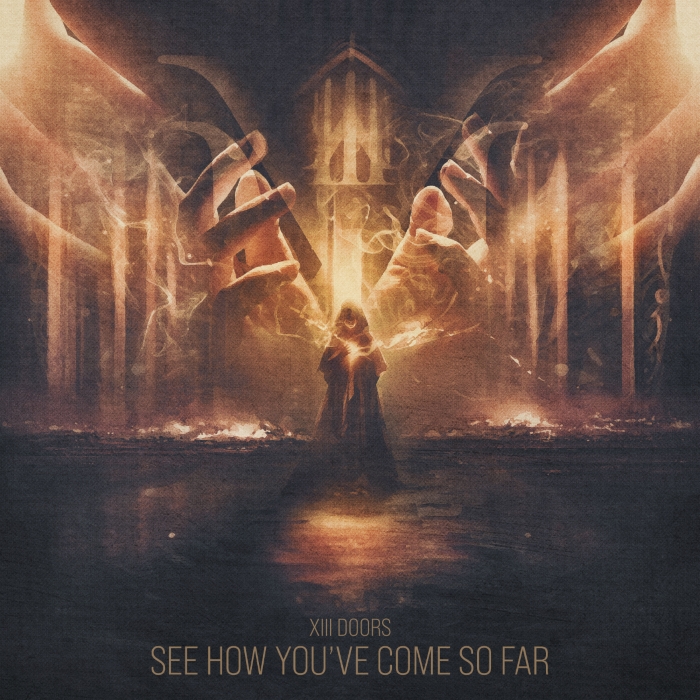
XIII Doors – "See How You've Come So Far" cover art

image courtesy of BJF Media

Single Review of XIII Doors: “See How You’ve Come So Far”

This song simply rocks! It’s timeless, with plenty of classic hard rock riffs and song structure but a very modern rock edge, in part driven by the song’s soaring vocals.

XIII Doors is a powerful Irish rock band consisting of DJ O’Sullivan (vocals, guitars), Flash Murphy (guitars), Pat “Pablo” Byrne (bass), and Cian “Whoasley” O’Sullivan (drums).

“See How You’ve Come So Far” features a guitar part that cycles in and out of the song, atop a full-on energy-buzz of a music bed. O’Sullivan’s voice soars with an airy power that’s a bit reminiscent of classic progressive hard rock bands. The song also features a blistering axe solo – from Murphy, I presume – about two-thirds of the way through that impresses while still remaining true to the song’s feel, returning it to the powerfully churning close. Musically, the arrangement and delivery are well-suited to the song’s focal lyric: “See how you’ve come so far. Look deep within your heart.” For power-rockers like me, this is an inspiring song.

“See How You’ve Come So Far” appears on the band’s debut album, Into the Unknown. I haven’t heard anything else on that record yet, but if this single is any indication, it’s gotta rock!

Album Review: Craig Bickhardt – Soliloquy: Sixteen Solo Songs

Craig Bickhardt

photo courtesy of Trespass Music

Album Review of Craig Bickhardt: Soliloquy: Sixteen Solo Songs

Craig Bickhardt has a classic folk singer-songwriter voice. It’s rich but a little raspy. Craig’s voice can be powerful in some instances, tender in others. He can be a storyteller, can help you feel the emotions in the lyrics, or see things from a new perspective. Craig’s voice, coupled with his detail-oriented, picture-painting lyric-writing skills, dependably result in an instant-classic collection of folk songs, and Soliloquy is no exception.

This record is just Craig, his guitar and his voice – solo, as the album title indicates. It’s an attempt to capture the intimacy of one of Craig’s acoustic performances, and it certainly does. The production of such an undertaking is extremely important, and Craig’s performance on this record is captured with a rich, full sound that plays well through speakers or headphones. Now, 16 songs is a lot, so I’ll just focus on some favorites or tracks that stand out for different reasons.

Craig opens the record with “Go Round,” with energetic finger-picking that provides an energetic opening to the album, something that’s always wise to do on a record that’ll feature a lot of softer crooning later on. Wake the audience up at the beginning! The song itself is playful, both musically and regarding wordplay, with fun lyrics like “Way back in ancient times, men had the upper hand, ’til Solomon’s seven hundred wives made a wreck of the man.”

“It Opens” is a song about embracing what comes in life, built around the chorus “It don’t look like a door. It don’t look like a door. But it opens, it opens.” Craig rolls out his raspy voice in a couple spots in this song. It seems like more, but upon closer listen, no just in a select few spots, mostly at the beginning of the verses.

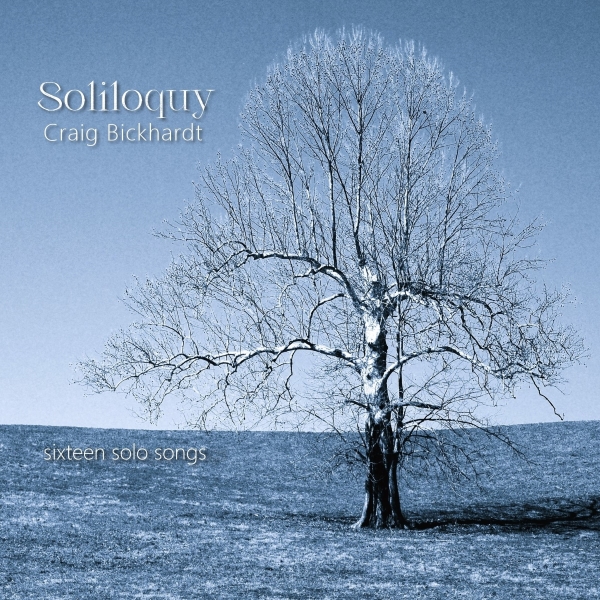
Craig Bickhardt – Soliloquy: Sixteen Solo Songs album cover

image courtesy of Trespass Music

“You Take Me Home” is a pleasant love song on which Craig employs a rough-hewn vocal delivery that conveys his emotion, punctuated by guitar-picking that’s almost like a soft rain.

“The Real Game” is an energetic song about preferring baseball played for the love of the game rather than money or fame. About remembering the pure reason for enjoying the game. It has a lively tempo and is extremely catchy, though it espouses an opinion that can come off as kind of pretentious and preachy. However, given the story behind the song, I know that’s not intended, so I try to hear it a super-catchy song about the simple pleasures, unencumbered by real-life, adult complications.

“This Old House” and “Stan” are extremely well-written songs that paint vivid pictures of frequent folk song themes, at least among the better folk songwriters with the talent to pull it off. “This Old House” is an ode to a dependable house, while “Stan” is about a man who saw his livelihood disappear, as the world leaves people behind – in this case, Stan. The first of this pair of songs is pleasant and reminiscent, while the second is matter-of-factly heartbreaking.

“The Restless Kind” stands out as a particularly energetic quick-picker of a song, a song on which Craig varies his vocals more than on many of his others. It’s a peppy song that could inspire those among us who are restless souls to feel much better about their desire to avoid putting down roots or staying in one place too long. Come to think about it, it’d be nice if it inspires a few restless people to throw off their shackles. Again, the energetic delivery could certainly inspire.

I think the connection made on “Men and Rivers” is interesting. Referencing Huck Finn and Tom Sawyer in one verse, Lewis and Clark in another, Craig keeps things moving with rhythmic guitar-picking as he elucidates “the bond between men and rivers.” I suppose, much like “The Restless Kind,” this could inspire some restless souls to break free from societal expectations, as well, but more specifically as it relates to men… and rivers.

“Donald and June” is one of the best life-story storytelling song you’re ever going to hear. The pattern of the strumming and Craig’s vocal cadence do a great job of supporting his precisely-phrased lyrics to paint a vivid picture of a couple’s life together. This song is truly something special.

“Life With the Sound Turned Down” deploys a nifty little recurring guitar bit, while Craig’s delivery is energetic. There are some vocal flourishes on this song that recall, for me, another of my all-time favorite singer-songwriters, Billy Crockett (who I reviewed live here, while I reviewed one of Billy’s albums here). Mostly, though, this song will stand out because of the slightly different vocal delivery style Craig deploys on it.

Craig closes the record with another soft love song, “Where in the World.” He sets it atop the backdrop of a world on the brink, but “Just when the world’s looking painfully blue, I see a light shining through.” The guitarwork pairs the verse lines as couplets; it’s always a pleasure when guitar styles are varied, particularly on an album where that’s the only instrument on the record. You want to keep a folk album interesting over the course of 16 songs? Then you’ve gotta vary the guitar patterns, like Craig does. Have I mentioned how exceptionally talented he is? Well, I’m saying it again. Soliloquy is an inspired 16-song collection. And “Where in the World” is a sweet way to close it, leaving the listener with a warm heart and a soft smile, while acknowledging the world around us isn’t ideal.

If you’re a folk music fan, you need this record – heck, probably several Craig Bickhardt records – in your collection. If you’re not so much of a folkie, then i you only listen to one song on Soliloquy, I’d recommend “Donald and June.” While Craig’s songs are all among the best folk performances you’ll ever hear, that song is simply inspired.

More Recently

Three months ago, in February, Craig released another album, Man of Sorrows, this one a collaboration with Thom Schuyler on which a whole lot of other talented artists make appearances, as well.