Album Review: Hristo Vitchev Quartet – Of Light and Shadows

Hristo Vitchev

photo courtesy of Hristo Vitchev

by Eric Harabadian, Contributing Blogger

Album Review of Hristo Vitchev Quartet: Of Light and Shadows (First Orbit Sounds Music)

Hristo Vitchev is a Bulgarian-born and San Francisco-based contemporary jazz guitarist with a series of albums out on indie label First Orbit Sounds. His latest release, Of Light and Shadows, continues a string of progressive impressionistic albums he’s recorded with his steady unit of Jasnam Daya Singh on piano, Dan Robbins on bass and Mike Shannon on drums. It may be a cliché to say that an artist’s latest release is their best, but it takes a while to truly gel and operate on all cylinders as a group. And, with this latest endeavor, that is indeed the case.

The cover art for this latest album — as with most of Vitchev’s previous recordings — was painted by the leader himself. It is certainly an abstract blend of light and dark colors, hues, brushstrokes and shades, that tie perfectly with the album title.
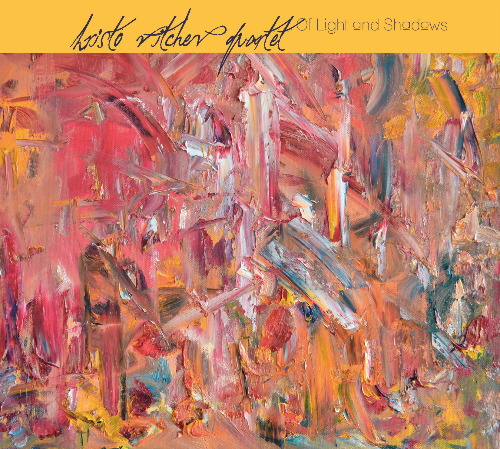
Hristo Vitchev Quartet - Of Light and Shadows

image courtesy of Hristo Vitchev

“Of Light and Shadows” is the first track that sets the pace for the album. And, like the cover, is multi-tiered and complex. The tune seems to be broken down in sections, with a light samba-like feel supporting the main theme. The mid-section establishes itself as a vehicle for the drums and piano to step out. The piece is very open and has a kind of baroque ECM label element to it. Some of Pat Metheny or John Abercrombie’s early work comes to mind.

“The Shortest Wavelength” follows with a thoughtful piano intro by Singh that leads into something, I believe, in 7. As with the ebb and flow of a traditional waveform, the piece slowly builds in intensity and subsides as drummer Shannon and bassist Robbins ride the tide.

“Selective Absorption” features a soft and lilting melody that wafts above the rhythmic fray. The dialogue and transitions between Vitchev and Singh are extremely focused and smooth. The head of the tune is as tuneful as it is challenging and Shannon’s rubato figures at the end provide excitement and flair.

After the somewhat up tempo arc of the previous tune they take it down a bit for kind of a romantic piece called “At Your Side.” There are some lovely peaks and valleys here where Vitchev demonstrates his strengths as both composer and soloist. Shannon’s artful brush work in tandem with Robbin’s warm and resonant bass is transcendent.
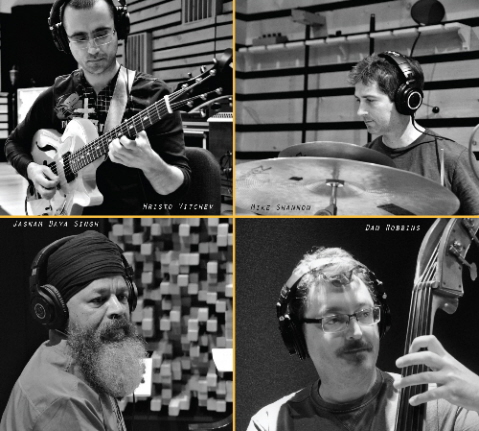
Hristo Vitchev Quartet

photo courtesy of Hristo Vitchev

“Prelude to Prismic Dance” is a tasteful intro piece featuring Singh’s graceful and lush solo piano. His use of triads and trills really builds things up and leads into “Prismic Dance.” Vitchev’s glossy chord textures and seemingly effortless solos glide nicely over odd time signatures and well-orchestrated dynamics.

The colorfully titled “Pentachromatic Butterflies” is a melodic piece that blends with a slightly dissonant or minor edge. It is very modal and open, with some fluid solos from Robbins. Also, this tune features a nice use of time and space. Vitchev isn’t really about chops as much as giving his solos a chance to breathe and develop with each pass.

The other overt ballad here is “ A Portrait of a Love Forgotten.” This is a pensive and somewhat somber tune that is sweetly lyrical and a nice showcase for the band. Vitchev plays a very linear, yet abstract melody, with a tone and approach that recalls greats like Lee Ritenour, Steve Khan or George Benson. Singh’s Bill Evans-like piano and Shannon’s Joe Morello-styled brush work make this one a highlight.

The album concludes with the noir-ish coined “Partial Darkness.” There is a lot going on here rhythmically. The drums kick things off in a very vibrant and flashy manner. Singh shifts into some dense and reflective passages as Vitchev holds the weight of the melody with a somewhat funky repetitive figure. There is a nice breakdown of the drums and bass in the middle and the structure offers the listener some interesting twists and turns.

The Hristo Vitchev Quartet is truly setting the scene for cutting edge jazz on a global scale. Pick up this current snapshot of their visionary music and you will not be disappointed.

Live Performances

The “Itinerary” page of Hristo’s website lists three upcoming performances.  Tonight, Saturday, February 3rd, as part of the Pat Bianchi Trio (Pat Bianchi, Hristo Vitchev, Sanah Kadoura), Hristo plays Cafe Stritch in San Jose, CA. On Wednesday, February 7th, the Hristo Vitchev 3 (Hristo, Pat Bianchi, and Sanah Kadoura) perform at Cafe Pink House in Saratoga, CA. And on Thursday, February 22nd, Hristo is back at Cafe Stritch as part of the SJZ Collective (Brian Ho, Oscar Pangilinan, Saúl Sierra, Wally Schnalle, John Worley, Jr., and Hristo) for “SJZ Collective Reimagines Monk.” Be sure to check Hristo’s website for future gigs as they’re added.
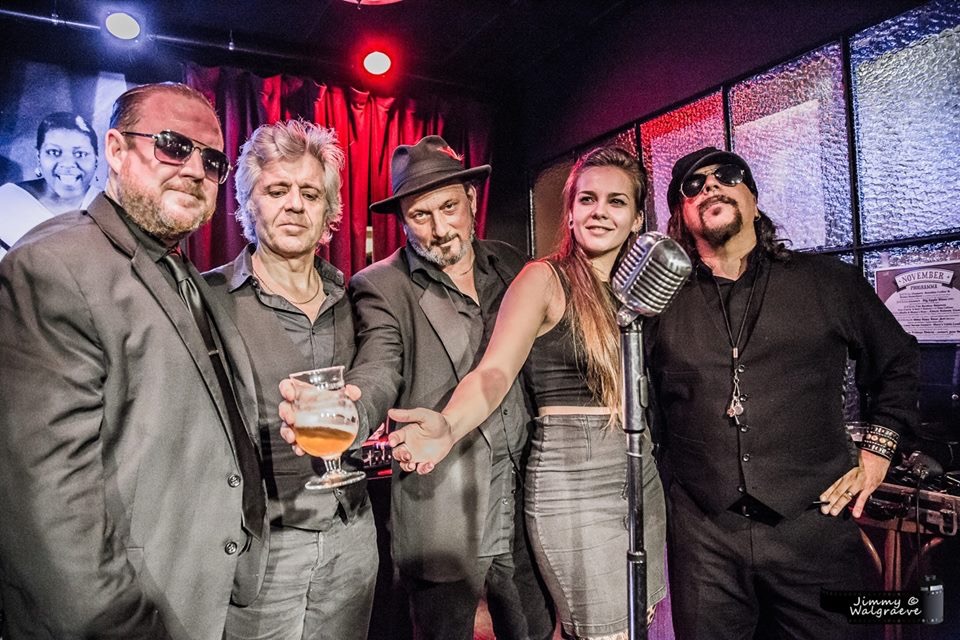
Album Review: Ghalia & Mama’s Boys – Let the Demons Out

Ghalia & Mama's Boys

photo courtesy of Frank Roszak Promotions

by Eric Harabadian, Contributing Blogger

Album Review of Ghalia & Mama’s Boys: Let the Demons Out (Ruf Records)

Arguably, the blues is an American art form. But, having said that, one cannot simply compartmentalize it into such jingoist and provincial terms. A case in point is the marriage of bluesy Belgian street busker Ghalia Vauthier and New Orleans-based R&B rockers Mama’s Boys. Vauthier had been following her musical dreams all across the U.S. — from Chicago to Mississippi — and wound up in the great state of Louisiana. She met up with harmonica/vocalist Johnny Mastro and company, and the result is this album here.

Ghalia & Mama's Boys - Let the Demons Out

image courtesy of Frank Roszak Promotions

And what an album it is, too! It is a hot and spicy musical gumbo of rhythmic abandon and a hedonistic free-for-all. The album kicks off with an uptempo number called “4 AM Fried Chicken.” Basically it’s about after-hour juke joints where the drinks are flowing and the food is first rate. Vauthier sets things in motion, with a hard partying vibe that spotlights her expressive voice and guitarist Smokehouse Brown’s rough and ready sound.

Title track “Let the Demons Out” follows and has a moody, almost gospel-like feel to it. Vauthier’s vocals are eerie and are framed nicely by Brown’s atmospheric guitars and Mastro’s searing harmonica. “Press That Trigger” truly ties into the aforementioned “hedonistic” tag. This is a fun one, with thinly veiled wordplay like “c’mon babe, find the right tool to polish my jewel.”

Ghalia & Mama's Boys

photo courtesy of Frank Roszak Promotions

“Have You Seen My Woman” finds the chanteuse Vauthier singing from the perspective of a guy searching for his lady. The band chimes in collectively on backing vocals for the chorus as the rhythm section shuffles, the harmonica wails, and the guitar lays down some muscular crunch. “Hoodoo Evil Man” offers some of that swampy down-home-type blues this band is known for. It is an intoxicating and swinging standout.

There are some cool novelty type tracks that should be noted. “Waiting” is kind of a clever duet between Vauthier and Mastro where they claim themselves as king and queen of New Orleans. It’s a call and response thing that’s cute but gritty and hard-edged at the same time. The album closer, “Hiccup Boogie,” is a cool little story that Vauthier concocted about how she very well could’ve met the band in some Crescent City blues club. Brown’s blazing solo in the middle really ignites this piece and concludes the album with a crazy and full throttled exclamation point.

Ah, the universal language of some good ‘ol rockin’ blues! The marriage of Ghalia and Mama’s Boys is proof that music is the great unifier, as this stellar working class band blends seamlessly with the European vocal dynamo. Well worth checking out!

Album Review: Jane Getter Premonition – On Tour

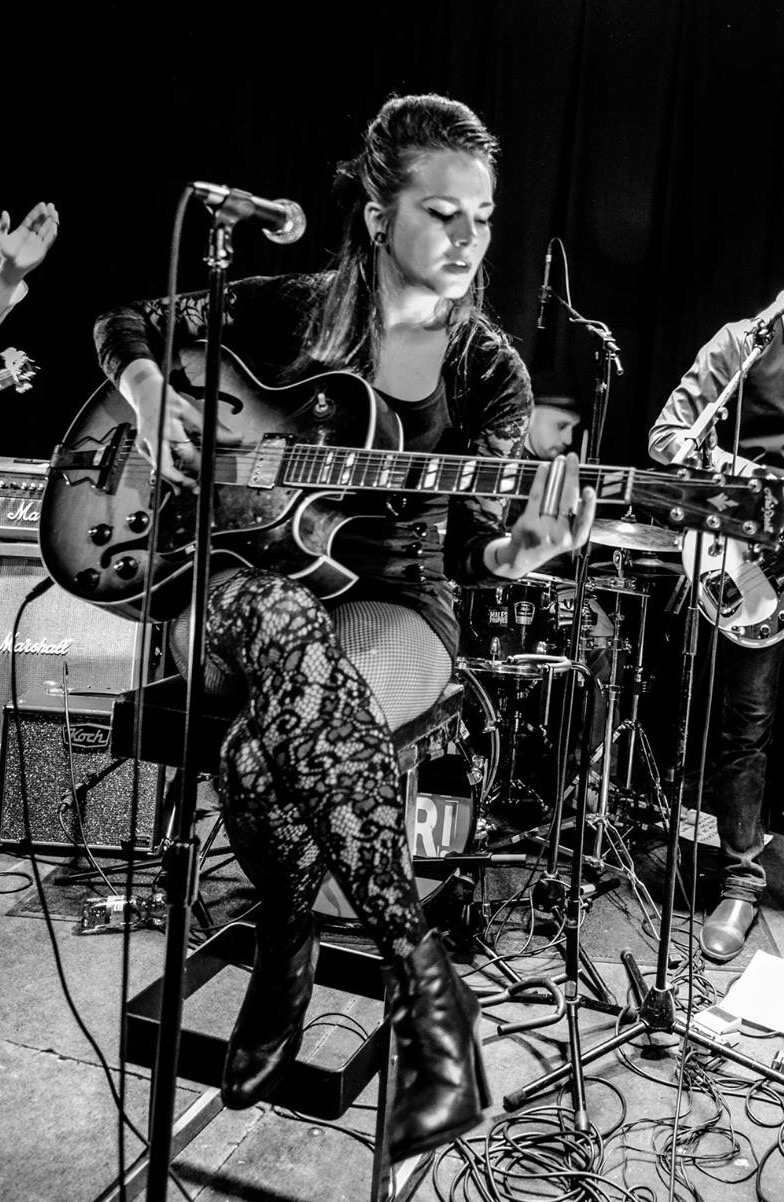
Jane Getter

photo courtesy of Jane Getter

by Eric Harabadian, Contributing Blogger

Album Review of Jane Getter Premonition: On Tour (Big Fun Productions)

All you jazz and fusion fans out there who pine for the days of classic progressive jazz-rock like Mahavishnu Orchestra, Return to Forever, Larry Coryell’s Eleventh House, UK, etc., etc., look no further. Guitarist-vocalist, bandleader, and composer Jane Getter will hook you right up. The former Saturday Night Live Band axewoman recently released On Tour, which is a compilation of performances from dates at the Outreach Festival in Schwaz, Austria, The Iridium nightclub in NYC, and a live jam at Avatar Studios, also in New York. And she’s got some of the best people in contemporary jazz and rock with her such as her keyboardist husband Adam Holzman (Miles Davis, Steven Wilson), guitarist Alex Skolnick (Trans-Siberian Orchestra, Testament), drummer Chad Wackerman (Frank Zappa, Allan Holdsworth), bassist Mark Egan (Pat Metheny), bassist Stu Hamm (Joe Satriani, Steve Vai), drummer John Mader (Jeff Berlin, Bernie Worrell), vocalist Corey Glover (Living Colour, Galactic), bassist Bryan Beller (Mike Keneally, The Aristocrats), saxophonist/flautist Theo Travis (David Gilmour, Steven Wilson), percussionist Mino Cinelu, and vocalist Chanda Rule. The recordings take place over a three year period from 2014-2016 and a number of the tracks are derived from her 2015 Madfish label studio release On.

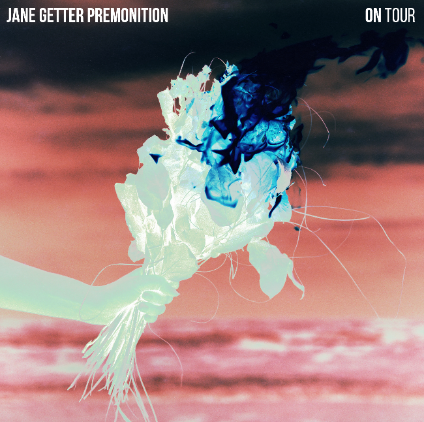
Jane Getter Premontion - On Tour

image courtesy of Jane Getter

The first track, simply called “Opener,” sets the scene, with ambient and moody synthesized music by Holzman. That quickly leads into the very rhythmic and rock-oriented “Pressure Point.” Both Getter and Skolnick’s lead work blend and co-exist perfectly as Holzman’s graceful straight ahead piano passages infuse things with a romantic feel.

Getter sings lead on the following track, “Surprised,” and her voice floats ethereally above the tune’s off-kilter beats. She and Skolnick play some nice harmonized lines as Glover chimes in on vocals as well. The orchestral mid-section is haunting and provides an ample vehicle for inspired solos from everyone.

“Inversion Layer” has a catchy odd-time melody that, again, features some nice interplay between Getter and Skolnick. The band employs exceptional dynamics here as well.

“Falling” is a bit of a change in mood and pace. Getter picks up acoustic guitar and delivers a pensive vocal reminiscent of something off of Joni Mitchell’s more progressive jazz-oriented albums like Hejira or The Hissing of Summer Lawns. She really shines with this kind of thought-provoking material.

Jane Getter

photo courtesy of Jane Getter

“Diversion Intro” leads into the track “Diversion” where the tune has a real soaring quality. The band builds the track with each chorus and phrase until it drives the sonic threshold over the top. Getter proves to be a great bandleader in that she is astute enough to allow her counterparts to take center stage and blossom.

Corey Glover utilizes his storytelling skills and stellar pipes to tell the tale of a homeless person on “Train Man.” The mid-section has kind of a funky feel, with strong solos from the band as well as some key vocal hooks.

The hypnotic ambience of “Transparent” exudes rhythms that captivate and draw the listener in. This track features a nice harmonic exchange between Getter and Chanda Rule as well as some cool soloing from Mark Egan.

The album concludes with what sounds like an impromptu performance called “Somewhere Jam.” This is a live, in-the-studio bonus track and features some smooth and mellow solos from Theo Travis on woodwinds. It’s kind of a modal exploratory piece that also serves as a snapshot of the Jane Getter Premonition in 2014 as they were getting their unique ensemble vision underway.

This is a really strong record in the sense that you feel the empathy and interaction between Getter and the various musicians she’s working with. The performances from three different distinct locations and lineups are pretty consistent. With this live recording Getter continues to prove that she is a triple threat as guitarist, singer and composer.

Looking Ahead

The “upcoming dates” page of Jane’s website currently lists one scheduled show. On April 17th at The Iridium in New York City you can see Jane Getter Premonition featuring Vernon Reid. Be sure to check the website periodically for additional dates as they’re added.

Album Review: Bob Kulick – Skeletons in the Closet

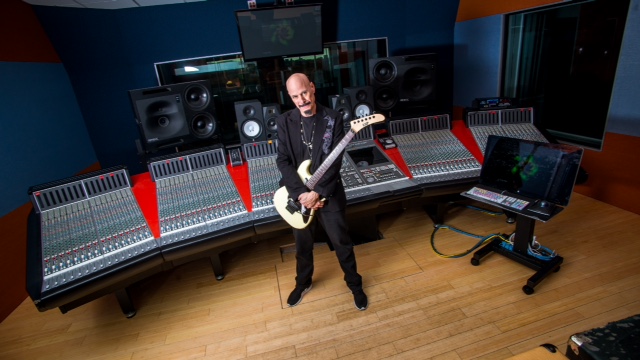
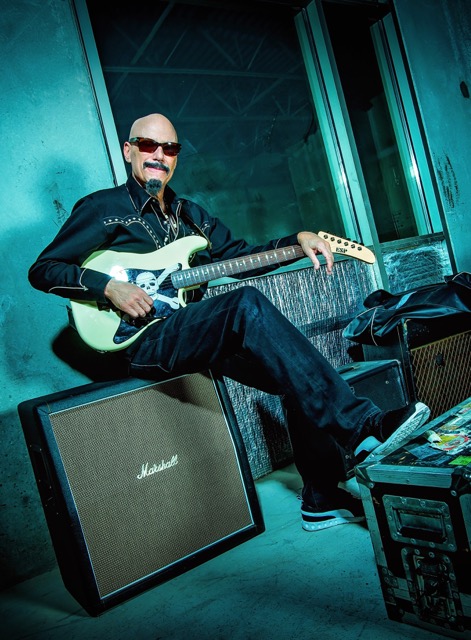
Bob Kulick

photo courtesy of Head First Entertainment

Album Review of Bob Kulick: Skeletons in the Closet

It’s a Bob Kulick album, so you know it’s gonna be good. But this exceeds all expectations. Guitarist Bob Kulick is joined on Skeletons in the Closet by lead vocalists David Glen Eisley, Andrew Freeman, Todd Kerns, Robin McAuley, Dennis St. James, Dee Snider, and Vick Wright; bass players Kjell Benner, Bobby Ferrari, Bruce Kulick, Dennis St. James, Rudy Sarzo, and Chuck Wright; keyboardists Doug Katsaros and Jimmy Waldo; and drummers Vinnie Appice, Frankie Banali, Chuck Burgi, Scot Coogan, Brent Fitz, Bobby Rock, Jay Schellen, and Eric Singer. Talk about an all-star cast! Surrounded by this talented crew of iconic ’80s rock cohorts, Bob has delivered a great, catchy, engaging new ’80s-style rock album.

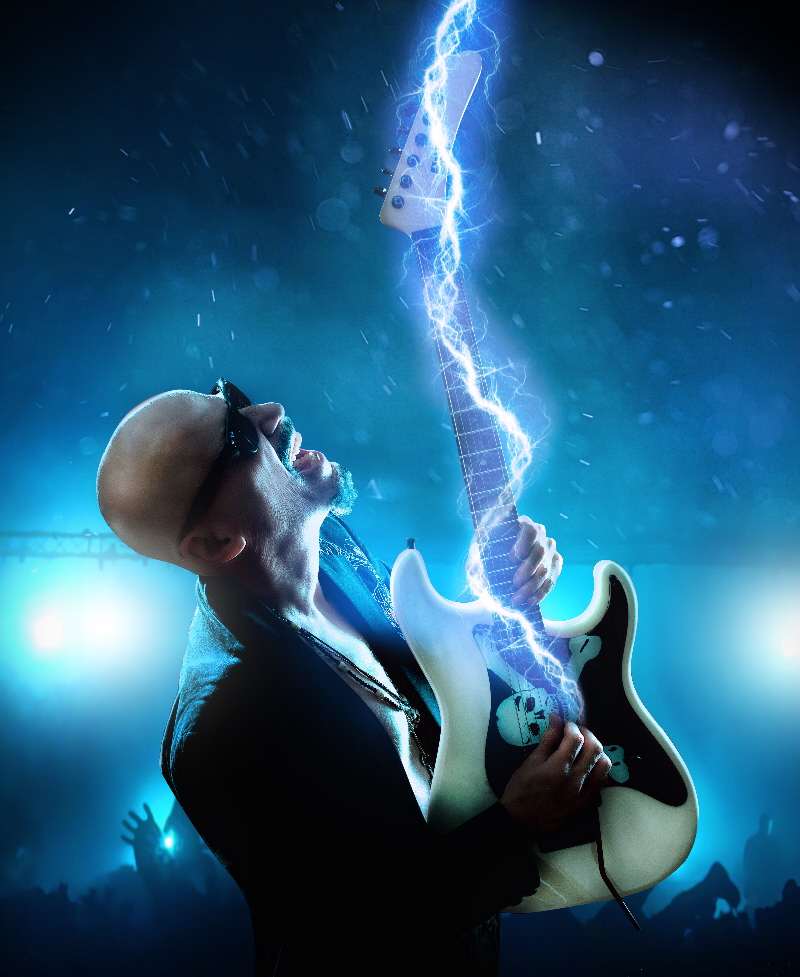
Bob Kulick - Skeletons in the Closet

image courtesy of Head First Entertainment

And that’s what really counts. Indeed, as I listen to my album review queue in preparation for writing these reviews, the pedigree of the band is unimportant; the music itself rises and falls on its merits. Needless to say, the music on this album rises.

Skeletons in the Closet is a mix of new songs and recordings of material from Bob’s rock ‘n roll past, including a couple songs each from Murderer’s Row and Skull.

I won’t pretend to be familiar with Murderer’s Row or Skull; I wouldn’t have known which songs were old vs. new if I hadn’t read the bio. As much as all hard rockers know Bob’s skill, I personally own only a few of the albums he played on. But that puts me in a position to hear all ten of these songs for the first time, like a kid in a candy store, and they’re an awesome collection of sweets.

The album kicks off its 10-tune journey with the five new tracks – well, four new tracks and an inspired cover.

First up is “Rich Man,” and it roars out of the box with power. Screaming guitar riffs, pounding, popping drums, and soaring vocals. Next up is “Not Before You”, and yes, we all know the swirling amazement that is a Robin McAuley vocal, so it should be no surprise that this was also a quick favorite, but I was more unexpectedly exceptionally impressed with the foreboding power of Dee Snider’s vox in “London,” with the booming, roaring guitars combining to form a theatrical, almost heavy metal Broadway (think Phantom of the Opera) all-encompassing wave of power. (I frequently underestimate Dee’s powerfully textured voice; you’d think I would know better by now.)

Bob Kulick

photo courtesy of Head First Entertainment

The included cover of “Goldfinger” is catchy and fun. Vick Wright brings just the right amount of snarl to the vocal, and the familiar guitar line eventually builds to an apex. “Player” follows, a solid number with swirling guitars in a style reminiscent of hair metal’s Sunset Strip heyday.

The Murderer’s Row songs are “India” and the title track. Of the two, “India” stands out as the more unique number for its House of Lords-esque soaring overtone (ironically, with David Glen Eisley providing the vocals), with crunchy guitars serving as the underpinning. “Skeletons in the Closet” is a more straightforward rocker, with the vocals more controlled, always almost-soaring but not quite; the result is the sort of building tension that’s the reason this style is frequented in the first place.

“Can’t Stop the Rock” is an old Bob Kulick-David Glen Eisley churning rocker that dates back to the pair’s work on “Sweet Victory” for SpongeBob.

And the last two songs are Skull numbers. The first is quite probably my favorite song on the disc, “Guitar Commandos.” Dennis St. James’ just-slightly-gritty, insistent vocals perfectly punctuate the dueling guitarwork of brothers Bruce and Bob Kulick on this energetic tune, the perfect melodic metal backdrop to a movie chase scene.

Bob Kulick

photo courtesy of Head First Entertainment

The disc’s last track, “Eyes of a Stranger,” reminds me of several ’80s bands, which is probably why I have such a hard time picking just one for comparison. The pounding beat, occasional screeching guitar dancing through the song’s pulsing rhythm, and the tuneful vocals that hint at depth but, when given a choice, choose melody over emotion, rendering the vox a fourth instrument alongside guitar, bass, and drums – hence the almost orchestrally-arranged feeling of this and similar songs. From a pure musical standpoint, this is as pure a representation of the melodic metal raunch and roll era as any; a great way to end the disc, especially for those of us who appreciate the subgenre.

In all, this is a great disc, but would you expect any less from Bob Kulick and the talent he assembled for it? Consistently amazing guitars from Bob, varied song styles, and top-shelf musicianship and powerful vocals served up a who’s who of heavy rock icons. So if this is your style, grab and enjoy Skeletons in the Closet. And, if you’re like me and don’t have parts of Bob’s back catalog, it’ll probably inspire you to dig around into his discography a little, too (starting with the discs from Murderer’s Row and Skull).

\m/

EP Review: Matt Westerman – Life Out Loud

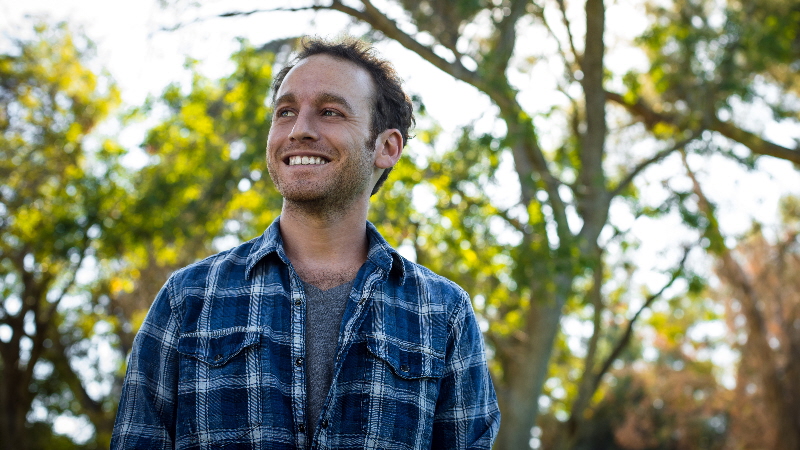
Matt Westerman

photo courtesy of FARdigital PR

by James Morris, Contributing Blogger

EP Review of Matt Westerman: Life Out Loud

Reviewing new music can be a bit daunting. Expectations are high, and you always want to stumble upon something that you love. Personally, I like to be grabbed when I listen to something for the first time. It is not always obvious what it is that sparks that interest; it may be a melody or a clever lyric or a mood or the rhythm that sweeps you up.

It’s the same with a film or a book. The narrative is key. I want to be interested in the characters, intrigued by the story. I want to be drawn in so I stick around to find out how it turns out.

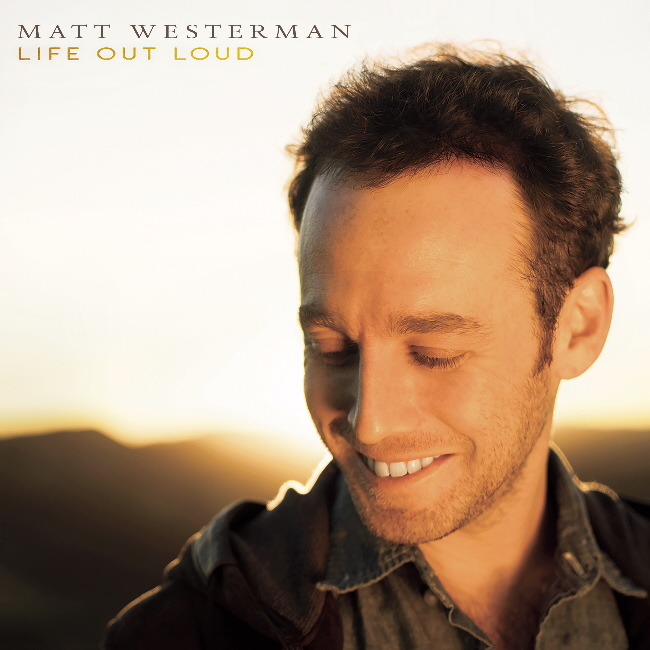
Matt Westerman - Life Out Loud

image courtesy of FARdigital PR

The big question is, does the new EP from Matt Westerman make me feel this way? Let’s see…

Matt Westerman is a Los Angeles-based singer/songwriter and Life Out Loud is his debut EP. His website says that he “writes upbeat acoustic pop songs with a positive, compassionate message meant to uplift and inspire listeners everywhere”.

In the last few years, Westerman has been carving out his dreams on stage, with gigs all over the Southern California area, from clubs to bars and even busking on the Santa Monica pier.

The EP features 6 tracks happily sitting in the popular mainstream with an easy pop presence. Lots of people will love this music, even if there are many other contemporary singer-songwriters competing for the same listener’s ear.

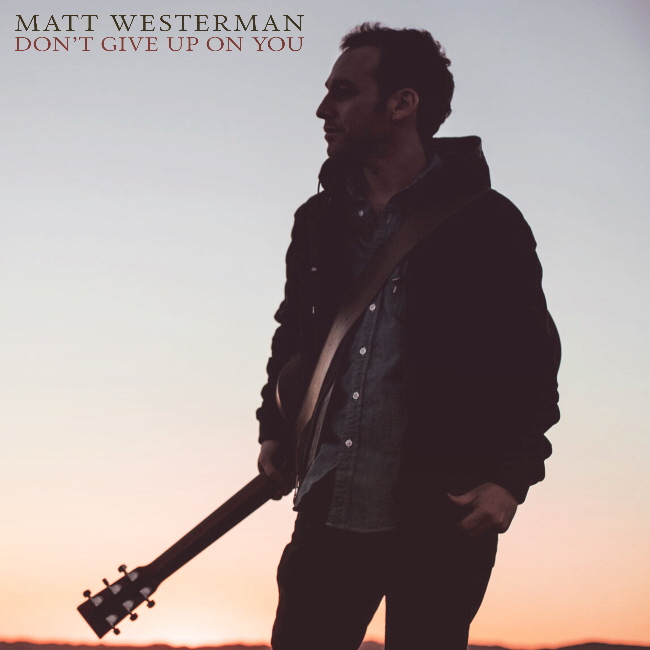
The opening song, “Don’t Give Up On You,” and following track, “One Fine Day,” are clearly the best of the collection with a smooth acoustic pop delivery.

“Don’t Give Up On You” starts a bit like a modern-sounding twist on a Simon and Garfunkel song but then grows through its positive vibe chorus to something more akin to Damien Rice or James Blunt. Matt Westerman’s voice is very much in the style and range of these singers.

Matt Westerman - Don't Give Up On You

image courtesy of FARdigital PR

“One Fine Day” has a Jack Johnson groove which confirmed my feeling that the EP had one foot in 2005, when a lot of singer songwriters were making an impact on the charts. Given their success, it is not a bad vein to mine.

The EP benefits greatly from the production of Brad Swanson, whose tracks can be heard in popular shows like Smallville, CSI and Ghost Whisperer. Matt is also joined by many notable session players including pedal steel player Marty Rifkin, a longtime Bruce Springsteen collaborator, and session journeyman Sean Hurley on bass, who has performed on John Mayer’s records.

There is so much potential for this debut release, and in this streaming age it won’t cost you anything to check it out for yourself. It would be worth doing just that, and then if you like what you hear you can commit to buying yourself a copy.

So whilst you all go and make up your own mind by giving Matt a listen, I still have to answer that big question I set earlier. How did it make me feel?

Well, here we have beautifully made music, with crisp and clean production. The songs are successfully populist in their themes of hope and love and deliver a pleasant FM radio wash.

I could argue that I felt it lacked an original edge and maybe I would have liked more narrative in the lyrics, but should this style of easy going, light touch, acoustic pop, really need to trouble itself with such ambition? Probably not, and I see from looking at Matt’s profile on Spotify he has a great many plays and monthly listeners, so it would seem his approach is, as I already said, a very popular one and I guess, at the end of the day, if it works for the many, who am I to doubt it?

Anyway, after any misgivings I had on first listen when it didn’t instantly grab me, I am glad to say that after many more, Matt’s debut release is definitely and positively a grower and worthy of your attention, so go listen.

Looking Ahead

Matt’s website currently list just a single show, a February 6th, 2018 data at Bar Lubitsch in West Hollywood, CA. See the “Events” tab on his Facebook page for additional details and future shows as they’re added.
Alternatively hook up with him on Instagram or Twitter.

Publisher’s Addendum

“One Fine Day” has made its way onto my personal smartphone playlist, the one whose first several shuffled-up songs during a breakfast or lunch out I periodically share with my twitter followers, dubbing it a breakfast (or lunchtime) playlist. One fine day (pun intended), since I carry “One Fine Day” on my phone, it’ll shuffle up this song from Matt. – Geoff Wilbur

Album Review: Fernando Perdomo – The Golden Hour

Album Review of Fernando Perdomo: The Golden Hour

Fernando Perdomo is a modern manifestation of a ’70s/’80s soft rock reimagination of Tom Jones, crooning love songs with warm, fully orchestrated rock ‘n roll sound beds. Musically, he’s a ’70s/’80s slow rocker, someone whose music suggests influences from Moody Blues to John Lennon, his rolling soft rock numbers offering hints of the more piano-heavy numbers from the repertoires of Kansas or Styx.

The Golden Hour kicks off with “Sunset (Intro),” a piano intro that leads into a rich, lush, slow, Moody Blues-esque crooner, “Sleep.”

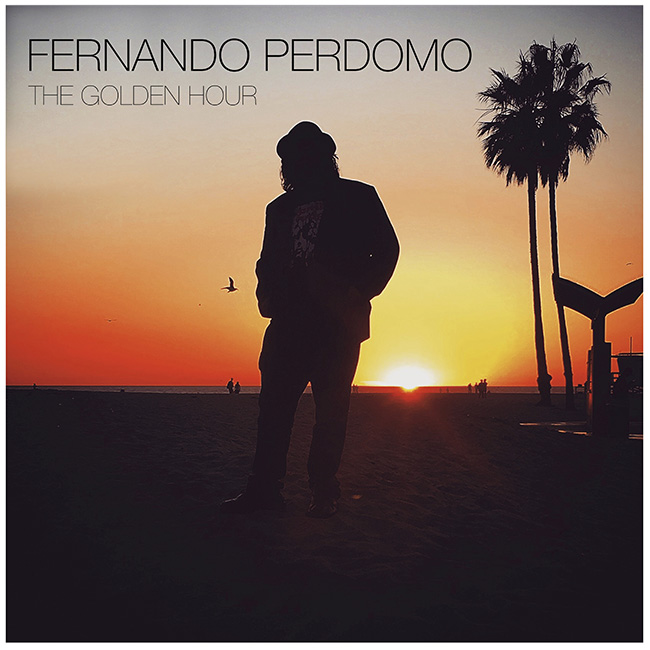
Fernando then picks up the tempo with “Spotlight Smile,” a familiarly comfortable, totally laid-back yet energetic ’70s guitar pop-rock-ish number, something well-suited to a concert on the beach. Perhaps the beach shown on the album cover.

Fernando Perdomo - The Golden Hour

image courtesy of ACR Management

Indeed, beaches, palm trees, and sunsets seem to be the perfect backdrop for most of The Golden Hour‘s songs. The next track, “Look At the Moon,” deploys some mild guitar hooks a bit reminiscent of Cheap Trick. Mellow Cheap Trick.

“Here With Me” is a nice ballad, its guitar hinting at a Hawaiian twang. “Sunset,” meanwhile, opens with a guitar sound and vocal intro relatively akin to Pink Floyd. The mellowest Pink Floyd you’ve ever heard.

“Love Loss Repeat” is one of my favorite songs on the album, lyrically a clever thought, with standard mid-tempo drumming, mellowly powerful melodic rises and falls, and interesting supplemental harmonies. Perhaps my very favorite is “I Feel (Therefore I Am),” with an interesting, classic guitar line, mid-tempo rock with a bit of an ’80s distorted axe flair.

A couple more songs are standouts, as well. “When You’re Here With Me” is a close-your-eyes, turn-out-the-lights slow rock swayer, suitable for an arena full of lighters held high, with a late-song guitar solo driving home that classic arena rock lineage. And album-ender “Gold,” even though it protests “I’m tired of sleeping/It’s time to live” sways and jangles almost as if it wants to put the listener to sleep. As such, it’s a great closing number, gently lifting the covers up on this engaging 13-song soft, classic, ’70s-era, lushly produced pop-rock album and putting it to bed.

Excellent musicianship, tight songwriting, and warm, precise production combine to deliver The Golden Hour, a disc that clearly showcases Fernando’s talent from the first listen and whose songs’ initially apparent strengths grow on you with repeated listens, as you start to notice the precision and interesting details.

Kansas, Cheap Trick, Moody Blues… Fernando Perdomo is a soft pop-rock version of a lot of my favorite old rock bands. And that’s pretty cool for whenever I want to hear good music with rich, lush, full production, but don’t want it too loud. Per Fernando’s website, The LA Weekly says he’s “The millennial answer to Todd Rundgren.” Yeah. I wish I had thought of that.

Looking Ahead

I don’t see any upcoming shows listed on the Events tab of Fernando’s Facebook page, but be sure to check back regularly to see, particularly if you’re in southern California, since he’s based in Los Angeles.

EP Review: Liz Bills – Liz Bills

Liz Bills

photo by Scott Bakal; photo courtesy of Liz Bills

EP Review of Liz Bills: Liz Bills

This brand new self-titled four-song EP – it’s scheduled to drop on Saturday, November 18th – is the first solo release by Analog Heart frontwoman Liz Bills. Liz has a voice you can recognize quickly. It’s powerful, versatile, original, and memorable.

When I first heard Liz with Analog Heart, I was impressed, but with each successive step, I’ve heard growth. In dynamic delivery, full utilization of her vocal tools, consistently strong songwriting and the ability to find unique hooks. Most of all, though, while conveying a confidence and feeling that she is exactly where she belongs. That has always been a strength of Liz’s (at least during the two-plus years since I first – and last – saw her perform); her presence just seems to get stronger with each recording.

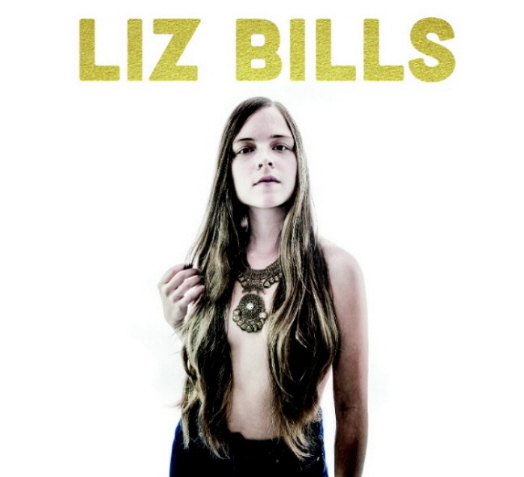
Liz Bills EP cover

image courtesy of Liz Bills

You’ve seen reviews of Analog Heart’s Sun Here I Come album last year and, this past summer, the band’s “Not Good Enough” single here in the Blog. Those had a band vibe. Liz’s new, eponymous EP is still a rock album, but it really showcases her voice and personality within and beyond the music. And hits. It has hits. The first two tracks on the collection are immediate, smack-you-in-the-face with their catchiness kind of hits; the back end of the EP, meanwhile, is subtler in its hookiness, obviously good songs even at first, but they ultimately hit you sneaky-hard as you peel back their layers and discover their massive coolness.

The first half of the collection, which I’ll call the “instant favorites” half, begins with “Born to Wander,” a big song with energetic strumming and rhythm, monster hooky stop-gaps and tempo changes, big, powerful vocals that include Liz’s crystal clear highs, and plenty of engaging character.

It’s followed by “My Man,” another smack-you-in-the-face, memorable-from-the-first-listen, causes-music-journalists-to-overuse-hyphens tune. There’s a bit of a ’70s funky rhythm and some tempo-changing lyrical runs, but the most Liz Bills element of the song is a spoken word, conversational, encouraging/empowering-conversation-with-the-audience portion, something she does memorably well, a trick Analog Heart fans might recognize from “She’s Rock ‘n’ Roll.” Indeed, “My Man” is a song you won’t soon forget.

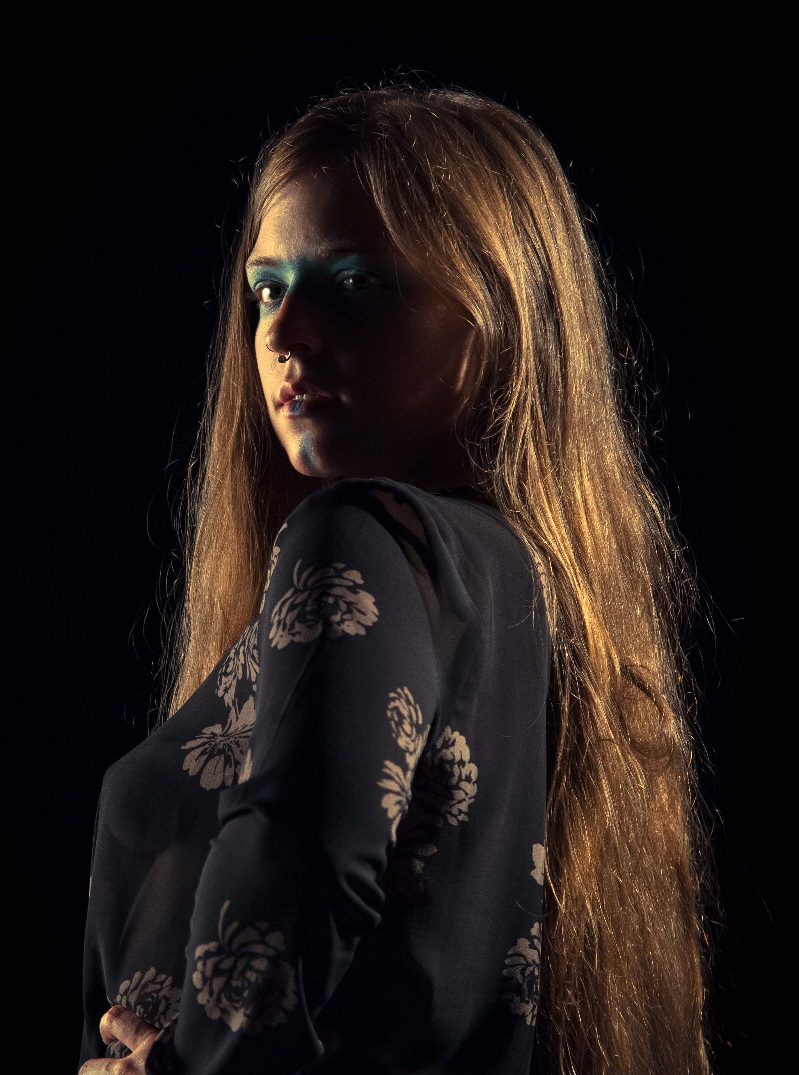
Liz Bills

photo by Jonathan Rummel; photo courtesy of Liz Bills

The “back half” of Liz’s EP contains a couple songs whose hooks are slightly more hidden but very certainly potent and likely with a more permanent impact. “Werewolf,” the first single from the disc, was released October 21st. It has a subtler, rhythmically nuanced vocal, a song that softly ratchets the intensity, punctuated by howls that are both appealing and a bit confusing, at least until you start to pay attention to the lyrics (or, at least the song title). Oh, the lyrics are well-crafted to tell the song’s tale, and they match the journey of the song as well as its vocalization and instrumentation, musically leaning on the rich texture and versatility of Liz’s voice while only hinting at its power. “Werewolf” is a thoughtfully-constructed, very cool rock ‘n roll song and quite possibly my favorite…

Unless my favorite is “Bomb Song.” It’s also lyrically clever. And, as with “Werewolf,” once you stop listening passively and pay attention to said lyrics, the unusual point of emphasis, “bang,” suddenly makes sense and becomes the lyric you sing along to the most, just as you start to howl after several listens to “Werewolf.” “Bomb Song” also sports a cool, rhythmic, not-quite-syncopated strum that, at the end, halts abruptly. Abruptly emphasizing the brevity of this four-song collection and making you want more. So, of course, this is an EP that has to be played on repeat.

In the end, yes, I’ve been in Liz Bills’ camp for a while now, intrigued the first time I heard her perform live. At the time, before I started blogging and just as “Merrimack Jane” was released, I thought Analog Heart had finally hit its songwriting groove, found its niche. The band rounded a corner with a strong album beginning to end with Sun Here I Come. And now Liz has managed to kick things up another notch with her eponymous solo EP. She’ll have to blow the roof off the proverbial joint to lift her game any higher, and I look forward to hearing her try. I bet she can. For now, though, I’ll just sing and howl along with her all-too-short solo EP, and I suggest you do the same. This rock ‘n roll singer-songwriter-bandleader is something special.

Looking Ahead

The “tour” section of Liz’s website lists her upcoming tour, kicking off with a Saturday, November 18th album release show at the Chit Chat Lounge in Haverhill, MA. The subsequent tour includes stops in Millvale, PA; Cincinnati, OH; Burns, TN; Nashville, TN; Louisville, KY; Richmond, VA; Lynchburg, VA; Baltimore, MD; and Brooklyn, NY before she returns to Massachusetts for a December 5th date at Atwood’s Tavern in Cambridge. Check Liz’s website for details and for additional dates as they’re added.
Album Review: Savoy Brown – Witchy Feelin’

Album Review of Savoy Brown: Witchy Feelin’

Yes, that Savoy Brown. Legendary British blues rockers you’d know mostly from the ’60s and ’70s, though they’ve been releasing music pretty steadily ever since. And by they, I mean Kim Simmonds and whoever is in the band with him, as he has churned through a significant number of bandmates through the years under the moniker Savoy Brown; Pat Desalvo (bass) and Garnet Grimm (drums) have been Kim’s bandmates since 2009.

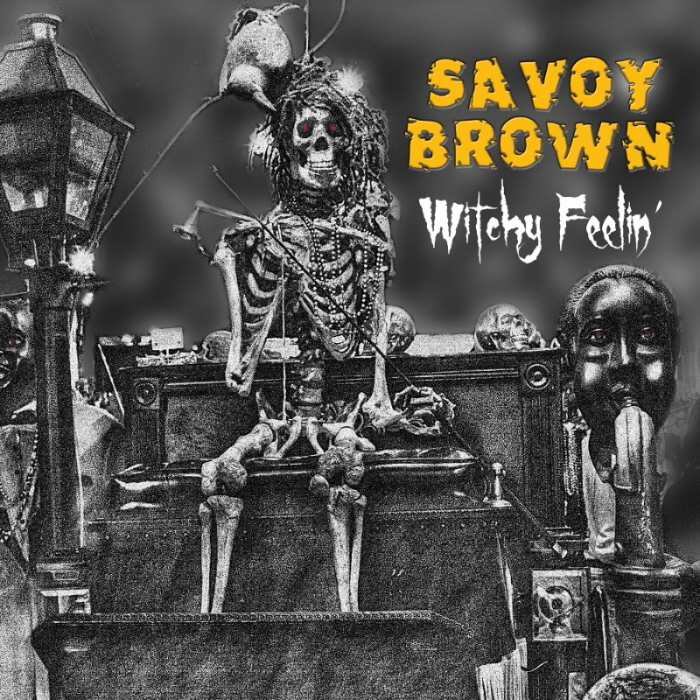
Savoy Brown - Witchy Feelin'

image courtesy of Howlin’ Wuelf Media

Through the years, though, Kim’s bluesy guitar wail and bluesy vocals have been a constant, while his list of former Savoy Brown colleagues is impressive in both quantity and quality.

That telltale axework doesn’t take long to appear on Witchy Feelin’, as first track “Why Did You Hoodoo Me” kicks of with crunch and power, a deep bluesy vocal acting as a New Orleans-inspired booming siren call. It is a proper introduction to this old-school, classic blues rock album. Like fine wine, this disc just improves with age; it’s solid at first listen, but the attention to detail helps this collection dig its tentacles in like smoke from an old blues club filters its way through the seams and into the lining of your leather jacket. It’s loud, smelly, and worth the time to fully enjoy.

My other favorite track, closer to the middle of the collection, is “Guitar Slinger,” another crunchy guitar-driven, unforgivingly ploddingly advancing blues rocker, perhaps a bit George Thorogood-esque but with more fancy ’70s rock fretwork in some of the guitar runs.

Savoy Brown

photo courtesy of Howlin’ Wuelf Media

Those selections betray my preferences, though. If you’re more of a “Sweet Home Chicago” meets the Fabulous Thunderbirds kind of music fan, you might prefer “Vintage Man.” And the songs “Living on the Bayou” and “Memphis Blues” are additional standout tracks, each illustrating the source of its own particular blues roots in its song title.

“Standing in a Doorway” is a blues-soaked version of what might otherwise be a Dire Straits tune but crunchier and deeper vocalled. And the album ends with a suitable closing blues number, “Thunder, Lightning, and Rain,” a song that includes plenty of street cred-establishing jams, a bar-closing, “you don’t have to go home but you can’t stay here”-worthy spoken-blues delivery and noisy slow fade leading to an abrupt end.

I’m glad I gave this album a few listens. Its music starts off solid and grows on you by the sixth or eighth listen, a classic blues-rock album delivered by a talented veteran crew that really knows what it’s doing. Witchy Feelin’ is a welcome addition to my music collection; it’s a comfortable old-school disc I know I’ll reach for when in a specific mood for years to come.

Looking Ahead

Per the “tour dates” page of the band’s website, Savoy Brown is, indeed, on the road.  You can see them November 17th at Rams Head On Stage in Annapolis, MD; November 18th at the Sellersville Theater in Sellersville, PA; November 25th at The Montage Music Hall in Rochester, NY; November 26th at the Sportsmen’s Tavern in Buffalo, NY; December 1st and 2nd at Iridium Jazz Club in New York, NY; December 8th at The Upper Room in Albany, NY; December 15th at The Bull Run in Shirley, MA; and December 16th at Daryl’s House in Pawling, NY. Go to the band’s website for additional details and more live dates as they are added.


Album Review: Morosity – Low Tide

Morosity

photo by Andrew Vickers; photo courtesy of Morosity

by Eric Harabadian, Contributing Blogger

Album Review of Morosity: Low Tide

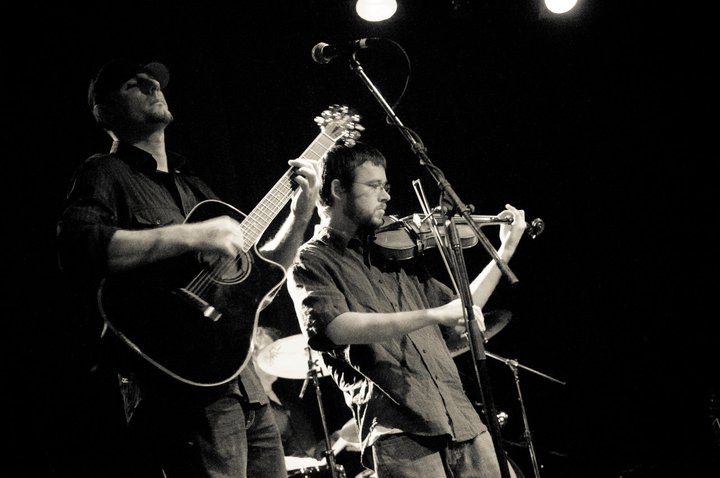
Morosity is a multi-faceted rock quintet from Minneapolis, Minnesota that began as an acoustic duo in 2001.  Childhood friends Jesse Albrecht (vocals/guitars) and Dave Rowan (guitars) adopted influences like Tool, Alice in Chains, Days of the New and Opeth into their sound. Feeling the need to expand their approach they gradually added Sean Bachinski (bass), Jason Wolfe (violin, guitar and mandolin), and Nick Johnson (drums). Their debut album release was Misanthrope in 2011. The follow up, Low Tide is their current focus.

Morosity - Low Tide

album artwork by Heather Albrecht; image courtesy of Morosity

The album Low Tide begins with a track called “Mind Over Matter.” It’s heavy on the drums and rhythmic vibe, conjuring up a world beat meets Gothic feel. The mood is dark, with unison-like vocals and a nice string accompaniment. “The Answer” continues a late ‘90s drop tuned tonality that is derivative of that time period, yet not clichéd.

“Ouroboros” is a piece that is very dense with the full depth and breadth of the band’s instrumentation. Wolfe’s violin and mandolin figure prominently, and it sounds like drummer Johnson adds some East Indian tabla-like elements to the fray, as well. A Distinct Middle Eastern essence on top makes for an interesting and exotic work.

Dave Rowan and Jason Wolfe

photo by Andrew Vickers; photo courtesy of Morosity

“Moon” follows and is a bit more straightforward as an acoustic kind of Alice in Chains inspired track. Albrecht and Rowan’s blend of guitars dovetail very natural and in sync.

“Smoke & Mirrors” has a laid back Soundgarden or Pink Floyd feel to it. Perhaps a lot of that can be attributed to the slide and ambient guitars a la Kim Thayil or David Gilmour.

The ominously titled “Death Grip” comes off as a kind of folk song, with haunting vocals and whistling from Albrecht. There is kind of an odd juxtaposition here of the light chordal backing and surreal delivery.

Jesse Albrecht

photo by Andrew Vickers; photo courtesy of Morosity

“Limbo” continues in an eerie sort of vein. There is an almost chamber choir matched with a stark and understated mandolin accompaniment. Wolfe’s light strings add a semi-classical effect.

The title track “Low Tide” is kind of bittersweet in approach and execution. The minor mode and pairing of acoustic guitar and violin almost suggests Kansas’ “Dust in the Wind” to a certain extent. The somewhat melancholy mood and dramatic character in Albrecht’s voice seem to evolve and build toward the coda.

Jesse Albrecht

photo courtesy of Morosity

“Adrift” appropriately concludes the album with the soft and tranquil sounds of ocean waves. Albrecht’s austere vocals paired with a dark and dream-like soundscape provide a short and sweet finale.

Morosity certainly draws from its musical peers and heroes such as Alice in Chains and Days of the New, but is so much more than that. Their use of world beat, psychedelia and traditional instruments liberally tap into Americana, progressive rock, and, on occasion, even blues. They are an interesting act with a somewhat familiar sound that is adventurous and diverse.

Morosity

artwork by Heather Albrecht; image courtesy of Morosity

Looking Ahead

The “calendar” page on Morosity’s website is currently blank, as is their Facebook “events” tab, but those are the places to look to see when and where they’ll be performing live.

Album Review: Sam Sherwin – Iodine Cocktails

Sam Sherwin

photo by Vincent Mineo; photo courtesy of Media Stew Public Relations

Album Review of Sam Sherwin: Iodine Cocktails

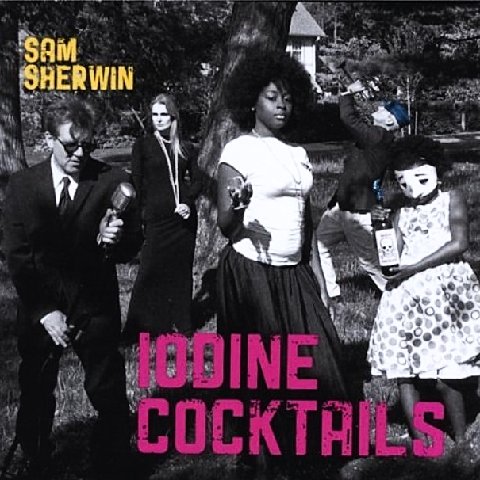
Straightforward rock ‘n roll from New Jersey. With roots in the ’70s and ’80s, Sam Sherwin‘s Iodine Cocktails is a bit of a rock ‘n roll, um, cocktail.

Sam Sherwin - Iodine Cocktails

image courtesy of Media Stew Public Relations

Sam Sherwin’s Iodine Cocktails showcases musical styles that recall rock ‘n rollers as disparate as Randy Newman and Bruce Springsteen.

Sam kicks things off with the cheerful, Randy Newman-esque “Anymore.” Picture a sunny day, two or three female backup singers adding emphasis, and a smile on everyone’s face, and you’ve captured the essence of this number. Moderately energetic with a laid-back, catchy, recurring guitar hook, “Anymore” has all the attention-grabbing elements perfect for an opening track, and it’s likely to become and remain a favorite.

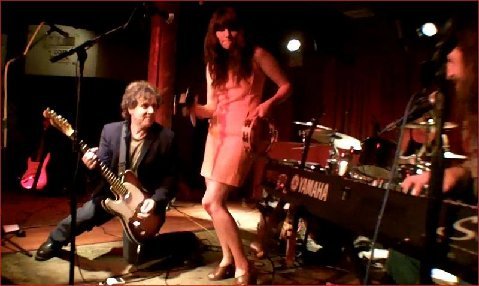
Sam Sherwin

photo by Geoff Lee; photo courtesy of Media Stew Public Relations

But even within the sunny opening number, there’s a hint of regular-guy New Jersey in the song, and that’s a thread that’s found elsewhere in Iodine Cocktails, too. Notably on the mellow, slightly melancholy, harmonica and guitar-filled, most Jersey-esque rocker on the album, “Automatic Day.”

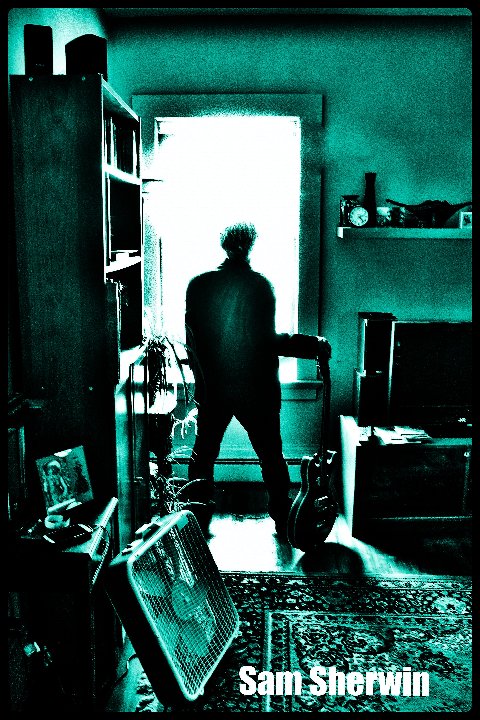
Sam Sherwin

photo by Dwyt Dayan; photo courtesy of Media Stew Public Relations

More prominent throughout the album, though, are the female backing vocals that add a fullness to the music. On “Without You,” for example, they’re paired with keyboards and well-placed organ for emphasis. Sam’s voice on “Without You” is smooth, melancholy, and gritty wherever the song calls for it, showing a range of vocal versatility within a five-minute song capsule.

“Well OK” features a John Mellencamp or Bruce Hornsby-ish tempo and well-suited harmonica intro, though Sam’s vocals have perhaps a smidgen more of a knowing sneer than you’d expect form Mellencamp, with maybe a hint of Springsteen’s grit. You’ll find the rich female backing vocals again on “And a Whole Lot More,” this time with more of the uptempo laid-backness of songs like “Well OK.”

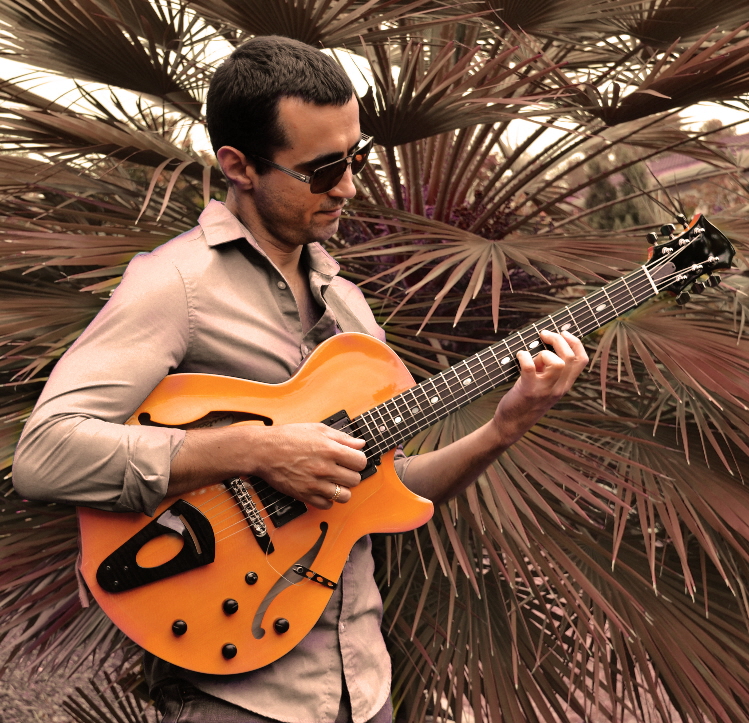
Sam Sherwin

photo by Dwyt Dayan; photo courtesy of Media Stew Public Relations

That’s not to say that there isn’t the occasional outlier – the fun “At the Old Canal” is a bit of a barn-raising-ready, slow-tempo, almost-twangy Americana number. But even this has a bit of Sam’s rock ‘n roll show band flair to it, more of a fun, quirky number than a shift in his base style.

And, going the other way on the rock ‘n roll spectrum, “Lick Your Lips” starts with a George Thorogood-esque gritty intro before moving to a more energetic, accessible, gritty blues rock style for the rest of the song. Still rock ‘n roll. And, if you noticed, still “gritty.” A little of that is Sam’s vocals, but more, I think, is the recurring, wailing, blues-rock guitar hook.

Indeed, Sam Sherwin touches upon a variety of classic, mid-tempo, radio-friendly rock ‘n roll styles, infusing his music with elements reminiscent of a broad cross-section of top artists from that mainstream rock ‘n roll genre. A bulk of the songs, including those I failed to mention, fall within this range, providing a varied yet cohesive 10-song collection that’s a solid addition to any mainstream, multi-decade rock ‘n roll collection.